It is one of those wonderfully strange firearms stories where a rifle wins on paper and loses to history. The Ishapore No. 6 was officially approved, but fate never gave it a production line.
A Rifle Born From A Real Wartime Problem
During World War II, armies fighting in Burma and other dense environments learned quickly that full-length rifles could be awkward in close country. A shorter, handier weapon made obvious sense for troops moving through jungle trails, vehicles, and broken terrain.
At Ishapore, India’s long-established rifle factory, designers looked to the familiar Short Magazine Lee-Enfield as the starting point. That was practical. The factory already knew the action, the tooling base existed, and the .303 British cartridge remained standard across much of the empire.
According to Forgotten Weapons, Ishapore produced at least two prototype patterns in its search for a compact carbine. The idea was not radical in mechanical terms. It was an adaptation of a proven system to meet a changing battlefield need.
What The No. 6 Actually Was
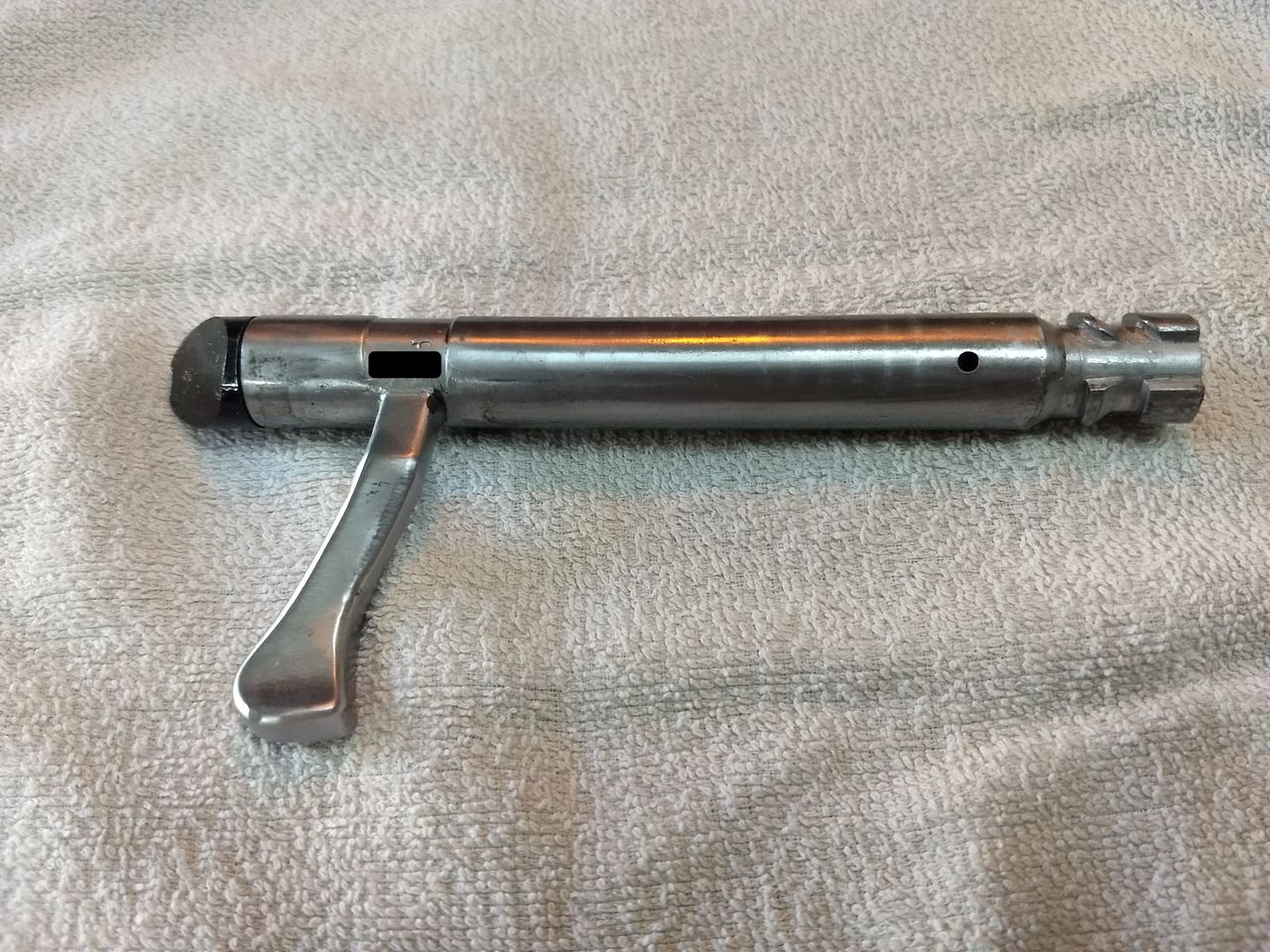
The Ishapore No. 6 was essentially a shortened, lightened Lee-Enfield pattern carbine meant to deliver the handling benefits soldiers wanted without demanding a completely new rifle family. That made it attractive in principle, especially during wartime, when speed mattered more than elegance.
Its strongest selling point was familiarity. Troops already understood Lee-Enfield controls, armorers knew the platform, and supply systems did not need to reinvent themselves overnight. In military procurement, that kind of continuity can matter as much as pure performance.
Forgotten Weapons notes that a second Ishapore pattern was provisionally approved as the No. 6 Mk I on September 1, 1944. That date is the heart of the story. Official acceptance had arrived, but it arrived late.
Approved Too Late To Matter
By late 1944, the strategic picture was changing fast. Allied momentum in Asia had improved, and the urgency behind emergency wartime improvisations was beginning to ease. A weapon designed to solve yesterday’s bottleneck suddenly faced a very different tomorrow.
That timing problem is fatal more often than bad engineering. Plenty of military arms have failed because they were flawed; others failed because history simply outran them. The Ishapore No. 6 belongs squarely in the second category.
Forgotten Weapons reports that production was cancelled before it could begin. So even though the rifle cleared the important bureaucratic hurdle of approval, it never crossed the harder threshold: becoming something factories built in quantity and troops actually carried in service.
Why Obsolescence Came So Fast
The end of World War II undercut the rifle’s original rationale. Once the immediate jungle-war pressure faded, governments became less interested in niche bolt-action carbines tailored to a specific theater problem. Procurement priorities changed almost overnight.
Then politics reshaped the map. Indian independence in 1947 changed the institutional and financial context around Ishapore itself. A transitional military establishment had larger issues to solve than launching a late-war bolt-action carbine whose moment had already passed.
There was also a bigger trend at work. The postwar world was moving toward self-loading service rifles and, eventually, new ammunition standards. In that environment, investing in a fresh .303 bolt-action variant looked less like modernization and more like a dead end.
Ishapore Moved On To More Practical Projects

Instead of building the No. 6, Ishapore continued along lines that made more sense for the era. The factory remained deeply tied to Lee-Enfield production, but its meaningful postwar legacy came from rifles that answered actual current requirements rather than fading wartime assumptions.
One major example was the 7.62mm Ishapore 2A and 2A1 series, developed after the 1962 Sino-Indian War and built around 7.62×51mm NATO. That shift showed a clear institutional preference for practical adaptation over resurrecting a cancelled .303 carbine concept.
Forgotten Weapons also notes that India later adopted and produced the FN FAL pattern domestically in the form of the 1A1. In other words, Ishapore did not stop innovating. It simply skipped a rifle that history had already rendered unnecessary.
The No. 6 Endures As A Great “What If”
That is why the Ishapore No. 6 fascinates collectors and military historians today. It was not a fantasy drawing or a failed sketch. It was a real, approved design that came right up to the edge of existence and then fell away.
Its story is a reminder that adoption does not guarantee production, and production does not guarantee service. In the weapons world, timing can outweigh engineering, and strategic change can erase a project faster than any test report ever could.
The Ishapore No. 6 never got its chance to prove itself in soldiers’ hands. Still, as a snapshot of wartime urgency colliding with postwar reality, it remains one of the most revealing near-misses in Lee-Enfield history.