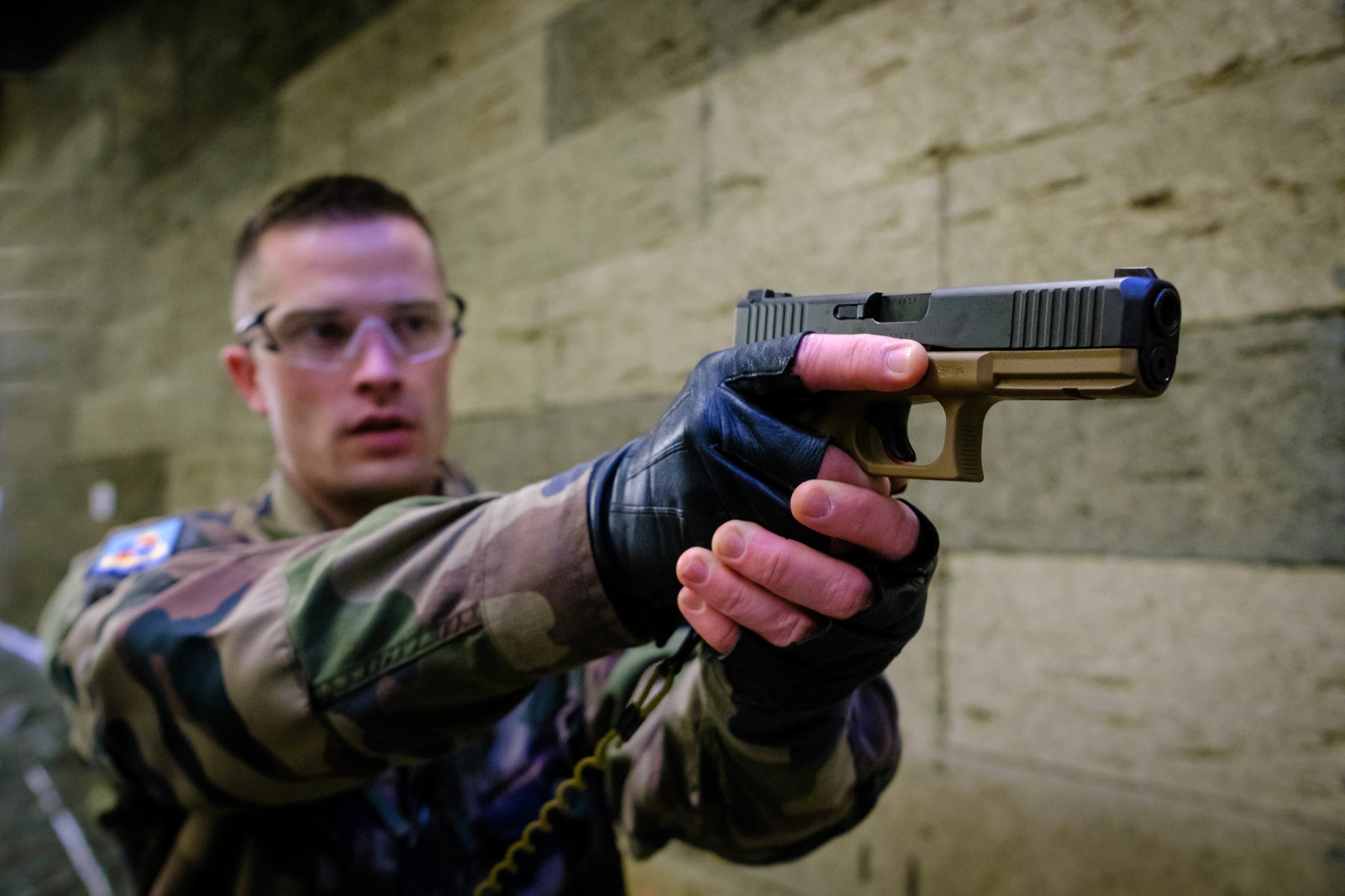
It looks like something dreamed up in a back alley, not an armory. And that is exactly why the Apache revolver still fascinates people.
A Pistol Built To Break Every Rule
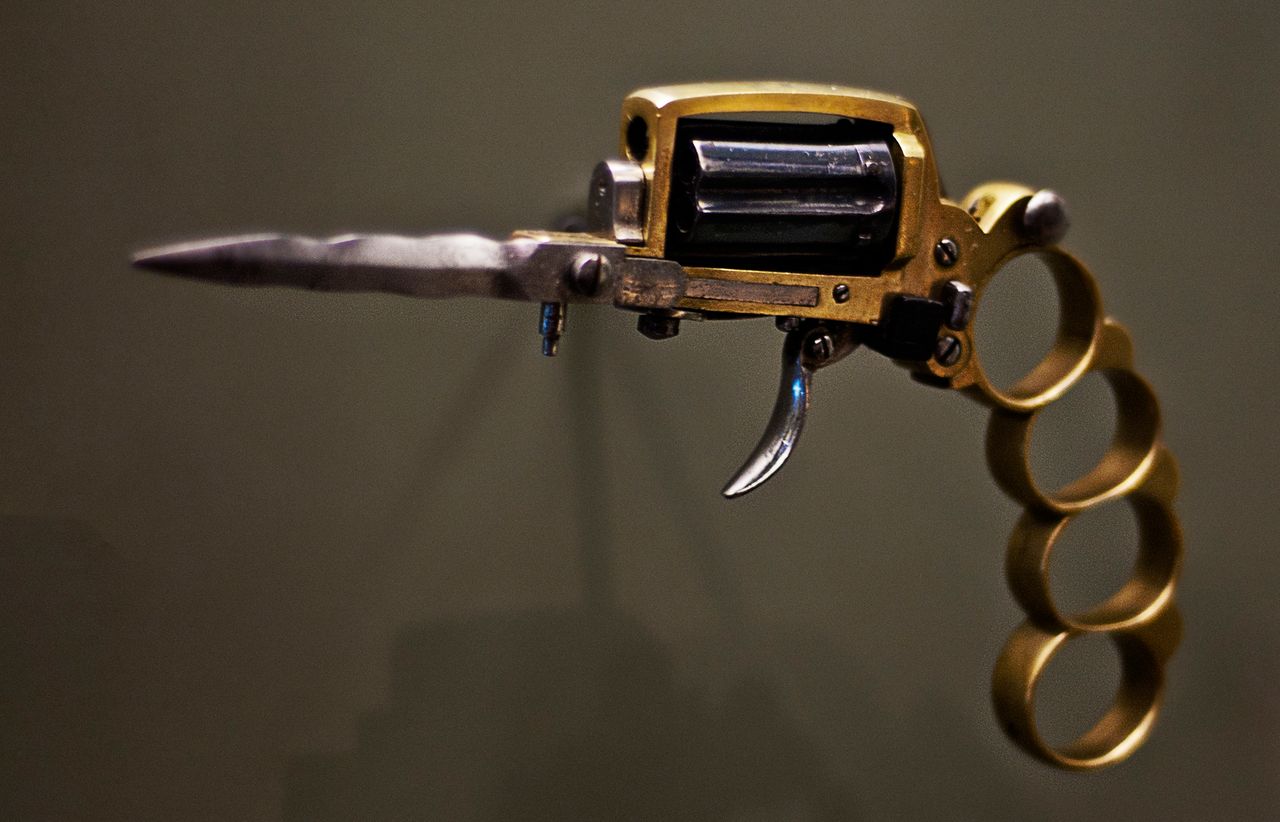
The handgun most people mean when they talk about one that fired sideways is the Apache revolver, a compact weapon linked to French street criminals around the late 1800s and early 1900s. According to museum and historical accounts, it combined three tools in one package: a small pinfire pepperbox-style revolver, folding knife, and knuckle duster.
What made it feel so wrong to modern eyes was its layout. It had no conventional grip in the usual sense, and the knuckle duster frame served as the handle. That meant the shooting portion sat in an awkward relation to the hand, giving the gun a strange sideways, improvised character rather than the straight-ahead form we associate with later handguns.
In practice, this was less a precision firearm than a desperate close-quarters weapon. It was designed for concealment, intimidation, and sudden violence at very short range.
Why People Call It A Sideways-Firing Gun

Strictly speaking, the Apache did not send bullets out of the side of the gun like a science-fiction prop. The projectiles still exited forward from the chamber area, as they do in other pepperbox designs. But because the weapon folded, lacked a normal barrel, and used a brass-knuckle frame as its grip, it often appeared to fire from a sideways-oriented mechanism when opened or viewed in profile.
That visual oddness is part of the legend. Collectors and firearms historians often point out that the weapon’s geometry makes it look more like a mechanical trap than a proper revolver. Forgotten Weapons has noted that many examples were made in Belgium and France and later became strongly associated with Parisian underworld figures.
The result is a gun that seems to violate instinct. You look at it and immediately wonder where the hand goes, where the barrel is, and whether using it was half as dangerous for the shooter as for the target.
The Apache Name And The Paris Underworld
The “Apache” name did not come from Native American design or manufacture. Historical references say the revolver became associated with violent Parisian gangs nicknamed “Les Apaches” in the early 20th century. The label reflected the era’s lurid and racist press habits, turning the name into shorthand for urban menace rather than a technical description of the weapon itself.
That matters because the revolver’s reputation grew through crime folklore as much as engineering. It became the perfect symbol of street fighting: compact, ugly, and multi-purpose. A knife for slashing, metal rings for punching, and a tiny firearm for point-blank emergencies all fit the same object.
In other words, the gun’s cultural image became bigger than its ballistic usefulness. It was notorious because it looked like trouble even before it was unfolded.
A Terrible Target Pistol But A Serious Threat
By normal handgun standards, the Apache was a poor shooter. Many examples had little or no true barrel to stabilize the bullet, which sharply limited accuracy and effective range. Historians routinely describe it as a contact-distance or near-contact weapon, useful only in the kind of street encounter where careful aiming barely mattered.
That does not mean it was harmless. At arm’s length, even a weak cartridge can be lethal. The real danger came from the combined threat: the victim had to deal with striking metal rings, a blade, and a firearm in one hand.
This helps explain why such a design existed at all. It was not trying to win military trials or sporting matches. It was built for sudden civilian violence in cramped urban spaces.
Why Inventors Loved Hybrid Weapons
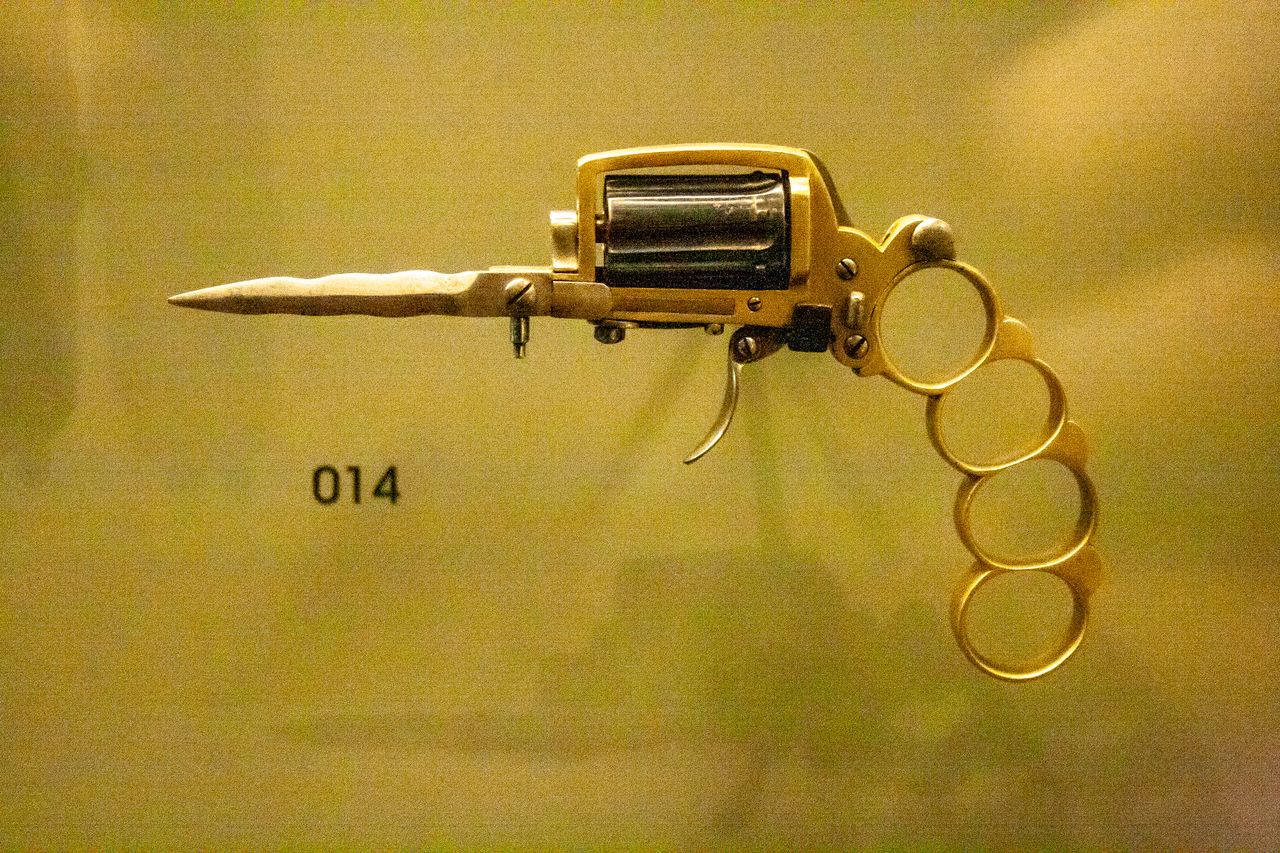
The 19th century was full of odd firearm experimentation. Designers chased concealment, faster access, and novelty, especially as small personal-defense weapons became commercially attractive. The Apache revolver belongs to that world of hybrids and curiosities, where inventors mixed knives, pistols, and brass knuckles in search of an advantage.
You can see the same inventive streak in palm pistols, folding triggers, and tiny pocket guns that sacrificed shootability for portability. Museums and arms collections are packed with examples that solved one problem while creating three more. The Apache simply pushed that logic to an extreme.
Its design tells us something important about weapons history. Not every gun was made to fight well; some were made to be carried easily, hidden quickly, and used without warning.
What It Was Actually Like To Use
Using an Apache revolver likely felt awkward, cramped, and unsettling. The knuckle-duster grip locked the hand into place, which may have helped retention in a scuffle, but it also reduced flexibility and comfort. Recoil management, sight alignment, and safe handling would all have been inferior to even many modest conventional revolvers of the era.
Reloading was no great joy either. Like many compact handguns of its time, it was built around compromise rather than convenience. That meant the owner accepted slow operation and poor ergonomics in exchange for a weapon easy to hide in a coat pocket.
From a modern perspective, it is the kind of object that looks more intimidating in the hand than effective on the range. Historically, that may have been enough.
Why The Sideways-Firing Myth Still Survives
People keep rediscovering the Apache revolver because it photographs so strangely. On social media and in collector circles, it is often described as a gun that fired sideways, backward, or in some impossible direction. The truth is more grounded but still bizarre: it was a real multi-weapon handgun whose shape disrupted every visual expectation we have about pistols.
That is why it endures. It captures a moment when urban crime, industrial tinkering, and sensational journalism all collided in metal. According to historical collections and firearms researchers, it was never a great gun in the traditional sense.
But as an artifact, it is unforgettable. Few handguns better demonstrate that the strangest weapon in a collection is often the one designed not for battlefields, but for the chaos of the street.