It looked almost harmless at first glance. Then it changed infantry firepower in a way soldiers never forgot.
A Familiar Shape With A Different Mission
The M79 grenade launcher did not emerge from nowhere as a fully formed battlefield classic. Its defining break-open, shoulder-fired shape grew out of earlier launcher concepts that looked strikingly similar to gas and flare guns already familiar to police and military users.
Small Arms Review notes that one of the key Project Niblick test launchers, the S-3, was a single-shot, break-open design that closely resembled the Federal Laboratories tear-gas gun. That mattered because engineers were not just inventing ammunition. They were also searching for a practical human-scale launcher soldiers could actually carry and fire well.
In other words, the famous M79 began with a layout people already understood. Open the action, load one round, close it, aim, and fire. Sometimes the smartest military designs start by borrowing a proven form and giving it a much more serious purpose.
Why The Army Wanted Something New
The U.S. Army had a real tactical gap to solve in the 1950s. Hand grenades lacked reach, rifle grenades could be awkward, and mortars were effective but belonged at a different level of support.
Project Niblick set out to create a lightweight explosive round and a launcher to match. According to Military.com’s history of U.S. Army weapons, the goal was a projectile more accurate and longer-ranged than a rifle grenade, yet far more portable than a mortar.
That mission helps explain the M79’s enduring reputation. It was not designed as a novelty or a specialist’s toy. It was built to let a single infantryman throw explosive force farther, faster, and with better control than older squad-level options allowed.
The M79 Formula That Worked
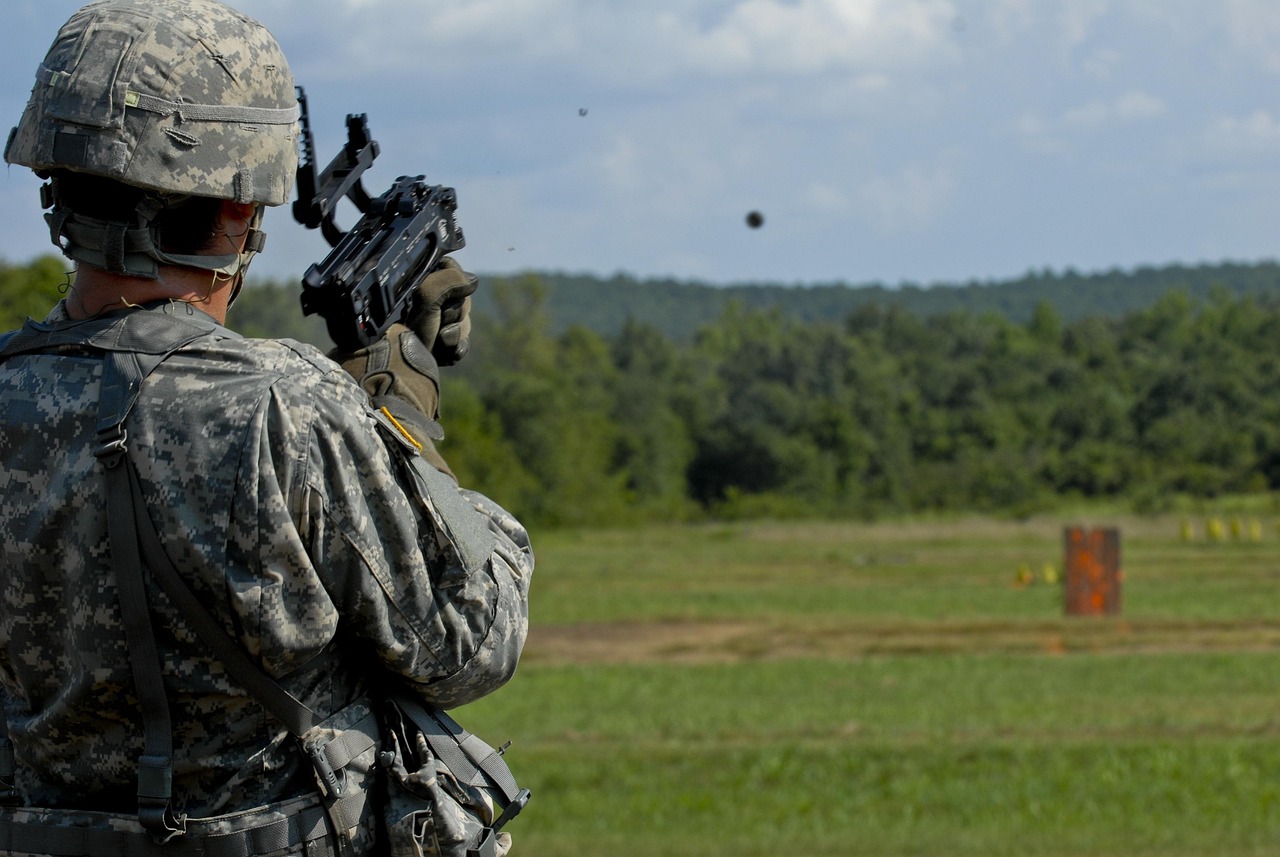
What made the M79 so effective was not mechanical complexity. It was the opposite. The finished weapon was a breech-loaded, single-shot 40mm launcher fired from the shoulder, and troops found it easy to learn and maintain.
Warfare History Network describes it as a large-bore, single-barrel weapon that launched 40x46mm low-velocity ammunition. U.S. Army material also records that it could fire a wide variety of rounds, including high explosive, smoke, antipersonnel, buckshot, flechette, and illumination.
That versatility is where the old flare-gun comparison becomes especially interesting. A simple launcher shape, once associated with signaling or gas delivery, evolved into a platform capable of putting several kinds of battlefield effects exactly where a squad needed them.
Vietnam Made It A Legend
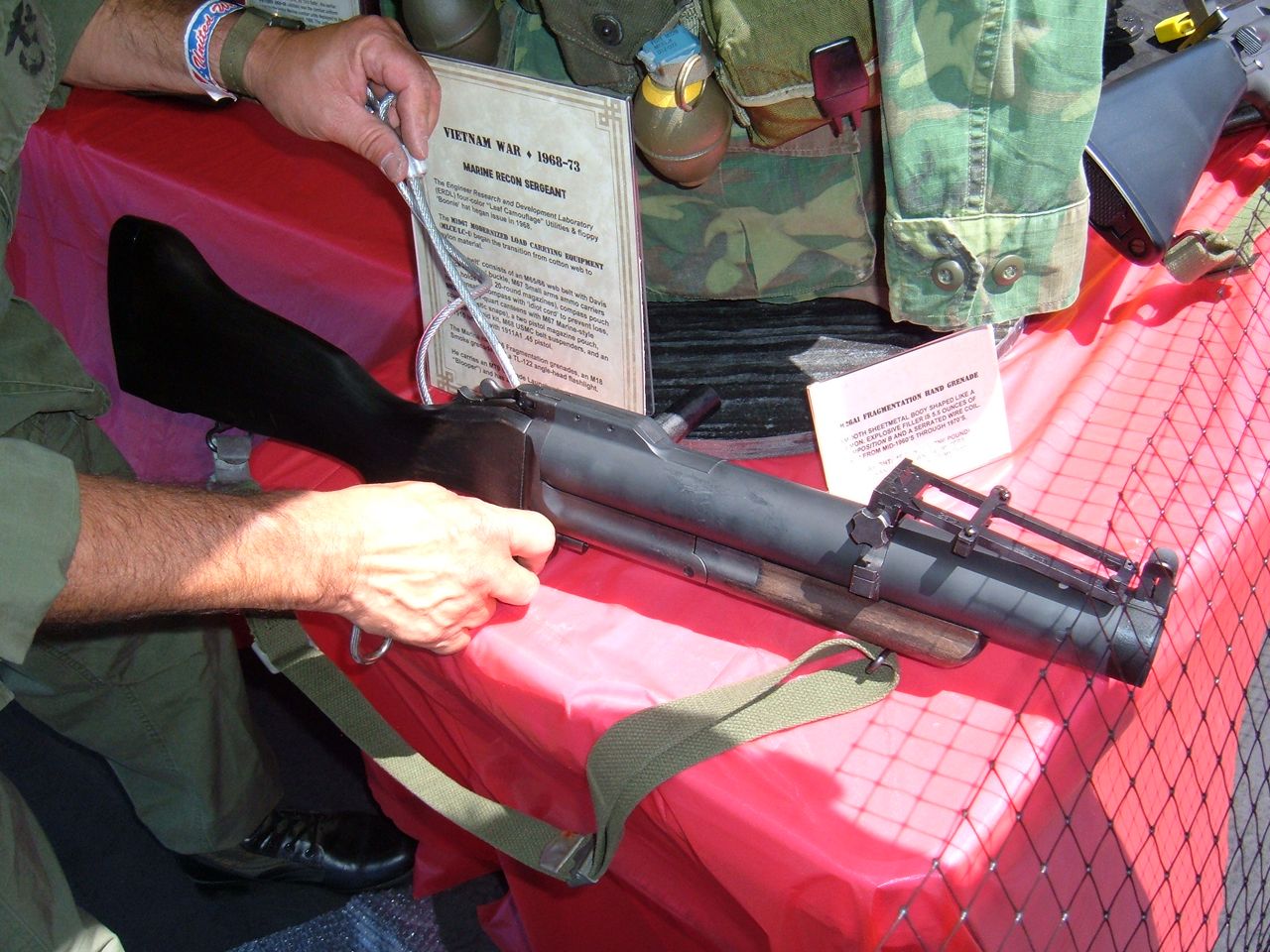
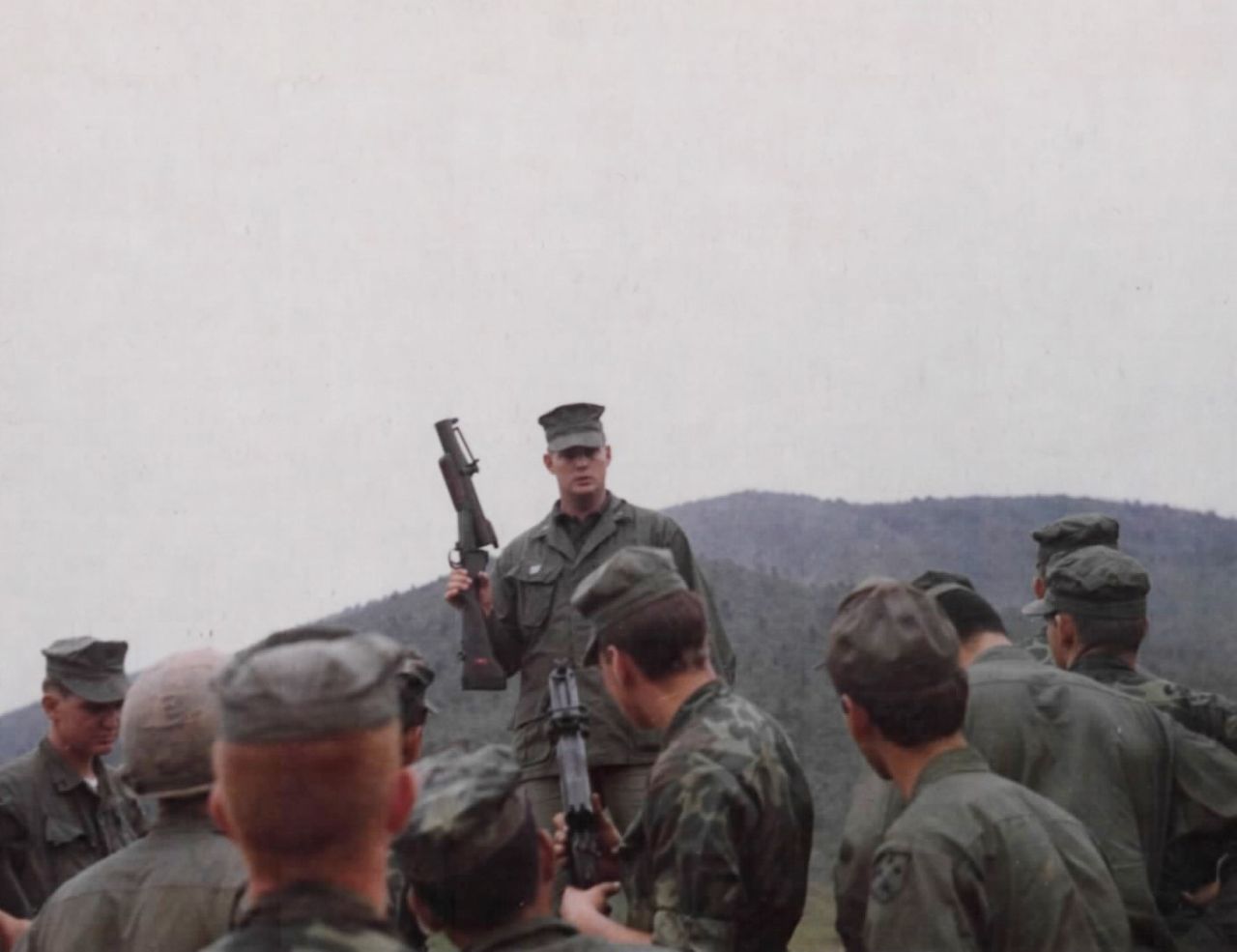
If the M79 was born in development programs, Vietnam made it famous. Army writing from the period and later recollections consistently portray it as a weapon troops valued for bunker fights, jungle engagements, and quick indirect-style shots at close-support ranges.
An Infantry magazine piece from Fort Benning called it handy, lightweight, and easy to use, while noting that one man in each fire team often carried it before the M203 became widespread. Its distinctive report also earned memorable nicknames such as “Blooper” and “Thumper.”
Those nicknames stuck because the weapon itself stuck in memory. Soldiers liked weapons that did useful work without drama, and the M79 had that rare combination of simplicity, reliability, and immediate battlefield effect.
The Limits Of A One-Shot Wonder
The same features that made the M79 elegant also imposed limits. A grenadier armed with a single-shot launcher had to reload after every round, and that could be a serious disadvantage if the fight suddenly collapsed into close-range rifle distances.
Army historical material points out one major drawback clearly: the grenadier often carried only a sidearm in addition to the launcher, reducing the squad’s direct-fire rifle strength. That shortcoming helped drive interest in an under-barrel system attached to the M16.
The result was the XM203, later standardized as the M203 in August 1969 according to U.S. Army history. It used similar 40mm ammunition while letting the soldier keep a rifle in hand at all times.
More Than An Explosive Launcher
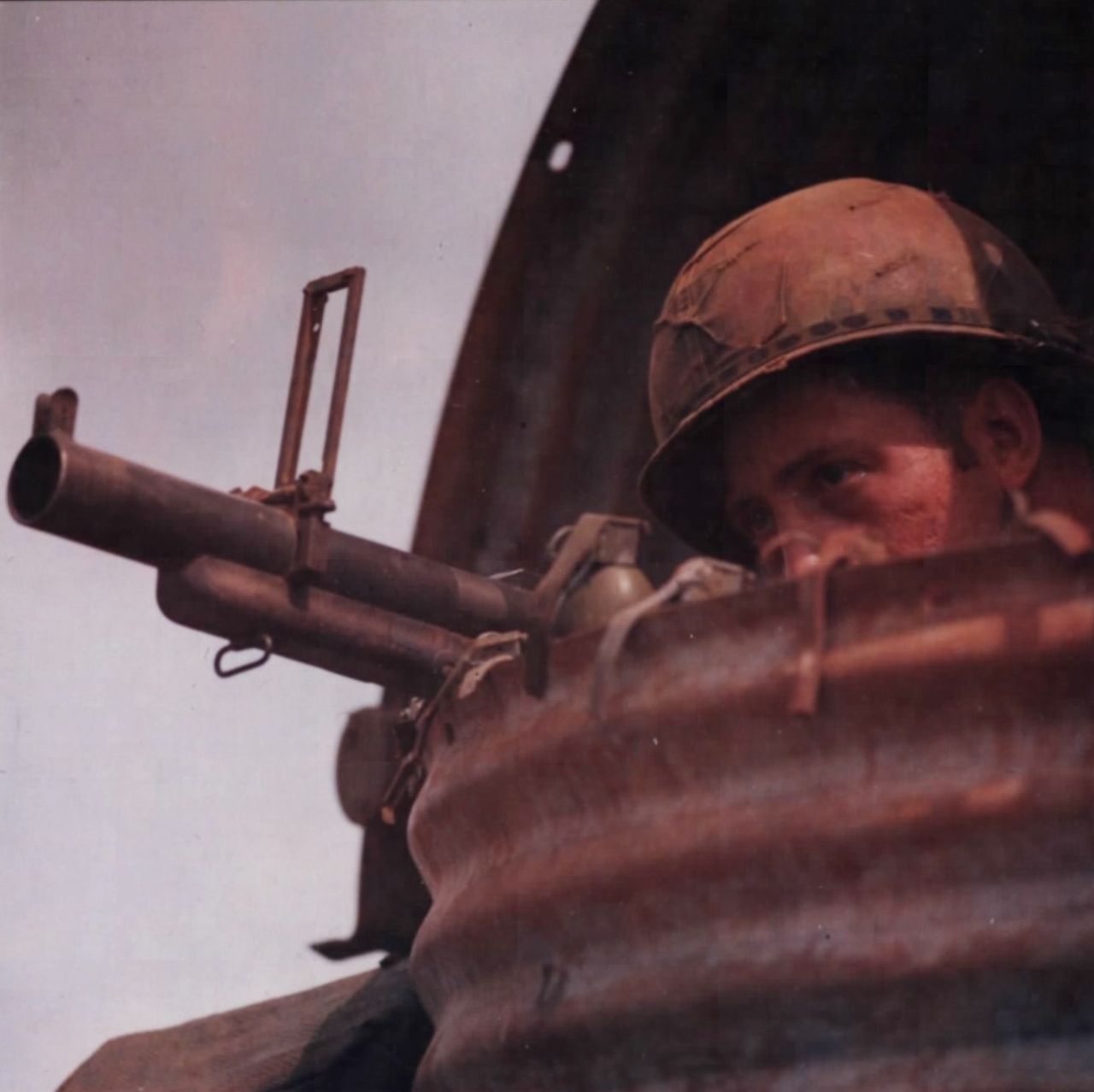
One reason the M79 mattered so much is that it was never limited to high explosive rounds alone. Army documentation and defense histories show it could launch smoke, star parachute illumination, signaling rounds, and other specialized cartridges for communication and battlefield marking.
A 1974 Army acquisition publication described 40mm smoke-canopy cartridges developed for dense jungle terrain, where ordinary smoke signals could disappear below overhead foliage. Fired from the M79 or M203, those rounds rose and deployed smoke high enough to be seen from above.
That wider utility echoes the launcher’s flare-gun ancestry in a fascinating way. Even after becoming a combat weapon, it still retained the signaling and illumination roles that older launchers had long performed.
Why Its Origin Story Still Matters
The M79 remains iconic because it shows how military innovation often works in practice. Revolutionary weapons are not always born looking revolutionary. Sometimes they begin as an adaptation of something humble, familiar, and already mechanically sound.
In this case, the path ran through launcher designs resembling Federal Laboratories gas guns and flare-gun-like single-shot arms, then matured into a dedicated 40mm infantry system. According to Army and defense sources, that system filled a genuine tactical need and shaped squad firepower in Vietnam and beyond.
That is what makes the M79’s story so good. Beneath the walnut-stock legend and the “Thumper” nickname is a reminder that even a battlefield classic can start life with the silhouette of a signal gun.