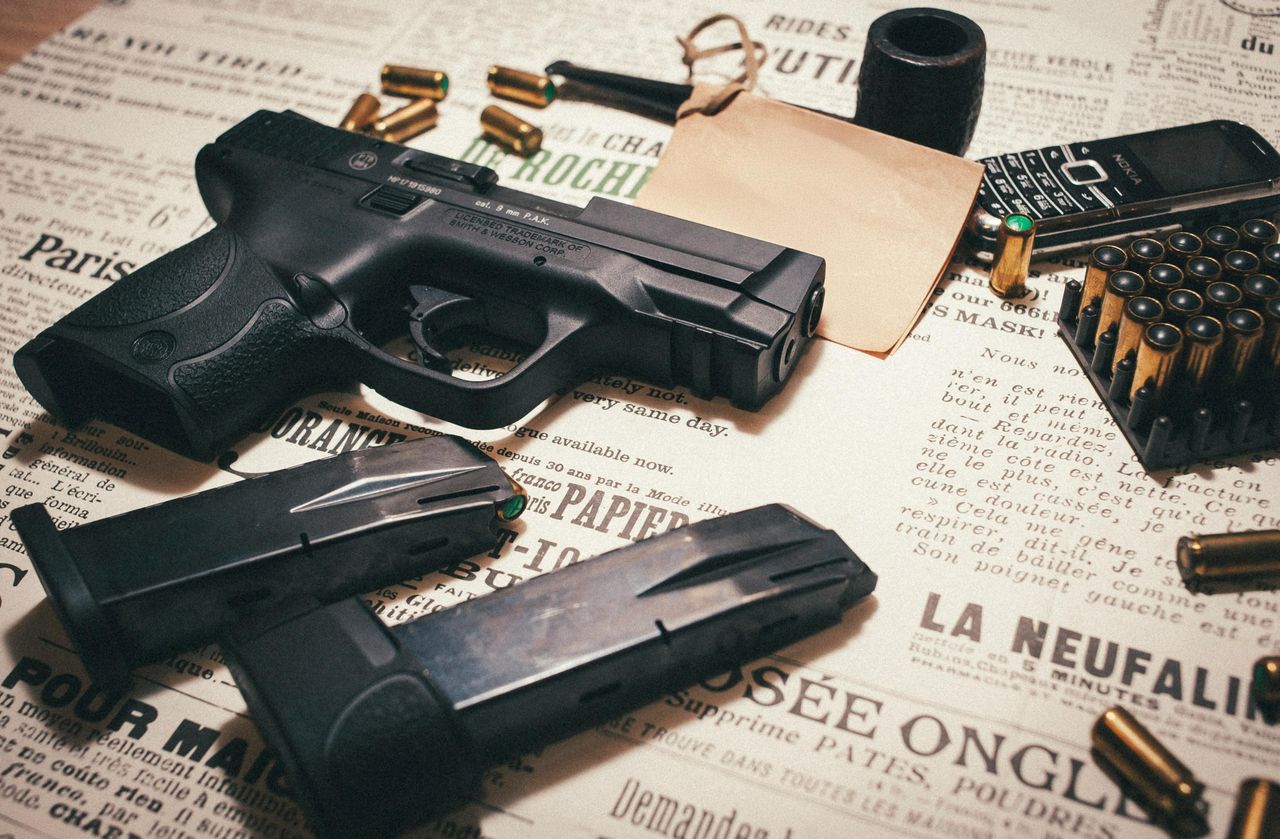
Few handgun matchups get argued harder than this one. And for good reason, because both pistols have real duty credentials.
Why this comparison matters so much

The Glock 19 is the benchmark many modern service pistols are judged against. Since the late 1980s, Glock’s compact 9mm has built a reputation for reliability, simple maintenance, and broad institutional adoption. Police agencies, military units, and private citizens have all put enormous round counts through it, which gives the platform a deep record that few competitors can match.
The Smith & Wesson M&P entered that world later, but it was never a casual challenger. Introduced in the mid-2000s, the M&P line was designed specifically to win back law enforcement users who had moved away from traditional American duty pistols. Smith & Wesson gave agencies interchangeable backstraps, ambidextrous controls on many models, and ergonomics that often felt more natural in the hand than Glock’s famously blocky grip.
That is why this comparison matters beyond internet debate. A duty pistol is not judged by hype, a single range session, or brand loyalty. It is judged by whether it runs when dirty, whether officers can shoot it well under stress, and whether departments can keep it in service for years without turning maintenance into a headache.
The big question is not which pistol is more popular. It is which one actually holds up when thousands of rounds, rough handling, sweat, rain, holster wear, and institutional use start exposing weaknesses.
Reliability under real duty conditions

If the test is pure reputation, the Glock 19 starts with an edge. Its record for feeding, firing, and surviving neglect is unusually strong, and armorers have trusted that pattern for decades. Gen 3, Gen 4, and Gen 5 pistols are not identical, but the platform as a whole has proven remarkably consistent across hard service use.
The M&P’s story is a little more complicated, mostly because the early guns had a few growing pains. First-generation examples were sometimes criticized for mushy triggers, indifferent accuracy in certain barrel configurations, and occasional inconsistencies that mattered more to high-volume shooters than casual owners. Smith & Wesson responded over time, and the M&P 2.0 dramatically tightened the platform’s reputation with improved texture, a stronger chassis system, and generally better shootability.
In practical terms, both pistols are reliable enough for duty when quality magazines and duty-grade ammunition are used. Large agencies have run both successfully, and major breakage rates on modern examples are low. Where Glock still wins is confidence through sheer historical volume. More departments have abused Glock pistols for longer, so its reliability case feels less theoretical and more fully documented.
That does not mean the M&P is fragile. Modern 2.0 models, especially full-size and compact 9mm variants, have shown they can digest high round counts and ugly conditions without drama. The gap today is smaller than many loyalists on either side want to admit.
Durability, wear, and parts life

Duty guns live hard lives even when they are not fired constantly. They ride in holsters, bang into seat belts, sit in hot cars, get soaked during weather calls, and pick up rust from sweat and neglect. In that environment, both the Glock 19 and the M&P have solid records, but they show wear differently.
Glock’s polymer frame and Tenifer-inspired finish legacy helped define the low-maintenance service pistol era. Even newer finish treatments continue that tradition reasonably well, and the gun’s internal design has very few parts that seem delicate in long-term use. Slides may show holster wear, and sights are often replaced early, but core components like the locking block, trigger assembly, and striker system are usually durable if basic maintenance schedules are followed.
Smith & Wesson built the M&P with serious duty use in mind, and the steel chassis embedded in the frame is one of the platform’s underrated strengths. The 2.0 line especially feels overbuilt in a good way. Its frame rigidity, aggressive texture, and robust slide design give it a planted, substantial feel that many officers prefer when training volume increases.
Parts life still slightly favors Glock because of ecosystem maturity. Replacement springs, trigger parts, magazines, and internal components are everywhere, and armorers know exactly what tends to wear first. The M&P is durable, but Glock remains easier to keep alive indefinitely simply because so many agencies, shops, and distributors have supported it for so long.
Ergonomics and shootability on the clock

This is where the M&P often wins people over. Pick up an M&P 2.0 and then a Glock 19, and many shooters immediately notice the difference in grip shape and natural point of aim. The M&P tends to sit lower and more naturally for a broad range of hand sizes, while Glock’s grip angle still feels perfect to some shooters and awkward to others.
That ergonomic advantage matters more in duty use than spec sheets suggest. Officers are not always firearms enthusiasts, and a pistol that points naturally can reduce training friction. Interchangeable backstraps on both systems help, but many instructors report that new shooters adapt to the M&P’s feel faster, especially when rapid follow-up shots and support-hand shooting are introduced.
Glock answers with consistency and a very predictable recoil impulse. The Glock 19’s bore axis, slide mass, and trigger reset create a shooting rhythm that experienced users can run extremely fast. It may not feel as refined in the hand, but it often performs better on a timer for shooters who have built strong habits with the platform.
Trigger quality is also part of the story. Older M&Ps were often criticized here, while newer 2.0 triggers are much improved. Glock’s stock trigger is not beloved because it is beautiful. It is respected because it is repeatable, familiar, and easy to learn across massive numbers of guns.
Maintenance, armorer support, and downtime
A duty pistol that is hard to service becomes expensive even if the gun itself is good. Glock has dominated this area for years because the design is famously simple. Fieldstripping is easy, internal disassembly is straightforward for trained armorers, and the number of small parts is modest compared with many competing striker-fired pistols.
That simplicity scales well inside large departments. Agencies can stock common recoil springs, trigger springs, slide stop parts, and magazines without worrying much about odd model-specific surprises. Armorers also benefit from an enormous institutional knowledge base. If a Glock starts acting up, chances are someone has seen that exact issue a thousand times before and already knows the fix.
The M&P is not difficult to maintain, but it does not enjoy quite the same universal support network. Smith & Wesson has improved the platform steadily, and qualified armorers generally find it manageable, yet Glock still has the easier reputation for parts availability and standardized service procedures. That difference becomes more meaningful in rural departments, smaller agencies, and shops that need quick turnaround.
For an individual officer, this may barely matter. For a fleet manager responsible for hundreds of pistols, it matters a lot. The gun with less downtime and simpler logistics often wins, even if both guns shoot equally well.
Adoption, field records, and what agencies learned
Glock’s advantage in adoption is impossible to ignore. The Glock 19 and its full-size siblings became standard issue or approved alternatives in a huge number of American law enforcement agencies, and that broad adoption created a self-reinforcing cycle. More use produced more data, more data built more trust, and more trust led to even wider adoption.
The M&P broke into that market by offering agencies something Glock sometimes did not: a more customizable feel without abandoning striker-fired simplicity. It won major contracts and gained traction with departments that wanted ambidextrous features, domestic brand familiarity, or improved ergonomics for a more diverse pool of officers. In several agency transitions, officers reported better comfort and qualification performance after moving to the M&P platform.
Still, field records are not just about who sold more guns. Agencies learned that both platforms require quality magazines, regular recoil spring replacement, and practical training rather than blind faith in brand names. Poor maintenance can make either pistol stumble, and weak ammunition choices can distort reliability impressions.
What agencies seem to value most is predictability. Glock has an older and broader predictability record. The M&P, especially in 2.0 form, has proven it belongs in the same duty conversation, but it got there later and with less margin for early mistakes.
So which one actually holds up best?
If the question is which pistol has the deepest, most proven long-term duty record, the Glock 19 still gets the nod. It has survived more institutional abuse, built a wider armorer and parts network, and maintained a level of reliability consistency that is hard to challenge. For departments that prioritize logistics, simplicity, and documented history, Glock remains the safer answer.
If the question is which pistol may fit and shoot better for a large number of officers right now, the M&P deserves very serious consideration. The 2.0 generation closed much of the reliability perception gap and, for many hands, clearly beats the Glock in ergonomics. A pistol that officers shoot better is not a soft advantage. It can matter as much as raw mechanical endurance.
So which duty pistol actually holds up? In pure historical terms, Glock 19. In modern practical terms, both do, and the M&P is closer than the old arguments suggest. The honest answer is that Glock still leads on long-term proof, while the M&P often leads on immediate comfort and control.
That is why this matchup remains alive. One pistol owns the legacy. The other keeps making a better case every year.