
Some guns are property. Others feel like family history you can hold in your hands.
That is exactly why heirloom firearms create such a difficult legal and moral debate.
Why heirloom firearms feel different from ordinary guns

An heirloom firearm is not just another consumer product pulled from a store shelf. It may be the duck gun a grandfather carried for forty seasons, a service revolver that came home from war, or a black powder rifle displayed over a mantel for generations. Families often see these pieces as artifacts first and weapons second, which is why modern gun rules can feel cold or mismatched when inheritance is involved.
That emotional distinction is real, and lawmakers ignore it at their peril. Probate lawyers, collectors, and estate planners regularly note that inherited guns often arrive during moments of grief, confusion, and rushed decision-making. People are not comparison shopping. They are sorting through a parent’s house and trying to figure out what is lawful, what is valuable, and what must be stored immediately.
There is also a cultural difference between heirloom guns and the firearms most often discussed in current policy fights. Many inherited firearms are older hunting rifles, shotguns, or antique handguns that were never part of the modern retail background-check system in the first place. Some were made before 1899, which matters because federal law treats many pre-1899 guns and certain muzzleloaders as “antique firearms,” outside the Gun Control Act’s core definition of a firearm, according to ATF regulations and the Legal Information Institute.
Still, sentimental value does not erase physical risk. A family revolver can fire just as lethally as any other gun if it remains functional. That tension drives the whole debate: should the law respect history, or should it treat capability, not nostalgia, as the deciding factor?
What federal law already does, and why that matters
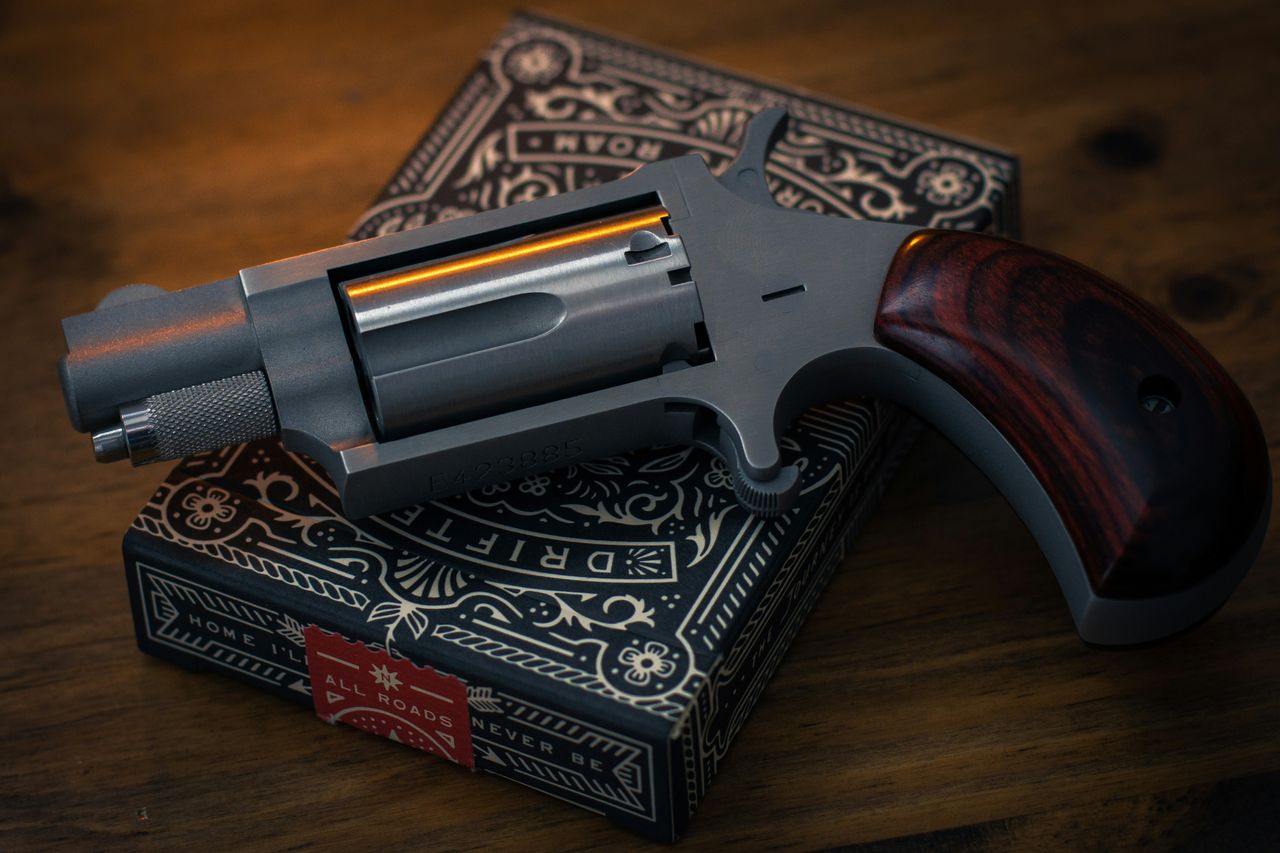
The short answer is that federal law already does treat some heirloom firearms differently, but only in narrow, technical ways. Under ATF regulations, firearms manufactured in or before 1898, along with certain replicas and black-powder muzzleloaders that cannot readily fire fixed ammunition, may qualify as antique firearms. Those guns are generally excluded from the Gun Control Act framework that governs ordinary dealer transfers and many background-check requirements.
That sounds broader than it really is. The antique exception is tied to design and date, not family sentiment. A gun does not become legally special because it belonged to your great-uncle. It becomes special only if it falls into a statutory category, and that can produce strange results where a cherished 1911 pistol inherited from World War II is treated as a modern firearm, while an older but still dangerous pre-1899 revolver may fall outside the federal definition.
The National Firearms Act adds another wrinkle. Its antique-firearm definition is narrower for some fixed-ammunition weapons, and ATF guidance has long emphasized that some old guns can still be regulated depending on design and ammunition availability. In other words, “old” does not automatically mean exempt.
This matters because many public arguments start from the wrong premise. The legal system does not currently ask whether a gun is an heirloom. It asks whether it is an antique, an ordinary firearm, or a specially regulated NFA item. That is a blunt framework, but it is at least administrable, which lawmakers value for obvious reasons.
The case for treating inherited guns with more flexibility

Supporters of special treatment argue that inheritance is fundamentally different from commerce. No one is creating new demand when a son receives his mother’s bird gun or a niece inherits a Civil War-era revolver. The gun already exists, often stays within the same family, and is frequently valued more as memory than as defensive hardware. From that viewpoint, applying the exact same transfer rules used for cash sales can look like bureaucratic overkill.
There is also a practical argument about fairness. Estates can be messy, and executors are rarely firearms experts. If every inherited gun transfer required the same steps as a retail-style sale, families in rural areas or in states with limited dealer access could face delays, added cost, and accidental noncompliance. That is one reason inheritance exceptions have persisted in some parts of gun law and in some state systems.
Collectors and museum-minded historians add another point. Heirloom firearms preserve military, regional, and family history in a way photographs do not. A frontier-era Winchester, a percussion revolver, or a first-generation service rifle can tell a story about migration, war service, hunting culture, and industrial design. When regulation is too rigid, families may surrender or destroy historically significant pieces simply because they cannot confidently navigate the rules.
A narrower, more defensible version of this argument is not “heirloom guns deserve a free pass.” It is that the law might reasonably streamline transfers for inherited guns while still requiring safe storage, prohibited-person checks where applicable, and clear rules for transport and sale. That is the compromise many ordinary people find intuitively appealing.
The case against special treatment based on sentiment or age alone

The strongest argument against special treatment is simple: a gun’s ability to injure does not depend on its sentimental story. A century-old revolver in working condition can still be used in a suicide, domestic assault, or impulsive act. Police and prosecutors do not investigate grief value. They investigate possession, access, and harm.
Data on criminal gun acquisition also complicates romantic assumptions. ATF’s recent trafficking analysis says firearm offenders frequently report obtaining guns through informal sources such as friends and family members, while ATF’s theft overview notes that roughly 215,000 guns are stolen and reported to law enforcement annually. Those figures do not prove heirloom guns are a major crime source, but they do show that informal channels matter.
Law enforcement also depends heavily on traceability. ATF says the National Tracing Center processed nearly 655,000 trace requests in fiscal year 2025, helping agencies identify trafficking patterns and investigative leads. Firearms outside ordinary retail records can complicate that process, especially when ownership changed casually across generations.
There is also a line-drawing problem. Once the law starts giving special status to “heirlooms,” what counts? A revolver handed down in a will? A rifle gifted at Thanksgiving? A shotgun kept in a cabin for decades? Sentiment is impossible to measure consistently, which is why critics say special treatment should rest on objective categories, not family stories.
Where state laws and real-life inheritance problems collide
Even when federal law seems straightforward, state law can make the picture much more complicated. Some states require background checks for a much broader range of transfers than federal law does, and gun-law trackers such as Giffords note that many jurisdictions have expanded private-sale rules beyond the federal baseline. That means a family transfer that looks simple under federal law may still trigger state-level obligations.
This is where people get into trouble. A widow may assume her late husband’s collection automatically becomes hers in every legal sense. An out-of-state sibling may drive home with a rifle after the funeral without realizing interstate transfer rules can be different from intrastate possession issues. A collector may believe a gun is antique because it looks old, even though the manufacturing date or ammunition type says otherwise.
Estate administration creates its own risks. Guns are often discovered before anyone has located serial-number records, appraisals, or storage keys. Families may not know whether a firearm is loaded, functional, stolen, modified, or subject to NFA rules. The legal question is only half the issue. The immediate safety question is often more urgent.
That is why this debate cannot be reduced to slogans. In real life, heirloom firearms sit at the intersection of probate law, state transfer law, federal definitions, safe storage, and family dynamics. Any serious reform has to deal with all of those pieces, not just the symbolism of old steel and walnut.
A smarter middle ground than either total exemption or total sameness
If the goal is good policy, the best answer is probably not to treat heirloom firearms completely differently, but not to treat them exactly the same either. The law should distinguish between inherited possession and open-market sales, while still focusing on public safety outcomes. That means clear inheritance procedures, straightforward prohibited-person screening where state law requires it, and practical safe-storage expectations from day one.
One smart reform would be a simple estate-transfer safe harbor. Families could receive a defined period to secure, inventory, and appraise inherited firearms before final disposition, provided the guns are stored safely and not transferred onward unlawfully. That would recognize the reality of probate without creating a giant loophole.
Another useful reform would be better antique and curio guidance written in plain English. ATF definitions are legally important, but most families do not read regulations for comfort after a death in the family. Clearer public-facing checklists, dealer guidance, and executor materials would prevent mistakes far more effectively than assuming people will figure it out alone.
In other words, heirloom status should matter procedurally, not absolutely. It can justify a smoother process, but not a blanket exception from the rules that keep guns away from prohibited possessors and help law enforcement understand where weapons come from.
So, should heirloom firearms be treated differently?
Yes, but only in limited and carefully designed ways. Heirloom firearms deserve different handling because inheritance is different from retail commerce, and because family history has legitimate cultural value. But that does not justify pretending an inherited gun is harmless, untraceable, or beyond the reach of modern safety standards.
The strongest framework is one based on objective facts. Is the firearm legally antique under federal law? Is it functional? Is the heir legally allowed to possess it? Does state law require a background check or dealer involvement? Is it being kept, sold, transported, or divided among relatives? Those are the questions that should drive outcomes, not whether the gun has a moving story attached to it.
That approach also respects responsible gun ownership. Plenty of families want to preserve grandfather’s rifle and still comply with the law, store it safely, and document its history. A sensible system should help them do exactly that rather than forcing them into guesswork or panic.
So the honest answer is not that heirloom firearms should get a free pass. It is that they should get a smarter process. History matters, but public safety still matters more.