It looks kind. In many places, though, a pile of corn can turn into a wildlife-management problem faster than people expect.
Why does feeding deer feel right to people?

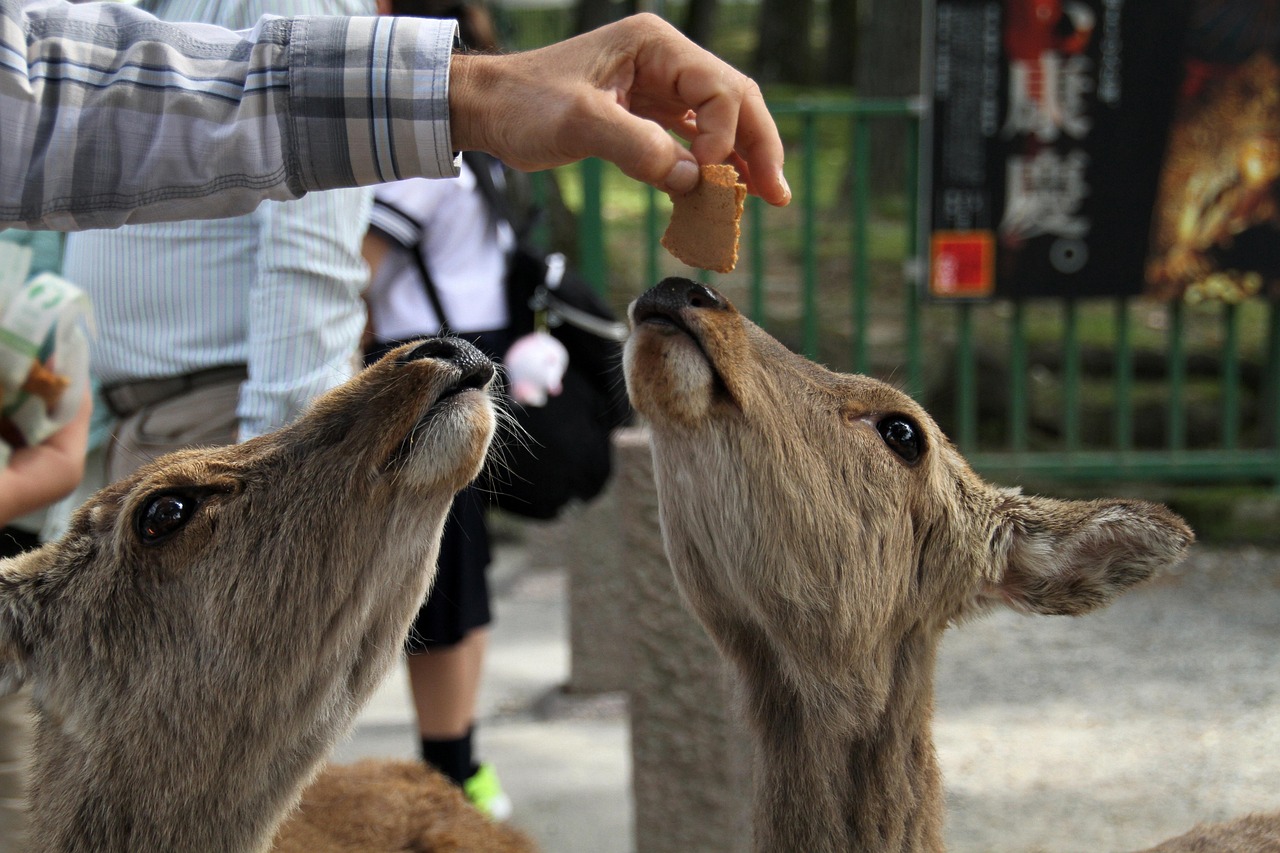
Most people who feed deer are not trying to break rules or interfere with nature. They usually see thin animals in late winter, spot does with fawns in summer, or simply enjoy having deer close to home. In suburban and rural America, that instinct comes from empathy. If an animal seems hungry, helping it feels like the decent thing to do.
There is also a long tradition behind it. Families put out apples, corn, or hay and tell themselves they are getting deer through a hard spell. Hunters, photographers, and homeowners often see feeding as harmless because the animals keep coming back and appear healthy in the short term. That repeated contact creates the impression that the practice is working.
But wildlife agencies have spent years warning that what feels good at the backyard level can go wrong at the herd level. Colorado Parks and Wildlife flatly says feeding deer is illegal there because it concentrates animals, spreads disease, and can even attract predators such as mountain lions. Wisconsin’s DNR has issued similar warnings, stressing that the risks to the population outweigh the temporary perceived benefits.
That gap between intention and outcome is why this issue keeps coming back. People judge by the individual deer standing in front of them. Biologists have to judge by what happens to hundreds or thousands of deer over years, across roads, farms, neighborhoods, and forests.
The strongest case for making it illegal
The most persuasive argument for broad feeding bans is disease. When deer gather unnaturally at one food source, saliva, feces, urine, and nose-to-nose contact all increase. Wisconsin’s DNR specifically notes that baiting and feeding encourage deer to congregate and can help spread chronic wasting disease, or CWD, through direct contact and contaminated environments. USDA APHIS continues to treat CWD as a major national wildlife health problem and announced about $12 million in 2026 funding to support prevention and control.
CWD matters because it is not a short-term nuisance. It is a fatal prion disease affecting deer and other cervids, and once it becomes established on a landscape, management gets much harder. Virginia wildlife officials have repeatedly described feeding and baiting as activities that increase direct contact among deer and raise concern for CWD spread. In some parts of Virginia, feeding bans already apply seasonally, year-round in disease management areas, and in counties near known positives.
There is also a nutrition argument. Wildlife agencies warn that winter feeding with corn, hay, or alfalfa can cause digestive trouble in deer adapted to natural seasonal browse. Wisconsin’s DNR says even a single feeding with unsuitable foods can trigger rumen acidosis and, in severe cases, death. That surprises many people because corn is widely seen as the default “deer food.”
If the question is whether governments have a defensible public-interest reason to ban the practice, the answer is yes. Disease risk, animal welfare, and knock-on ecological impacts give states a strong case that feeding deer is not merely a private choice.
Why a blanket nationwide ban is harder than it sounds

Even if the case against feeding is strong, “illegal everywhere” is a bigger claim. Wildlife law in the United States is mostly handled state by state, and local conditions differ. Some areas are dealing with active CWD spread, some with severe urban deer overabundance, and others with sparse herds and different habitat conditions. That legal patchwork exists because deer management is intensely regional.
You can see that in the current rules. Colorado broadly prohibits intentionally feeding deer and several other big-game species. Wisconsin ties many baiting and feeding restrictions to CWD detections and nearby counties under state law. Virginia uses a combination of seasonal bans, permanent bans in certain zones, and disease-driven restrictions. Those are not small details; they reflect different landscapes, herd densities, politics, and enforcement realities.
A national ban would also run into edge cases. What counts as feeding: a backyard pile of corn, an orchard dropping fruit, a food plot, livestock feed that deer raid, or a bird feeder spilling seed? States usually draw distinctions among intentional feeding, baiting for hunting, agriculture, and incidental attractants. Writing a single rule that is both clear and practical would be harder than many advocates admit.
There is also a trust issue. If laws feel overbroad or disconnected from local reality, compliance can suffer. A smart wildlife rule has to be enforceable, explainable, and targeted enough that ordinary people understand why it exists.
The hidden costs people often overlook
Artificial feeding changes deer behavior in ways that are easy to miss if you only watch from the porch. Deer become habituated to predictable food sources and spend more time concentrated near homes, roads, and property edges. That can increase crop browsing, garden damage, and conflicts with neighbors who never agreed to host a semi-tame local herd.
Road safety is another major concern. Research on deer-vehicle collisions has long shown that collisions are a serious and costly problem in North America. One study cited State Farm estimates of 1.35 million deer-vehicle collisions in a single year, with about $5 billion in annual damage. More recent research continues linking abundant deer populations and human-altered landscapes with higher collision risk. Feeding sites near roads or subdivisions can reasonably be expected to make those local patterns worse, even if the exact increase varies by site.
Predators and other non-target animals can also be drawn in. Colorado warns that feeding deer may attract mountain lions, and uncleaned bird feeders can attract bears. In other regions, piles meant for deer also bring raccoons, rodents, feral hogs, or livestock trespass issues. Once wildlife starts associating houses with calories, the problem rarely stays limited to deer alone.
Then there is the habitat effect. Concentrated browsing around feeding areas can hammer shrubs, forest regeneration, and landscaping. Over time, the practice can reduce plant diversity in the very places people think they are helping wildlife.
The best arguments against criminalizing it everywhere
There are fair counterarguments. Not every person who feeds deer is creating a major public hazard, and not every region has the same disease burden. In some remote areas, people view feeding as a longstanding custom tied to observing wildlife, supporting hunting culture, or helping animals through unusually deep snow. They see a total ban as the government reaching too far into private land use.
Critics also argue that wildlife agencies can overstate certainty. Feeding may raise risk, but the size of that risk depends on herd density, season, food type, sanitation, and proximity to roads or disease zones. A small accidental attractant in one yard is not the same as a deliberate year-round feeding station drawing dozens of deer. Good law usually works best when it distinguishes between those cases.
Enforcement is another problem. Wardens cannot monitor every rural property, suburban edge, bird feeder, salt block, compost pile, and livestock setup. If a rule is routinely ignored, it can weaken respect for wildlife law in general. Some states may get better results through targeted bans in CWD zones, clear nuisance ordinances, and strong public education rather than universal criminal penalties.
And there is a humane concern on the other side too. When people watch deer struggle during severe winters, “do nothing” can sound cold. Agencies have to explain, repeatedly and clearly, why habitat improvement is usually better than hand-feeding. Without that explanation, bans can look uncaring rather than science-based.
What would a better policy look like

The strongest policy is probably not one identical rule for every county in America. It is a presumption against feeding deer, paired with tougher restrictions where the stakes are highest. In practical terms, that means year-round bans in CWD management areas, near known detections, in urban and suburban conflict zones, and anywhere feeding is repeatedly linked to collisions, predator attraction, or nuisance complaints.
States already offer models. Wisconsin automatically expands baiting and feeding bans when CWD is detected in certain areas. Virginia layers feeding restrictions by season and disease geography. Colorado takes the simpler route and broadly bans intentional feeding of deer and several other large mammals. Those examples suggest lawmakers do not need to start from scratch; they need to match the rule to the local risk.
Good policy should also focus on alternatives. Agencies should steer people toward habitat work: native shrubs, early successional cover, winter browse, and forest management that improves natural forage. Wisconsin’s DNR specifically points landowners toward habitat-improvement programs instead of feed piles. That is the sort of tradeoff people can understand: don’t feed deer directly, improve the land that supports them.
Finally, the rules should be plain English and visible. Most compliance comes from people understanding the reason, not from writing bigger fines into statute books.
So, should feeding deer be illegal everywhere?
My view is no, not in the literal sense of a one-size-fits-all national prohibition. But it probably should be illegal in far more places than it is now, and the default public message should be simple: don’t feed deer. The evidence on disease spread, digestive harm, animal concentration, and conflict with people is strong enough that routine feeding is hard to defend as responsible stewardship.
The better question is not whether every acre of America needs the same law. It is whether states should keep treating deer feeding as a harmless hobby. On that point, the answer is clearly no. Once wildlife agencies are dealing with CWD, deer-vehicle collisions, predator attraction, and habitat damage, prevention is cheaper and smarter than cleanup.
So if you want a clean bottom line, here it is: feeding deer should usually be illegal where it concentrates animals, increases disease risk, or creates public-safety problems. Everywhere else, it should at least be strongly discouraged and tightly regulated. Good intentions are not enough when the biology is telling us something different.