Some gun arguments fade with time. This one keeps coming back because both sides have a very good case.
Why these two pump shotguns became the standard

The Mossberg 500 and Remington 870 sit at the center of the pump shotgun world because each earned trust the old-fashioned way: through decades of use in the field, at the range, and in patrol cars. Neither became famous through hype alone. They got there by being affordable, rugged, and available almost everywhere people bought shotguns. For many owners, one of these was the first long gun they ever handled seriously.
The Remington 870 arrived in 1950 and quickly built a reputation for smooth operation and solid steel construction. Remington sold it in huge numbers across hunting, sporting, and law enforcement markets. The Mossberg 500 followed in the early 1960s with a lighter design, lower manufacturing cost, and user-friendly controls. Mossberg positioned it as a working shotgun for ordinary Americans, and that strategy worked.
Over time, both platforms expanded into entire families. The 870 line included Wingmaster, Express, Police, and tactical variants. The 500 branched into hunting models, combo packages, security versions, and military-oriented descendants like the 590 and 590A1. When a design spawns that many versions, opinions multiply along with the hardware.
That is why the argument never really dies. People are not debating abstract engineering. They are defending the shotgun they carried for turkey season, trusted for home defense, rode with in a cruiser rack, or inherited from a parent. In that kind of debate, experience matters just as much as specifications.
The core design differences that shape the experience

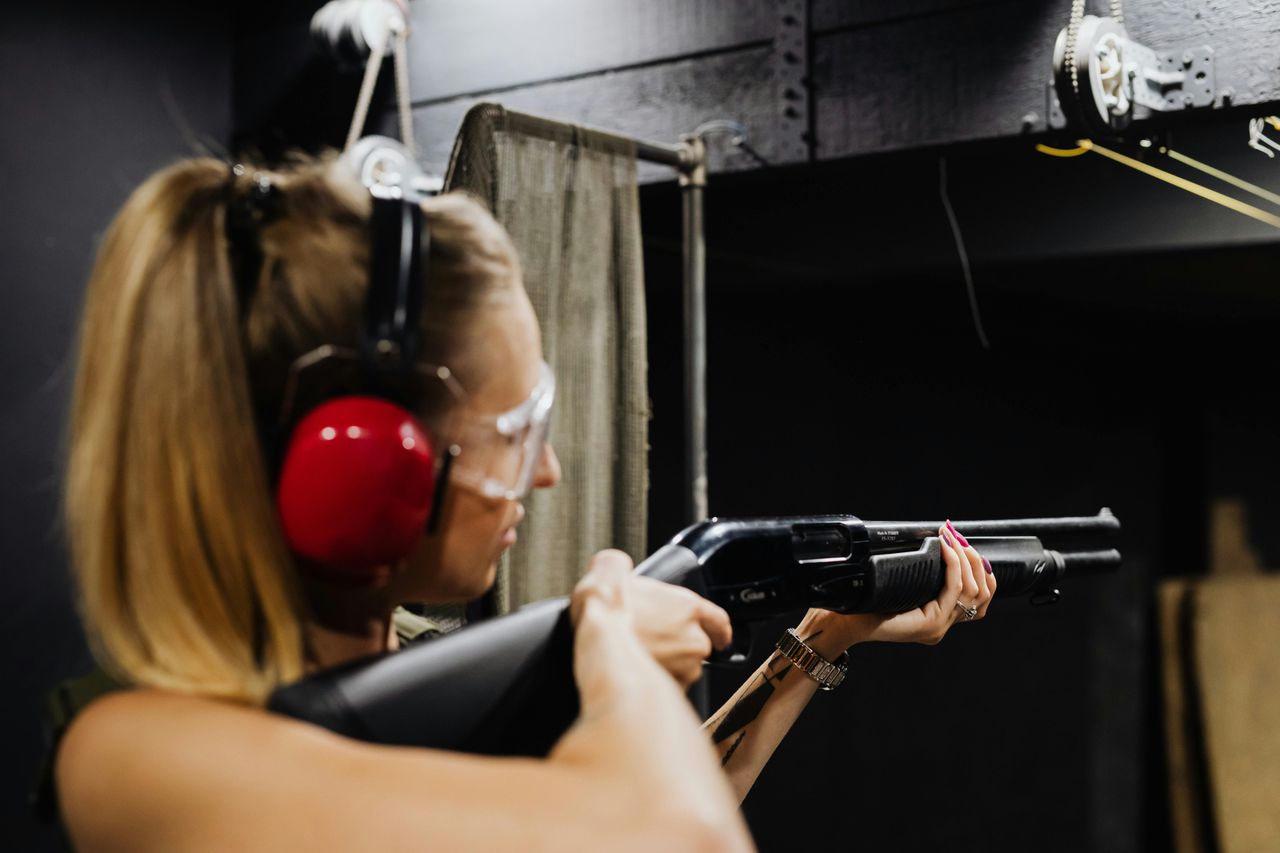
At a glance, the Mossberg 500 and Remington 870 seem almost interchangeable. Both are tube-fed pump-action shotguns, most commonly chambered in 12 gauge, with barrels and stocks swapped to fit hunting or defensive use. But once you start handling them, the differences are obvious. The controls alone can tell you which camp someone belongs to.
The Mossberg 500 uses a tang-mounted safety on top of the receiver. For many shooters, especially left-handed users, that is one of its best features because it is easy to see and reach with either hand. The 870 uses a cross-bolt safety near the trigger guard, which many right-handed shooters find natural but some left-handed shooters do not. This single detail has probably influenced more buying decisions than any marketing campaign.
The action release is another major divider. On the Mossberg 500, it sits behind the trigger guard on the left rear side, where many users can hit it easily with the thumb of the firing hand. On the 870, it is forward of the trigger guard on the left side. Neither is objectively wrong, but they encourage different handling habits under stress.
Construction also matters. The 870 traditionally uses a steel receiver, which gives it a denser, more substantial feel. The Mossberg 500 uses an aluminum receiver, helping cut weight while still relying on a steel bolt locking into the barrel. Some shooters interpret the 870’s weight as durability. Others see the Mossberg’s lighter build as smarter for real-world carry.
Reliability, durability, and the reputations both companies earned

Reliability is where this debate becomes emotional, because both shotguns built legendary reputations before later manufacturing changes complicated the story. Older Remington 870 Wingmasters are still widely praised for slick actions and excellent fit and finish. Older Mossberg 500s built their name on simple function, tolerance for abuse, and low drama in harsh conditions. In their best years, both platforms earned loyalty honestly.
Mossberg strengthened its reputation with military adoption of the 590 and 590A1, variants related to the 500 but built to meet tougher standards. The 590A1 in particular became known for heavy-walled barrels, metal trigger guards on some versions, and hard-use credibility. That military halo spilled over onto the entire Mossberg family. Fair or not, many buyers view the 500 through that lens.
Remington, meanwhile, enjoyed decades of law enforcement dominance with the 870 Police models. Officers and armorers valued the gun’s smooth cycling, strong parts support, and proven service record. But in the 2000s and 2010s, complaints about some lower-cost 870 Express models became more common, especially regarding rough finishes, rust concerns, and inconsistent quality control. Those complaints did real damage to the 870’s once-nearly untouchable image.
That does not mean modern 870s are bad by default, or that every Mossberg leaves the factory perfect. It means the debate now includes not only model design but also era of manufacture. Ask ten experienced owners which is more reliable, and at least half the argument will be about when the gun was made, not just what name is stamped on the receiver.
Hunting, home defense, and how each shotgun fits in real use

For hunting, both shotguns cover almost every practical need. You can find either with interchangeable choke systems, vent-rib barrels, slug barrels, camo finishes, and stock options suited to waterfowl, deer, turkey, or upland birds. Combo packages made both especially attractive to budget-minded buyers who wanted one receiver and two barrels. For generations of hunters, that flexibility mattered more than brand mythology.
The Remington 870 often gets praise for its pointing characteristics and forend feel. Many shooters describe it as more refined, especially in traditional sporting trim. The Mossberg 500 often wins points for lighter carry weight and a safety placement that works well when moving between ready and safe in the field. On long days chasing birds or walking timber, those small ergonomic details become less small.
In home defense discussions, the same design differences take on new significance. The tang safety on the Mossberg can be very intuitive with a conventional stock, while the 870’s layout tends to feel seamless for users trained around its trigger guard controls. Magazine capacity, sights, and furniture vary widely by model, so the platform matters less than the exact configuration chosen. A poor setup can ruin a good shotgun.
Real-world users also shape the narrative. Some instructors prefer the 870 because of decades of institutional familiarity and a huge aftermarket. Others like the Mossberg because it is straightforward, easy to maintain, and often cheaper to configure effectively. In practical terms, either can handle hunting or defense well if the owner trains enough to run the controls without hesitation.
Aftermarket support, customization, and the cost question
One reason this rivalry survives is that both shotguns are easy to personalize. Stocks, forends, shell carriers, lights, sights, sling mounts, barrels, magazine extensions, and optic-ready options have existed for years. The 870 long enjoyed a slight edge in sheer aftermarket depth, largely because so many agencies, hunters, and competitors used it. If a part could be imagined, someone probably made it for an 870.
The Mossberg 500 family is hardly underserved, though. Because the 500, 590, and related variants share many ecosystem advantages, buyers can find a broad range of accessories from budget to premium. In recent years, tactical furniture and mounting solutions for Mossberg platforms have become especially common. For the average owner, there is no shortage of ways to tailor either shotgun to a mission.
Cost is often where the argument gets practical fast. Historically, Mossberg built much of its appeal on delivering dependable function at a lower price point. Remington often traded on a more polished feel, especially in higher-grade versions like the Wingmaster. When quality differences between budget models narrowed or shifted over time, buyers became much more price-sensitive.
That is why recommendations vary so much. If someone finds an older, well-kept 870 Wingmaster at a fair price, many experienced shooters say buy it immediately. If another shopper wants a new, proven, no-nonsense pump with useful controls and strong value, the Mossberg 500 is an easy answer. The right buy is often less about theory and more about what is actually on the rack today.
Ergonomics, left-handed shooters, and the human factor
Shotguns live or die by how they feel in the hands, and this is where brand loyalty becomes deeply personal. Some shooters pick up an 870 and immediately notice a smoother stroke and a natural index that makes clays or birds seem easier to track. Others shoulder a Mossberg 500 and feel at home the second the thumb lands on that top safety. These are not trivial impressions. They shape confidence.
Left-handed shooters frequently enter the conversation with unusually strong opinions. The Mossberg’s ambidextrous tang safety is one of the clearest practical advantages either platform holds over the other. While left-handed users can absolutely run an 870 well, the control layout often demands adaptation, training, or specific habits that the Mossberg simply does not. In a defensive firearm, fewer workarounds usually means broader appeal.
Stock design also changes everything. A traditional stock tends to flatter the Mossberg safety layout, while some pistol-grip configurations can make that same safety less elegant to use. The 870’s cross-bolt safety can feel more consistent across stock types, depending on user preference. Once accessories enter the picture, the supposedly obvious winner in ergonomics can become less obvious.
This is why broad declarations often miss the point. The better shotgun on paper may not be the better shotgun for a specific person. Hand size, dominant hand, training background, hunting style, and intended role all affect the answer. In many cases, the “best” choice is simply the one a shooter can operate quickly, safely, and without second-guessing.
So which one wins, and why the debate never really ends
If the question is which shotgun is more iconic, the answer is both. If the question is which is more proven, again, both have enough history to end the argument and somehow never do. The Mossberg 500 wins a lot of people over with price, lighter weight, and superb safety placement. The Remington 870 wins others with steel-receiver heft, classic handling, and a long legacy of smooth, confidence-inspiring operation.
The real reason the debate survives is that there is no universally humiliating flaw on either side. These are not rivals where one clearly failed and the other dominated. Instead, they overlap so heavily in capability that buyers are forced to care about nuances. Safety location, action release placement, manufacturing era, finish quality, aftermarket preferences, and subjective feel all become deciding factors.
That kind of close competition keeps arguments alive for generations. One hunter swears by a battered Mossberg that has seen rain, mud, and duck blinds for 20 seasons. Another trusts an old 870 Wingmaster because it still cycles like glass after countless rounds. Both stories are credible, and that is exactly the problem for anyone trying to declare a final winner.
So the honest answer is simple. Choose the Mossberg 500 if you value ambidextrous controls, strong value, and a lighter, utilitarian package. Choose the Remington 870 if you want the classic steel feel, a long tradition of smooth handling, and a particularly strong example from the right production era. The argument will not die because each shotgun gives its owners just enough evidence to keep it alive.