Some handgun rivalries fade with time. This one never really did.
How the rivalry started in the first place

The Beretta 92 and Sig P226 are forever linked by one high-stakes contest: the U.S. military trials that searched for a new 9mm sidearm in the 1980s. That process was shaped by NATO standardization, logistics, cost, and a growing desire to replace the aging M1911A1 with a higher-capacity pistol chambered in 9x19mm. In practical terms, this was not just a gun test. It was a strategic procurement battle with international consequences.
Beretta’s 92SB-F, which became the M9, emerged as the winner of the XM9 trials. Sig’s P226 performed exceptionally well and, by many accounts, proved just as capable in reliability and durability testing. The difference that mattered most was total package cost, including magazines and long-term procurement economics. That narrow margin is exactly why the debate never died.
For enthusiasts, armorers, and military historians, the result created a kind of permanent split-screen. One pistol officially won the contract, but the other earned lasting respect as the contender many believed was every bit as serviceable. That unusual ending gave both pistols something rare: institutional legitimacy and underdog mythology at the same time.
What makes the Beretta 92 distinct

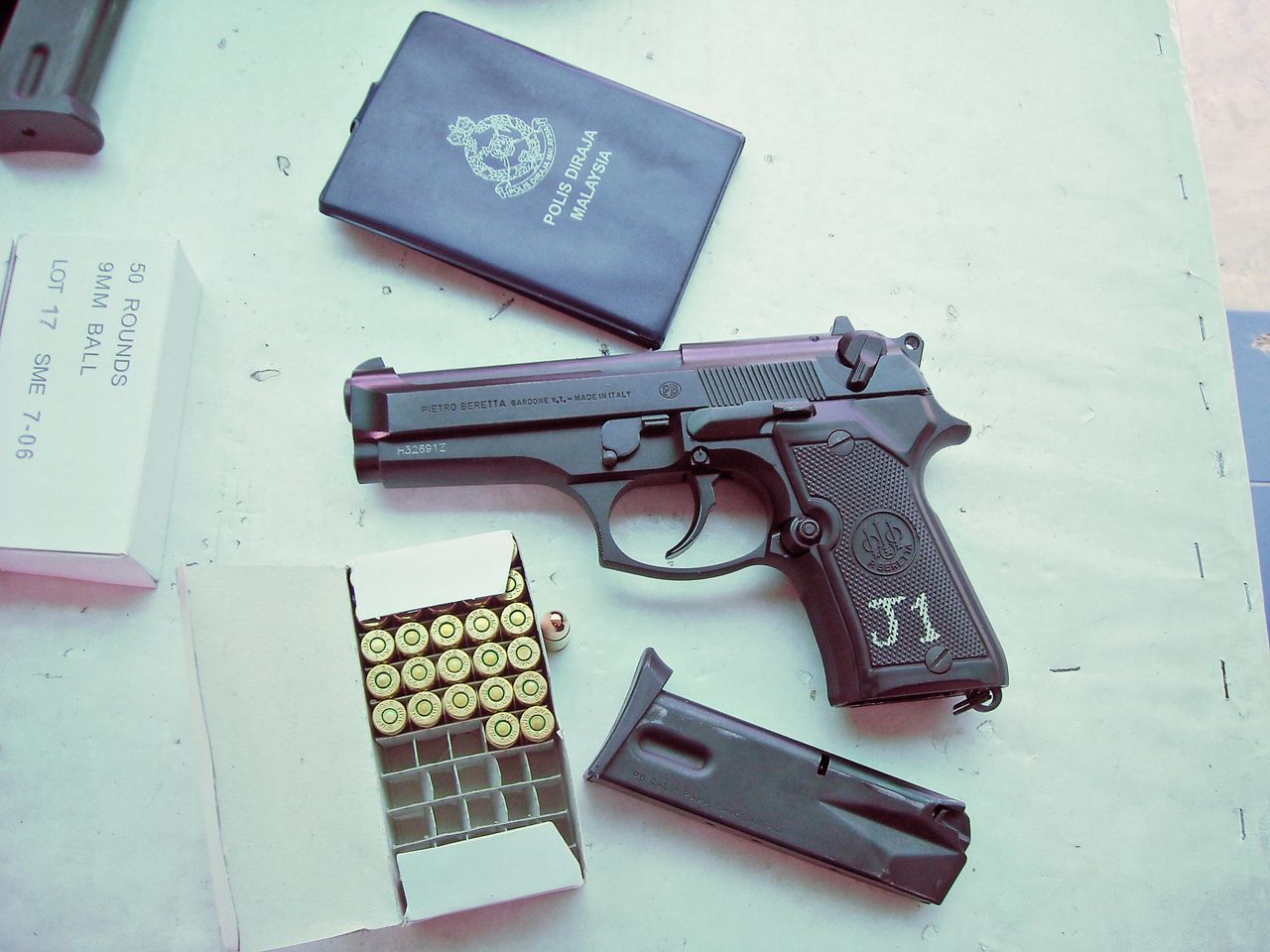
The Beretta 92 family stands out immediately because of its open-top slide and unmistakable profile. That design was not just cosmetic. It helped with reliable feeding and ejection, reducing the chance of stovepipes and contributing to the pistol’s reputation for smooth cycling under hard use. The locking block system also gave the gun a very soft, flat recoil impulse compared with many service pistols of its era.
In the hand, the Beretta feels large, but often surprisingly balanced. Its all-metal construction adds weight, and that weight soaks up recoil in a way many shooters still love. The long sight radius also helps practical accuracy, especially during slower, more deliberate strings of fire. For many users, it is a pistol that rewards rhythm and consistency.
The tradeoff is size. Shooters with smaller hands often find the grip circumference challenging, especially on traditional double-stack versions. The slide-mounted safety and decocker also divide opinion. Some like its positive, unmistakable placement, while others dislike reaching upward on the slide during manipulations or worry about activating it unintentionally while racking the pistol under stress.
Why the Sig P226 built such a loyal following

Original uploader was Zenmastervex at en.wikipedia/Wikimedia Commons
The Sig P226 came from a different design philosophy, and that difference shows the moment you pick it up. Its slide profile, frame controls, and overall ergonomics feel purpose-built for a fighting pistol that prioritizes control and intuitive handling. The frame-mounted decocker became one of the P226’s signature advantages. For many shooters, it is simply easier and faster to use than a slide-mounted lever.
The P226 also developed a reputation for excellent trigger characteristics in traditional double-action/single-action form. A well-set-up Sig can deliver a smooth double-action pull and a crisp single-action break that encourages accurate follow-up shots. Elite military and law enforcement units noticed. Over time, that helped the pistol gain a prestige factor that extended far beyond the original NATO-era trials.
That reputation was reinforced by real-world use. Naval special operations units famously adopted variants of the P226, and that association mattered enormously in the public imagination. Even when procurement decisions elsewhere favored Beretta, the Sig gained credibility as the choice of professionals who could select gear based on performance rather than broad institutional budgeting. That distinction still influences buyer perception today.
Reliability, durability, and the truth behind the legends

Both pistols earned their reputations honestly, but myths have accumulated around each one. The Beretta 92 is often praised as one of the most reliable full-size 9mm service pistols ever made, especially when fed quality magazines and maintained properly. During the M9 years, some complaints were tied less to the core design than to magazines, maintenance cycles, and ammunition variables. In other words, the story was more complicated than the loudest critics suggested.
The Sig P226 has its own legend as a tank-like duty pistol, and there is plenty of truth in that. It handles high round counts well, tolerates abuse, and has long been respected by armorers. But it is not magic. Like any mechanical system, springs wear, locking surfaces age, and neglected maintenance eventually catches up. Its excellence comes from robust engineering, not invincibility.
If you strip away fan culture, the real answer is straightforward: both guns are proven service weapons with decades of institutional use. Beretta offered exceptional reliability with shootability and capacity. Sig offered ruggedness, excellent handling, and premium execution. Their reputations survived because both platforms worked in the field, not because one side of the argument was ever completely wrong.
How do they compare at the range today
At the range, the Beretta 92 often surprises newer shooters with how gentle it feels. The gun’s weight, bore behavior, and locking system combine to make the recoil feel smooth rather than snappy. That matters in practical shooting because a pistol that tracks predictably is easier to run well. Many shooters find they can keep the sights flatter than expected, especially with standard-pressure 9mm loads.
The P226 usually feels more compact in the hand, even though it is still a full-size duty pistol. Its control layout tends to make transitions from firing to decocking very natural. In rapid strings, many shooters prefer how the Sig points and returns. The frame-mounted decocker also leaves the slide clean and uncluttered, which some users find beneficial during manipulations and malfunction clearance drills.
Accuracy is rarely the deciding factor because both guns are fully capable of excellent practical performance. The more meaningful difference is user fit. A shooter with larger hands may love the Beretta’s broad grip and long reach, while another may shoot the Sig better because the controls and trigger geometry feel more intuitive. These are not small differences; they shape confidence and consistency over time.
The military legacy and civilian afterlife
The Beretta 92, especially in M9 form, became one of the most recognizable military pistols on earth. It appeared in barracks, on deployments, in training ranges, and throughout popular culture for decades. That visibility cemented its identity as America’s 9mm service handgun, even for people who never handled one. Its long tenure gave it a unique cultural footprint that extended well beyond military procurement circles.
The P226 took a different path, but no less influential. Its association with elite units, specialized law enforcement teams, and serious duty use gave it a kind of professional mystique. In the civilian market, that translated into strong demand among shooters who wanted a premium service pistol with a hard-use pedigree. Sig also kept the platform alive through numerous refinements, finishes, and variant models.
Both pistols later faced the same challenge: the rise of lighter, simpler polymer-framed striker-fired handguns. Glock, Smith & Wesson, Walther, and others changed expectations about weight, capacity, and maintenance simplicity. Yet the Beretta 92 and P226 never disappeared. They survived because they offer something modern designs sometimes do not: metal-frame balance, traditional double-action character, and a deeply proven service history.
Which one actually wins the argument now
If the question is historical, Beretta won the contract, and that fact cannot be revised by nostalgia. If the question is technical, the answer gets much closer. The P226 was good enough to lose by economics rather than obvious inferiority, which is exactly why the debate stayed alive for decades. Few rivalries endure unless both sides have strong evidence behind them.
For collectors and military history fans, the Beretta 92 carries unmatched Cold War-to-Global War on Terror significance. For shooters who prioritize decocker placement, perceived ergonomics, and the Sig trigger feel, the P226 may seem like the more refined fighting pistol. Neither reaction is irrational. They come from two legitimate interpretations of what a service handgun should do best.
So the real winner depends on what standard you use. The Beretta 92 represents broad-issue success, durability, and one of the smoothest-shooting full-size 9 mm pistols ever fielded. The Sig P226 represents elite credibility, ergonomic confidence, and the greatest “what if” in modern service pistol history. That is why this NATO rivalry never died: both pistols earned the right to keep the argument going.