Some hunts feel clean and traditional. Others force hunters to ask a harder question: are we still hunting, or are we simply solving a problem with a trigger?
Fair Chase Was Built For A Different Kind Of Animal

The phrase fair chase did not come from predator control or invasive species management. It grew out of North American big-game hunting ethics, where the animal is wild, the pursuit is sporting, and the hunter accepts meaningful limits. Boone and Crockett still frames fair chase as a code that protects the animal, the hunt, and public trust in hunting itself.
That matters because the same organization has also drawn a bright line around some modern tools. In its current technology and records policies, Boone and Crockett says artificial lighting, night vision optics, and thermal imaging can cross into unfair advantage, especially when they guide a hunter to an animal in real time. The club also stresses that accurate shooting and recovery conditions matter, not just whether a practice is legal.
So if someone asks whether night hunting hogs and coyotes is fair chase, the honest answer starts with this: by classic fair-chase standards, often not really. At least not in the same way a daylight spot-and-stalk mule deer hunt is. The intent, equipment, and target species are different enough that trying to force them into the same moral category creates confusion.
That does not mean the practice is automatically wrong. It means we should stop pretending every lawful trigger pull belongs under the same banner. Some nighttime hunts are best understood as wildlife damage management with sporting elements, not pure fair-chase hunting.
Hogs Change The Entire Ethical Equation

Feral hogs blow up the usual debate because they are not a native game animal managed mainly for recreation. USDA APHIS says feral swine now occur in at least 35 states, and the agency estimates they cause about $2.5 billion in damages and control costs each year in the United States. APHIS also says the agricultural sector alone bears a massive share of that burden, while separate USDA reporting has highlighted tens of millions in annual livestock predation and disease losses in a 13-state region.
Anyone who has seen rooted-up hay fields, destroyed food plots, busted fences, or creek bottoms torn apart understands why landowners lose patience fast. Hogs are intelligent, mostly nocturnal under pressure, and highly adaptable. In many places, shooting a few in daylight barely dents the problem because sounders shift movement patterns almost immediately.
That is why nighttime control is so common. If the goal is reducing crop loss, limiting disease risk, and knocking back an invasive animal when it is actually active, using lights or thermal gear starts looking less like cheating and more like basic practicality. The same action that feels unsporting in an elk camp can feel overdue on a cattle place.
The ethical key is honesty about the objective. If you are removing destructive, invasive animals, say that. Calling every thermal hog shoot fair chase may win an argument at camp, but it muddies what is really happening. This is often control work first, recreation second.
Coyotes Sit In A More Complicated Middle Ground
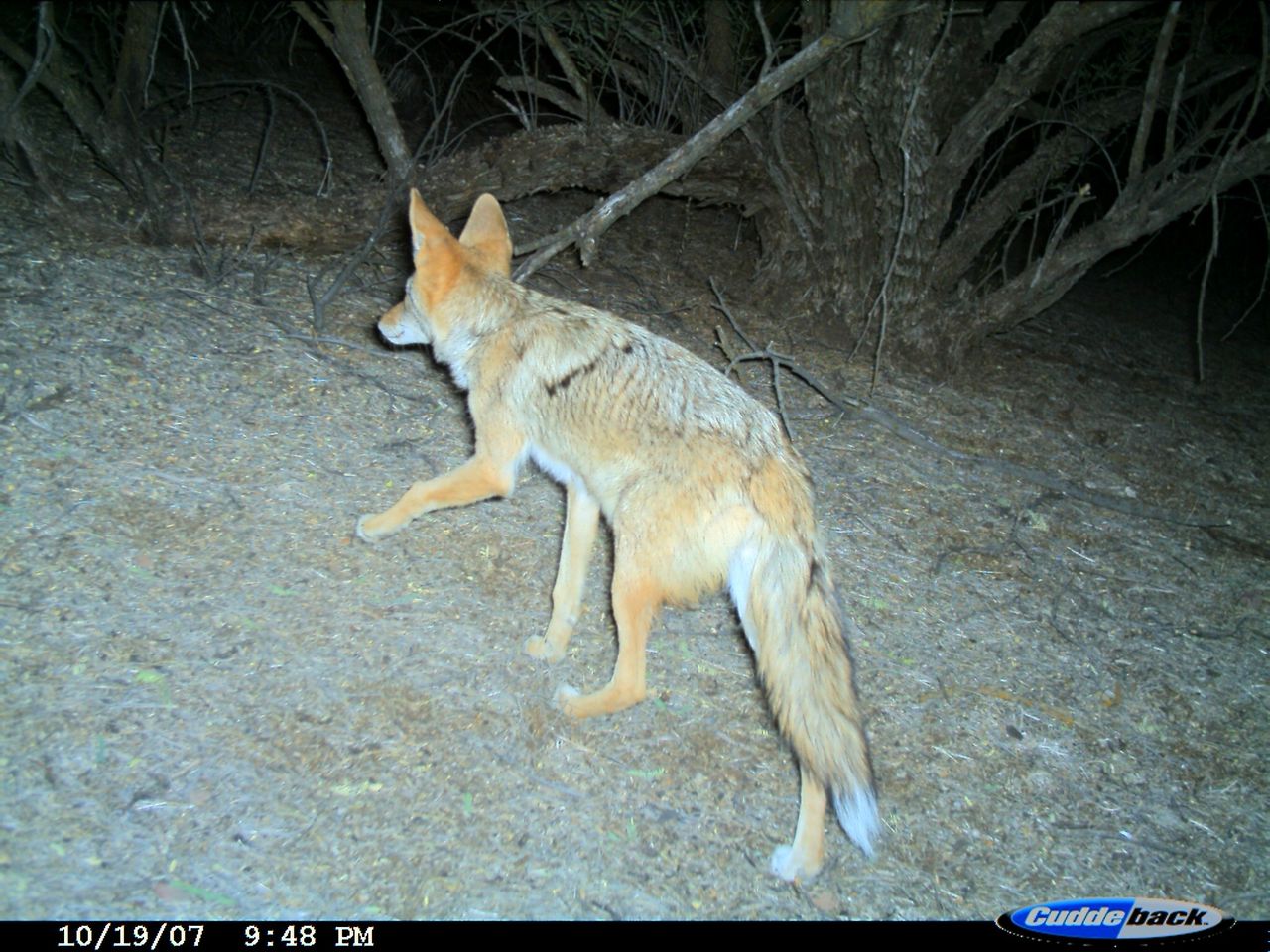
Coyotes are different from hogs, and that difference matters. They are native, ecologically important predators, but they are also remarkably adaptable and often come into direct conflict with ranching, pets, and deer-management goals. State agencies regularly describe them as year-round targets on private lands in some places, yet the ethical case for night hunting them is less straightforward than it is for invasive swine.
Part of the complication is that coyotes are hard to classify emotionally. To one hunter, they are a valuable predator worthy of challenge. To a sheep producer losing lambs, they are a nonstop problem. To a suburban homeowner hearing them in a greenbelt, they are both fascinating and unsettling. That split shapes the fair-chase argument more than many people admit.
Night amplifies that tension. Calling in a coyote under a red light or spotting one with thermal on a frozen pasture can still involve woodsmanship, setup discipline, wind reading, and shot restraint. Yet technology narrows the animal’s advantage in ways many hunters would reject for deer or pronghorn. That does not erase skill, but it does change the balance.
So coyotes live in the middle ground: not sacred sporting quarry in the classic sense, not invasive wrecking crews like feral hogs either. A night coyote hunt may be legal, useful, and demanding, while still falling outside the strictest interpretation of fair chase.
The Law Often Treats These Hunts As Damage Control
If you want proof that regulators see this issue differently by species and purpose, look at state rules. Texas allows feral hogs and depredating coyotes to be taken on private property under liberal rules, and its current hunting regulations even note that if hunting at night, hunters should contact the local game warden as a courtesy. Florida says wild hogs occur in all 67 counties and allows nighttime take on private property with landowner permission, while also noting a gun-and-light permit is not required for wild hog, coyote, or armadillo in nuisance situations.
South Carolina goes further by creating a specific registration system for private-property night hunting of feral hogs, coyotes, and armadillos. Registered properties may use artificial lights and night-vision devices, but the state also imposes boundaries, including distance-from-residence limits and disqualification for people with certain prior night-hunting convictions. That framework reads much more like regulated damage response than a romantic sporting season.
Tennessee’s current guide likewise carves out a defined coyote and bobcat night season, with legal hours and species-specific rules. Florida, meanwhile, recently approved restrictions on some public small-game hunting areas involving guns equipped with thermal or night-vision devices at night, showing that agencies are still fine-tuning where and how this technology belongs.
The pattern is clear. Wildlife agencies often permit night hunting for hogs and coyotes not because it mirrors classic fair chase, but because it addresses depredation, nuisance wildlife, and practical management realities.
Technology Makes The Debate Harder, Not Easier
Thermal optics changed this conversation more than any slogan ever could. A hunter scanning a hay field with thermal can detect animals that would have been nearly invisible a generation ago. Add suppressed rifles, precision reticles, rangefinding systems, and detailed mapping apps, and the old uncertainty that once protected the animal starts shrinking fast.
Supporters argue that this gear improves safety and shot placement. There is truth in that. Better target identification matters at night, and cleaner hits on hogs or coyotes are preferable to crippling shots taken through shadows. On working lands, efficient removal can also mean fewer animals educated, fewer return trips, and less cumulative disturbance.
The pushback is ethical rather than mechanical. Boone and Crockett’s technology position warns that some tools can demean the hunter-prey relationship or grant an advantage that overwhelms the spirit of the hunt. Even hunters who own thermal rigs often admit the experience can feel closer to surveillance and interception than old-school pursuit.
That is why the right question is not whether technology is evil. It is whether the technology matches the stated purpose. For invasive hog control, the answer may be yes. For someone claiming a thermal ambush on a coyote is the purest form of fair chase, the claim gets shakier.
Skill, Restraint, And Recovery Still Separate Hunters From Shooters

Even when night hunting is legal and practical, ethics do not disappear. A disciplined hunter sets lane limits, confirms the target, knows the backstop, and refuses marginal shots. Night compresses reaction time and depth perception, so restraint matters more, not less. Anyone can buy equipment; not everyone uses it with judgment.
Recovery is another dividing line. Boone and Crockett has long emphasized conditions that allow accurate shooting and, if needed, tracking and dispatching wounded game. That standard becomes harder after dark, especially in marsh edges, mesquite tangles, cut corn, or palmetto cover where blood and direction of travel vanish quickly.
Good night hunters compensate with planning. They pre-range landmarks, coordinate safe sectors of fire, keep communication simple, and stop shooting once animals scatter into uncertainty. On hogs, they may prioritize anchoring the biggest sow or the clearest broadside target instead of spraying at a running sounder. On coyotes, they may pass entirely unless the shot is unmistakable.
That is also where public perception enters the picture. To nonhunters, random volleys into darkness look reckless, not skilled. If hunting is going to retain social support, night hunters need to act like ambassadors of discipline. Otherwise the activity starts to resemble extermination theater, and that hurts everybody.
So Is It Fair Chase Or Something Else Entirely?
My view is simple: night hunting for hogs and coyotes is usually something adjacent to fair chase rather than a textbook example of it. With feral hogs, that is not an insult. It is a realistic description of invasive-species control carried out with hunting tools. The goal is effectiveness against a destructive animal, not preserving maximum sporting advantage for the quarry.
Coyotes require a finer distinction. A carefully executed night stand can still demand calling skill, patience, terrain reading, and excellent judgment. But once thermal, artificial light, and highly permissive seasons enter the picture, the hunt often shifts away from the old fair-chase ideal and toward targeted predator management. That does not make it illegitimate. It just makes it different.
Hunters do themselves a favor when they admit that difference openly. Not every ethical outdoor act needs to be squeezed into one cherished phrase. Fair chase remains a powerful standard for many forms of hunting, especially traditional pursuit of game animals under self-imposed limits. Night hunting for hogs and coyotes can be responsible, necessary, and even honorable without pretending it is always the same thing.
In the end, the cleanest answer is also the most useful one: lawful night hunting can be ethical, but legality and fair chase are not synonyms. Sometimes you are hunting. Sometimes you are controlling damage. And sometimes the most honest label is both.