Camping with your dog can be one of the best ways to explore the outdoors together, but a fun trip takes more than tossing a leash in the car. New terrain, wildlife, weather, and campground rules can all change the experience fast. These nine smart rules help owners prepare well, protect their pets, and make the adventure enjoyable for everyone at camp.
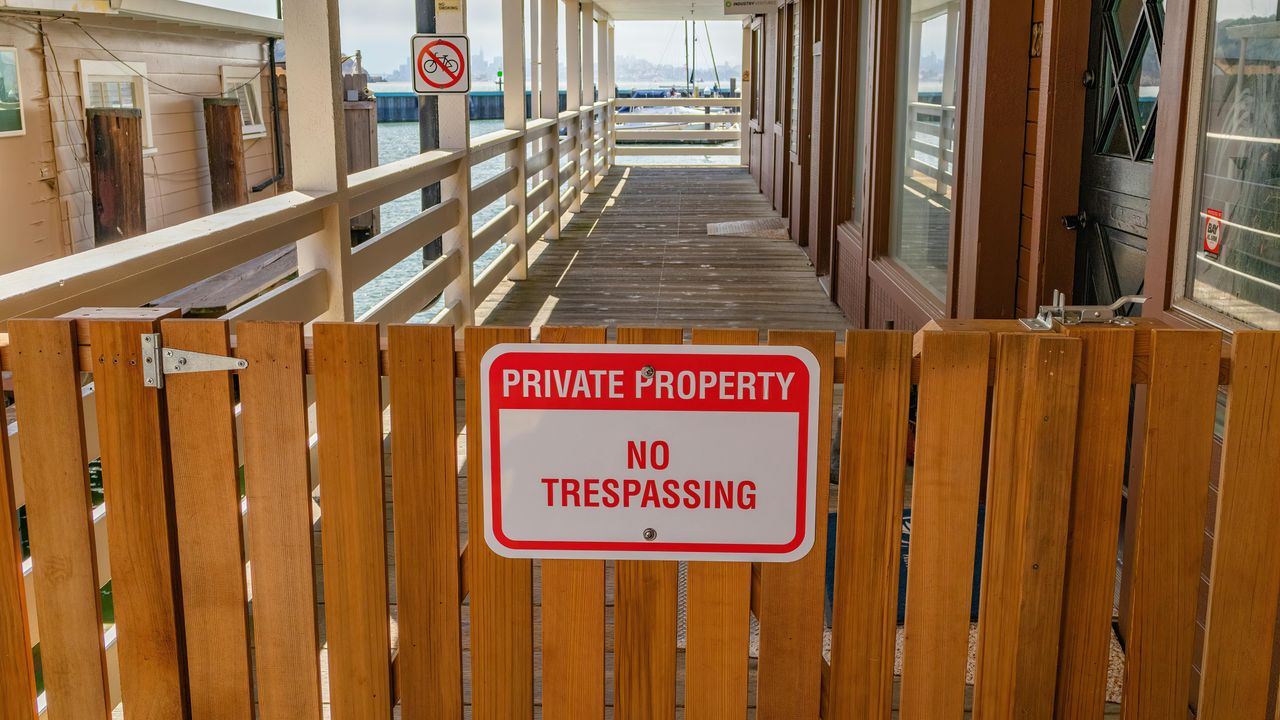
Check the campground rules before you go
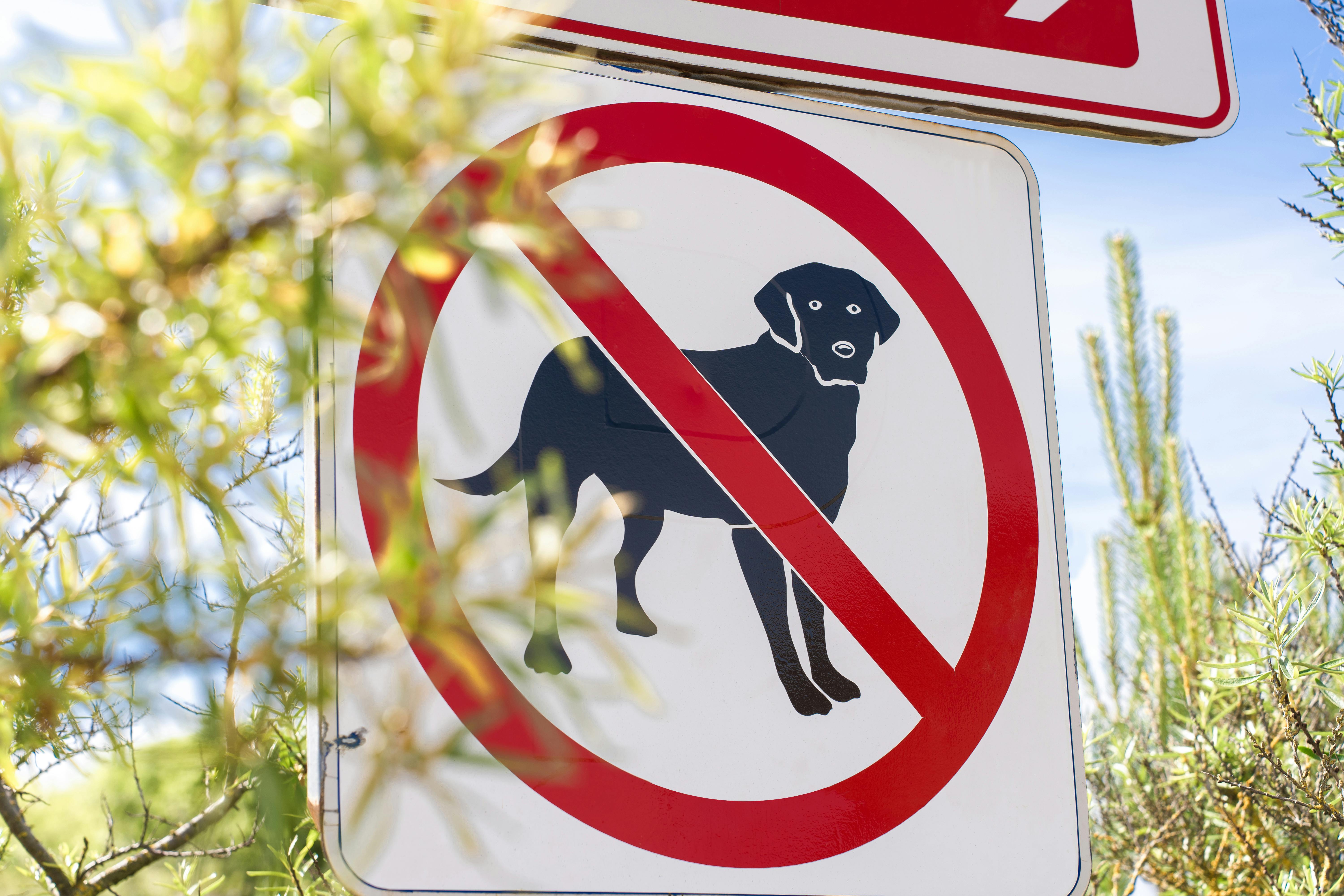
Not every campground welcomes dogs, and the ones that do often have specific policies about leash length, quiet hours, trails, beaches, and cabins. Reading the rules before you book can save you from a stressful arrival and help you avoid fines or a forced change of plans.
It is also worth checking whether the area has breed restrictions, pet fees, or limits on how many dogs are allowed per site. A dog-friendly icon on a booking page does not tell the whole story.
When you know the expectations ahead of time, you can choose a place that actually fits your dog’s temperament and energy level. That makes the trip easier for you, your pet, and everyone camped nearby.
Pack a dog kit, not just the basics
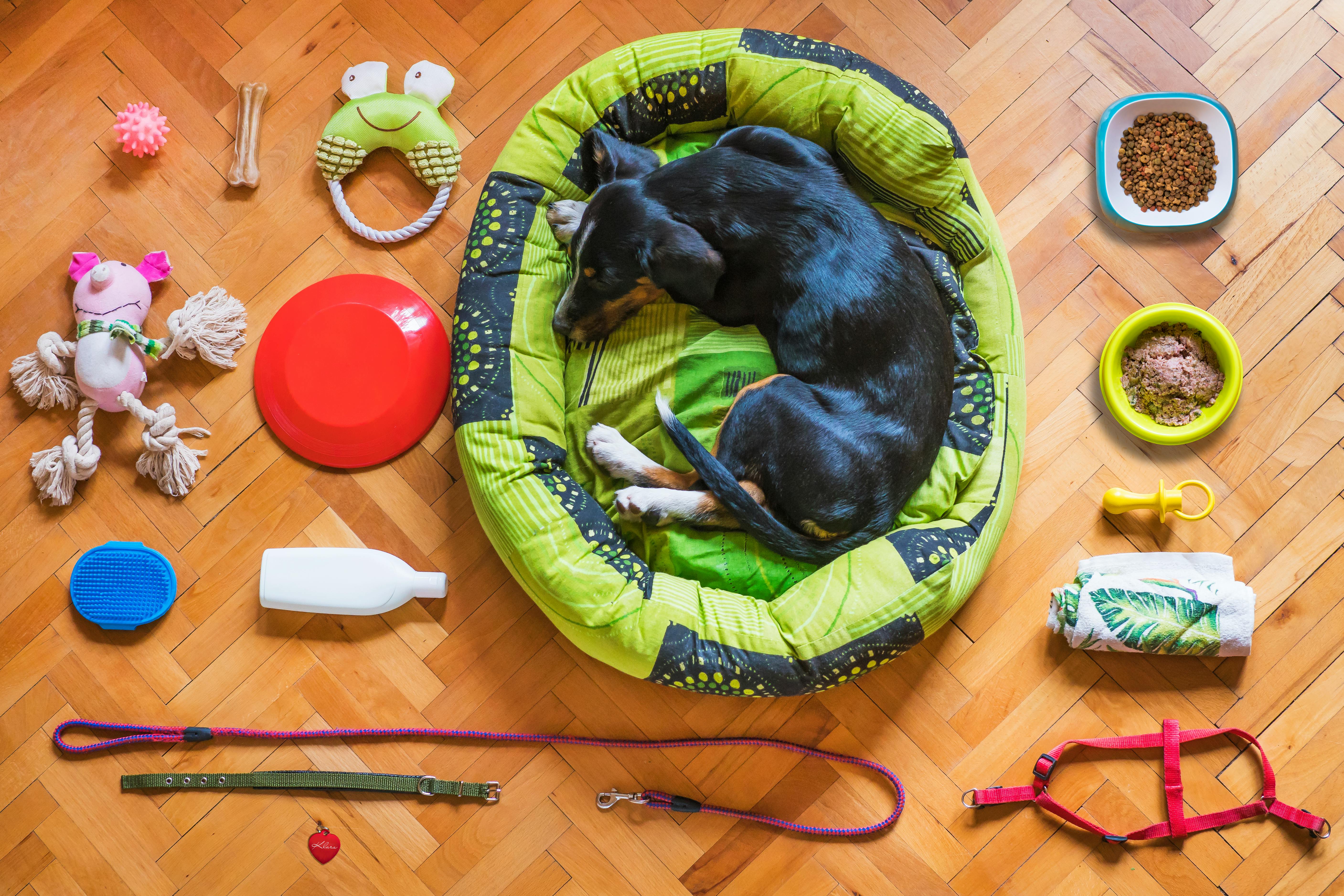
A leash and food bowl are a start, but camping calls for a more complete setup. Your dog should have enough food for the trip, extra water, collapsible bowls, waste bags, a towel, a bed or blanket, and any medications they take regularly.
It is smart to pack a pet first-aid kit too, especially for weekends spent far from town. Tick tools, bandages, paw balm, and copies of vaccination records can make a big difference when something small turns complicated.
Familiar items matter as much as practical ones. A favorite toy or sleeping mat can help your dog settle down in an unfamiliar place and sleep more soundly through the night.
Make sure your dog is ready for the trip
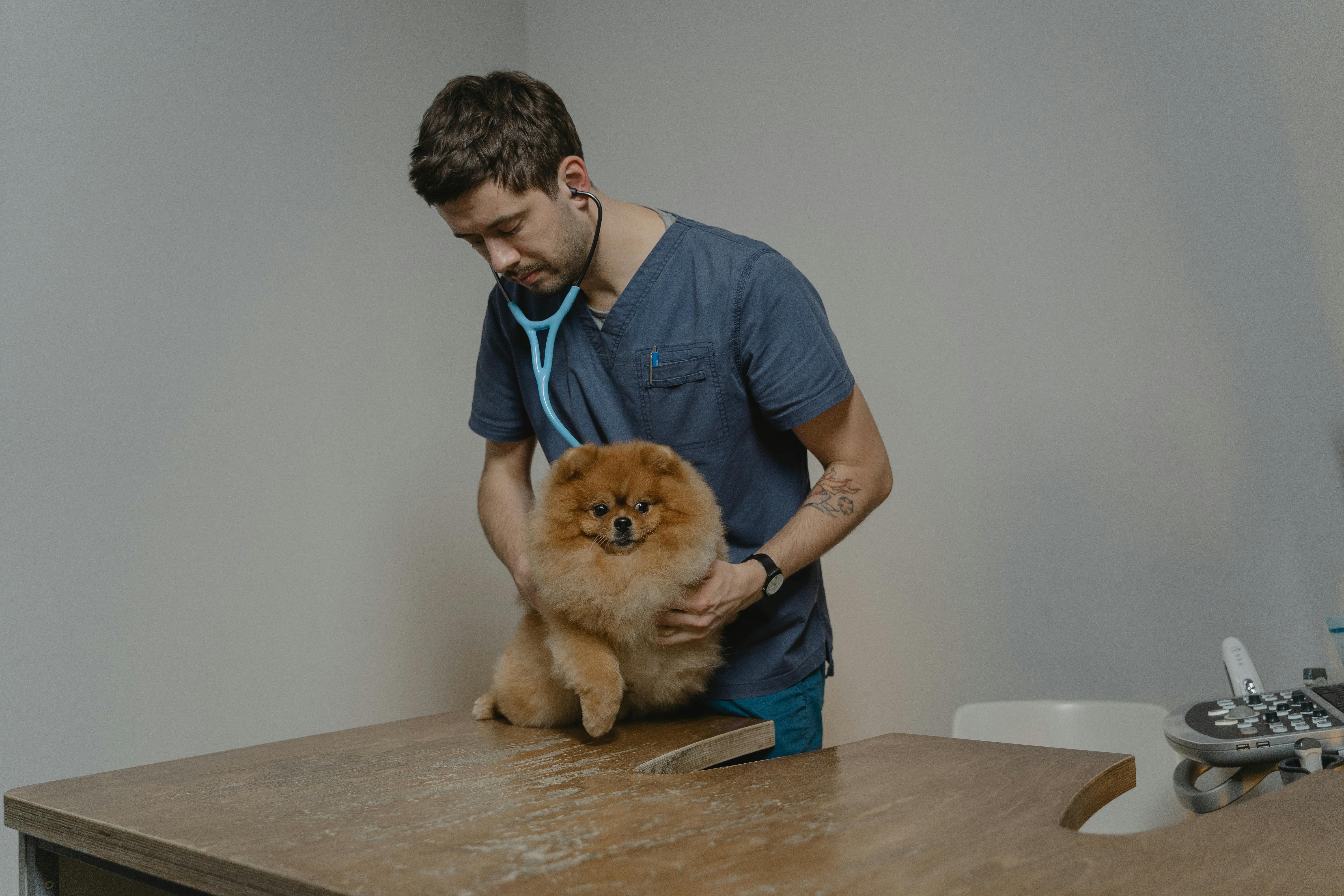
Camping is not the ideal setting for your dog’s first big test in obedience, social behavior, or stamina. Before heading out, your pet should be comfortable with car rides, sleeping away from home, meeting strangers, and responding to basic cues like come, stay, and leave it.
A quick checkup with your veterinarian is also a wise move, especially if your dog is older, anxious, or has health issues. Preventive care for fleas, ticks, and heartworm becomes even more important outdoors.
If your dog struggles with reactivity, heat, or long walks, plan a shorter trip close to home. A little honesty during planning can prevent a rough experience in the wild.
Keep your dog leashed and under control
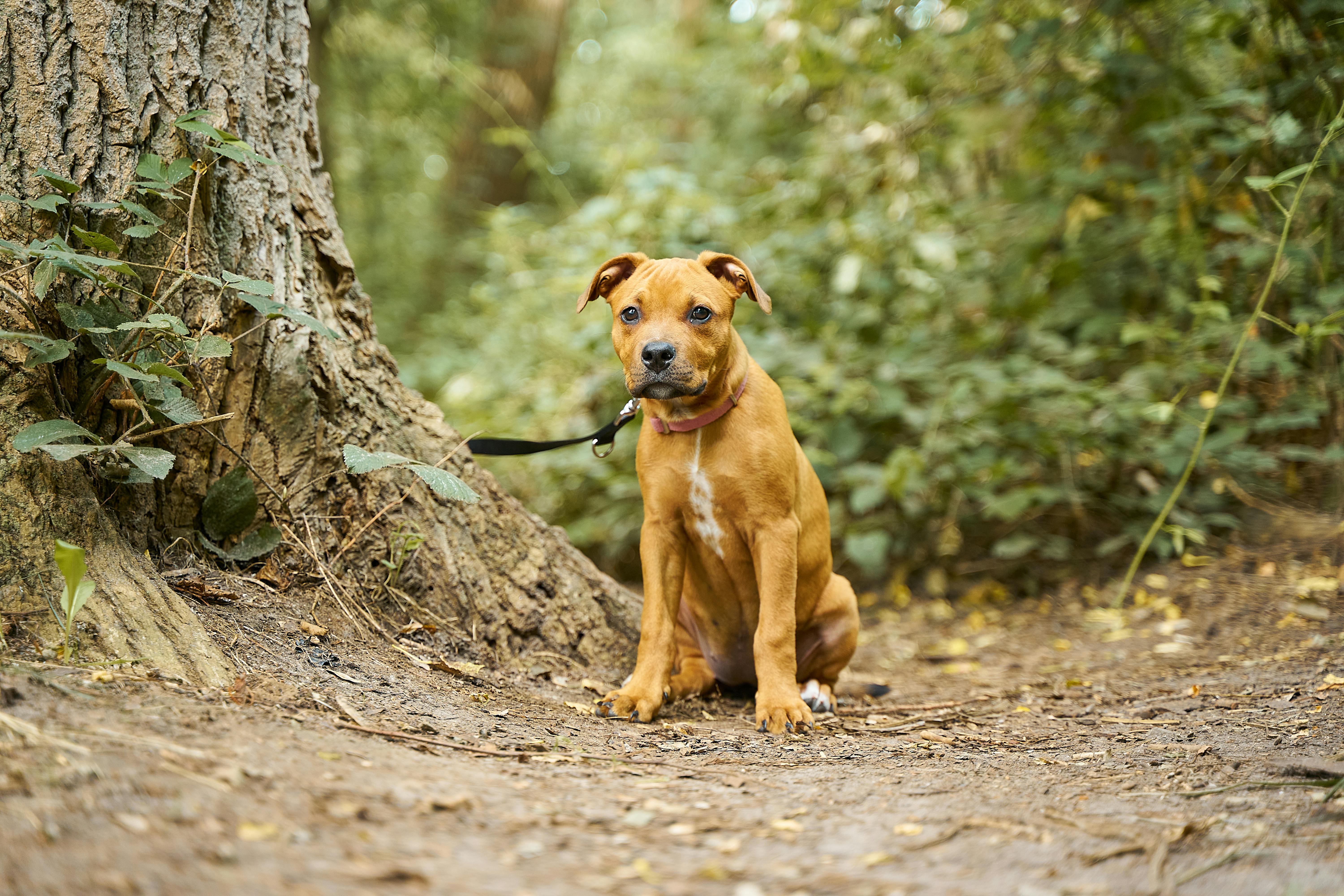
Even a friendly dog can become unpredictable in a new environment full of scents, wildlife, kids, bikes, and other campers. A leash is not just a rule at most campgrounds. It is one of the simplest ways to protect your dog from getting lost, injured, or into trouble.
Retractable leashes are often a poor match for campsites and busy trails, where quick control matters. A standard leash gives you better handling when another dog rounds the corner or a squirrel suddenly appears.
Reliable control also shows respect for other people outdoors. Not everyone wants a dog at their picnic table, and not every leashed dog is comfortable being approached by an off-leash stranger.
Bring plenty of water and watch the heat
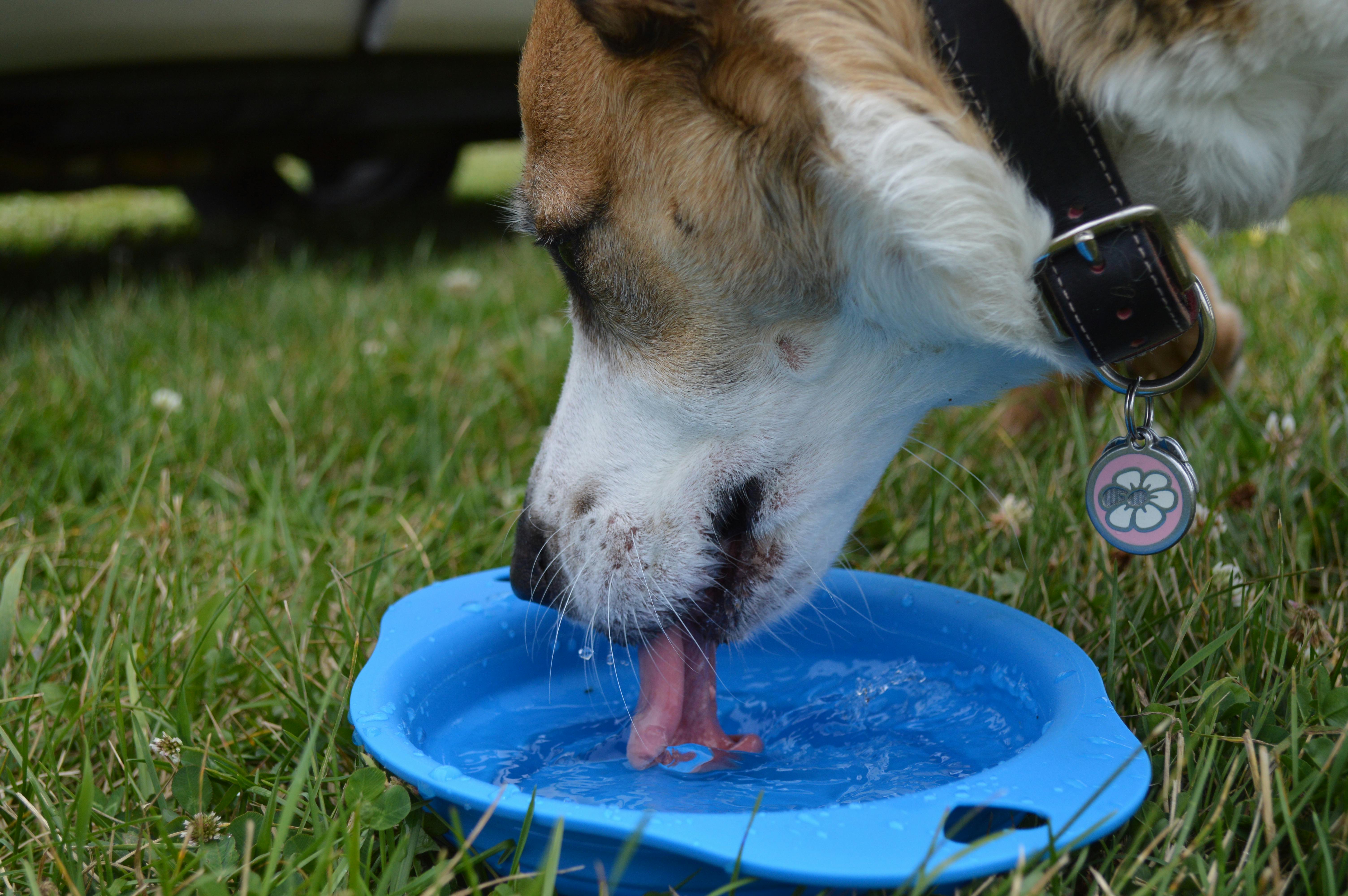
Dogs can overheat faster than many owners realize, especially on exposed trails, in humid weather, or inside a warm tent. Fresh water should always be easy to reach, and your dog should get frequent drink breaks even if they seem eager to keep moving.
Plan hikes for cooler hours when possible, and look for campsites with shade rather than full afternoon sun. Hot ground can burn paws, and heavy panting is a warning sign you should never ignore.
If your dog seems sluggish, confused, or unusually restless, stop activity right away and cool them down gradually. Outdoor fun ends quickly when heat stress enters the picture, so prevention is the real priority.
Protect paws from rough terrain
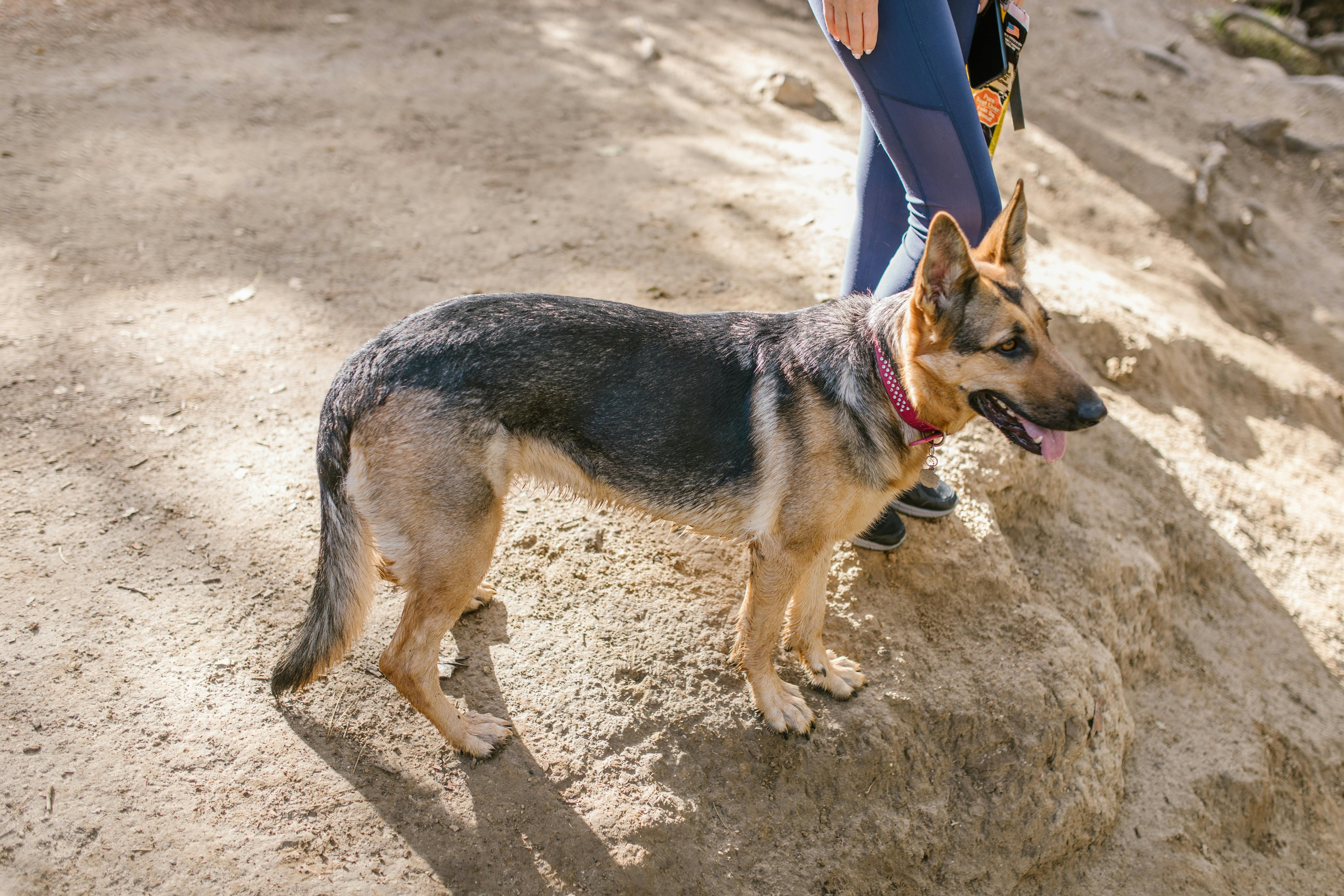
Campgrounds and trails can be hard on paws, even for active dogs. Sharp rocks, hot sand, rough gravel, thorns, and splintery wood around fire rings can all leave your pet sore before the trip is half over.
Check your dog’s feet regularly, especially after hikes or long walks around camp. A quick look for cuts, burrs, cracked pads, or lodged debris can prevent a small irritation from becoming a limping problem by sunset.
Some dogs do well with booties, while others prefer a conditioning period before the trip and a little paw balm afterward. Either way, healthy paws are part of keeping your dog comfortable enough to enjoy the adventure.
Store food securely and manage the campsite

A tidy campsite matters even more when a dog is part of the setup. Pet food, treats, chew toys, and bowls can attract raccoons, rodents, and even larger wildlife, especially if they are left out overnight or between meals.
Feed your dog on a schedule, then pick up leftovers right away. The same goes for trash, wrappers, and anything scented, because your dog’s gear can bring animals closer to camp than you want.
Good campsite management also reduces tension with neighboring campers. A clean site smells better, feels calmer, and gives your dog fewer chances to snatch something unsafe off the ground when you are not looking.
Respect wildlife and trail etiquette
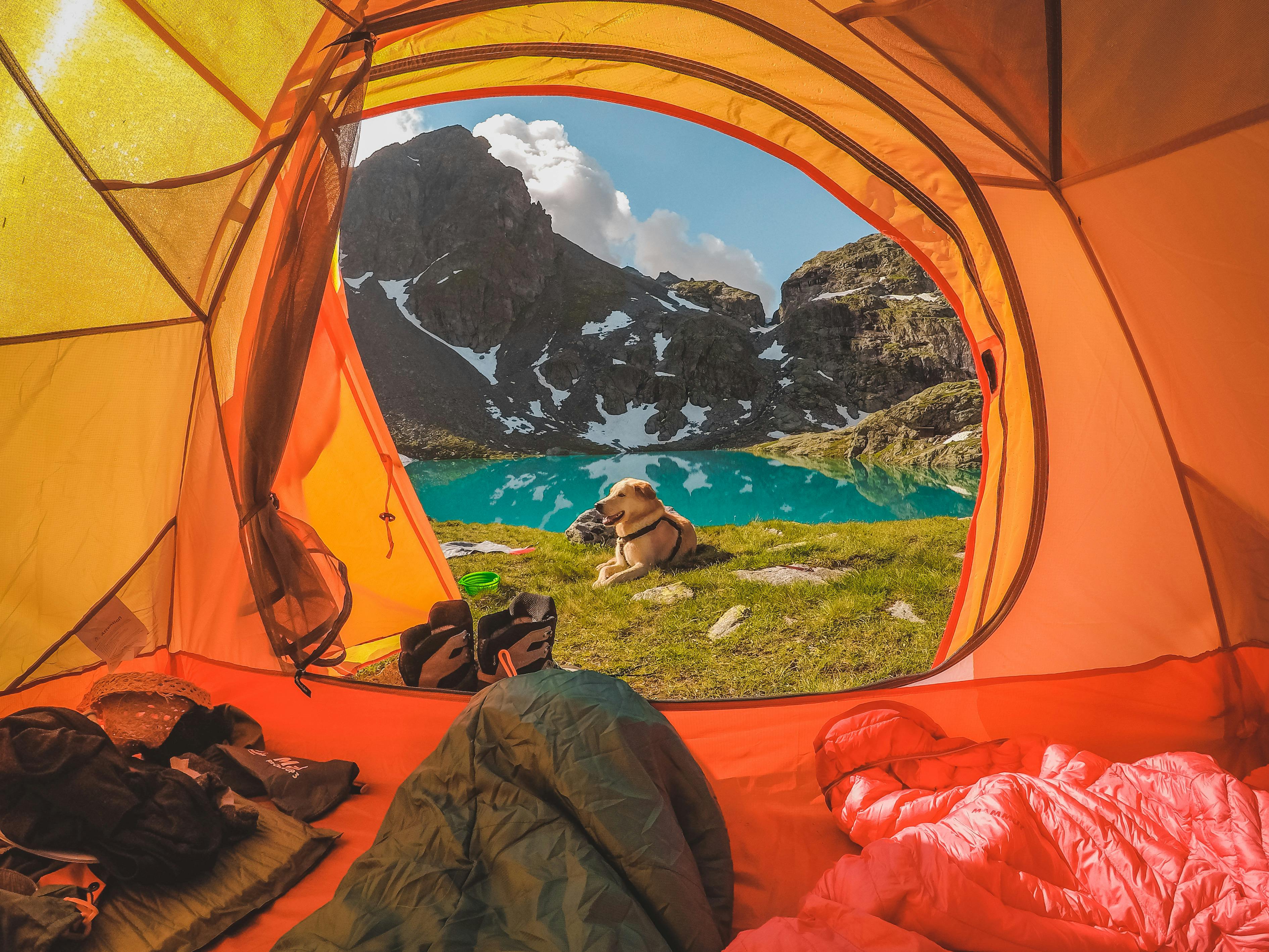
One of the biggest mistakes owners make is assuming their dog will simply ignore wildlife. Even well-behaved pets can lunge after deer, bark at birds, or fixate on small animals in brush, which can put both your dog and wild creatures at risk.
Stay on marked trails, keep distance from animals, and do not let your dog investigate nests, burrows, or shorelines crowded with birds. In many natural areas, that kind of disturbance has real ecological consequences.
Trail etiquette matters with people too. Step aside when needed, keep your dog close during passes, and clean up waste promptly. A dog that moves politely through shared outdoor spaces is always more welcome.
Prepare for nighttime noise and anxiety
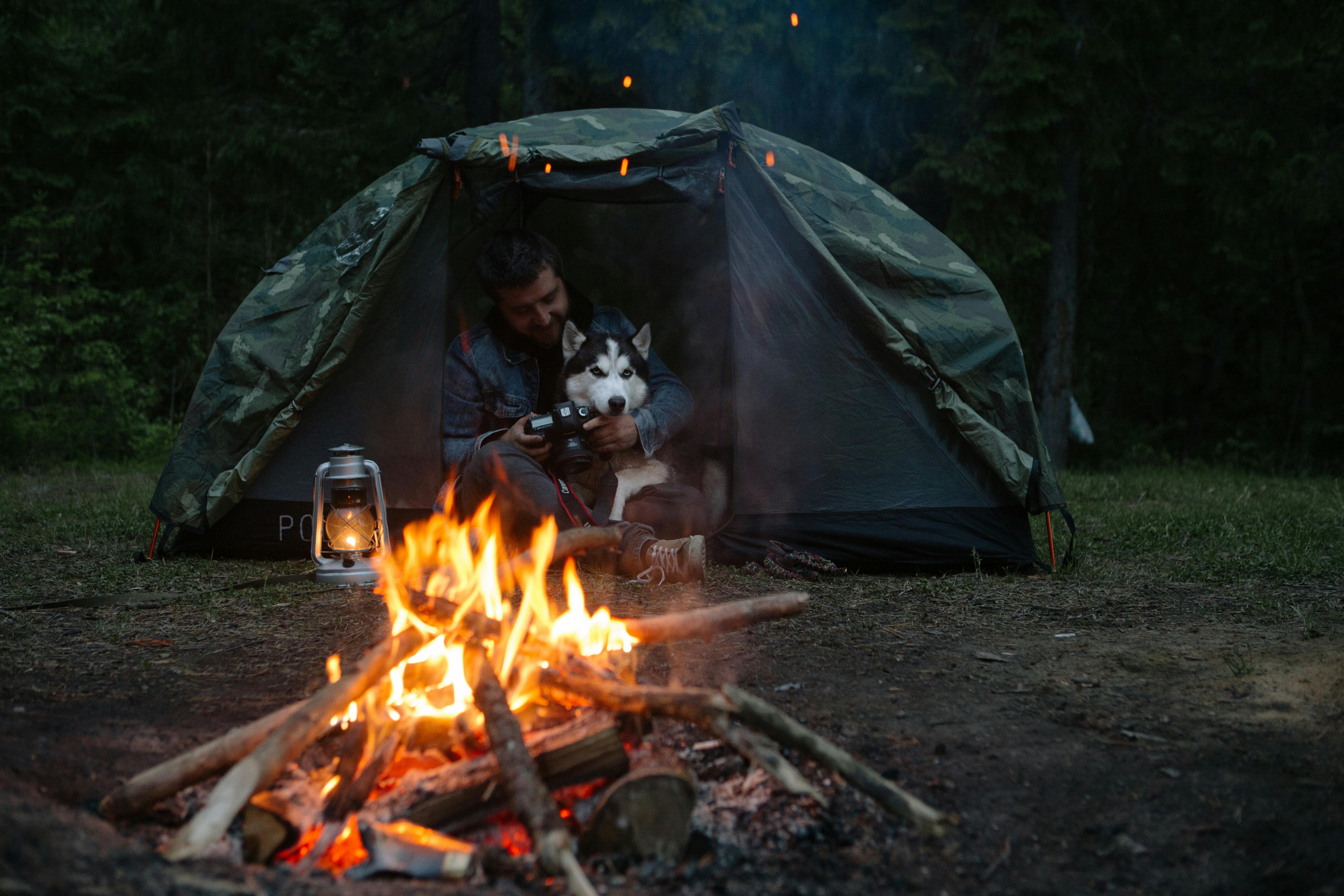
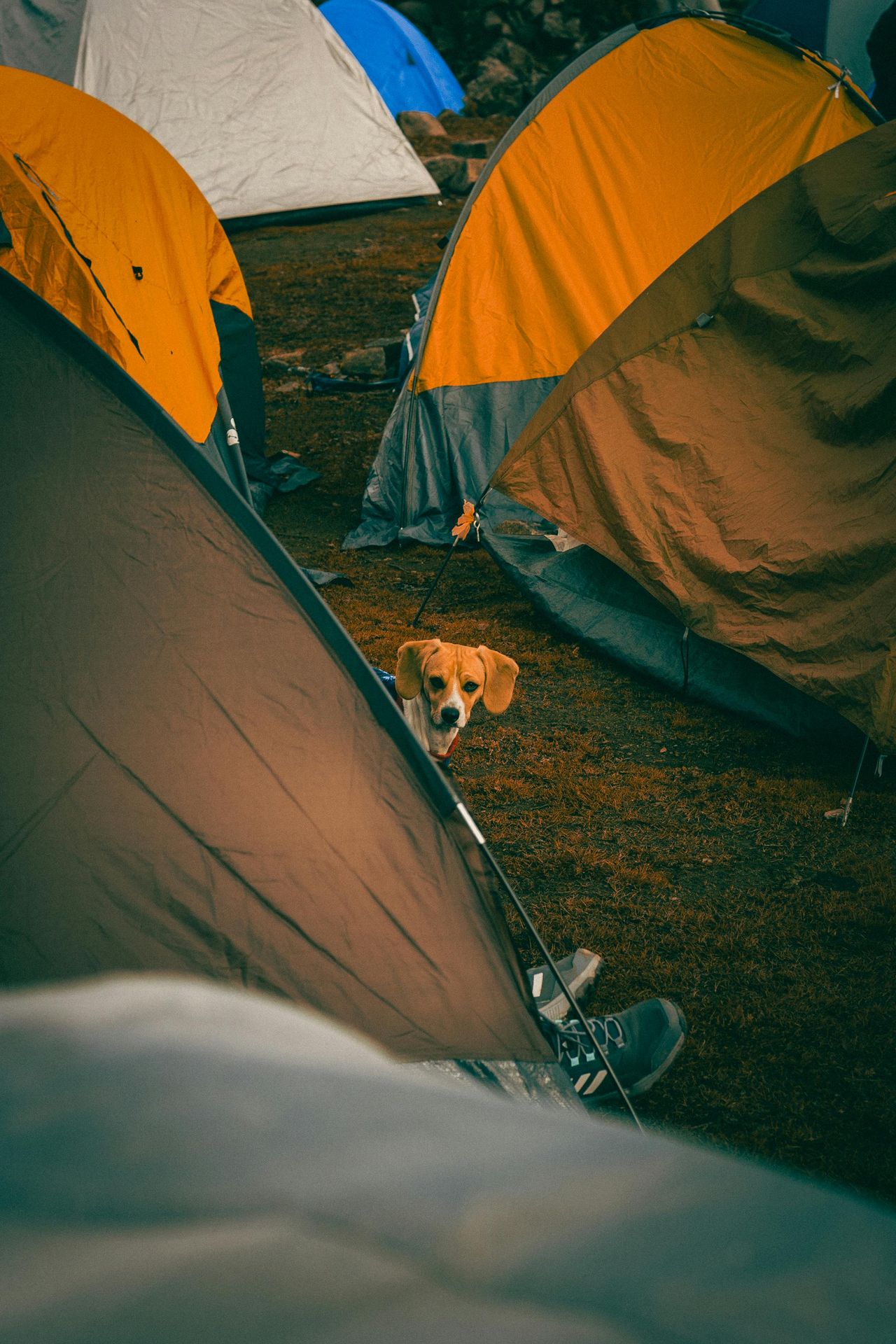
The sounds of camping can feel magical to people and unsettling to dogs. Wind, owls, rustling branches, distant voices, and unfamiliar smells may keep your pet alert long after you are ready to sleep.
Help your dog settle by keeping the evening routine close to what they know at home. A final walk, a chance to relieve themselves, and a familiar blanket or crate can make the tent or cabin feel far less strange.
If your dog is especially nervous, start with one night instead of a long weekend. Successful camping often comes down to comfort, and restful sleep can shape the mood of the entire trip by morning.
Leave the campsite cleaner than you found it
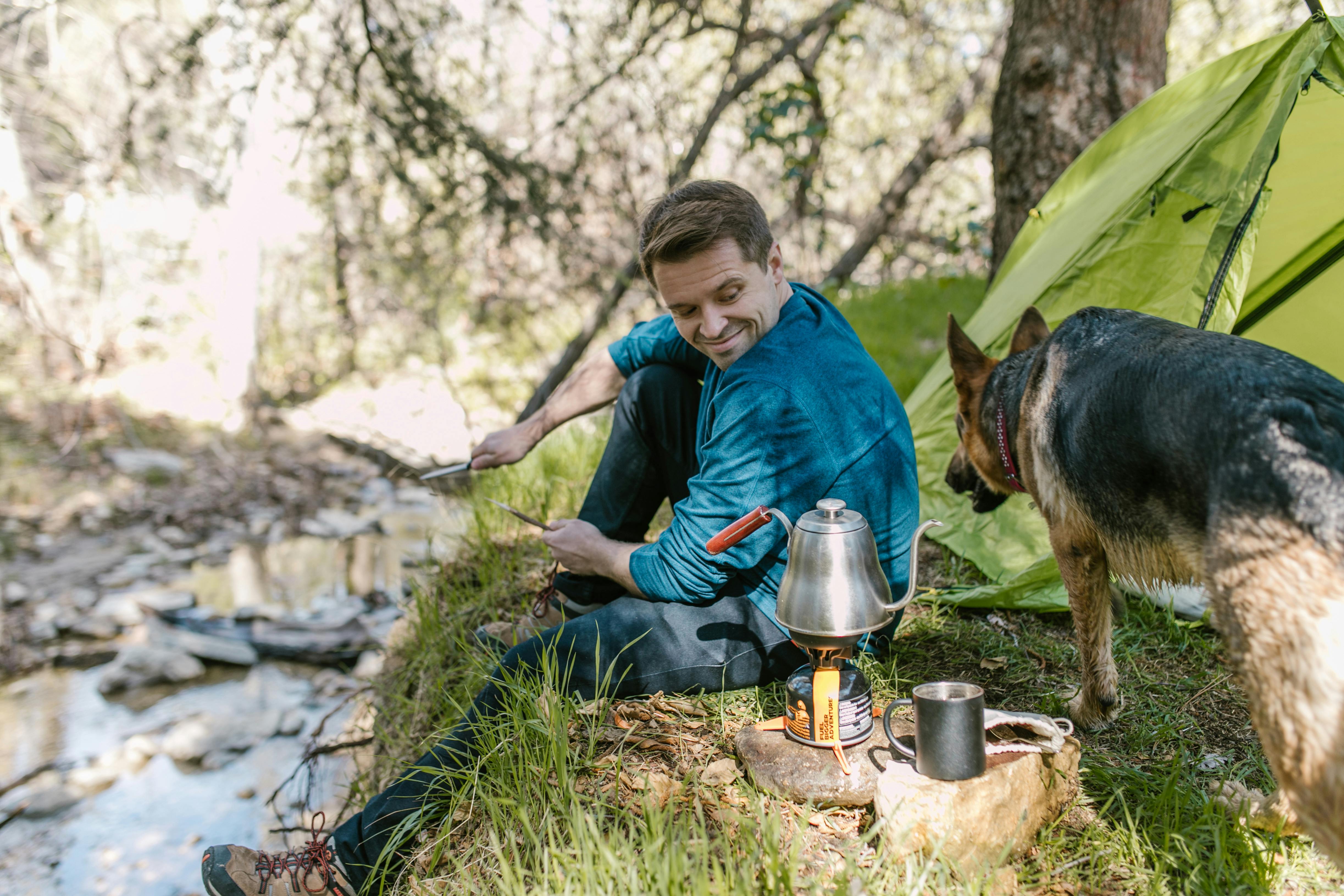
Camping with a dog comes with extra responsibility, and cleanup is a major part of that. Waste should be picked up promptly and disposed of properly, not left near trails, tossed into brush, or abandoned in bags beside the path.
Before you leave, do a final sweep for kibble, toys, fur, packaging, and any pet-related mess around the site. The goal is to leave no sign that your dog was there, beyond your own good memories.
That kind of care protects the environment and helps preserve access for future pet owners. When dog owners are considerate, campgrounds are more likely to stay welcoming to four-legged guests.