The argument over guns in America has not cooled down. It has simply moved into courtrooms, regulatory agencies, and state capitols where the rules are being rewritten in real time.
The Supreme Court Changed The Ground Rules

The biggest shift came from the Supreme Court’s 2022 Bruen decision, which told judges to evaluate gun laws through the nation’s historical tradition rather than the familiar balancing tests many lower courts had used for years.
That change did more than reshape one case about concealed carry. It invited challenges to a wide range of laws, from age limits to assault-weapon restrictions to rules governing where guns can be carried.
Then came a crucial clarification in June 2024. In United States v. Rahimi, the Court upheld the federal ban on gun possession by people under domestic-violence restraining orders, signaling that not every modern restriction is doomed if judges can find a historical analogue.
Courts Are Now Drawing The Real Boundaries
That has created a new legal era because the central question is no longer whether gun regulation exists. The question is which regulations can be defended under this history-and-tradition framework, and which cannot.
The Court’s June 2024 ruling in Garland v. Cargill, which struck down the federal bump-stock ban, showed a second pressure point. Even when judges might sympathize with regulation on policy grounds, they may reject it if they think Congress, not an agency, must speak more clearly.
In March 2025, the Court also upheld the federal government’s ghost-gun regulation in Bondi v. VanDerStok. That outcome suggested the justices are not uniformly hostile to firearms regulation, but they are demanding tighter legal reasoning and cleaner statutory authority.
States Are Splitting In Opposite Directions
While Washington argues, the states are moving in opposite directions. Some have expanded permitless carry and narrowed enforcement tools, while others have doubled down on licensing, safe-storage rules, and broader background-check systems.
According to Giffords, Delaware adopted a handgun purchase-permit requirement in 2024, and states including California expanded safe-storage requirements. At the same time, several states advanced laws limiting the use of merchant category codes to track firearm sales.
That divergence matters because states are becoming legal test labs. The result is a map where one state’s signature public-safety law may be another state’s prime constitutional target.
Agencies And Enforcement Still Matter
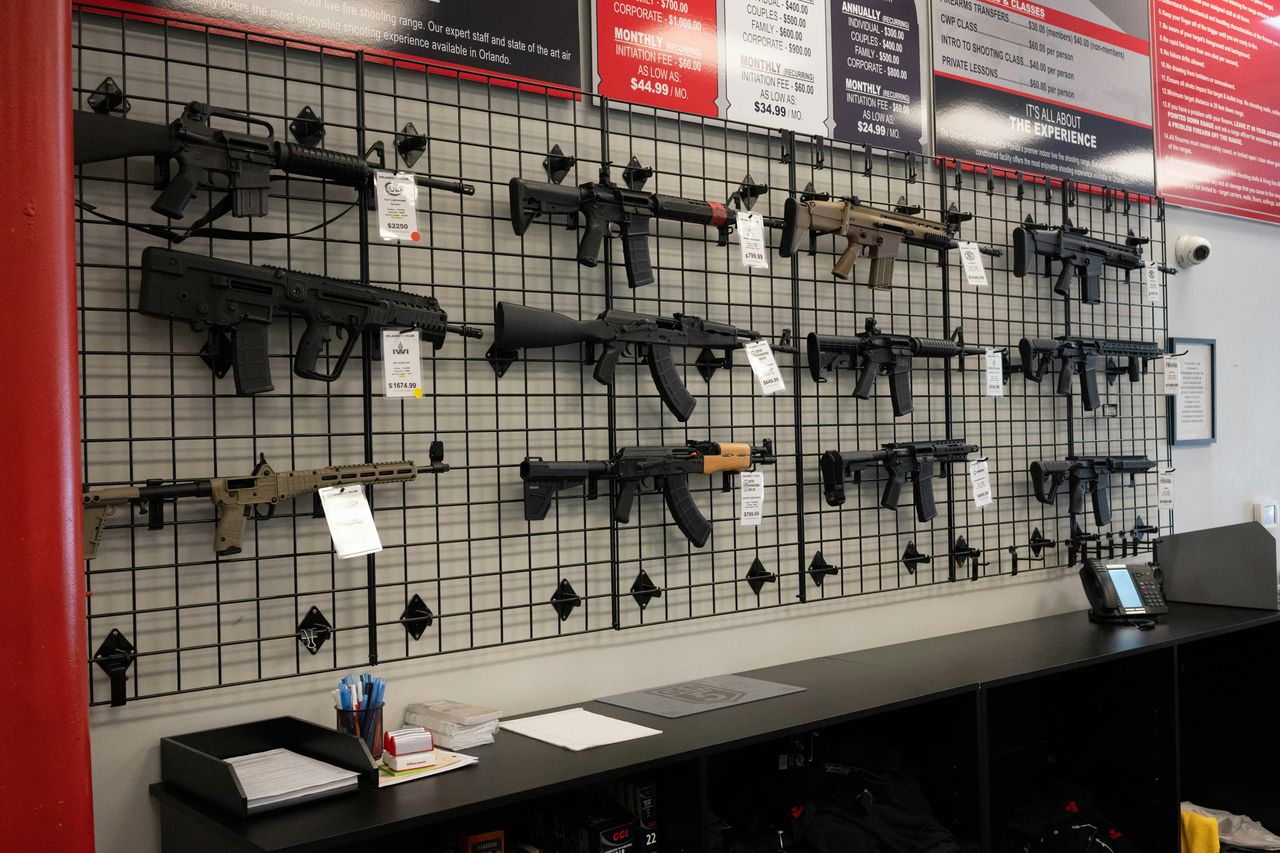
The legal fight is not only about judges. It is also about whether federal agencies can still regulate the firearms market in practical ways, especially where Congress has left older statutes to meet newer technology and newer sales channels.
Ghost guns are the clearest example. The Supreme Court’s 2025 decision preserved room for federal oversight of kits and parts that can be readily turned into working weapons, especially when tracing them has proved difficult for law enforcement.
Meanwhile, ATF remains a major actor on the commercial side. The agency says it had 128,690 active federal firearms licensees in fiscal year 2024 and conducted 9,696 firearm compliance inspections, underscoring how much the debate now turns on administrative enforcement, not just headline legislation.
Data Keeps Fueling Both Sides
The politics remain fierce because the underlying harms remain enormous. CDC materials continue to describe firearm injury and death as a major public-health problem, and national reporting still places annual gun deaths around the tens of thousands.
Supporters of stronger laws point to evidence that states with tighter regulations often post lower gun-death rates. Gun-rights advocates answer that many restrictions burden lawful owners while doing little to stop determined criminals.
RAND’s long-running gun policy reviews show why the fight persists: on several major questions, the evidence is mixed, incomplete, or policy-specific. That uncertainty leaves courts, lawmakers, and voters free to emphasize different risks and different constitutional values.
The Next Phase Will Be More Technical

The next phase of the gun debate will likely feel less like one giant national showdown and more like a grinding series of technical legal battles. Expect fights over sensitive-place rules, licensing systems, assault-weapon bans, magazine limits, and dealer accountability.
Expect more litigation over who gets to regulate: Congress, agencies, states, or cities. Expect more cases where the dispute turns on an 18th- or 19th-century historical analogy rather than a modern cost-benefit argument.
That is the defining feature of the new era. America’s gun debate is still deeply moral and political, but increasingly, its real outcomes are being decided by statutory wording, historical interpretation, and which side can persuade judges that its rule fits the Constitution’s past as well as the country’s present.