Some firearms earn fame for reliability or accuracy. This Thompson became memorable because it was almost too violent for its own good.
A Thompson Most People Have Never Heard Of
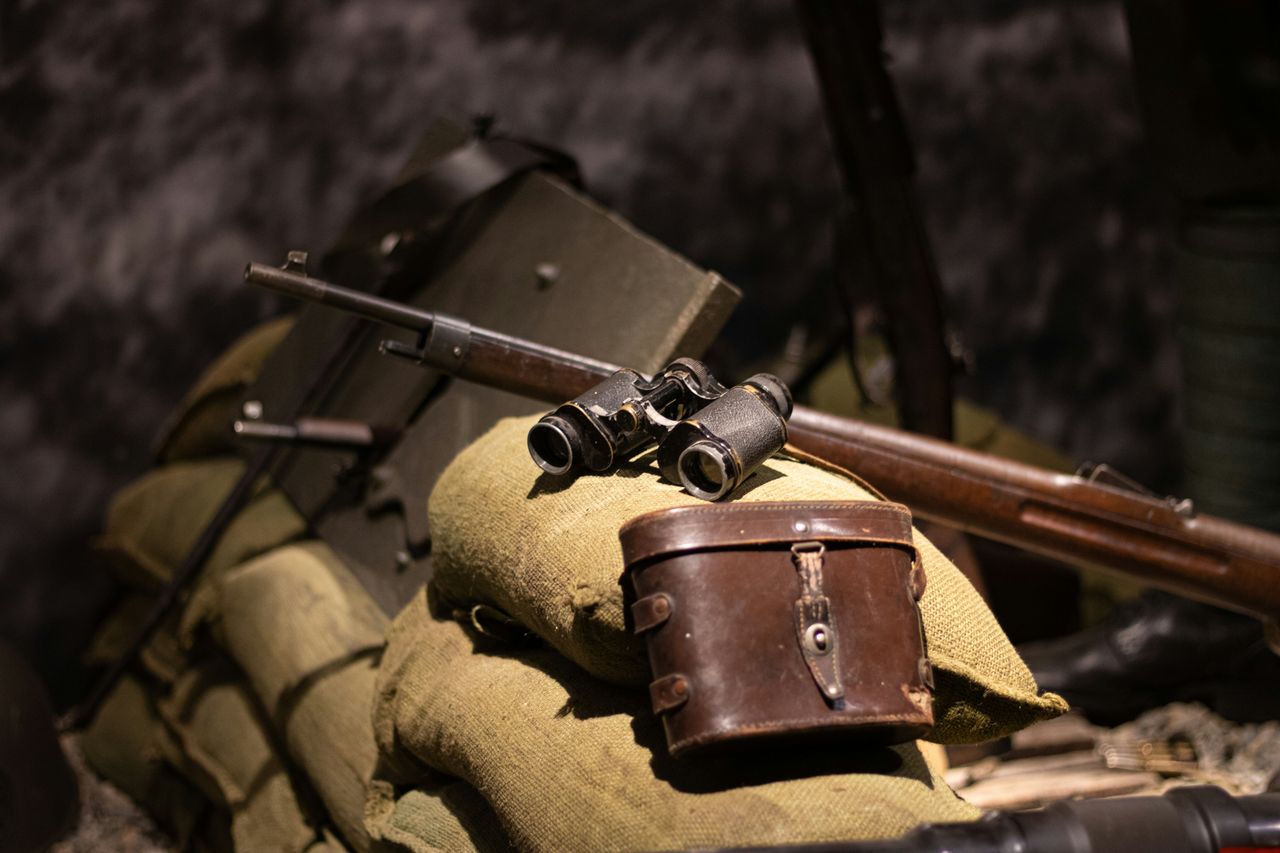
When most people hear “Thompson,” they picture the .45 ACP submachine gun from gangster movies and World War II. But Auto-Ordnance also tried to scale the Thompson idea up into a full-power rifle chambered in .30-06. According to Forgotten Weapons, the Model 1923 autorifle was one of roughly 20 made by Colt for U.S. military testing in 1924.
That alone makes it unusual. America was searching for a practical self-loading service rifle, and inventors were trying every operating system imaginable. The Thompson entry looked like a bold shortcut: take a known concept, enlarge it, and sell the Army on familiarity.
The catch was that what worked, or at least functioned tolerably, in a pistol-caliber arm became a much harsher proposition in a high-pressure rifle cartridge.
Why The Blish System Became The Problem

The rifle used the same basic Blish principle associated with the Thompson submachine gun. In simple terms, designers believed angled metal surfaces would resist opening under pressure long enough for the cartridge to become safe to extract. In practice, modern analysis, including Forgotten Weapons, describes the mechanism less as true locking and more as delayed blowback.
That distinction matters. A locked-breech rifle can wait for chamber pressure to drop before extraction really begins. A delayed-blowback .30-06 rifle, by contrast, can start pulling the case while internal pressure is still uncomfortably high.
That is exactly where the Model 1923 ran into trouble. High extraction pressure puts tremendous stress on brass, the action, and the whole firing cycle. It can make a rifle feel mechanically angry, even when it technically works.
The Wooden Board Story
The detail that keeps this rifle alive in gun-history conversations is the ejection. Forgotten Weapons and Rock Island Auction both note that the rifle became known for throwing empty cases with such force that they could stick in a wooden plank placed near the shooter during testing.
That sounds like legend, but it fits the engineering problem. If the action is trying to open early and yank brass out under pressure, the cases leave the gun fast and hard. Violent extraction often leaves visible marks on spent brass, and in extreme cases it turns ejection into a kind of side show.
For ordnance evaluators, that was not an amusing quirk. It was a warning sign that the action was doing something fundamentally wrong for a service rifle expected to survive dirt, heat, wear, and sustained firing.
What The Army Wanted Instead

The U.S. military did not just want a self-loading rifle that could fire. It wanted one that could endure trials, control recoil, protect parts, and treat ammunition in a reasonably civilized way. American Rifleman’s historical coverage of early self-loading rifle development makes clear how crowded and demanding those interwar evaluations were.
The Thompson design also carried practical penalties. Sources describing surviving examples note the rifle’s long, bulky receiver and awkward overall package. That made it a hard sell even before durability questions entered the picture.
Other concepts were moving toward more convincing answers. The eventual path to the M1 Garand favored a system better suited to rifle pressures, military handling, and long-term reliability under service conditions.
A Short Career And A Dead End
The Thompson autorifle did not vanish after one embarrassing demonstration, but it never escaped its core flaw. Forgotten Weapons reports that versions continued to receive military testing until 1929, and one reportedly broke a bolt during endurance testing before the design was finally dropped.
That timeline says a lot. Designers and evaluators were willing to keep experimenting, but repeated trials could not change the limitations of the operating principle. A mechanism that was marginal in one role became deeply strained in another.
In that sense, the rifle is a classic dead end in firearms development. It was not stupid, and it was not unserious. It was simply built around a theory that could not scale gracefully to .30-06 performance.
Why Collectors Still Find It Fascinating
Today, the Model 1923 Thompson autorifle is compelling precisely because it failed so dramatically. Collectors, historians, and technical shooters are drawn to guns that reveal the trial-and-error side of weapons design. This one does that better than almost any polished success story.
It also reminds people that firearms history is full of near misses. A famous brand name, a respected manufacturer like Colt, and military interest still do not guarantee a good mechanism. Physics always gets the final vote.
And that is why the wooden-board anecdote matters. It is not just a colorful range story. It is a vivid, almost comic illustration of a serious engineering lesson: if extraction starts too early in a powerful rifle, the gun will tell on itself in spectacular fashion.