For years, American collectors tended to focus on the usual European stars while a deeper bench of pistols stayed in the shadows. That is changing fast as more enthusiasts discover the craftsmanship, unusual engineering, and historical significance of lesser-known sidearms from across the continent. These nine models are not exactly obscure anymore, but they still feel like insider picks with plenty of room to rise.
Steyr Hahn M1912

The Steyr Hahn M1912 has long lived in the shadow of more famous Austro-Hungarian service pistols, but collectors are giving it a fresh look. Its clean lines, robust build, and distinctive fixed-magazine system make it feel like a mechanical bridge between 19th-century thinking and modern self-loading handgun design.
What really draws enthusiasts in now is how much personality the pistol has in hand. The lockwork is strong, the profile is unmistakable, and surviving examples often carry fascinating military history. As values climb on better-known service pistols, the Steyr Hahn suddenly looks less like a niche curiosity and more like a smart addition with real depth.
Star Model B

Spain’s Star Model B is one of those pistols that makes American collectors pause and take a second look. At first glance, it resembles a familiar 1911-style silhouette, but the details tell a different story. It is slimmer in feel, distinctly European in execution, and tied to a rich network of wartime and postwar contracts.
Part of the growing appeal is practicality. These pistols have often remained more attainable than comparable military sidearms, which gives collectors a chance to own something historically interesting without immediately stepping into top-tier price territory. Add in solid workmanship and broad parts variation, and the Star Model B starts to feel like a hidden chapter in 20th-century handgun history.
Astra 600

The Astra 600 is unapologetically chunky, a little odd, and exactly the sort of pistol serious collectors eventually learn to appreciate. Built in Spain for wartime German contracts, it combines blowback simplicity with surprising heft, creating a sidearm that feels overbuilt in the most satisfying way.
What has helped its reputation lately is the way collectors now celebrate pistols with unusual backstories and unmistakable handling. The Astra 600 is not trying to be graceful. It is trying to be durable, distinctive, and historically relevant, and it succeeds on all three counts. Once dismissed as awkward, it now reads more like an acquired taste that rewards anyone willing to look beyond the obvious names.
Beretta Model 1934

The Beretta Model 1934 is compact, handsome, and often underestimated because it seems so straightforward. Yet that simplicity is exactly why many American collectors are revisiting it. The pistol has elegant proportions, a reputation for reliability, and a place in Italian military history that gives even common examples a little extra gravity.
Its renewed appeal also comes from collectibility without excessive fuss. Markings, wartime production changes, and condition differences create plenty of room for deeper study, while the pistol itself remains easy to admire as an object. In a market that often chases sheer rarity, the Model 1934 offers something different: a classic European sidearm with style, substance, and a surprisingly loyal following.
CZ 50

The Czech CZ 50 used to be the sort of surplus pistol many buyers barely noticed in the case. Today, that same modest profile is part of its charm. It reflects postwar Eastern Bloc design in a compact, no-nonsense package, with styling that feels both restrained and quietly distinctive.
Collectors are warming to the CZ 50 because it represents an era that was once underappreciated. It is not flashy, but it tells a clear story about police sidearms, industrial production, and Cold War practicality. For people who enjoy studying the less glamorous corners of firearms history, the CZ 50 delivers exactly the kind of authenticity that can turn a bargain bin pickup into a favorite conversation piece.
MAB Model D

The MAB Model D has quietly built a stronger reputation in the United States as collectors have become more curious about French sidearms. Sleek, compact, and often better made than casual observers expect, it carries itself with a confidence that photographs rarely capture. In person, the fit and finish can be surprisingly persuasive.
There is also the simple fact that the Model D represents a collecting field with room to grow. French handguns remain less crowded territory than many of their European counterparts, which means discovery still feels possible. That sense of finding something overlooked is part of the thrill. The MAB Model D may never be mainstream, but that is exactly why its fans tend to become such enthusiastic advocates.
Lahti L-35
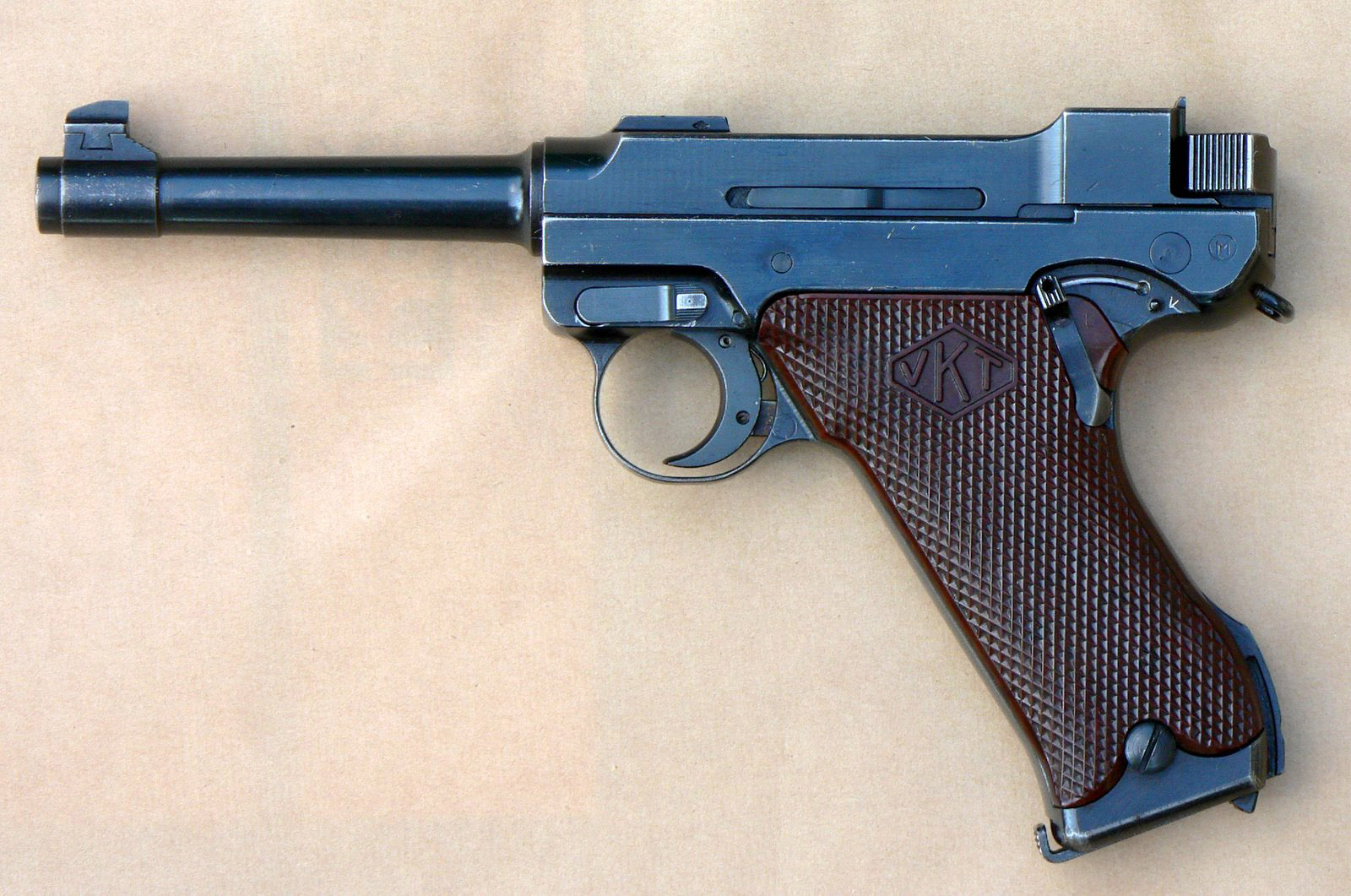
Finland’s Lahti L-35 has always had devoted admirers, but it now seems to be attracting broader interest from American collectors who want something more than another standard service pistol. It is rugged, distinctive, and engineered for harsh conditions, with features that reflect Finland’s very specific military needs and design priorities.
That unusual context gives the Lahti real presence in a collection. It is not just a handsome firearm with angular lines and solid machining. It is a pistol shaped by climate, doctrine, and national necessity. As collectors become more interested in how weapons were adapted to local realities, the Lahti L-35 feels newly relevant, offering both technical intrigue and a strong historical identity.
Ruby Pistol

The Ruby pistol family was once easy to dismiss because there were so many makers, so many variations, and so much confusion surrounding them. Ironically, that complexity is now one of the main reasons collectors are paying attention. These Spanish-made pistols tell a messy, fascinating story about wartime demand, subcontracting, and mass production under pressure.
For modern enthusiasts, the appeal lies in the detective work. Markings, contracts, finish differences, and small mechanical changes turn each example into a research project. The Ruby is not a prestige pistol in the traditional sense, but it captures a chaotic moment in European arms history better than many more famous designs. That gives it a pull that keeps growing as collectors dig deeper.
SIG P210 Military Surplus Variants

The SIG P210 is hardly unknown, but certain military surplus variants still count as underrated in the American market because they are often overshadowed by the pistol’s near-mythic reputation for accuracy. Once collectors move past the legend, they start noticing the fascinating differences among service-issued examples and the stories those pistols carry.
What makes these variants newly compelling is the balance they strike between refinement and authenticity. They are beautifully made, yet they were built as working sidearms, not safe queens. That combination speaks to collectors who want elite craftsmanship without losing the military context. As appreciation broadens beyond the most famous commercial examples, the surplus P210 looks less like an offshoot and more like essential history.