The Steyr AUG has long occupied a strange place in American gun culture. It is instantly familiar from movies, magazines, and video games, yet far less common in real safes than its fame would suggest. This gallery looks at the design choices, timing, and cultural exposure that made the AUG an icon people recognize at a glance, even if most have never handled one.
Its bullpup shape looked unlike almost anything else

The AUG became memorable because it barely resembled the rifles most Americans were used to seeing. With the magazine tucked behind the trigger and the action packed into the rear of the stock, its proportions looked futuristic from the first glance.
That bullpup layout gave it a compact overall length without giving up barrel length, which made the design feel clever as well as unusual. Even people who could not name it often remembered the rifle that looked like it came from tomorrow instead of yesterday.
In a market crowded with conventional silhouettes, the AUG stood out immediately. Recognition came easy because there was simply very little else that looked like it.
The integrated optic gave it a space-age identity
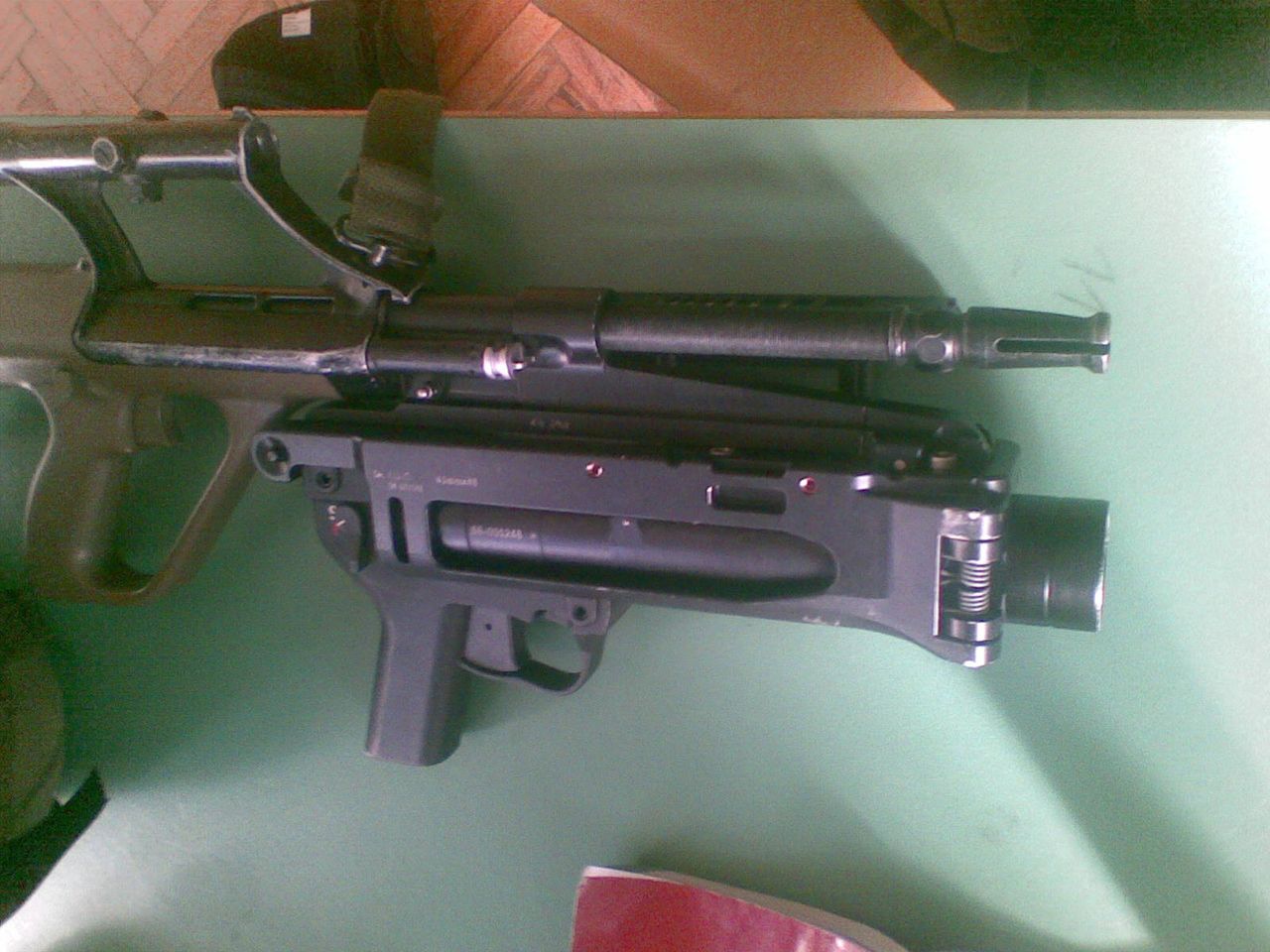
Early AUG models often appeared with a built-in optic carried inside that distinctive handle assembly. At a time when many rifles still wore plain iron sights or more traditional setups, the AUG looked like a complete package designed by industrial futurists.
That visual detail mattered more than people sometimes realize. The optic and carry handle were not just functional components. They formed the rifle’s face, the feature that made it instantly identifiable in photos, films, and game art.
For American viewers, it projected sophistication before they knew anything about the mechanism. The AUG did not just look modern. It looked like modernity had been preinstalled.
Its translucent magazines were unforgettable
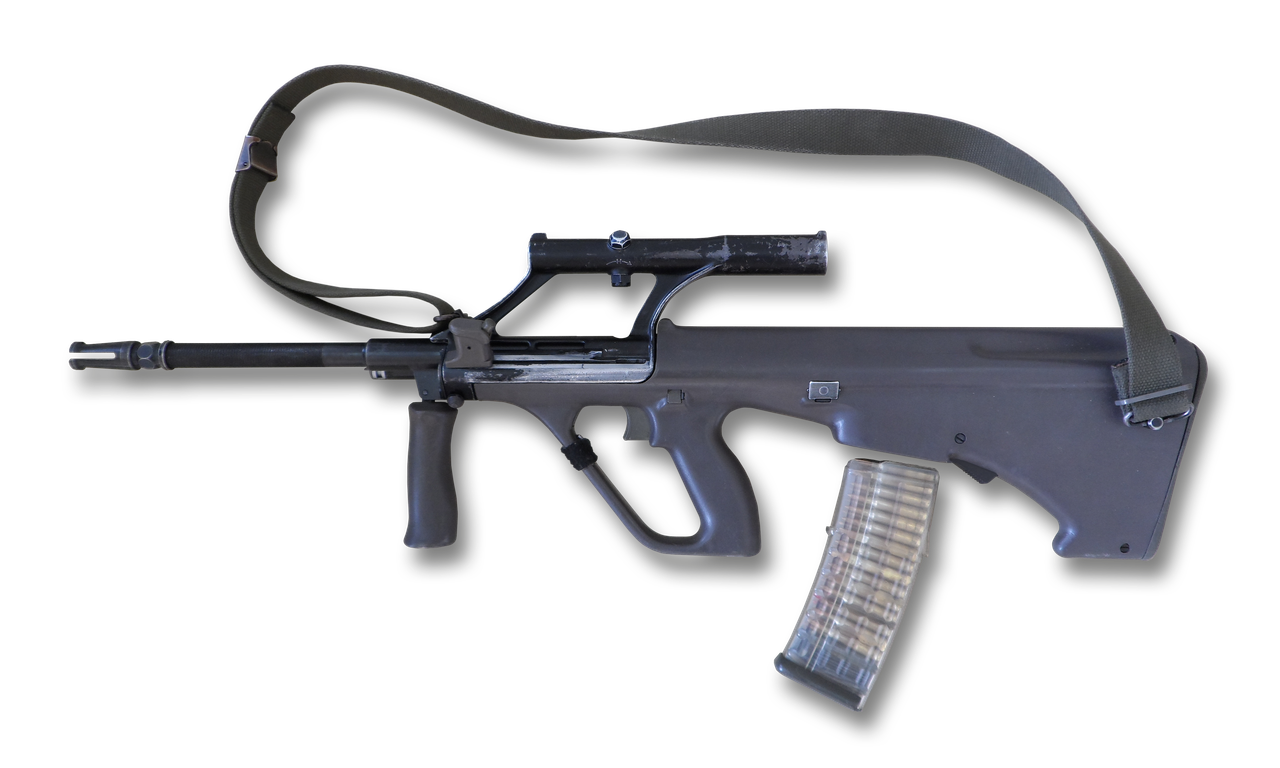
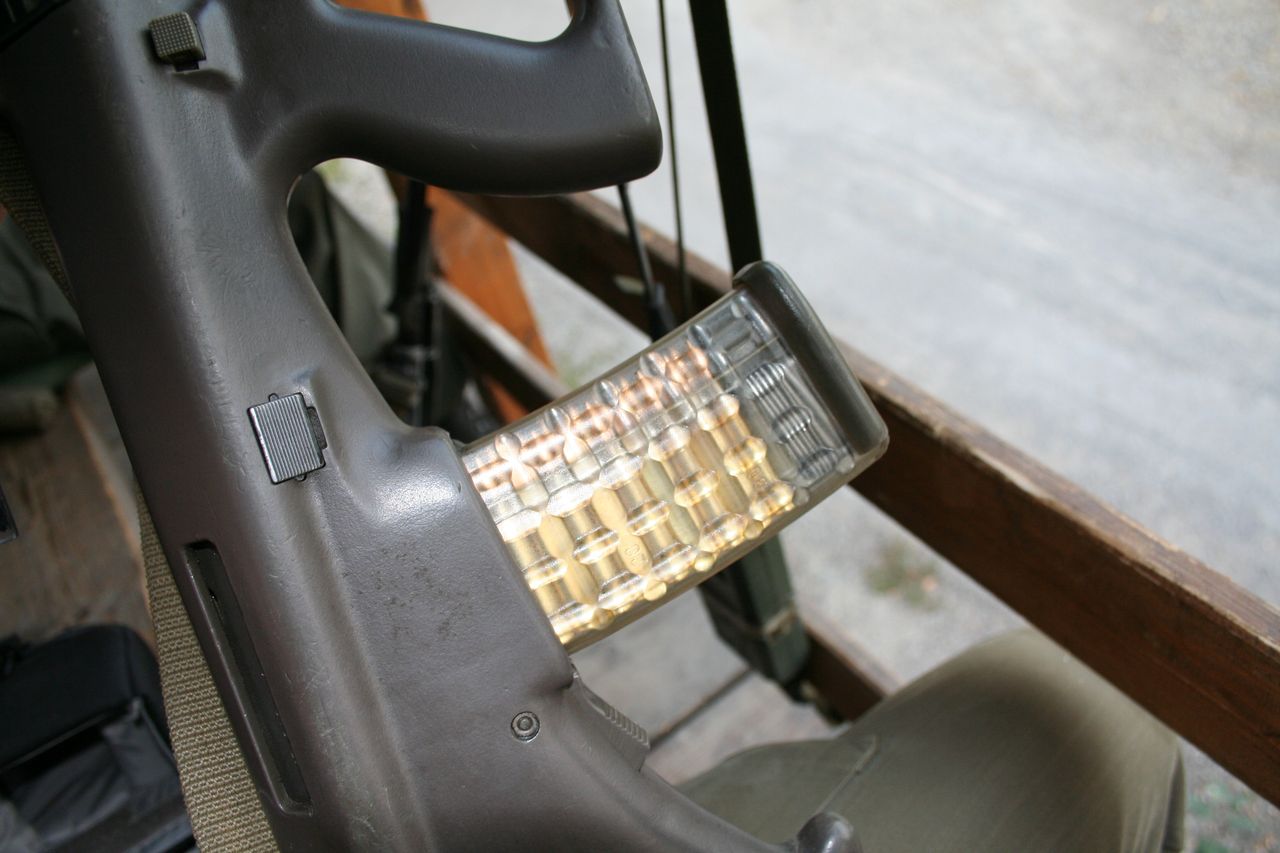
One of the AUG’s smartest visual tricks was also one of its most practical. The translucent polymer magazine let users quickly check remaining ammunition, but it also created a signature look that helped separate the rifle from blued steel and aluminum rivals.
That semi-transparent magazine became part of the AUG’s identity in still photos and on screen. Even casual observers noticed that it looked advanced, almost like a product from a design studio instead of a military depot.
In the American imagination, details like that carry weight. Plenty of rifles were capable, but few advertised their cleverness so clearly at a glance.
It arrived as European military design was peaking in cool factor
The AUG benefited from timing as much as engineering. In the late Cold War era and after, European service rifles carried an aura of elite professionalism in American eyes, and the Austrian-made AUG felt especially polished compared with rougher, more utilitarian designs.
Its clean lines, synthetic furniture, and standardized appearance made it seem purpose-built for a new era. This was not a rifle with old-world wood furniture or obvious heritage baggage. It looked like a fresh start.
That helped the AUG become aspirational. Even people who would never buy one could admire it as a symbol of sleek, disciplined military design from abroad.
Hollywood and television made it feel more common than it was
A lot of Americans met the AUG on screen before they ever saw one in person. Armorers and prop departments liked distinctive firearms, and the AUG offered immediate visual drama without needing explanation from the script.
Because it photographed so well, it kept popping up in action movies, TV episodes, and promotional stills. That repetition did something powerful. It made the rifle seem familiar, almost everyday, even though actual civilian ownership remained relatively niche.
This is how icons are built. A design appears often enough in culture that the public starts to assume it is everywhere, when in reality it is mostly everywhere in media.
Video games turned the silhouette into a memory shortcut

If movies introduced the AUG, video games cemented it. Its profile was ideal for game developers because it read clearly even in low-resolution eras, and players could identify it almost instantly by the stock, optic, and magazine placement.
For a generation of Americans, the AUG was less a gun-store item than a digital artifact they handled across countless rounds in first-person shooters. That kind of exposure creates deep recognition, especially when a weapon appears across multiple franchises.
The result is a strange modern phenomenon. Many people know exactly what an AUG looks like, sounds like, and represents, despite never seeing one at their local range.
The American market was captivated by it, but not built around it
Recognition does not always translate into ownership, and the AUG is a prime example. The American rifle market has long revolved around platforms with broad parts support, lower entry prices, and huge aftermarket ecosystems, especially the AR-15.
The AUG, by contrast, has often lived in the category of admired specialty item. People talk about it, want to try it, and appreciate its history, but many ultimately buy something more familiar, more customizable, or simply less expensive.
That gap between fascination and purchase helped make the AUG famous in a particular way. It became the rifle many people knew, but relatively few prioritized bringing home.
Import limits and pricing kept it from becoming ordinary
Part of the AUG’s mystique comes from scarcity, or at least the perception of scarcity. Import rules, shifting availability, and higher prices over different periods made the rifle feel less like a common purchase and more like an item to hunt down.
That changes how the public relates to a firearm. When something is expensive or harder to find, it tends to gather prestige and conversation even among people who never intend to buy one.
In the United States, that dynamic worked in the AUG’s favor as an icon, if not as a mass-market product. Limited access often sharpens recognition rather than reducing it.
Its modular reputation made it seem ahead of its time
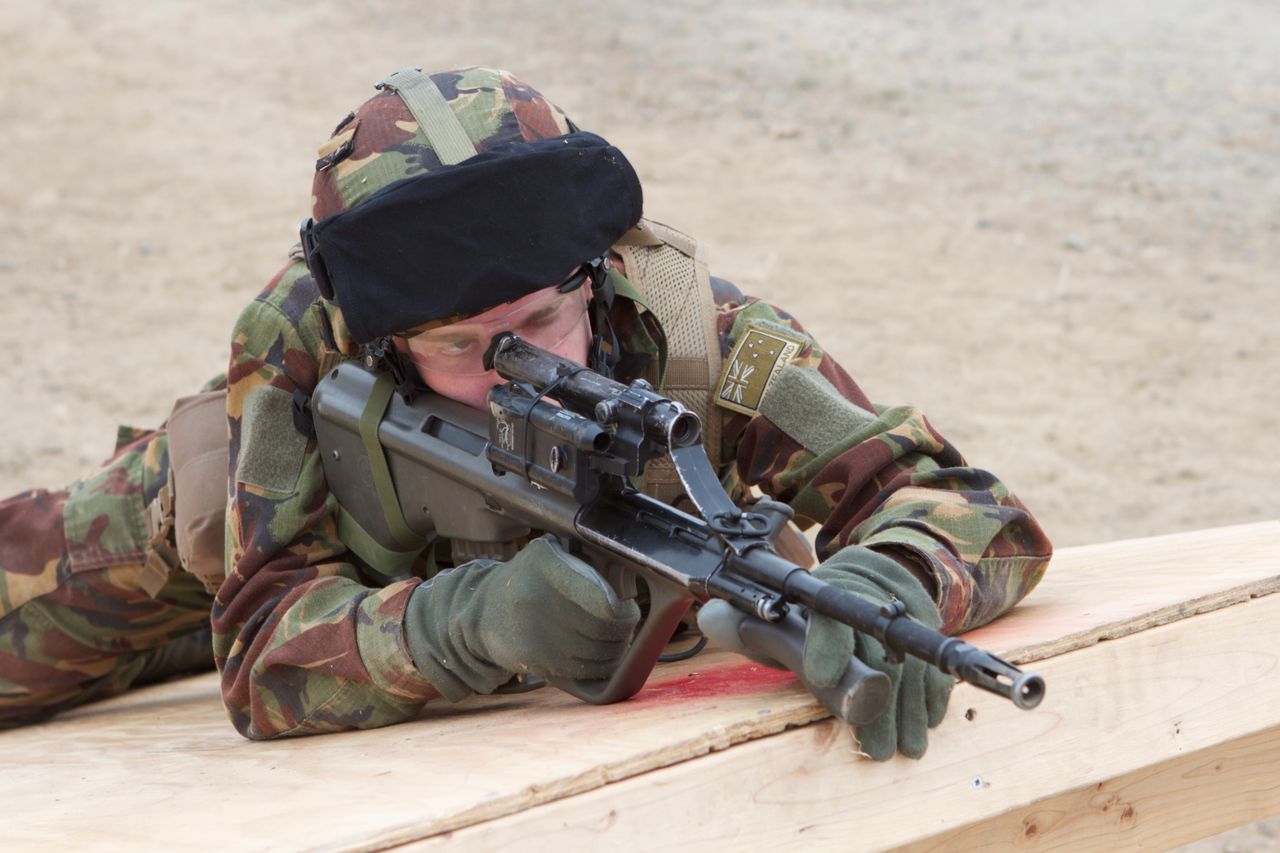
The AUG built a strong reputation for modularity well before that became a standard marketing word. Quick-change barrel capability and configurable components suggested a rifle system rather than a single fixed setup, which felt advanced to many American observers.
Even for people who never planned to swap barrels or reconfigure parts, the idea mattered. It told a story about engineering foresight and military flexibility, two themes that tend to resonate strongly with enthusiasts.
That reputation helped keep the AUG in conversations about innovation. It was not merely distinctive in appearance. It also carried the image of a rifle that had arrived early from the next design generation.