A lot of gun owners think their homeowners policy is enough right up until they discover the special limits section. That is usually the moment they realize insurers often take certain firearms far more seriously than the average owner expects.
High-end 1911 pistols with custom work
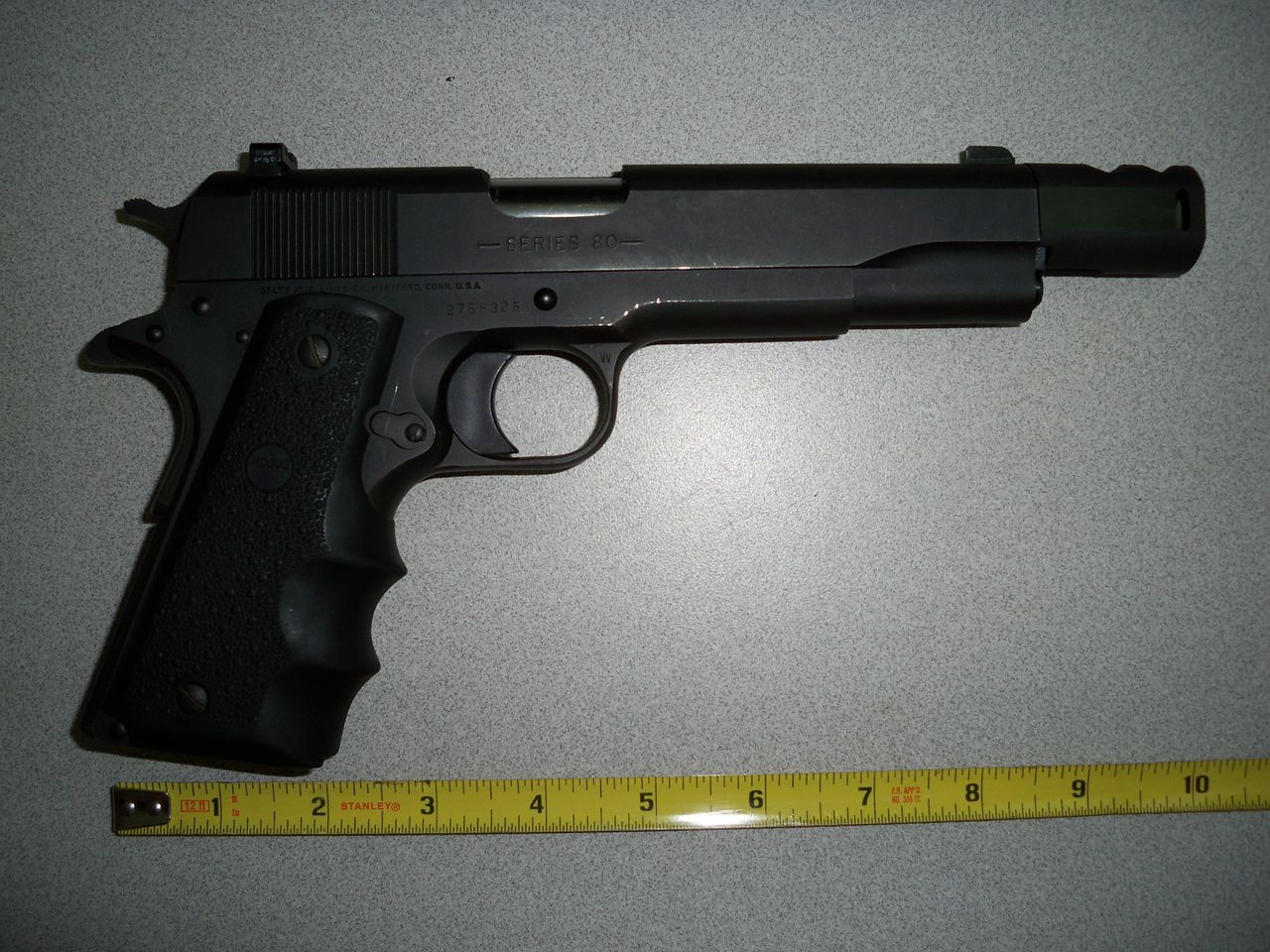
A custom 1911 can blow past ordinary household coverage limits faster than people realize. Once a pistol has hand-fit internals, premium optics cuts, custom finishes, and work from a known smith, it stops being just another sidearm and starts looking like a scheduled asset. Insurers care because replacement is not as simple as walking into a store and buying the same gun off the shelf.
This matters because standard homeowners coverage often has special limits for firearms theft. State Farm says homeowners policies have maximum limits on specified property types, including firearms for theft, and a State Farm policy form available online lists a $2,500 theft limit for firearms. USAA’s renters policy form similarly lists a $2,000 limit for theft of firearms and related equipment, while its separate gun coverage is designed to go beyond homeowners or renters protection.
That means a tuned 1911 package can be underinsured even when the owner feels perfectly responsible. Add a custom trigger job, rare grips, magazines, red-dot setup, holster rig, and maybe a second fitted barrel, and the insured value can climb into territory where a separate personal articles or valuables policy makes much more sense. State Farm explicitly pitches personal articles coverage as broader protection with higher limits, often with no deductible.
Collector-grade Colt Single Action Army revolvers
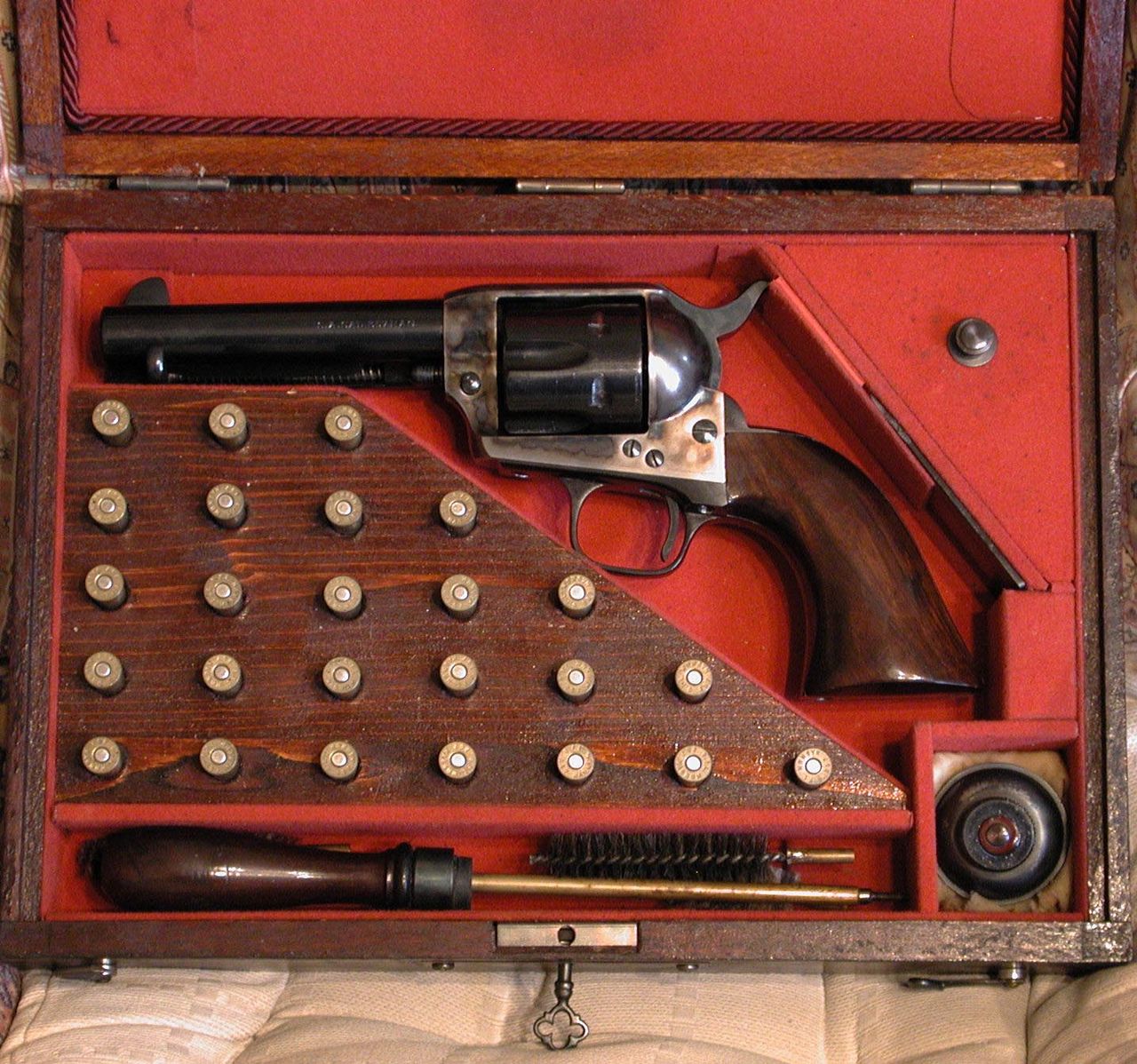
This is where insurance companies get almost cold-bloodedly practical. A collector may think of a Colt Single Action Army as a family heirloom or a safe queen, but an insurer sees a highly mobile, theft-prone collectible with a replacement market driven by auction results, provenance, finish, and serial-number desirability. In other words, one loss can become a very expensive claim very quickly.
Auction houses reinforce that point. Rock Island Auction has documented record-setting prices for collectible Colts and other historic firearms, including million-dollar-class sales at the top end of the market. Even when a specific revolver is not worth six or seven figures, the larger lesson is clear: rare Colts can appreciate into values that far exceed what a generic personal property assumption would cover.
Insurers know another truth that owners sometimes underestimate. Two apparently similar revolvers can have dramatically different values based on originality, engraving, factory letters, and condition. That is exactly the kind of asset insurers prefer to schedule separately with a stated amount, photos, and sometimes an appraisal. It reduces disputes later and protects the owner from discovering too late that “old revolver” is not how claims departments price collector firearms.
Pre-64 Winchester Model 70 and other premium classic hunting rifles

Classic hunting rifles often slip under the radar because they still look like practical field guns. But a pre-64 Winchester Model 70, early Browning Safari, or other desirable legacy rifle can combine sentimental value, collector value, and active-use risk in one package. That is a combination insurers tend to notice, especially when the gun actually leaves the house every season.
The replacement problem is what pushes these rifles into separate-policy territory. A modern deer rifle can be replaced with a same-model equivalent pretty easily. A clean pre-64 Winchester cannot. The owner may need to chase specific production years, chamberings, original sights, or correct stocks, and the market price can swing sharply depending on those details.
Insurers also know these rifles are exposed to more than burglary. They travel in trucks, cabins, motels, and camps, and they are handled in rough weather. According to the Justice Department’s summary of ATF trafficking assessment data, nearly 1.1 million firearms were reported stolen between 2019 and 2023, with about 95% of those reports involving thefts from private citizens. That helps explain why a valuable hunting rifle often gets treated as more than ordinary household contents.
Precision long-range rifles with expensive optics

A precision rifle is almost never just a rifle. By the time an owner adds a premium action, match barrel, chassis, bipod, suppressor-ready muzzle setup, and top-tier optic, the package can represent a five-figure investment. Insurance companies understand that a theft claim on a long-range rig may involve the rifle, glass, rings, rangefinder, and other dedicated accessories that move together as a system.
The optic alone can justify separate scheduling. Homeowners policies do cover personal property broadly, but insurers repeatedly warn that certain property classes have special limits and that higher-value items may need their own coverage. State Farm says personal articles insurance can provide broader protection for treasured items with higher limits, and USAA markets gun coverage that can insure one item or many starting at low minimum values.
Then there is the theft profile. Precision rifles are exactly the kind of targeted property thieves can resell quickly, especially when premium optics are attached. From the insurer’s perspective, this is portable property with concentrated value. That makes separate insurance less about paranoia and more about recognizing that one stolen rifle case can produce a claim bigger than a lot of homeowners expect.
NFA-regulated suppressor hosts and transferable packages

Any firearm package tied to National Firearms Act rules tends to get extra attention because ownership, transfer, and replacement are more complicated. That can mean an SBR setup, a premium host with a registered suppressor, or a multi-item package with serialized accessories that cannot be casually swapped out after a loss. Complexity makes insurers cautious, and caution usually means more serious underwriting.
ATF’s current processing page shows median processing times for individual eForm 4 applications finalized in June 2026 at 6 days, a major improvement from the old system. Silencer Shop also says the tax stamp fee for suppressors and other NFA items became $0 as of January 1, 2026, for eligible transfers under the current rules. Faster processing and lower transfer cost may make replacement more feasible than it once was, but it does not make the lost property any less specialized or any easier to document correctly.
Insurers also know that NFA items create paperwork sensitivity. If something is stolen, owners care about far more than retail price. They care about serial numbers, registration documents, compliance, and getting a like-kind replacement. That is why many serious owners keep these items on separate schedules with documented values, photos, and serial inventories rather than trusting a broad household contents bucket.
Vintage Winchester lever guns with documented provenance

A plain old lever gun is one thing. A Winchester tied to a known ranch, lawman, family estate, or documented historical figure is something else entirely. Provenance is where insurance companies start seeing a firearm more like fine art or Americana than sporting equipment, because the story can drive the value as much as the steel and wood.
That is not theoretical. Major auction houses such as Rock Island routinely publicize exceptional realized prices for historically significant firearms, and even lesser-known pieces can command outsized premiums when records, letters, or family history support the claim. Once provenance enters the conversation, market value becomes too nuanced for rough replacement-cost assumptions.
This is why owners who would never think twice about insuring a modern lever-action separately often do exactly that with a vintage Winchester. The insurer wants documentation because the difference between “old Winchester” and “documented old Winchester” can be many thousands of dollars. The owner should want the same thing, because proving that extra value after a burglary is much harder than proving it before one.
Premium over-under shotguns used for competition
Competition shotguns are sneaky expensive. A serious over-under from Beretta, Browning, Perazzi, Krieghoff, or Caesar Guerini can carry a price tag that rivals a used car, and that is before adjustable comb work, fitted stocks, release triggers, premium cases, and spare chokes enter the picture. Yet many owners still think of them as just their clay gun.
Insurers see a different profile. These guns travel constantly to clubs, tournaments, hotels, and vehicles, which means more opportunities for theft or accidental damage away from home. Personal articles policies are designed specifically for valuable personal property that travels, and State Farm notes that this kind of coverage can follow the item beyond the home while also offering broader protection than standard homeowners insurance.
There is also a replacement reality here. Fit matters. A competitor may not be able to replace a broken or stolen shotgun with any same-model example and get the same result. Length of pull, stock dimensions, rib preference, and trigger feel can turn a “replaceable” sporting shotgun into a highly individualized piece of equipment. That is exactly the sort of property insurers take seriously once they see the declared value.
Rare military surplus rifles in matching condition

Military surplus guns are famous for fooling non-collectors. To one person, a matching-number K98k, M1 Garand variant, or rare Finnish Mosin looks like an old service rifle. To a knowledgeable market, it may be an increasingly scarce collectible whose value depends on originality, markings, import status, and whether the parts all still belong together.
Insurers care because surplus markets are not stable or simple. A replacement is rarely a straightforward retail transaction. One matching rifle may be worth several times more than a rebuilt example, and small details like original finish, unit markings, or wartime production changes can alter the price dramatically. That creates claim friction unless the firearm is separately listed with supporting records.
Theft trends make the concern more understandable. ATF data highlighted by the Justice Department shows theft from private citizens remains the overwhelming source of reported stolen firearms. Portable collectibles with active enthusiast markets are especially easy to liquidate quietly. For owners of serious surplus collections, separate insurance is not overkill. It is often the only realistic way to match coverage to what the rifles would actually cost to replace.
Engraved presentation guns and family heirlooms
Presentation guns are where emotion and insurance collide. An engraved shotgun from a retirement ceremony, a commemorative revolver, or a family pistol passed down for generations may not always set auction records, but insurers still treat them cautiously because they are uniquely difficult to value after a loss. If the engraving, inscription, or provenance is one of a kind, market replacement becomes messy.
Insurance companies generally prefer advance documentation over after-the-fact storytelling. That means clear photographs, serial numbers, any letters or receipts, and sometimes an appraisal that separates base-gun value from embellishment and historical significance. Owners often assume sentiment will somehow translate into claim value. It usually does not unless the policy specifically schedules the item and its insured amount.
This is the quiet reason separate insurance matters. The insurer is not honoring sentiment. It is recognizing uniqueness, dispute risk, and the possibility that ordinary policy limits will not handle a specialized claim fairly. For an heirloom gun, separate coverage is often less about chasing top-dollar collectibility and more about making sure a loss does not become an argument over what made that firearm special in the first place.