Forest rangers have worked in some of the most isolated places in the world, from dense American wilderness to remote national parks where help could be hours away. Their equipment varied with the country, the period, and the duties they performed. While many rangers relied on radios, field knives, and basic survival gear, some agencies also issued firearms for protection against dangerous wildlife, law enforcement, or emergencies. Certain weapons became familiar, while others remained limited to particular services or historical periods. These 9 firearms reveal a lesser-known side of forest ranger history, including unusual designs, military surplus, and practical choices shaped by life in the wilderness.
1. Winchester Model 1873 Rifle

The Winchester Model 1873 became a familiar sight across the American West, and its history connects with the rugged world of frontier law enforcement. Chambered in cartridges including .44-40, it offered a repeating design that was practical for many civilian users. Standard rifle versions commonly featured a 30-inch barrel, while shorter carbines were easier to carry on horseback. More than 720,000 Model 1873 rifles were manufactured between 1873 and 1916. However, its widespread popularity does not prove that forest agencies formally issued it to their rangers.
2. Winchester Model 1876 Rifle
The Winchester Model 1876 was designed for more powerful ammunition than earlier Winchester lever-action rifles, making it an important part of late nineteenth-century firearms history. Introduced during America’s centennial year, it became known as the Centennial Rifle. One documented chambering was .45-75, and the rifle’s 28-inch barrel gave it a substantial presence in the field. The North-West Mounted Police and Texas Rangers are among the groups associated with its use. Although its connection to frontier law enforcement is genuine, surviving historical references do not establish it as a standard issue firearm for every forest ranger service.
3. Colt Single Action Army Revolver
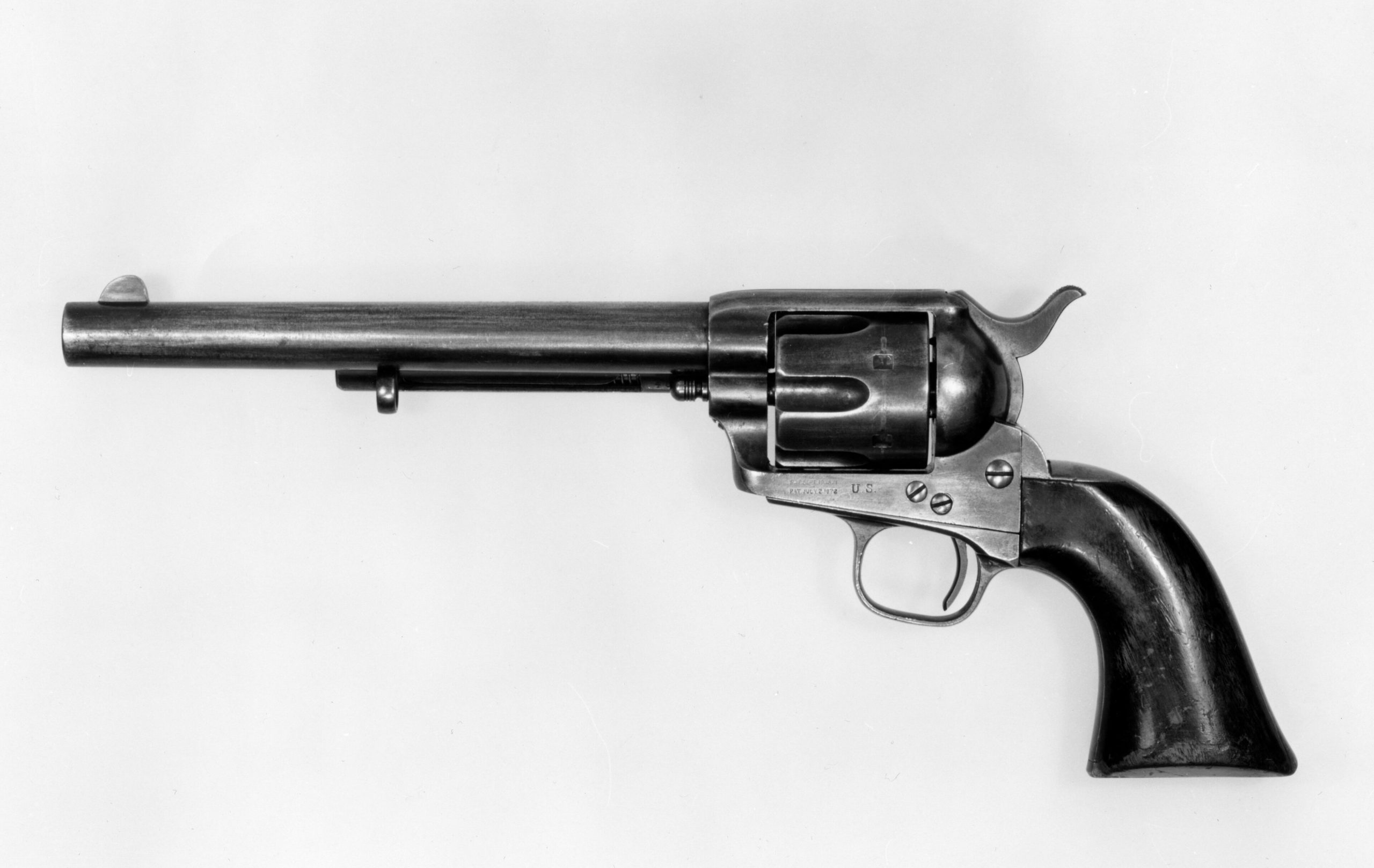
Few firearms are as closely associated with nineteenth-century American law enforcement as the Colt Single Action Army, introduced in 1873. Commonly chambered in .45 Colt, it used a six-round cylinder and a single-action mechanism that required the hammer to be cocked for each shot. Available with several barrel lengths, it became popular among military personnel, civilians, and lawmen. Its historical significance makes it relevant to understanding the equipment of frontier officers, but that reputation should not be confused with proof of universal forest ranger issue. Its long production history also reflects its enduring appeal across generations.
4. Colt Model 1860 Army Revolver
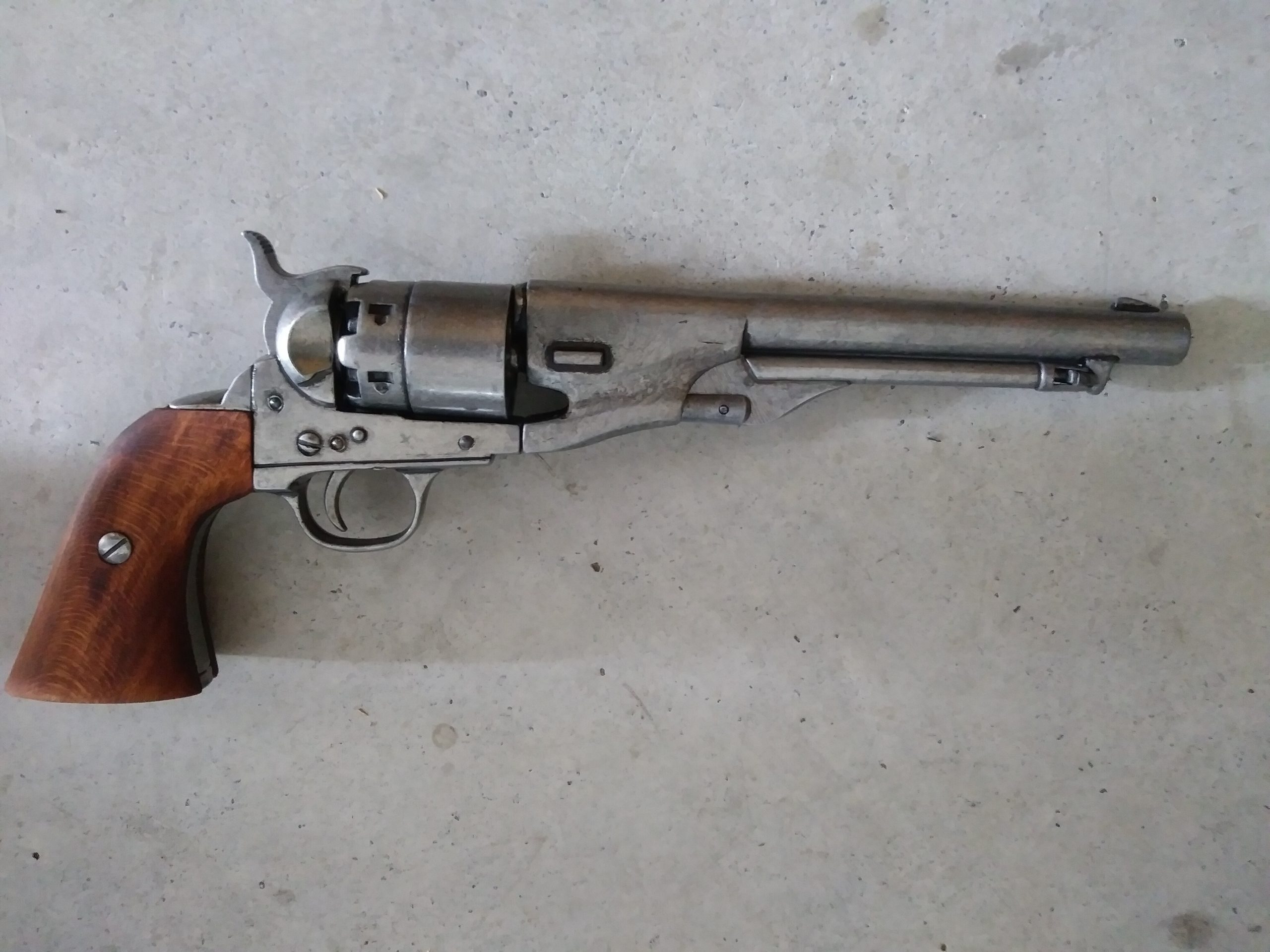
The Colt Model 1860 Army revolver was developed during an era when dependable sidearms mattered to soldiers and mounted personnel. Its .44-caliber chambering and six-shot cylinder made it a significant Civil War firearm, with Colt selling nearly 130,000 to the United States government. The revolver’s comparatively streamlined design helped distinguish it from earlier, heavier models. Some surviving examples are connected with historic ranger units, including Mosby’s Rangers, rather than modern forestry agencies. That distinction matters: the weapon illustrates the broader history of armed patrols, but does not establish routine issue to forest rangers.
5. Colt Model 1851 Navy Revolver
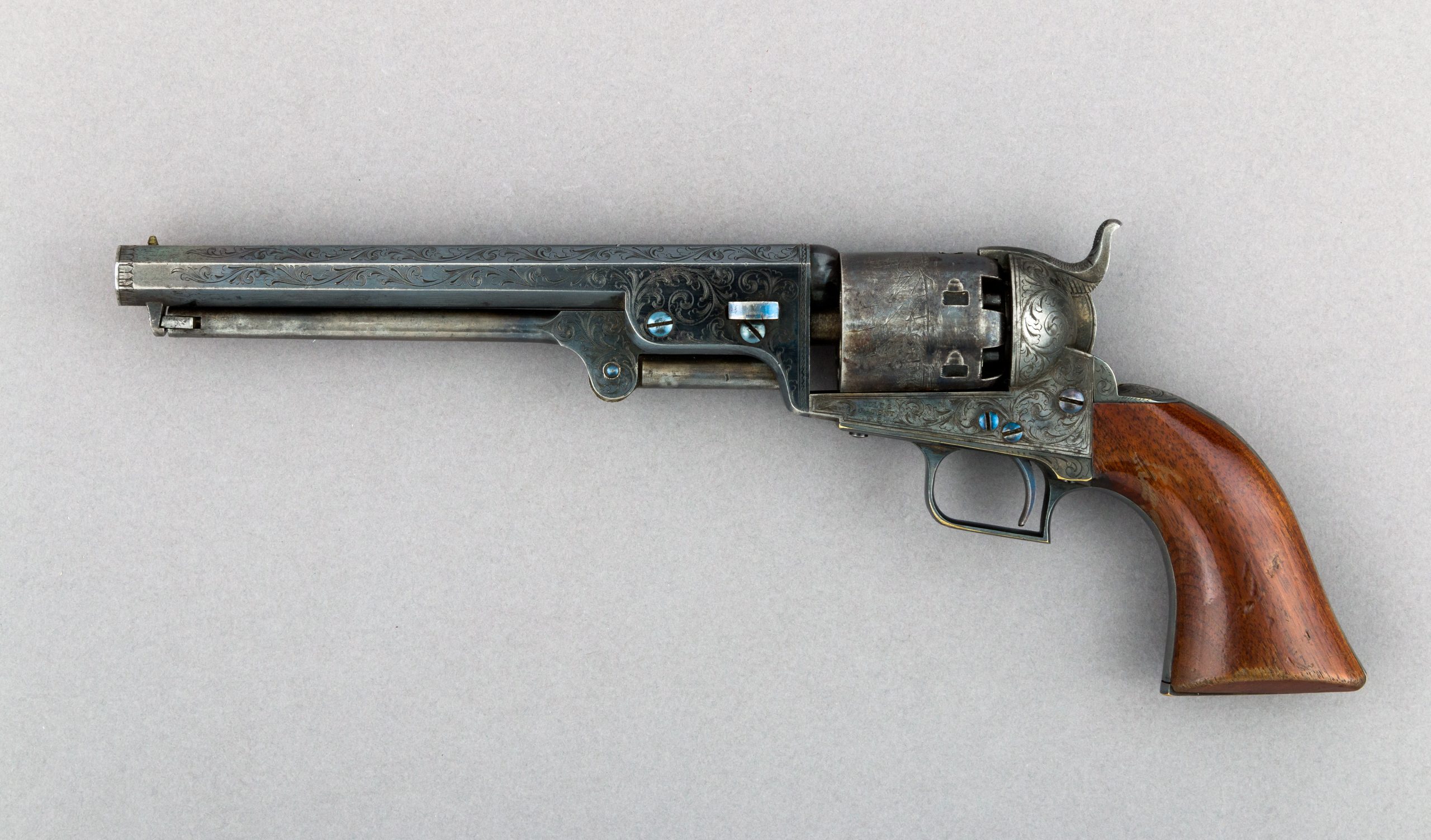
The Colt Model 1851 Navy revolver was one of the most recognizable handguns of the nineteenth century. Its .36-caliber percussion system used a six-shot cylinder, while the familiar version featured a 7.5-inch barrel. Unlike later cartridge revolvers, it required separate loading components and percussion caps, making its operation more laborious. The model saw extensive military use during the American Civil War and remained popular with some lawmen afterward. Its connection to frontier life explains why it appears in ranger-era histories, although evidence of widespread formal issue by forestry agencies is lacking.
6. Sharps Carbine
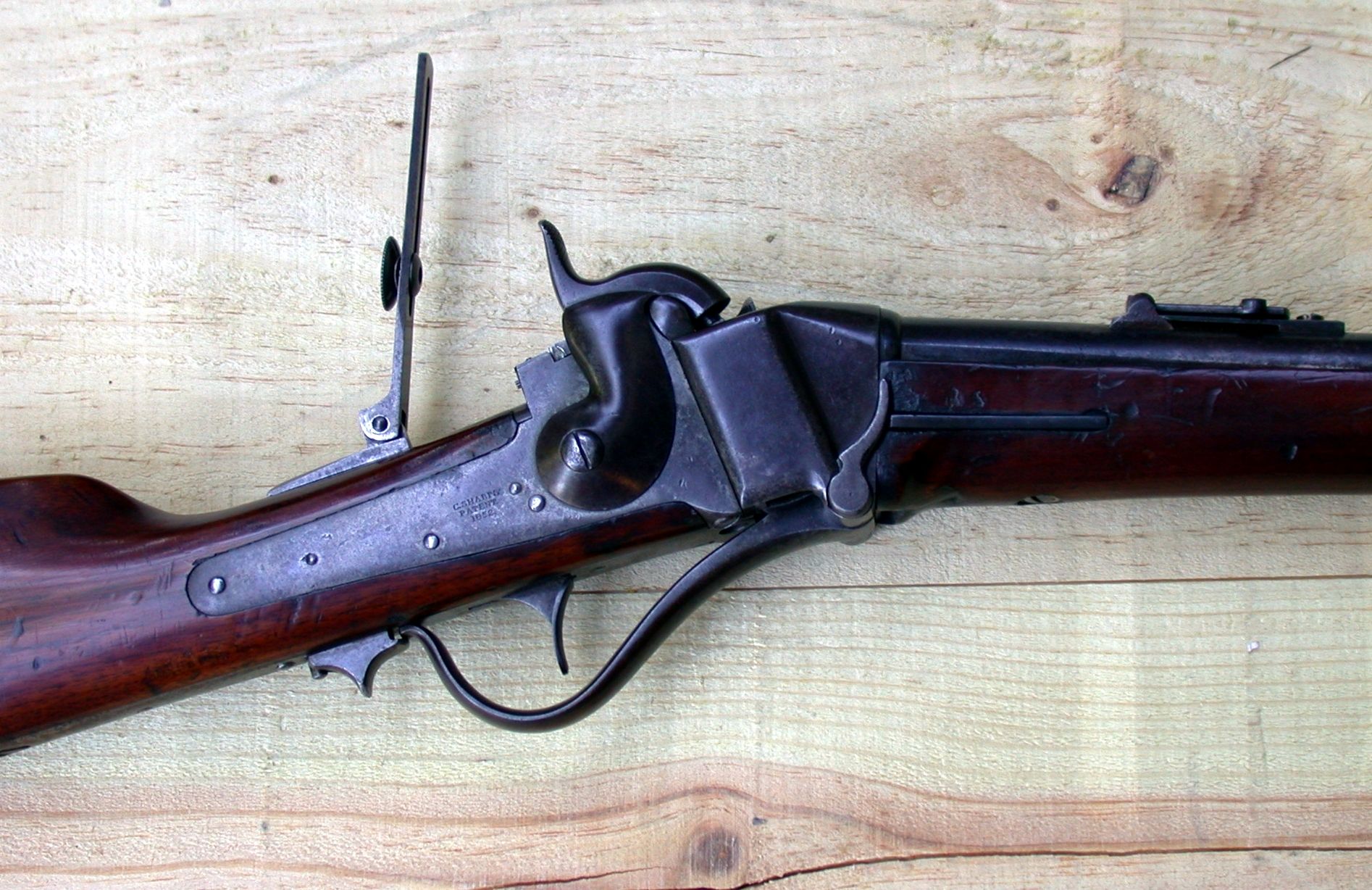
The Sharps carbine belongs to the story of mounted patrols, where carrying a full-length infantry rifle was often impractical. Its breech-loading design allowed ammunition to be loaded at the rear of the barrel, an important development during the nineteenth century. Sharps carbines served American cavalry units, including troops stationed at Fort Larned, and helped illustrate the transition away from slower muzzle-loading arms. A shorter carbine could be carried more conveniently by personnel on horseback. While such weapons provide useful context for historic armed patrols, a cavalry issue record alone does not prove that a forest ranger agency adopted the same firearm.
7. Winchester Model 1887 Shotgun
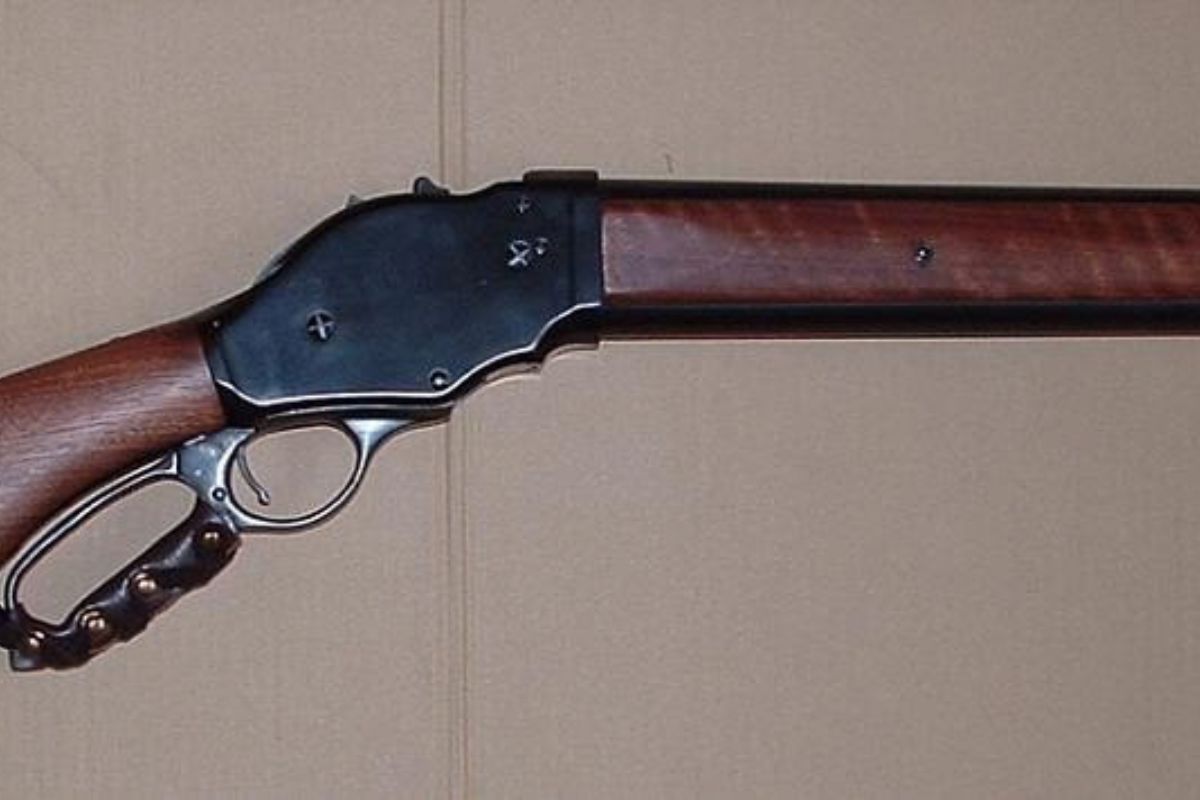
The Winchester Model 1887 stands out because it brought lever-action operation to a repeating shotgun. Designed by John Browning and introduced in the late nineteenth century, it represents a different branch of firearm development from the rifles and revolvers commonly associated with frontier lawmen. The National Park Service’s historic weapons collection includes an 1887 Winchester shotgun, confirming its place in the period’s firearms history. However, a museum collection is not the same as an agency issue list. Without a specific ranger service record, it is more accurate to describe this shotgun as a period-relevant firearm than to claim it was routinely carried by forest rangers.
8. M16 Rifle
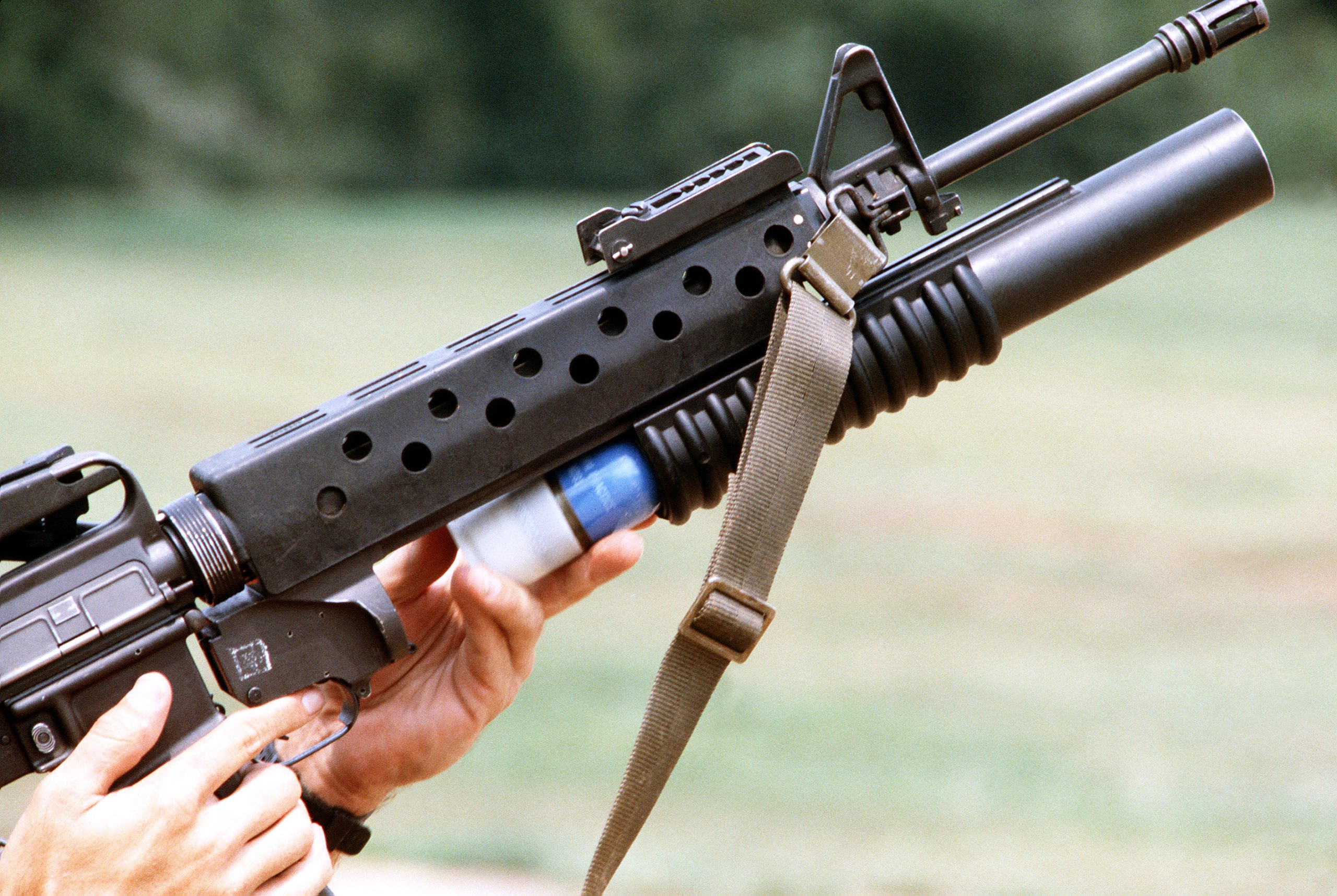
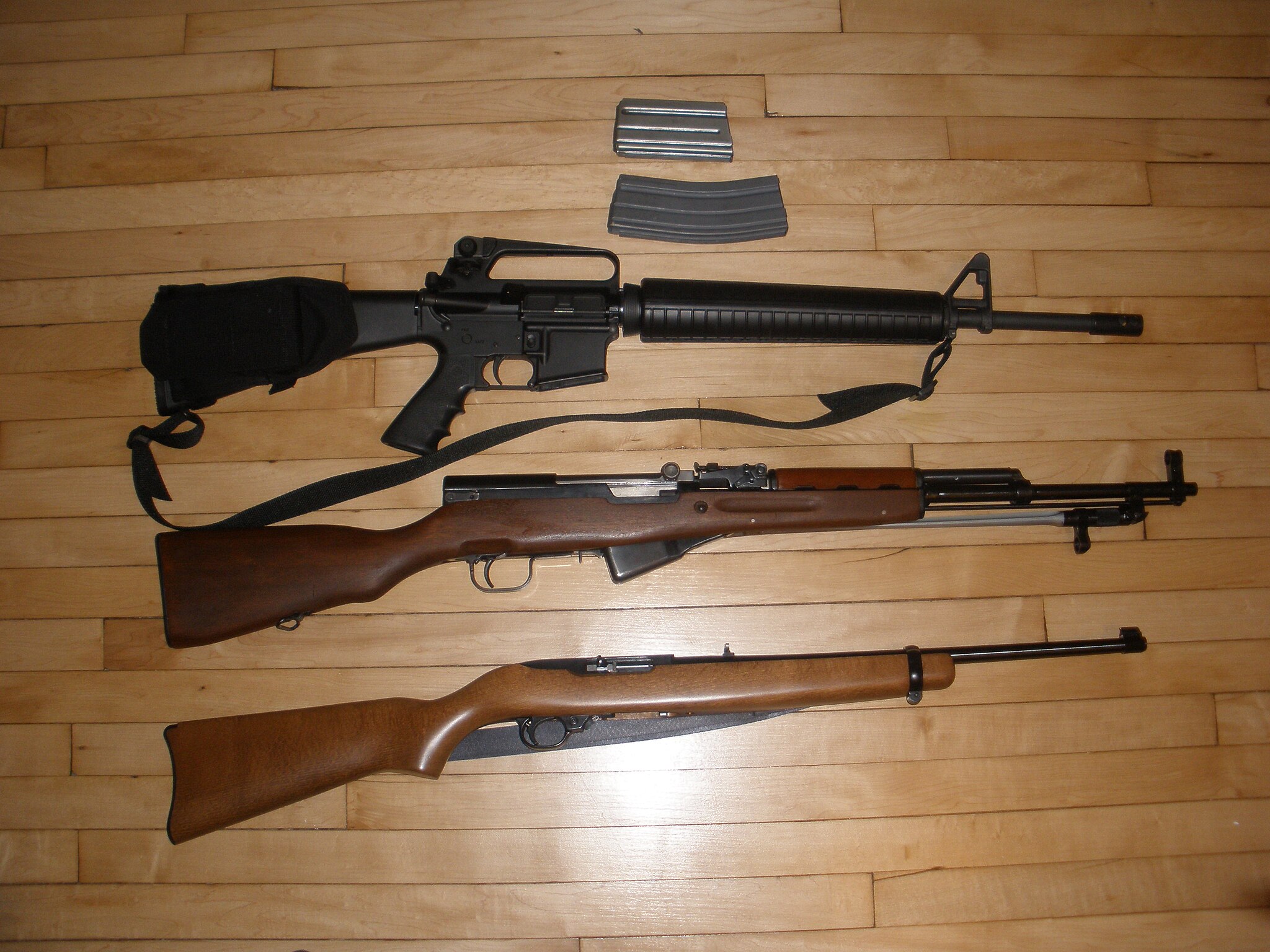
Modern ranger firearms have a very different history from the revolvers carried by nineteenth-century lawmen. An official investigation into National Park Service firearm purchases records that rangers at Mount Rainier National Park carried Vietnam-era M16 rifles before a later effort to replace them. This detail is particularly revealing because it documents an actual agency equipment history rather than relying on a weapon’s general popularity. The M16 originated as a military rifle, and its appearance in a park service context reflects a specific operational setting. It should not be interpreted as evidence that all American forest rangers carried military rifles.
9. Colt M4 Carbine
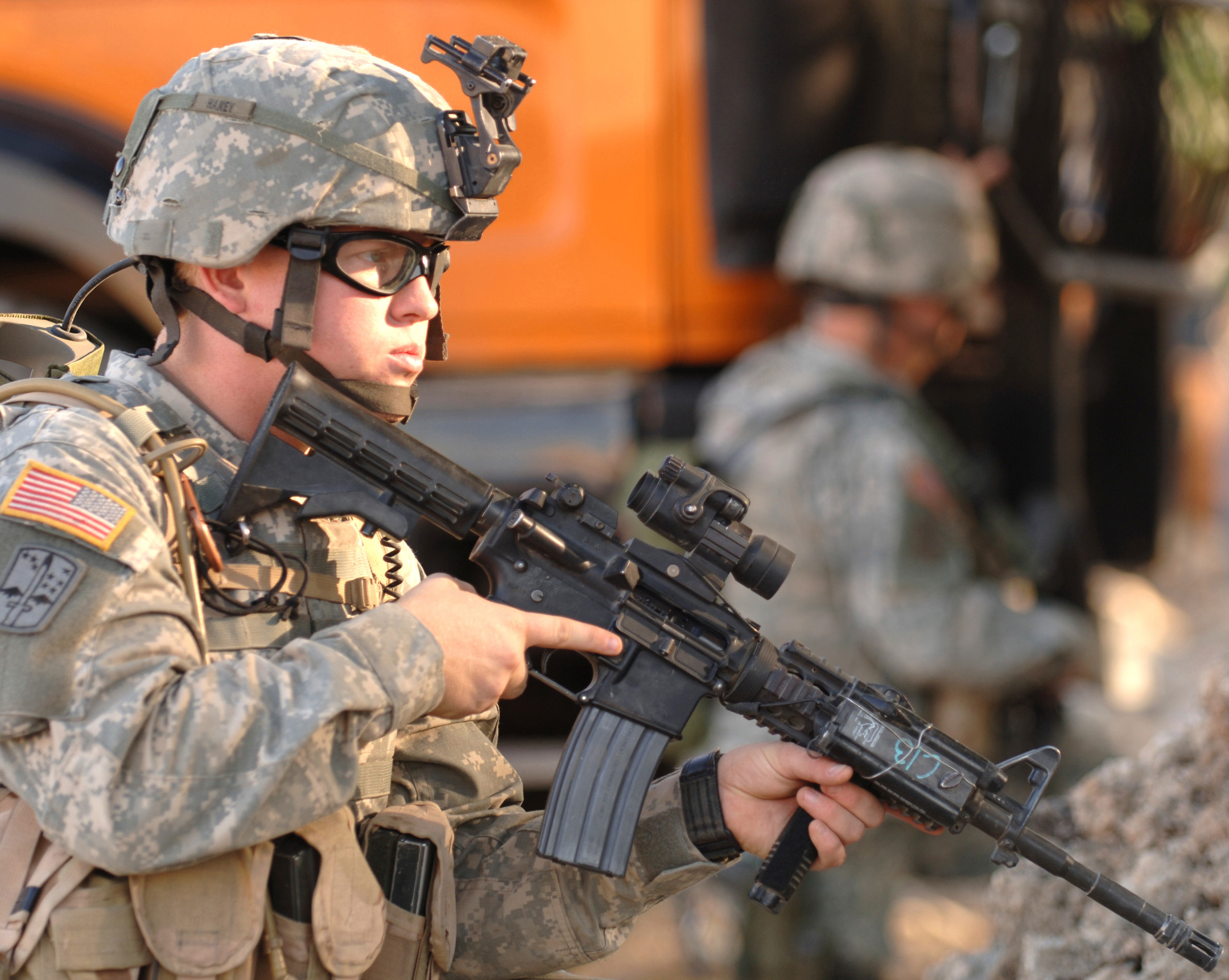
The Colt M4 carbine represents a more recent chapter in the history of firearms associated with park law enforcement. A federal oversight investigation examined the purchase of Colt M4 Model R0977 rifles for Mount Rainier National Park, including questions about their selection and compliance with National Park Service policy. The report describes a replacement effort involving older M16 rifles around 2008 and 2009. This is a documented example of specialized firearms procurement within a particular park operation, not evidence of a universal issue weapon. It also shows why the distinction between forest rangers and park law enforcement personnel matters when examining agency equipment.