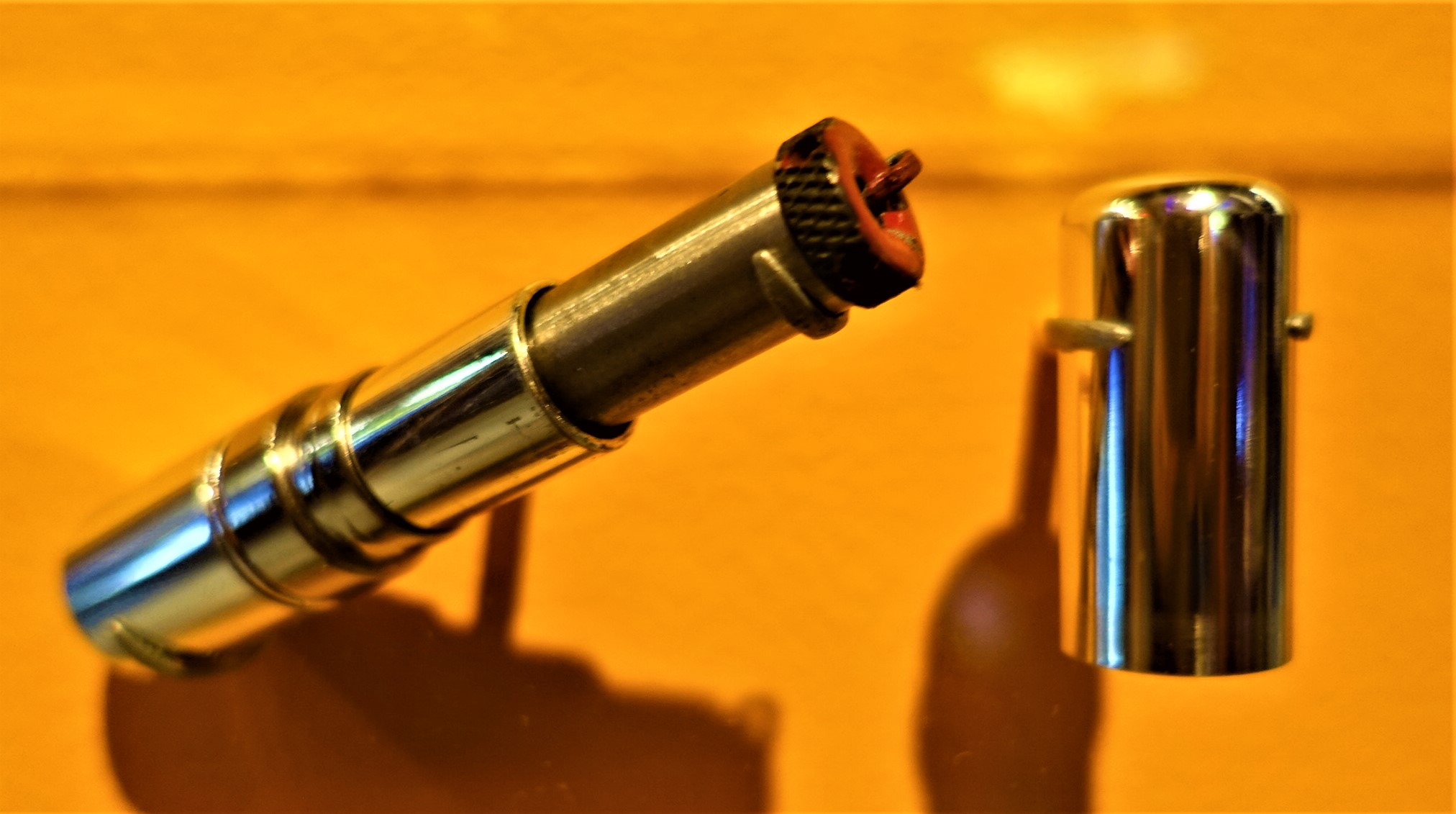
The Cold War produced some remarkably unconventional espionage equipment, but few devices were as visually deceptive as the KGB lipstick pistol. Dating to about 1965, this tiny 4.5 mm single-shot weapon was disguised as an ordinary lipstick container. Its purpose was concealment rather than conventional firepower, making it a fascinating example of how intelligence services adapted everyday objects for covert roles. The surviving evidence tells a compelling story, although some dramatic claims surrounding its use remain difficult to verify.
1. It Appeared During the Cold War
The KGB’s lipstick pistol emerged during the Cold War, when intelligence services prized concealment as much as firepower. The best-known example dates to about 1965 and was a tiny 4.5 mm single-shot weapon built into a lipstick-sized tube. Its unusual appearance was the point: an object associated with cosmetics could attract little attention during a casual search. The International Spy Museum dates the example to the 1960s. That combination made it memorable.
2. A Real Example Was Found in West Berlin

The weapon became famous after an example was discovered at a U.S. checkpoint in West Berlin in 1965. That detail gives the story a real historical anchor, rather than leaving it as a spy-fiction legend. West Berlin was a tense Cold War frontier, making concealed equipment especially significant. Contemporary and later museum accounts connect the recovered pistol with the KGB and describe it as a 4.5 mm, one-shot device. The discovery also showed why intelligence services experimented with disguises that could pass through ordinary inspections.
3. The Disguise Was Its Defining Feature

Its most striking feature was its disguise. Instead of resembling a miniature conventional handgun, the firearm was concealed inside a cylindrical lipstick-style container. The International Spy Museum describes the surviving example as a 4.5 mm single-shot weapon, with the barrel hidden within the compact body. It was not designed to compete with service pistols for range or capacity. Its purpose was concealment, and its unusual shape made it memorable precisely because it looked more like a cosmetic item than a firearm. That unusual silhouette became part of its lasting historical appeal.
4. It Carried Only One Round

Despite the nickname, the lipstick pistol was not a multi-shot pocket handgun. It carried just 1 round, a major limitation that reveals what the designers were trying to achieve. The weapon was intended for an extremely close-range role rather than sustained fighting. Museum descriptions say it fired when the barrel was pressed into the target. That unusual arrangement explains the grim phrase “Kiss of Death,” a nickname that captured both the disguise and the weapon’s intended clandestine character. A second shot was not available without reloading.
5. Its Caliber Was Only 4.5 mm

The 4.5 mm chambering is one of the most consistently documented specifications of the famous example. That measurement is smaller than the cartridges used by many standard military pistols of the Cold War era, reflecting the device’s miniature format. Its single-shot configuration further reduced its practical fighting value. What it gained instead was compactness and concealability. The historical significance therefore lies less in ballistic performance and more in how the design turned a familiar everyday form into a covert intelligence tool.
6. Its Assassination Reputation Needs Context

The lipstick pistol is often presented as an assassination weapon, but that description needs some caution. The International Spy Museum states that its ca. 1965 example would have been used for self-defense more than assassination. Public sources also do not establish a well-documented list of successful attacks carried out with this particular device. That distinction matters because Cold War spy stories often grow more dramatic in retelling. The surviving evidence supports its existence and KGB association, while the exact operational history remains less certain.
7. “Kiss of Death” Became Its Famous Nickname
The nickname “Kiss of Death” helped transform a little-known intelligence device into one of the Cold War’s most recognizable spy gadgets. It appeared in museum displays, historical writing, and popular culture because the contrast was so striking: a lipstick container hiding a 4.5 mm firearm. The International Spy Museum has preserved and exhibited an example from about 1965. That surviving artifact gives researchers a tangible link to the era when intelligence agencies developed increasingly creative concealment devices. The artifact remains a vivid example of concealment in espionage.
8. Concealment Mattered More Than Firepower

Its fame also comes from what the pistol represents about Cold War espionage. Intelligence work often depended on secrecy, portability, and deception rather than the obvious presence of military equipment. A device measuring only a few inches in its disguised form could attract less attention than a conventional pistol, at least in theory. The lipstick design shows how concealment itself became a technological objective. Its value was secrecy, not sustained firepower. In that sense, the pistol is historically important even though its 1-round capacity made it a highly specialized weapon.
9. It Survives Today as a Spy-Era Artifact
Today, the lipstick pistol is remembered primarily as a historical artifact rather than a practical firearm. The International Spy Museum preserves an example associated with the KGB and dates it to about 1965, placing it firmly in the Cold War period. Its 4.5 mm caliber, single-shot capacity, and lipstick disguise explain why it became so famous. The surviving evidence is strongest on its design, date, and association, while claims about specific missions or confirmed kills should be treated carefully. Its enduring legacy is the extraordinary idea of hiding a firearm in plain sight.