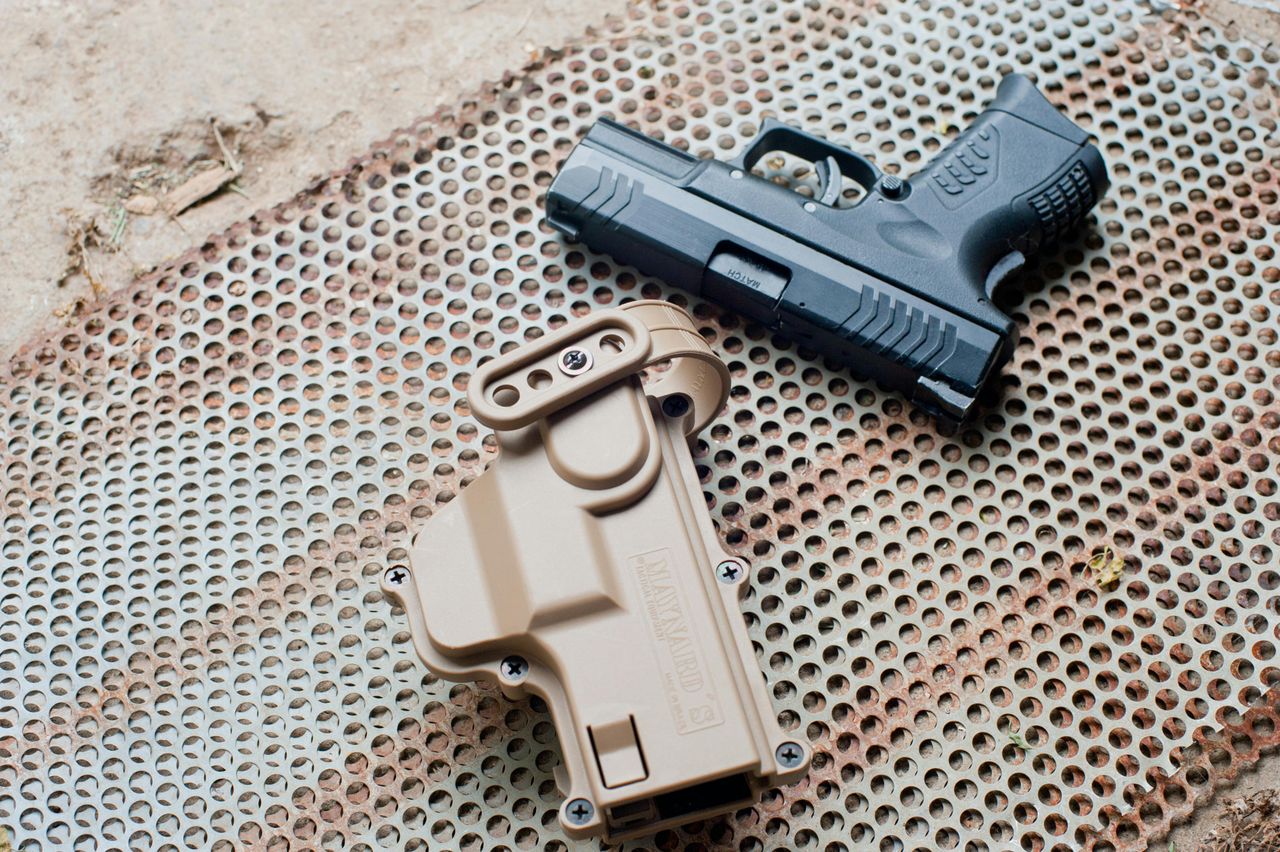
A carry gun lives a harder life than most range guns. It may fire less, but it is exposed to your body, your clothes, your car seat, and the weather almost every single day.
Holster wear is the most visible change, but not the most important one
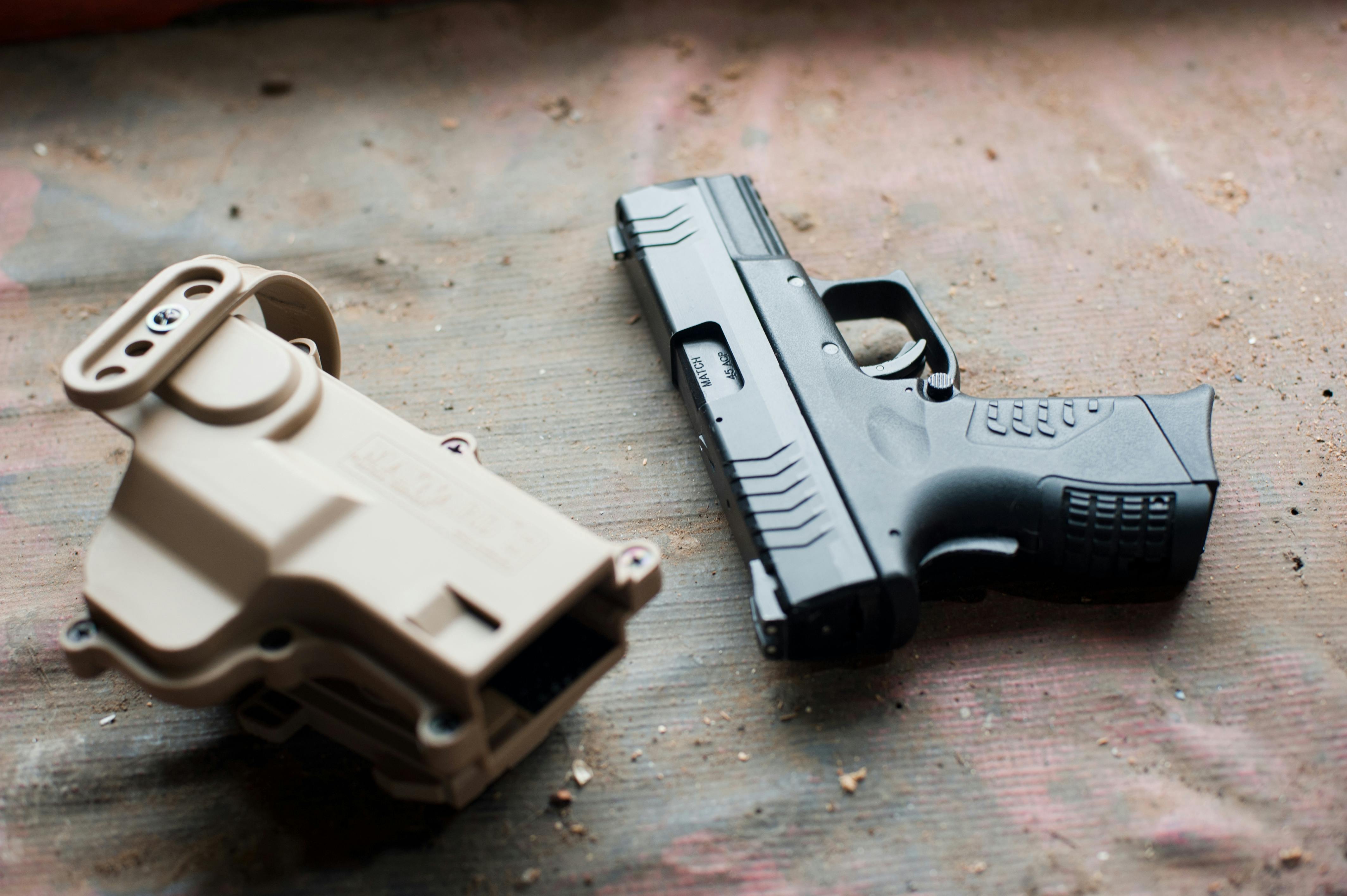
After a decade of concealed carry, the first thing most owners notice is finish loss. Sharp edges on the slide, muzzle, front sight, and controls often show polished spots where the holster rubs every day. On blued pistols, that can mean obvious thinning or bare metal. On nitrided or coated slides, it usually looks like glossy high spots rather than dramatic rust at first.
The amount of wear depends heavily on the holster material and how consistently the pistol is carried. Kydex creates repeatable friction in the same places, while leather can trap grit and moisture if neglected. Appendix carry often scuffs the front of the slide and muzzle more, while strong-side carry may polish the rear corners and controls. Small differences in ride height can’t add up over thousands of draws and reholsters.
Cosmetic wear worries new owners more than experienced carriers. In practice, finish loss by itself rarely hurts function unless it exposes untreated steel to sweat and humidity for years. What matters is whether those shiny spots stay clean, dry, and lightly protected. A beat-up slide can still be perfectly dependable, but a neglected pistol with hidden corrosion under grips or around pins is a different story.
Sweat, lint, and daily grime create the slow damage that people underestimate.
Body contact is one of the harshest environments a pistol can face. Sweat contains salts and moisture that work into crevices around sights, slide serrations, magazine releases, back plates, and grip screws. In hot climates, or for people who carry close to the skin, that exposure can be relentless. Stainless steel resists rust better than carbon steel, but it is not magical, and small parts often use different finishes and alloys.
Lint is less dramatic, but over ten years, it becomes a real maintenance issue. Pocket carriers see it most, though inside-the-waistband pistols collect plenty from shirts and cover garments too. It packs into the muzzle end of the slide, around the recoil spring assembly, under extractors, and inside magazines. By itself, lint does not destroy a gun, but mixed with oil, dust, and sweat, it forms sticky residue that slows parts and attracts more debris.
The neglected magazine is often the weak link. Owners tend to wipe down the pistol and forget the mags riding against the body every day. Feed lips, springs, followers, and base plates all collect contamination, and magazine bodies can corrode from the inside out. Many reliability complaints blamed on the pistol itself are actually long-term magazine issues caused by years of carry grime and no scheduled replacement cycle.
Springs age from use, storage, and heat more than from simple
A common myth says carry guns wears out because the recoil spring or magazine spring stays compressed for years. In reality, spring life is mostly about quality, design margin, heat, repeated cycling, and whether the spring is being pushed beyond its intended range. A well-made spring can remain loaded for a very long time without failing just because the calendar moved forward. What shortens life faster is repeated compression cycles, poor metallurgy, or contamination.
That said, ten years of daily carry usually includes thousands of load and unload cycles, chamber checks, administrative handling, and range sessions. Each of those actions adds wear to recoil springs, striker springs, trigger return springs, and magazine springs. Compact and subcompact pistols tend to be less forgiving because their springs work harder in shorter slide travel. Manufacturers often recommend recoil spring replacement at intervals far shorter than owners expect, sometimes every few thousand rounds.
Heat matters too. A pistol left in a hot vehicle, pressed against the body all summer, and exposed to sweat can see conditions that slowly degrade lubricants and stress small components. The fix is not paranoia. It is tracking use realistically. If your carry gun has spent a decade riding daily, the smart assumption is that some springs are now cheap preventive maintenance, not lifetime parts.
Small repeated impacts add up, especially in compact carry pistols.
Most everyday carry pistols are lightweight and compact, which makes them easy to conceal and a little less forgiving over very long service lives. The slide slamming into the battery, the barrel locking and unlocking, and the frame absorbing recoil are all controlled violence. Over ten years, even moderate shooting volume can produce peening, worn locking surfaces, chipped extractors, or cracked small parts if maintenance has been inconsistent.
The problem is not usually the dramatic frame failure. It is cumulative wear in places that owners rarely inspect closely. Barrel hood wear, slide stop notch deformation, ejector damage, and extractor tension changes can develop gradually. Polymer frames generally hold up very well, but frame rails, locking blocks, and pins still deserve attention. Alloy-framed pistols can show wear patterns that differ from steel or polymer guns, especially when lubrication has been sparse.
Dry fire and administrative handling also count in small ways. Repeatedly dropping the slide on an empty chamber, slamming magazines into the gun, or rechambering the same top round over and over can create wear that has nothing to do with defensive shooting. The cartridge itself can suffer bullet setback from repeated chambering, which is a safety issue separate from the pistol but very much tied to long-term carry habits.
The sights, controls, and magazines often show age before the barrel does

Many owners assume the barrel will be the first major part to go, but on a carry pistol, that is often not true. Modern pistol barrels can last a very long time unless round counts are extremely high or cleaning habits are abusive. What tends to age first are the parts you touch constantly and the parts exposed to movement, sweat, and impact. Night sights dim, screws loosen, magazine catches round off, and slide stops lose crisp edges.
Tritium night sights are a perfect example. They do not last forever, and after roughly a decade, many are visibly weaker than when new. That does not make the pistol unusable, but it changes sight picture performance in low light. Fiber optic rods can crack or fall out, and plain black rear sights can rust around set screws if the gun is carried in humid conditions. A pistol can remain mechanically sound while its aiming system quietly declines.
Magazines deserve special emphasis because they are consumable items, whether people like that fact or not. Feed lips can spread, springs can weaken, and base pads take abuse from seating, dropping, and body pressure in concealment. If a ten-year-old carrying a gun still runs flawlessly, there is a good chance the owner has been rotating, cleaning, and replacing magazines instead of treating them as permanent hardware.
Long-term reliability depends less on brand and more on maintenance habits
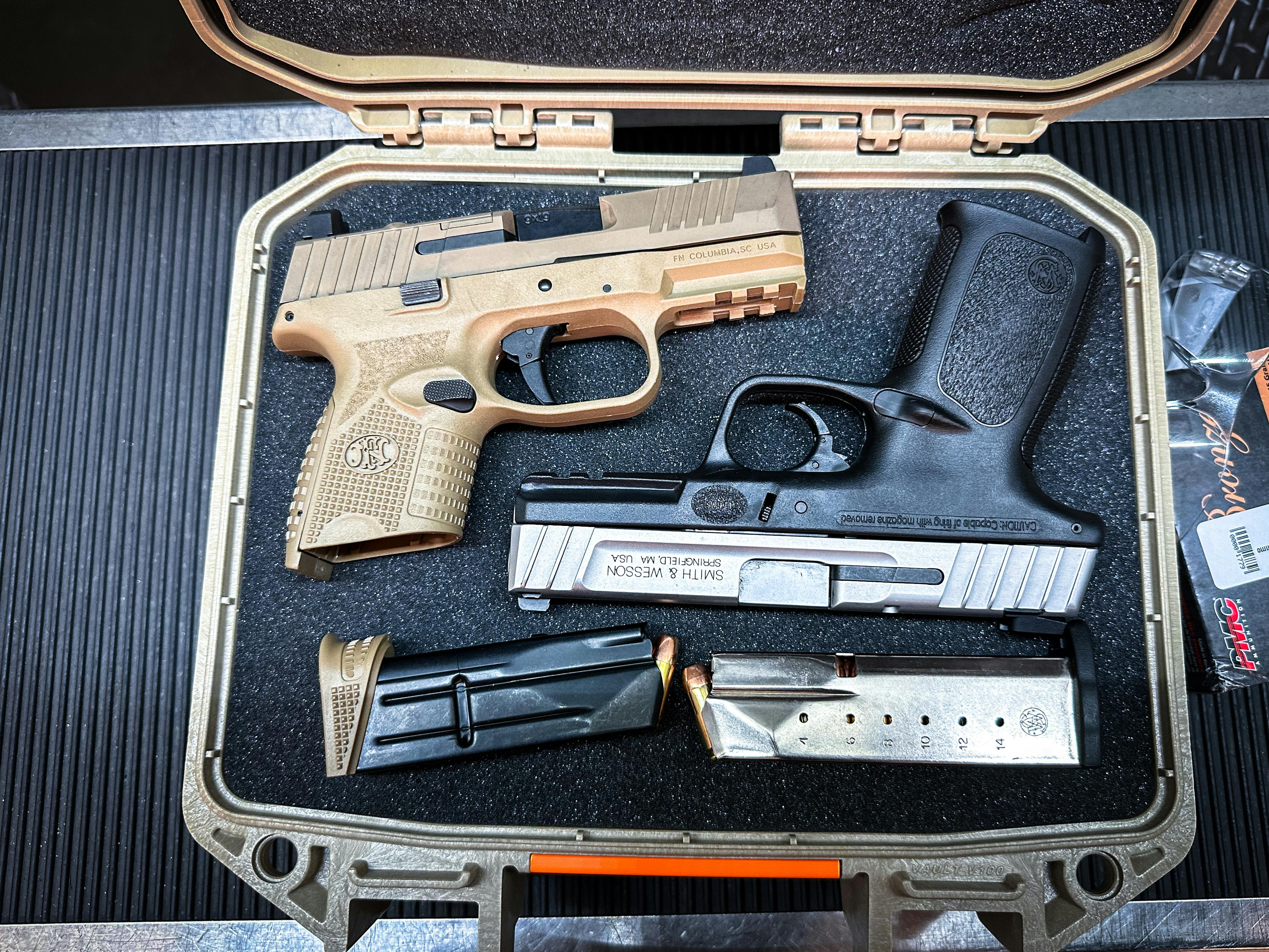
A premium pistol carried carelessly can become less trustworthy than a basic model maintained on schedule. Over ten years, the difference usually comes down to inspection, lubrication, spring replacement, and honest function testing. Owners who shoot their carry ammo occasionally, verify zero, clean magazines, and replace worn parts tend to catch problems early. Owners who assume modern pistols are maintenance-free usually discover wear at the worst possible time.
Experienced armorers often say carry guns should be inspected by use pattern, not emotion. If the pistol gets soaked with sweat every week, rides in dusty environments, or is handled daily, it needs more attention than a safe-kept gun with the same round count. Visual checks should include rust around pins, unusual wear marks, cracks in polymer near rail sections, damaged extractor claws, and loose sights. None of this is complicated, but it does require consistency.
Documentation helps more than people expect. Keeping a basic log of round count, spring changes, magazine age, and any stoppages turns vague guesswork into a maintenance plan. Law enforcement agencies have long understood this because duty pistols are tools, not talismans. Civilian carriers benefit from the same mindset. If a pistol has protected you for a decade, it deserves scheduled upkeep, not sentimental assumptions.
A ten-year carry gun can still be excellent if you treat wear like information.
The encouraging truth is that a decade of concealed carry does not automatically ruin a pistol. Many modern handguns can remain completely serviceable after ten years of daily carry, provided wear is monitored and consumable parts are replaced. Finish loss, polished edges, and a few scratches are often just evidence that the gun has done its job as a constant companion. Cosmetic age is not the same thing as mechanical decline.
What matters is learning to read the condition of the pistol correctly. Surface rust, sluggish cycling, weak magazine performance, fading sights, and unusual wear patterns are signals, not mysteries. A carry pistol should be inspected the way a serious user checks tires, brakes, or smoke detectors. Routine attention prevents surprises, and most fixes are inexpensive compared with the cost of the handgun or the stakes of needing it.
If your everyday carry pistol has spent ten years riding at your side, do not panic and do not ignore it. Strip it, inspect it, replace the predictable wear items, and test it with the ammunition you actually carry. The goal is not to preserve it like a collectible. The goal is to keep a working defensive tool trustworthy for the next decade, too.