The Winchester Salvo rifle came from a fascinating period when the U.S. Army questioned whether conventional one-shot-at-a-time rifles were the best way to increase battlefield hit probability. Project SALVO explored duplex ammunition, multiple barrels, rapid bursts, and other unconventional approaches. The goal was not simply to make a rifle more powerful, but to put several projectiles into the target area quickly enough to compensate for small aiming errors. Some ideas proved impractical, but the experiments influenced later military small-arms development.
1. Project SALVO Started With a Hit-Probability Problem
Project SALVO grew from a simple battlefield question: could several projectiles improve the chance of a hit without requiring a soldier to become a perfect marksman? The Army’s studies in the 1950s examined multiple-projectile ammunition and rapid bursts as ways to increase hit probability. Work began in 1952 and explored duplex and triplex loads, among other ideas. The important number was 2 or 3 projectiles from one firing event, creating a controlled spread rather than relying on one precisely aimed bullet. The experiment was therefore as much about statistics as hardware.
2. Winchester Built a Rifle Around Two Barrels
Winchester’s experimental SALVO rifle took the multiple-projectile idea in a dramatic direction. Instead of placing several projectiles in one conventional barrel, the design used 2 barrels mounted together and based much of its action on a T48/FN FAL receiver. Two magazines supplied ammunition to the paired barrels. The arrangement allowed the rifle to fire through one barrel when only one magazine was fitted, or use both when the pair was loaded. It was an unusually direct attempt to multiply firepower. That made the prototype look futuristic, but also made its logistics unusual.
3. The Ammunition Could Multiply Each Trigger Pull
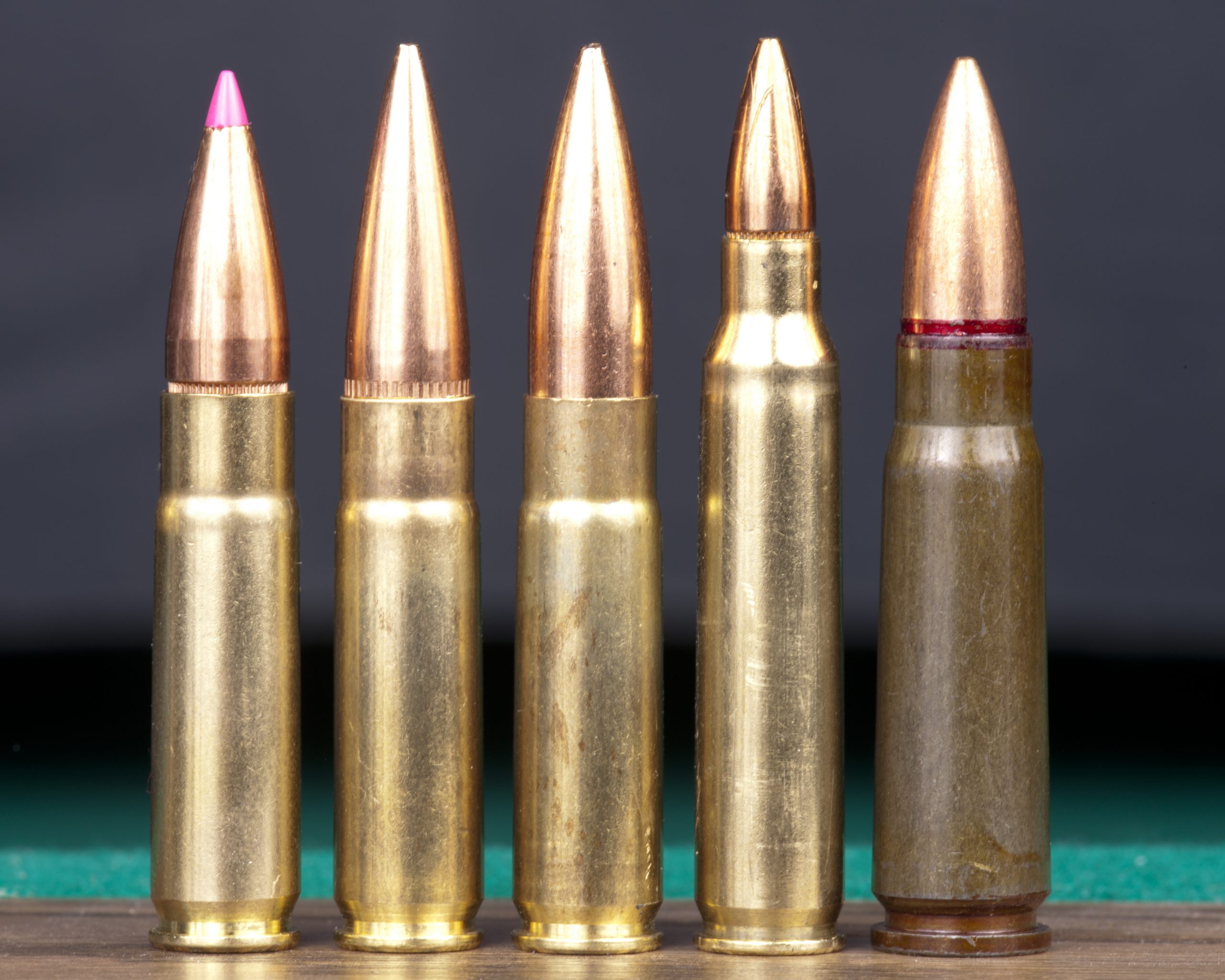
The Winchester concept became even stranger because its experimental T65 Duplex ammunition carried 2 bullets in a single cartridge. Different loads used 35-grain bullets at about 3,505 feet per second or 41-grain bullets at roughly 3,250 feet per second. With 2 barrels firing duplex rounds together, one trigger press could theoretically send 4 projectiles downrange. That made the rifle less about conventional marksmanship and more about creating a compact, controlled burst of projectiles. The result was an extraordinary increase in theoretical projectile output.
4. The Army Was Chasing Dispersion, Not Just Firepower
The goal was not simply to throw more lead into the air. SALVO researchers were interested in controlled dispersion because a small pattern could compensate for minor aiming errors. Battlefield studies had suggested that many hits came from unaimed or rapidly delivered fire, while ammunition consumption could be high. A salvo offered another mathematical approach: instead of betting everything on 1 projectile, put several projectiles into the same engagement window and improve the statistical chance that one would connect. It was a statistical approach to aiming.
5. Two Barrels Created a Serious Weight Problem
The Winchester approach exposed a major engineering weakness of multiple-barrel weapons: the hardware needed to fire several projectiles also had to be carried by the infantryman. Two barrels, their associated structure, feeding arrangements, and ammunition made the front of the rifle heavy. Historical accounts describe the multiple-barrel SALVO prototypes as suffering from pronounced forward imbalance. A rifle can be mechanically clever yet tactically awkward, and this was a crucial lesson from the program: 2 firing tubes brought more complexity than practical benefit.
6. Salvo Research Also Tested Three-Barrel Ideas
Winchester and Springfield did not stop at paired barrels. Their SALVO work included plans for 2- and 3-barrel weapons intended to launch near-simultaneous bursts of small-caliber projectiles. The attraction was obvious: 3 barrels could produce a compact volley almost instantly, potentially increasing hit probability without demanding a long automatic burst. Yet every additional barrel meant more mass, more alignment problems, and more mechanical complexity. The number 3 therefore represented both the promise of the concept and its engineering headache.
7. The Idea Evolved Toward Three-Round Burst Fire
One of SALVO’s lasting lessons was that firing several projectiles did not necessarily require several barrels. Later concepts explored rapid, controlled bursts from conventional-looking rifles. This path eventually influenced the thinking behind weapons such as the SPIW, where 3-round bursts of flechettes were pursued at extremely high rates. The Winchester SALVO rifle itself was not adopted, but the broader research helped establish a key principle: a tightly controlled 3-shot burst could offer much of the practical advantage of a salvo while avoiding some of the burden of multiple barrels.
8. The Salvo Rifle Was a Dead End With Useful Lessons
The Winchester SALVO rifle never became a standard Army weapon, but calling it a failure misses the larger story. Its experiments helped expose the trade-offs between hit probability, ammunition design, weapon weight, recoil, reliability, and controllability. The Army eventually favored more conventional solutions, while SALVO research fed into later programs, including SPIW. The remarkable figure is 4 projectiles per trigger press for the duplex, twin-barrel Winchester concept. It proved that multiplying shots was easy in theory, but making the idea practical for soldiers was far harder.