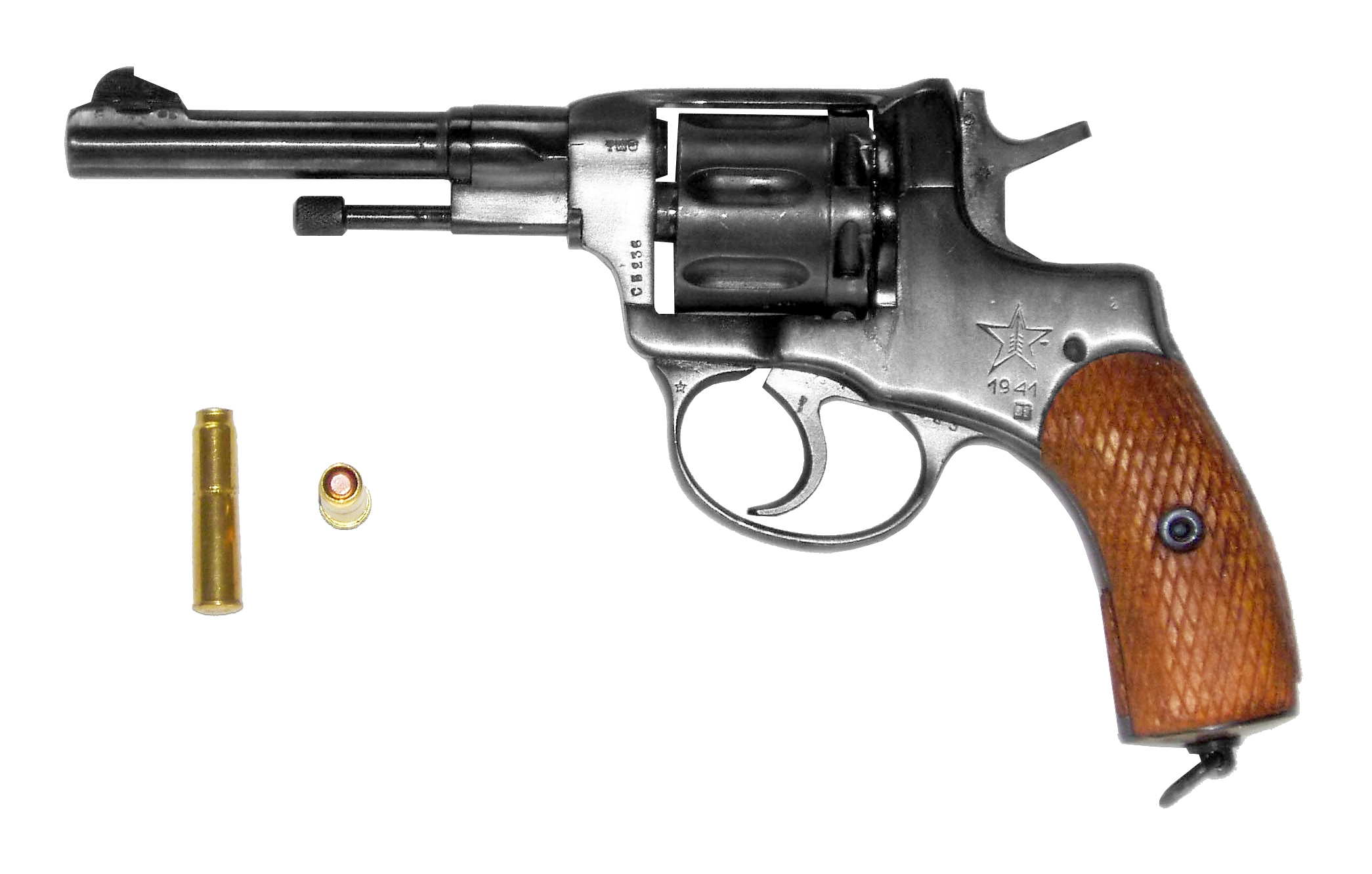
Most revolvers accept a small leak of hot gas at the cylinder gap, but the Nagant M1895 treats that leak as a flaw to be engineered away. Designed in Belgium and adopted by Imperial Russia in 1895, it served for decades through revolutions, wars, and secret police work. Its odd sealing system, long-necked cartridge, and unusual cam movement give it a character no other service revolver shares. Here are nine reasons the design works, with the measurements, dates, and prices that make each one clear.
1. A Cylinder That Slides Forward
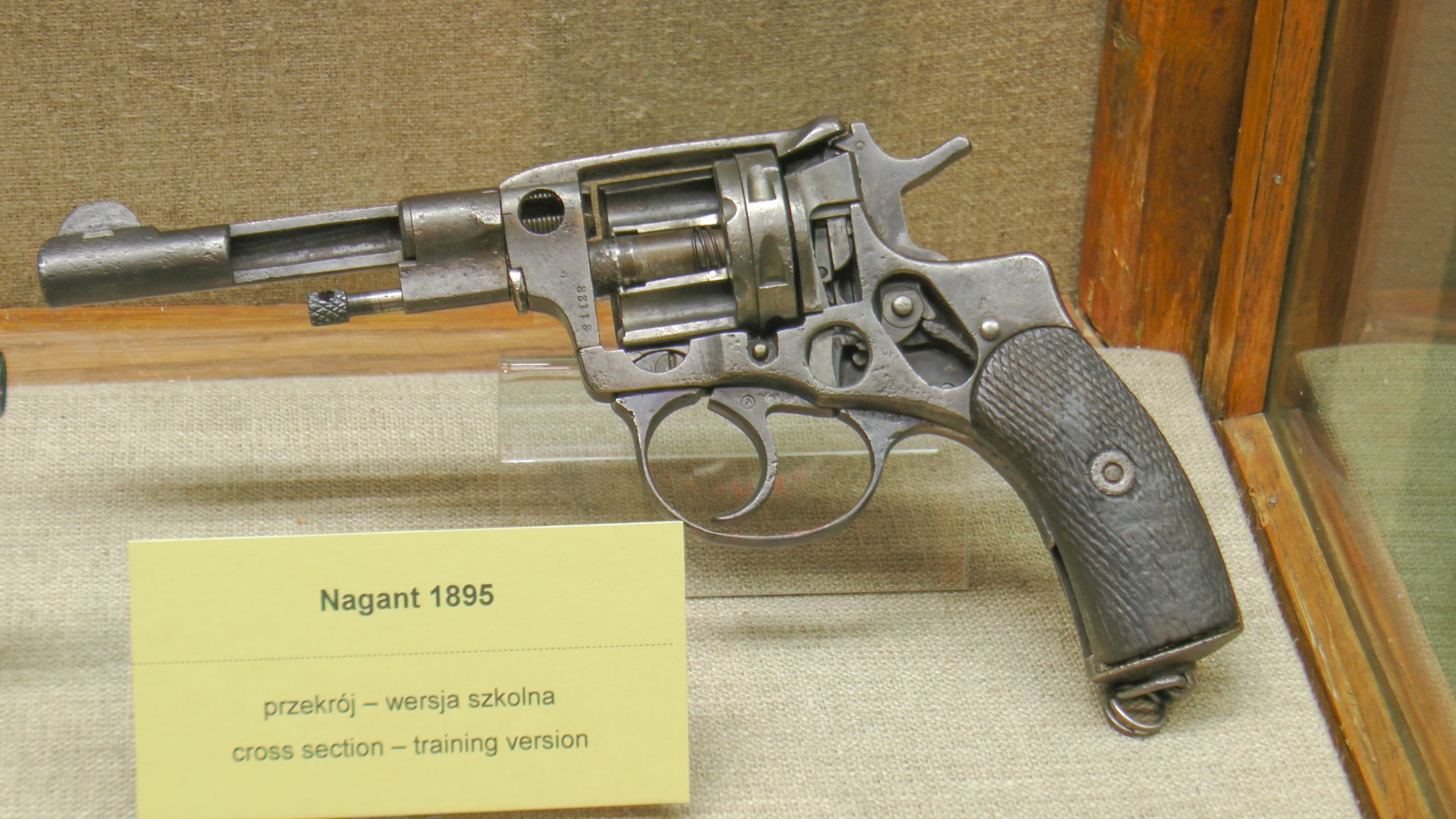
Most revolvers leave a thin gap between cylinder and barrel, but the Nagant closes it every time the hammer is cocked. A cam inside the frame pushes the cylinder forward by only a few millimeters, so the chamber meets the rear of the barrel with almost no space between them. That short, simple travel is the entire secret behind the gas seal. Belgian designer Léon Nagant developed the idea in the early 1890s, and Russia adopted the finished M1895 in 1895. The cylinder holds seven rounds, one more than most contemporary designs, yet the gun stays compact at about 9.3 inches long and roughly 1.7 pounds unloaded. Cams, not extra parts, handle the whole job.
2. A Cartridge Built Like a Plug
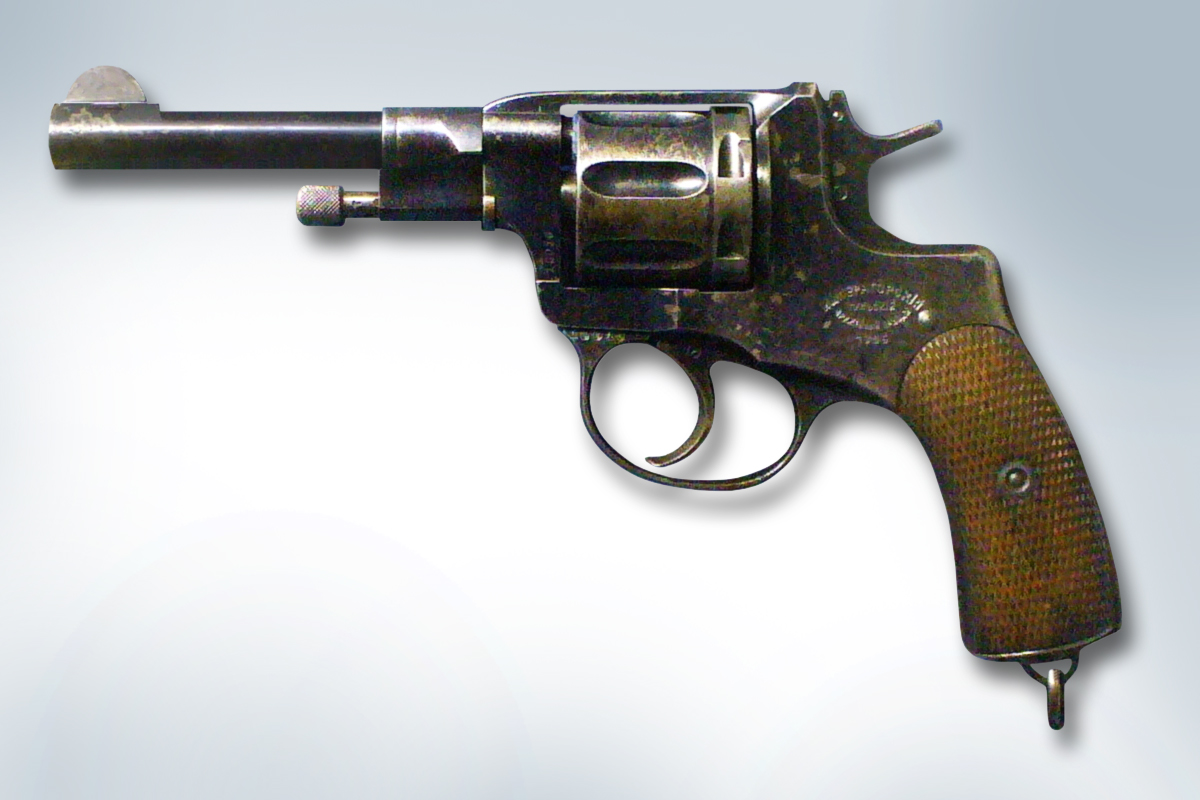
The 7.62x38mmR cartridge looks odd at first glance, because the bullet sits fully recessed inside a long, narrow case neck. The case measures about 38 millimeters, and its mouth reaches well past the bullet, which is exactly the point. When the cylinder slides forward, that projecting neck enters the barrel’s forcing cone and plugs the opening like a cork in a bottle. Designers had to hold the dimensions within a few hundredths of a millimeter, or the case would jam instead of seating. The standard Russian load pushed a bullet of about 108 grains, or roughly 7 grams, which is light by modern standards but enough for close-range service work in 1895.
3. Brass That Expands to Block the Leak
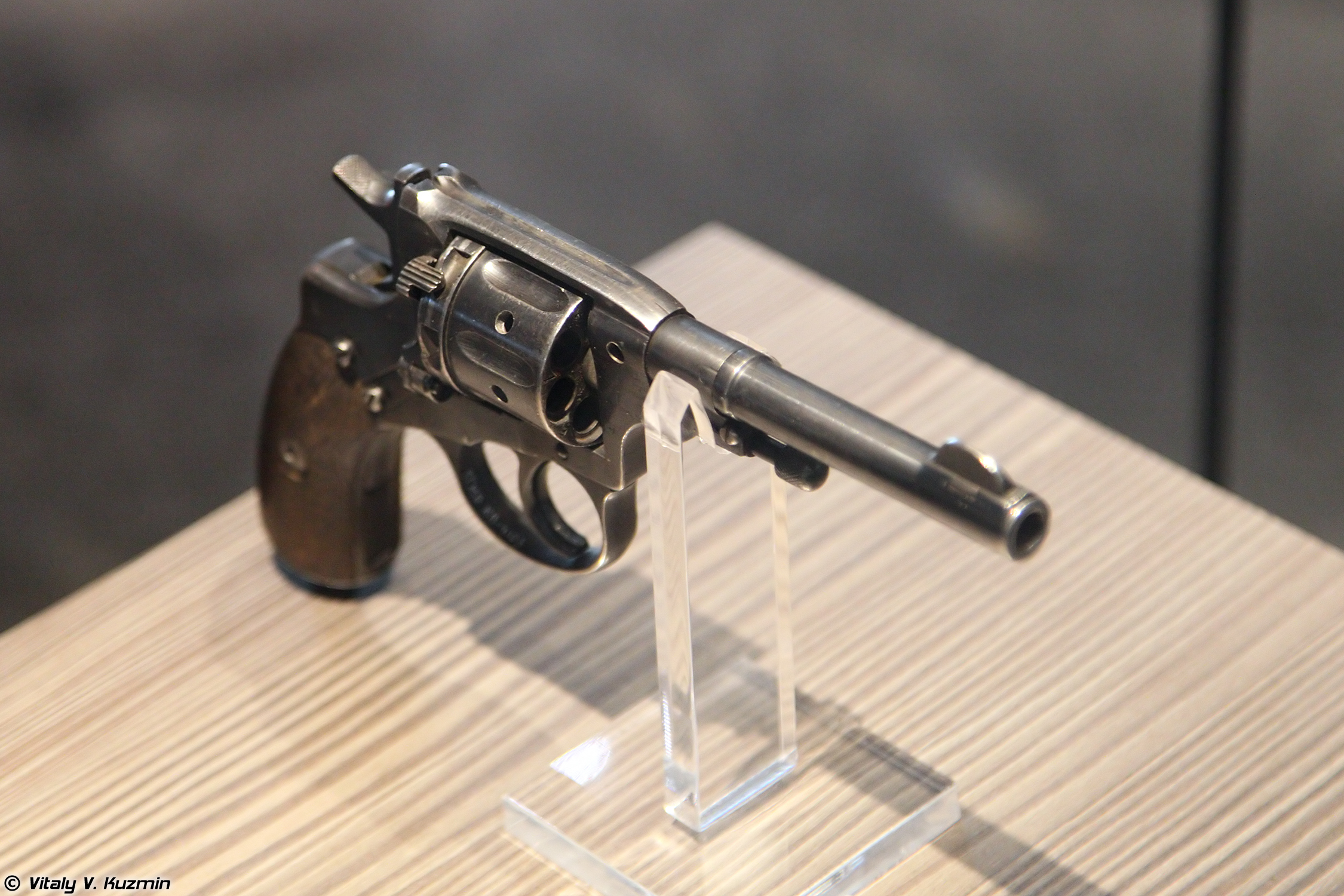
Mechanical contact alone would not stop every leak, so the Nagant also lets the brass do some sealing. When the powder ignites, pressure swells the case neck outward against the tapered throat of the barrel, forming a tight ring that blocks escaping gas. Engineers call this obturation, and it works much like the brass cases in artillery. Pressures in this cartridge stay well under 20,000 psi, so the thin brass handles the strain without splitting. After the shot, the neck relaxes slightly, the cylinder drops back, and it turns freely to the next chamber. Each of the seven shots repeats that brief, precise motion without any help from the shooter.
4. A Small but Real Gain in Velocity
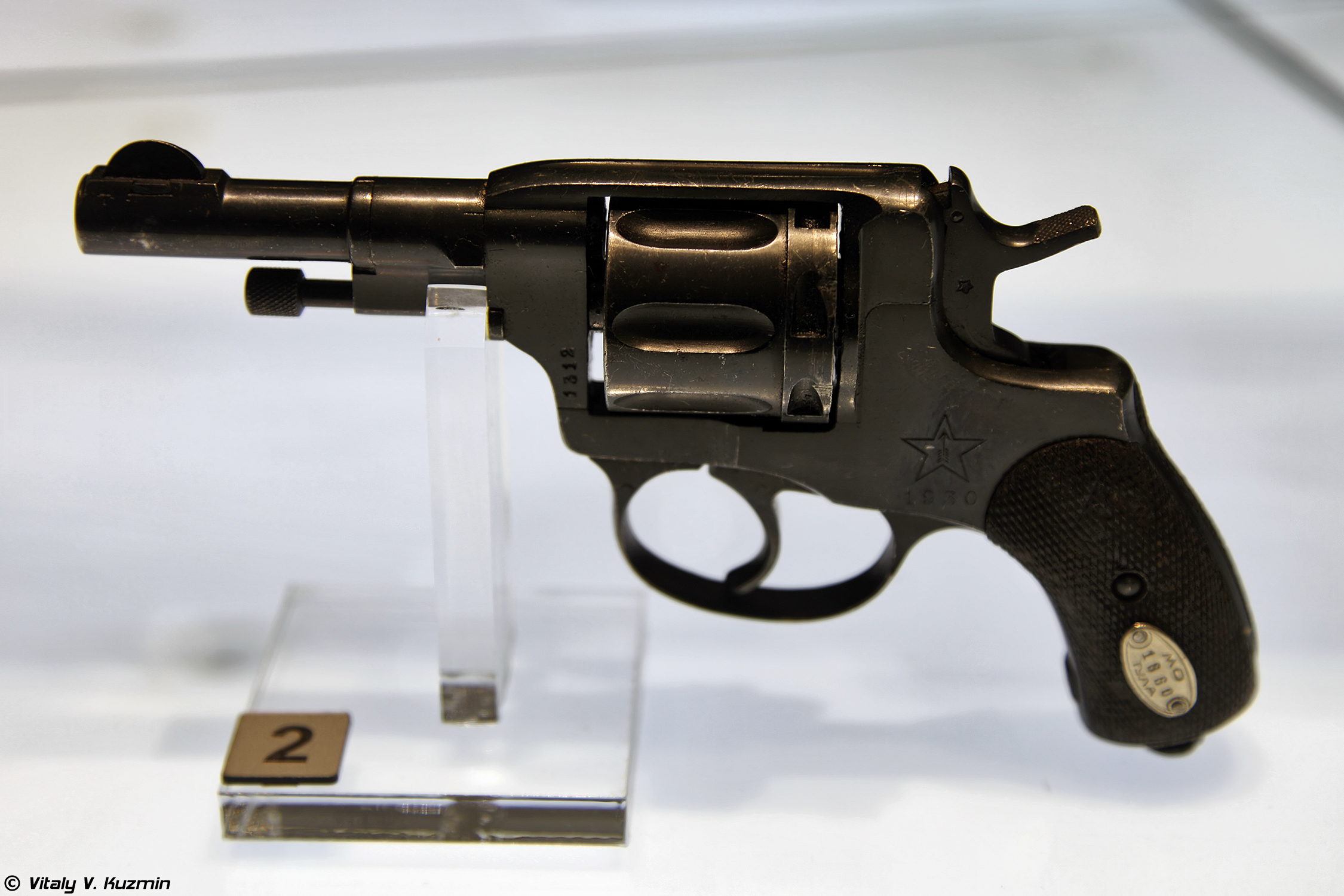
A sealed joint means the gas pushes only the bullet, which gives the Nagant a small but real velocity advantage. Standard Soviet loads leave the 4.5-inch barrel at roughly 270 to 330 meters per second, or about 890 to 1,080 feet per second, depending on the batch. Tests against open-gap revolvers firing similar bullets often show a gain of a few dozen feet per second, since no gas escapes sideways. Muzzle energy lands near 250 to 300 joules, comparable to a mild .32 or .38 caliber load. There is also less flash and spray around the cylinder, so shooters feel less blast against the hand and face. It is a modest improvement, but across millions of service revolvers it mattered.
5. Careful Timing Between Hammer and Cylinder
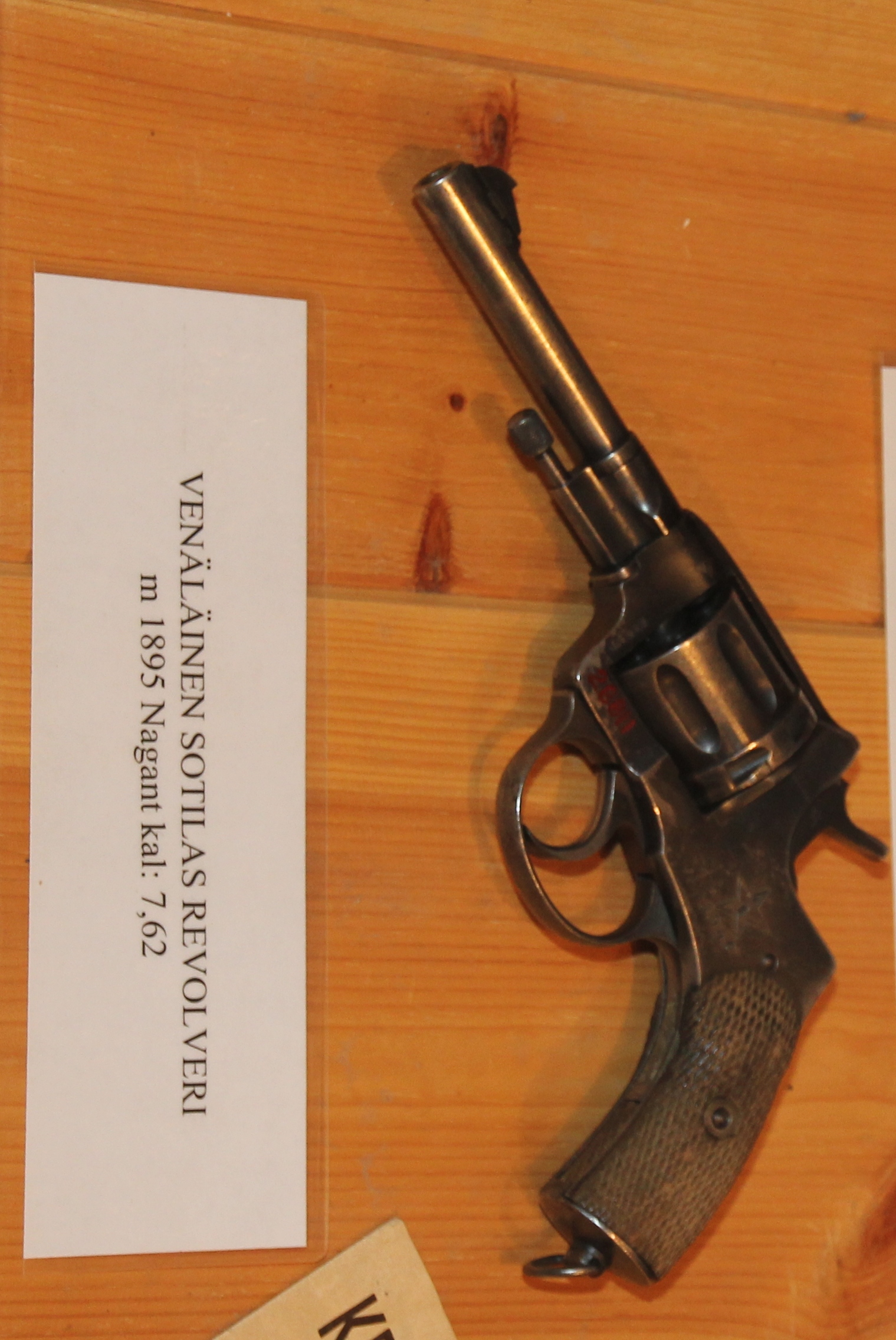
Nagant revolvers rely on careful timing between hammer, trigger, and cylinder. In double action, the pull rotates the cylinder first, locks it, and only near the end of the stroke shoves it forward to meet the barrel. In single action, the same motion begins as the hammer is thumbed back. Soldier models allowed both modes, while the officer’s version worked in double action only, with a spurless hammer. Double action pulls are famously heavy, often 18 to 22 pounds, partly because the trigger must push the whole cylinder against its spring. Single action drops the pull to about 3 to 4 pounds and noticeably tightens groups, which is why careful shooters thumb the hammer back.
6. A Revolver That Can Be Silenced
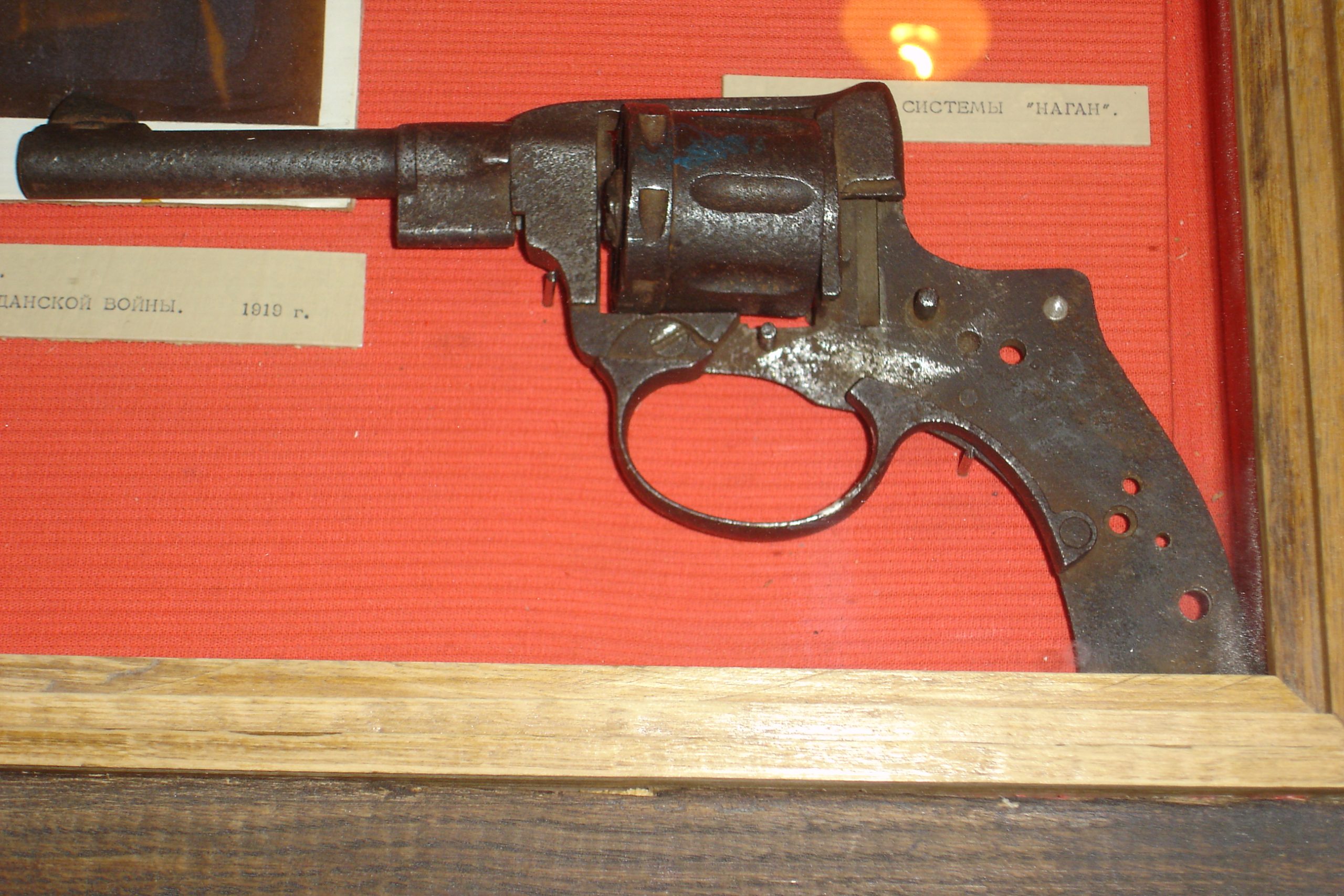
The gas seal made the Nagant one of the few revolvers that can wear a real suppressor. Because no gas escapes at the cylinder gap, a can on the muzzle captures nearly all of it. In 1929, the Soviet Mitin brothers developed the Bramit device, a baffled tube that threaded onto a modified Nagant barrel, and the NKVD and reconnaissance units used it through the Second World War. The subsonic 7.62x38mmR round already travels near 300 meters per second, so it needs no special load. A suppressed revolver also keeps its brass, so no spent casings land in the open, which suited covert work. Because the round is already gentle, the can needed only a few baffles to quiet the shot.
7. Tight Machining at Tula and Izhevsk
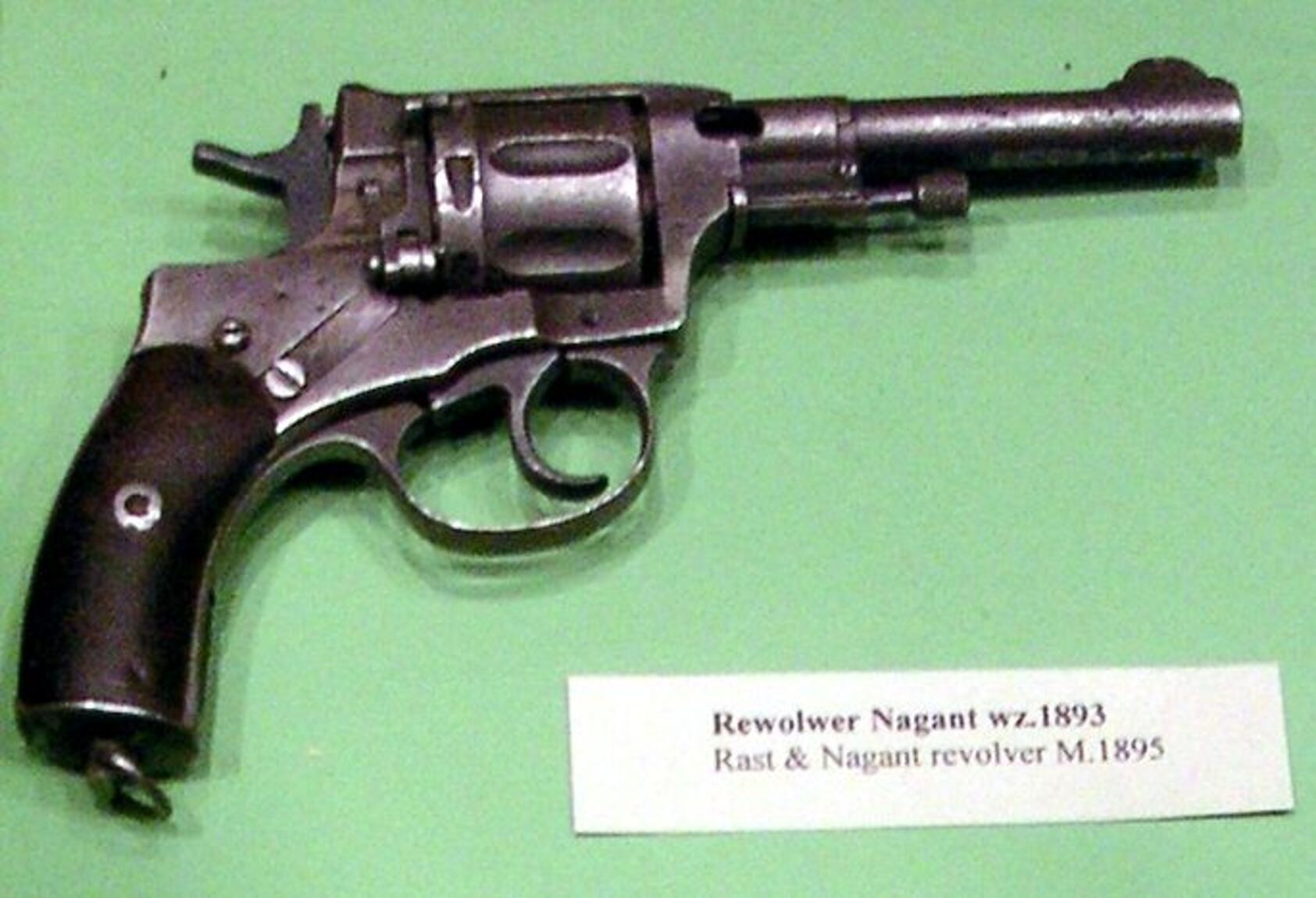
Building a gas-seal revolver demands tighter machining than a normal wheel gun. Early guns were made in Belgium, then Tula arsenal took over in 1898, with Izhevsk joining later. Workers had to hold the cylinder gap to roughly 0.1 millimeters and keep the chambers aligned within hundredths of a millimeter, tolerances older shops struggled with. Soviet production ran until 1945, and some estimates count more than 2 million guns. Finishes on wartime revolvers were often rough, yet the sealed fit rarely suffered, since factory gauges rejected any loose one. Collectors check arsenal marks and year stamps to date each gun, because quality shifts noticeably between 1910 and 1943.
8. Trade-Offs Worth Accepting
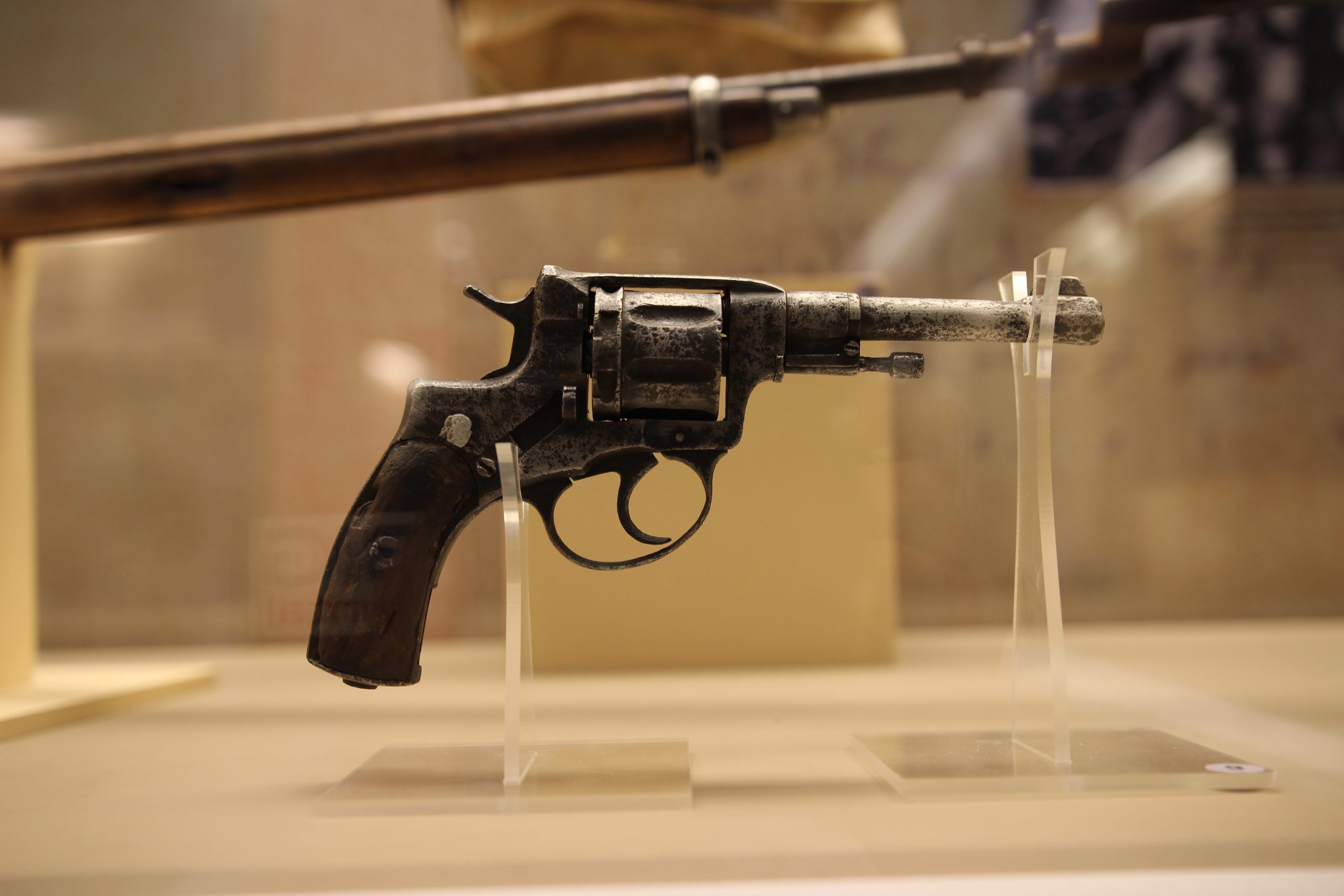
Every clever feature has a price, and the Nagant pays several for its sealed design. Loading takes place through a gate on the right side, one cartridge at a time, and the ejector rod pushes out empty cases individually, so a full reload can take 45 seconds or more. The long, heavy trigger pull makes precise shooting harder at distances beyond 25 yards. The cylinder cannot swing out because the cam system requires a fixed frame, and the forward shift adds slightly to wear on the cylinder face. Even so, a sound gun keeps a 3- to 4-inch group at 25 yards, which is good enough for the service tasks it was built for. For officers and police, simplicity mattered more than speed.
9. An Affordable Piece of History Today
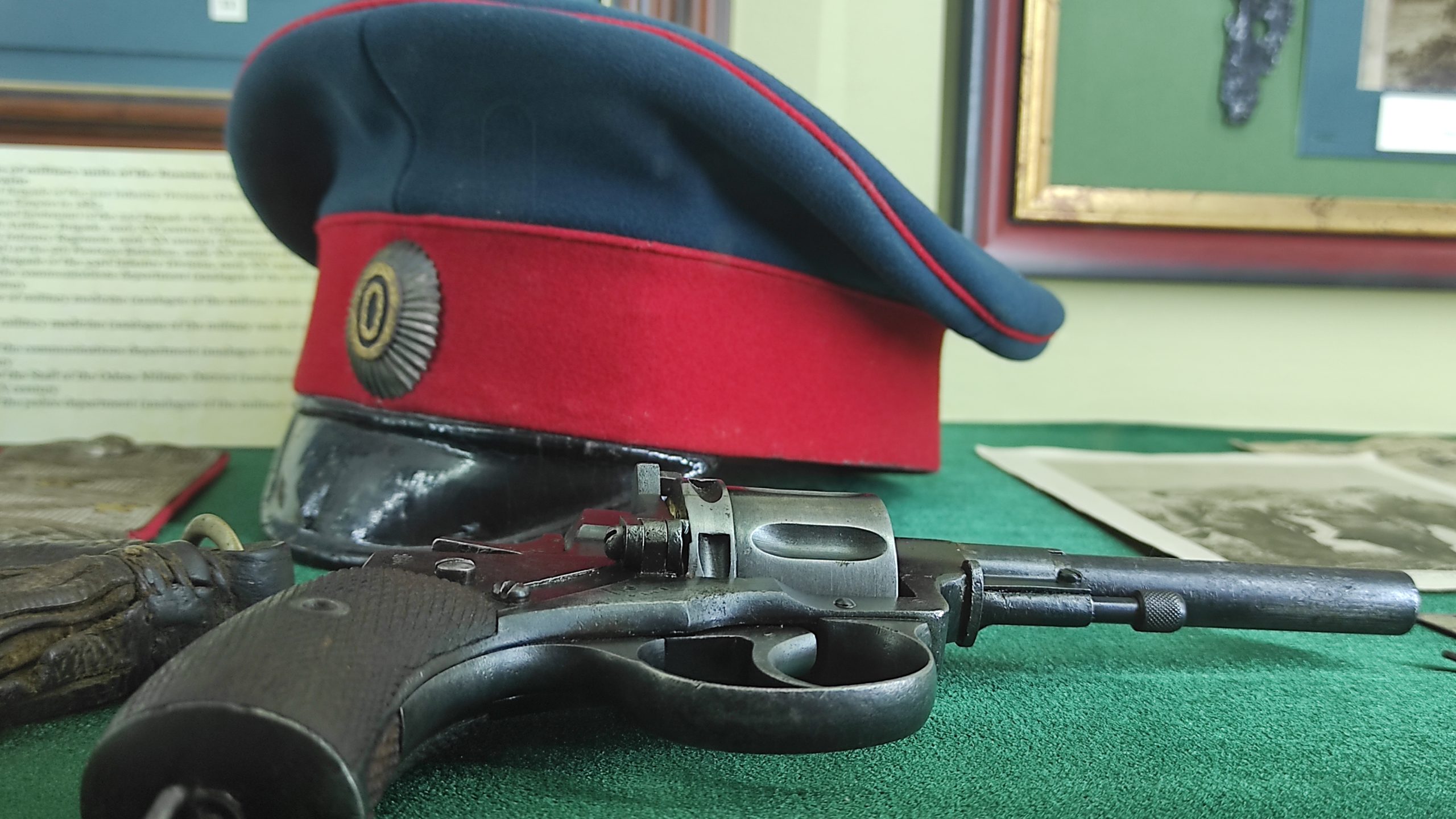
Today the Nagant is one of the cheapest ways to own a piece of Russian history. Surplus revolvers, often import-marked Tula or Izhevsk guns dated 1910 to 1945, usually sell for about 250 to 450 dollars in the United States. Ammunition is still made in Russia and Eastern Europe, and a box of 50 factory rounds costs around 40 to 60 dollars, though supplies swing with import rules. Use only correct 7.62x38mmR ammunition, because the long-necked case needs exact dimensions to seal properly. Cleaning is simple, but the forcing cone collects fouling quickly, so a few passes with a brush after every 50 shots keep the seal tight. A reliable Nagant can last another century.