When Richard Gatling patented his rotating-barrel gun in 1862, most soldiers still fought with single-shot muzzle-loaders and drilled to fire three rounds a minute. Within a few decades, that world was gone. The Gatling did not win wars by itself, but it altered how armies bought weapons, moved supplies, fought colonial campaigns, and imagined the battlefield. Here are six lasting changes, with the dates, weights, and rates of fire that make each one clear.
1. It Turned Firepower Into a Machine
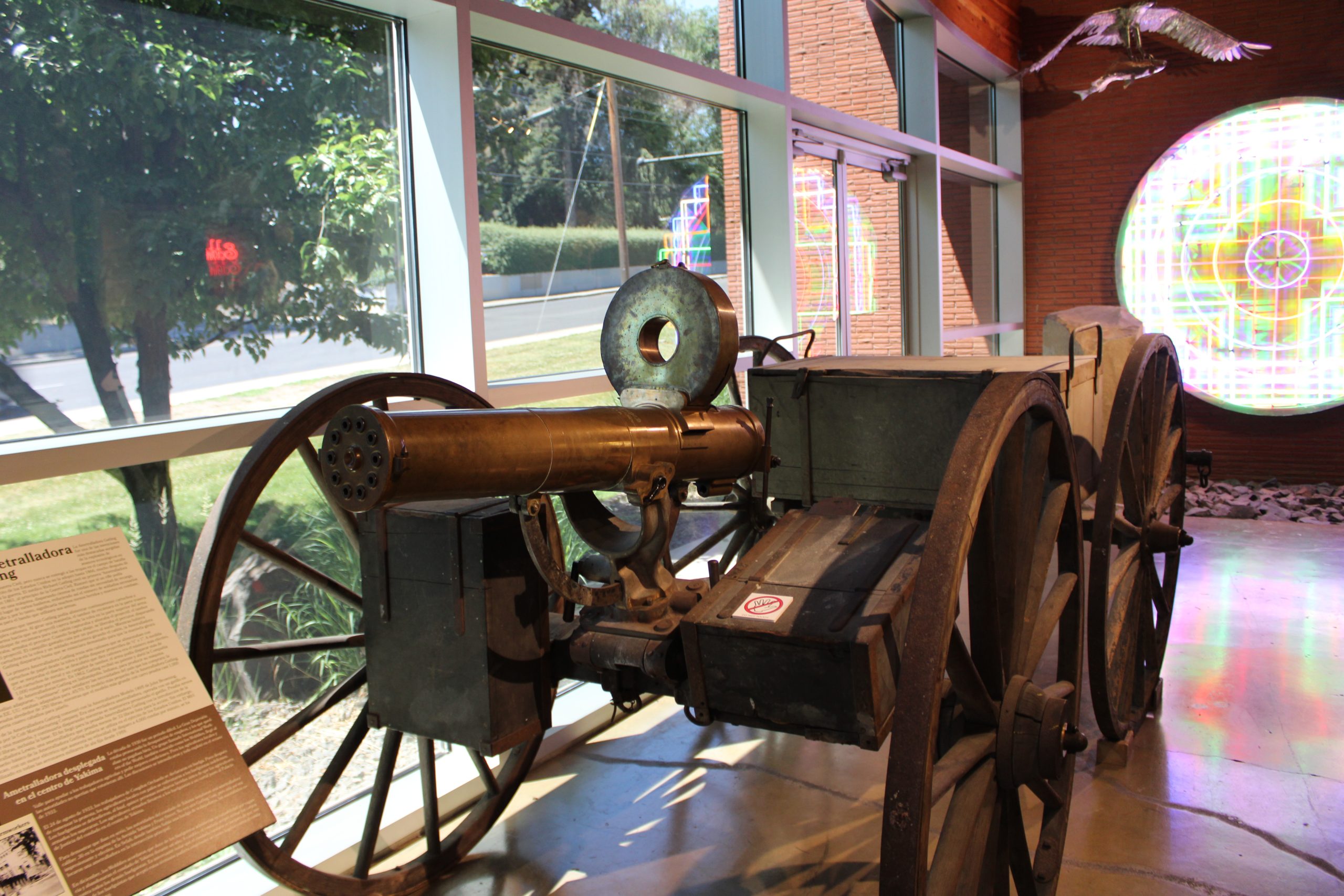
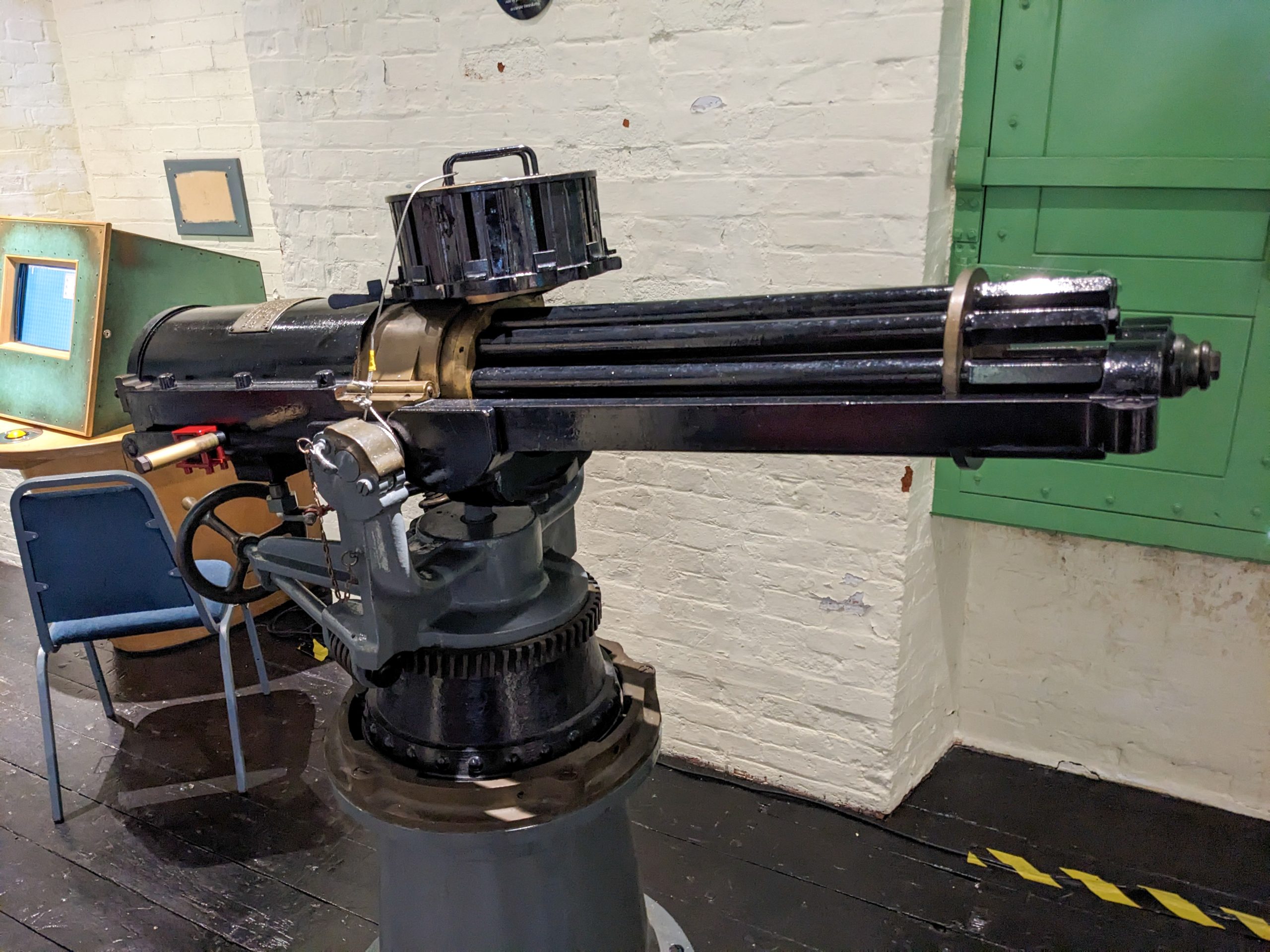
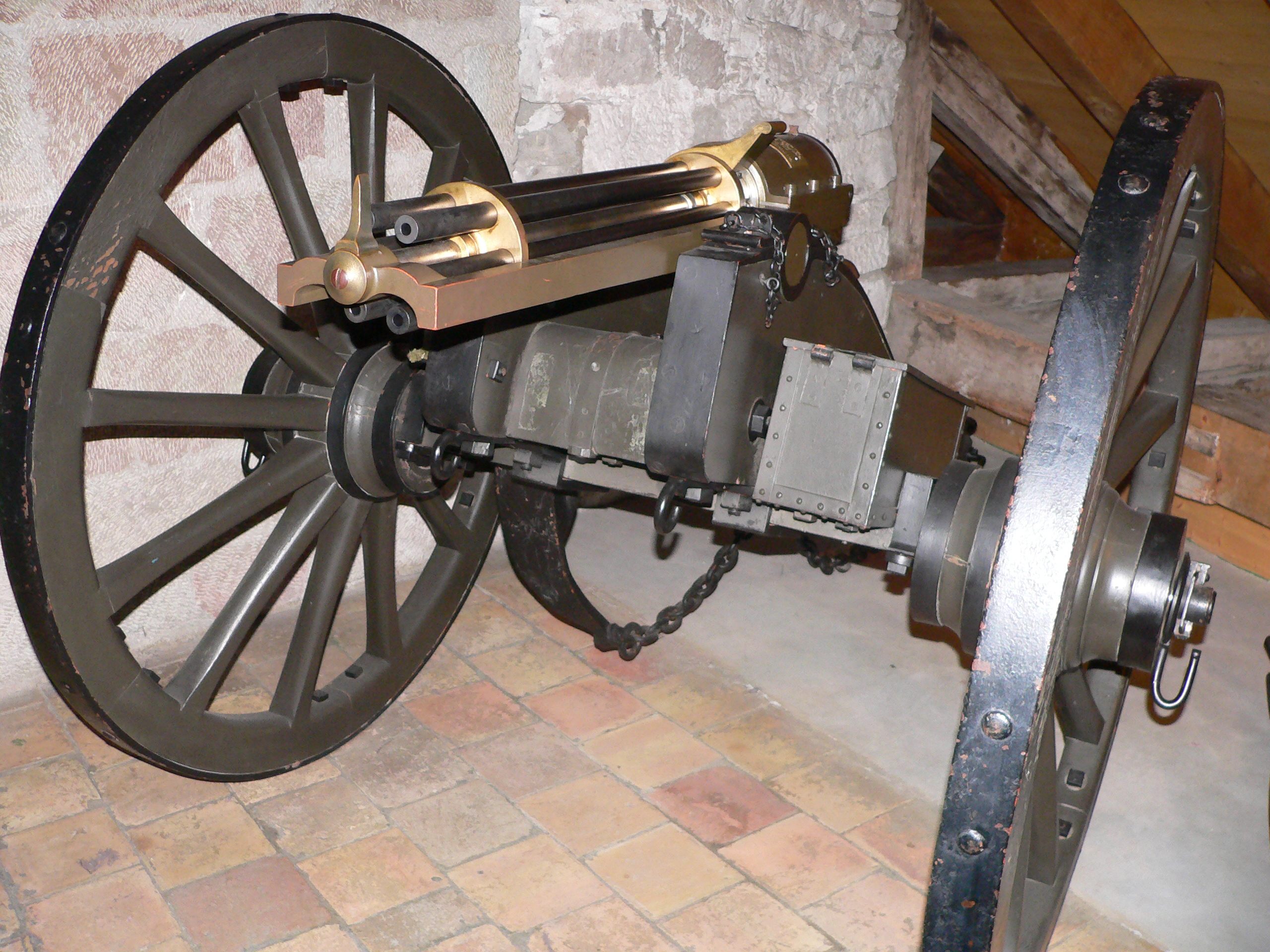
Before Richard Gatling, a skilled infantryman with a rifle musket might fire two or three shots a minute. His hand-cranked weapon, patented on November 4, 1862, changed that math almost overnight. Six barrels rotated around a central axis while a crew member turned the crank, loading and firing each barrel in turn. Early guns managed roughly 200 rounds per minute, and improved models of the 1870s pushed past 400. Gatling, a physician from Indiana, claimed one gun could do the work of about 100 riflemen, a boast that sounded absurd to veteran officers. The real shock was not the speed itself but the idea that a crew of four could deliver sustained, aimed fire without exhausting the shooters.
2. It Rewrote How Armies Bought Weapons
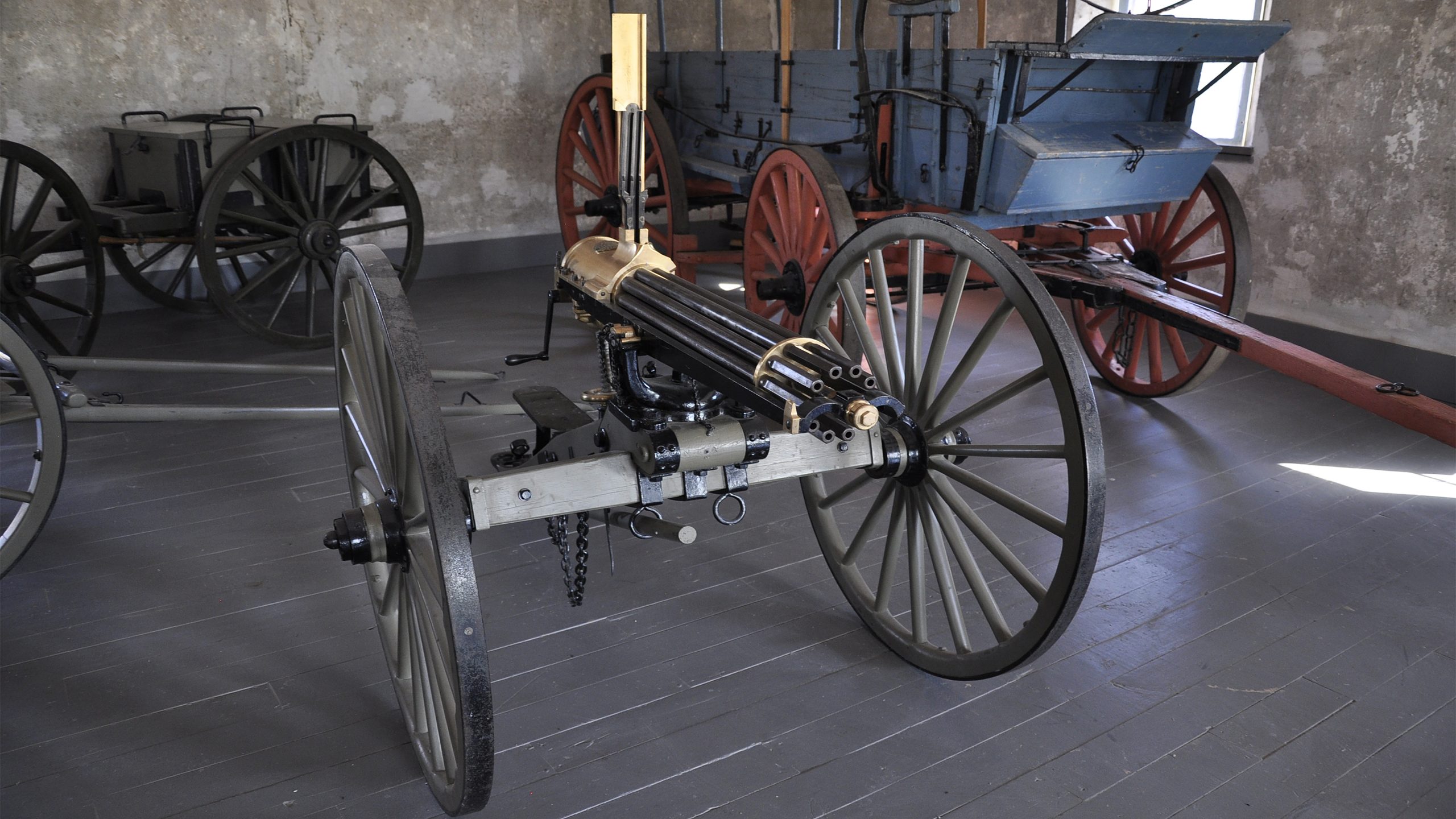
Armies were slow to trust the new weapon, and the Civil War shows why. Union ordnance chief James Ripley resisted buying it, doubting any untested invention could outperform trained riflemen. General Benjamin Butler ignored the objections and bought 12 Gatling guns in 1863 at about 1,000 dollars each, a huge price when a rifle cost under 20. He used them near Petersburg in 1864, but only a few saw combat. Only in 1866 did the U.S. Army formally adopt the Gatling, ordering roughly 100 guns in .50 and .58 caliber. That decision gave the design a lasting official foothold. It also taught gun inventors that battlefield results mattered more than patents when winning military contracts.
3. It Tilted Colonial Battles
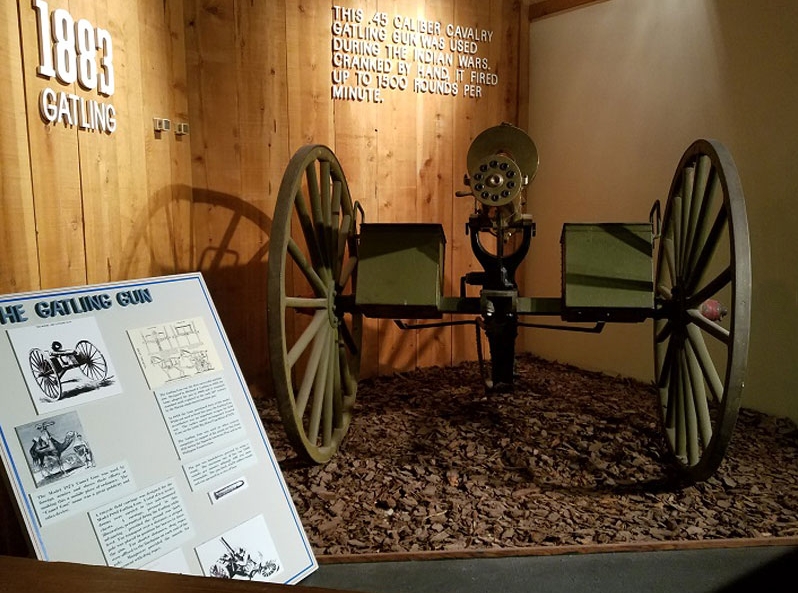
Colonial armies made the Gatling famous because it fit the lopsided battles of the era. British forces carried Gatlings in the Anglo-Zulu War of 1879, where two guns supported the square formation at Ulundi on July 4. A few thousand soldiers faced a Zulu army reported at 12,000 to 20,000, and sustained fire from rifles, artillery, and Gatlings broke the charge. Russia also bought hundreds of Gatlings after 1870 for campaigns in Central Asia. Such firepower let small expeditions control vast territory, a trade-off that encouraged empires to push farther. Many officers began treating a machine gun as a force multiplier, equal to a full company in defensive positions.
4. It Forced Armies to Rethink Logistics
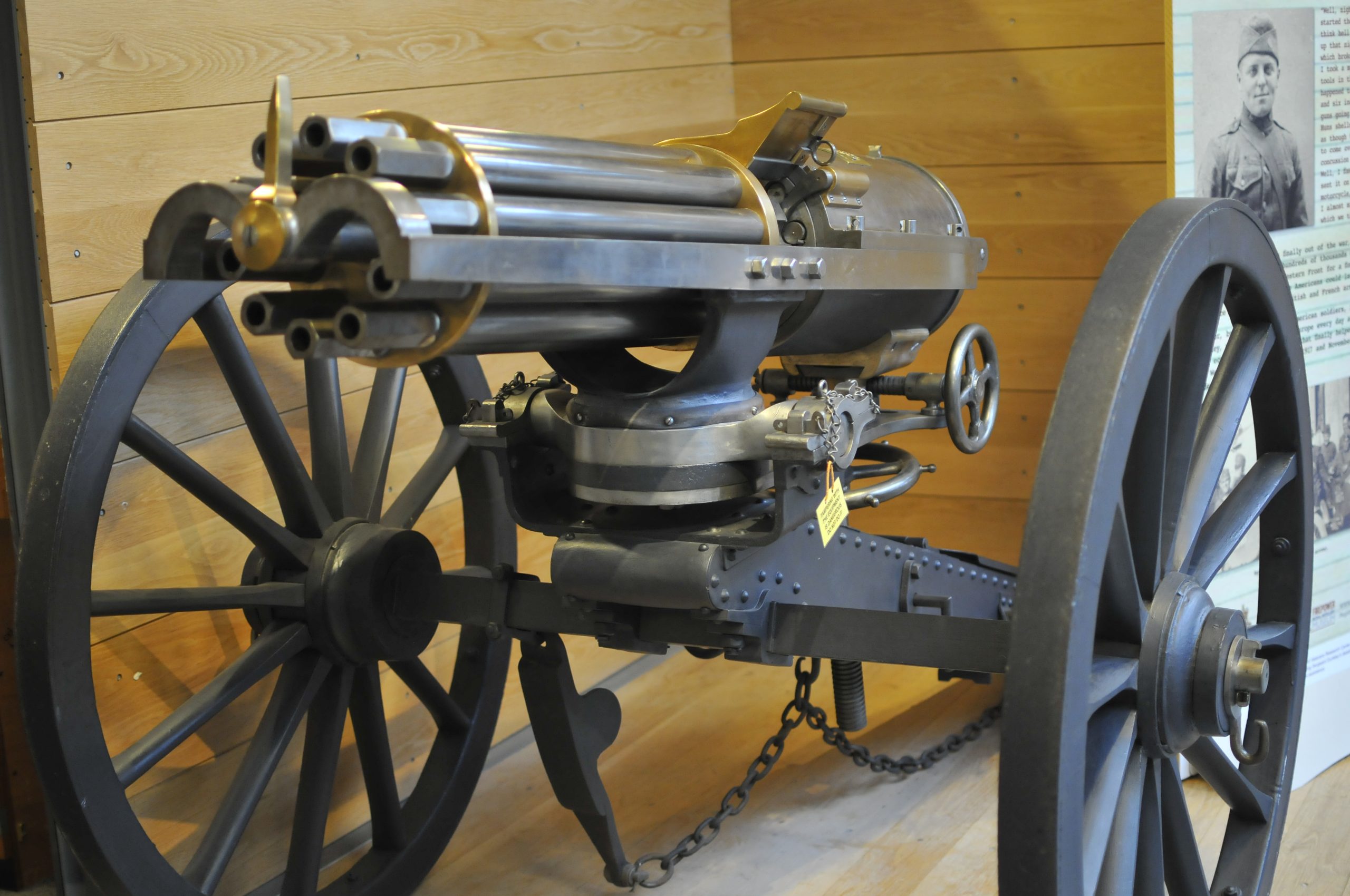
Power came with a price, and the Gatling was heavy enough to shape how armies moved. A typical field model of the 1870s weighed around 200 pounds for the gun alone and close to 1,000 pounds with carriage and limber. Horses or mules had to haul it, and a crew of four handled loading, cranking, and aiming. Because ammunition ran short quickly at 400 or more rounds per minute, a cart carrying several thousand cartridges often followed. The Broadwell drum feed, introduced in the early 1870s, held about 240 rounds and kept the gun firing without pauses. Commanders learned to plan supply, labor, and positioning around the weapon, which pushed military logistics to adapt.
5. It Learned to Support an Attack
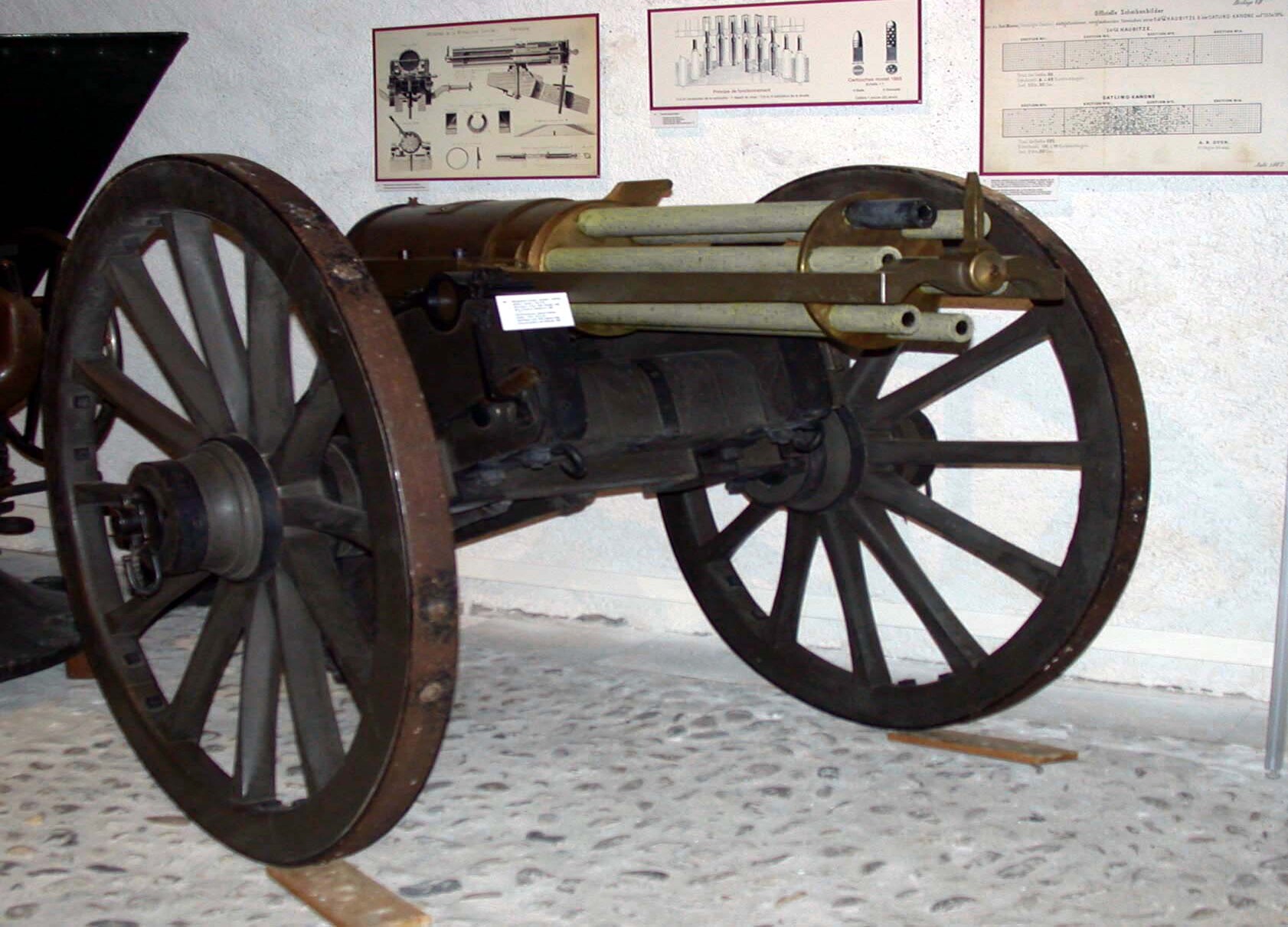
Gatling guns grew more mobile by 1898, and Cuba offered a sharp proof of the idea. Lieutenant John H. Parker commanded a four-gun detachment of .30-caliber Gatlings in the Spanish-American War and brought them forward with the infantry at San Juan Hill on July 1. Their fire was reported at around 700 rounds a minute per gun, and the guns helped cover the advance up the slope. That showed the weapon could support attacking troops instead of merely defending a camp. Parker’s example inspired military writers to rethink how machine guns could work beside riflemen and, later, how they might break a defensive line. Without that bold use, trench-era thinking might have come much slower.
6. It Opened the Road to Automatic Weapons
The Gatling’s greatest legacy was the path it opened to automatic firepower. Hiram Maxim built his recoil-operated gun in 1884, firing about 600 rounds a minute with no hand crank at all. That new design soon replaced the Gatling in most armies, and the U.S. Army finally retired its Gatlings in 1911. Yet the rotating barrel idea never died. In 1946 designers revived it with electric motors, and the M61 Vulcan cannon of the 1950s fires up to 6,000 rounds a minute. Gatling himself died in 1903, long enough to see his invention challenged but not forgotten. His central insight, that spreading heat and work across many barrels allows relentless fire, still guides modern weapons.