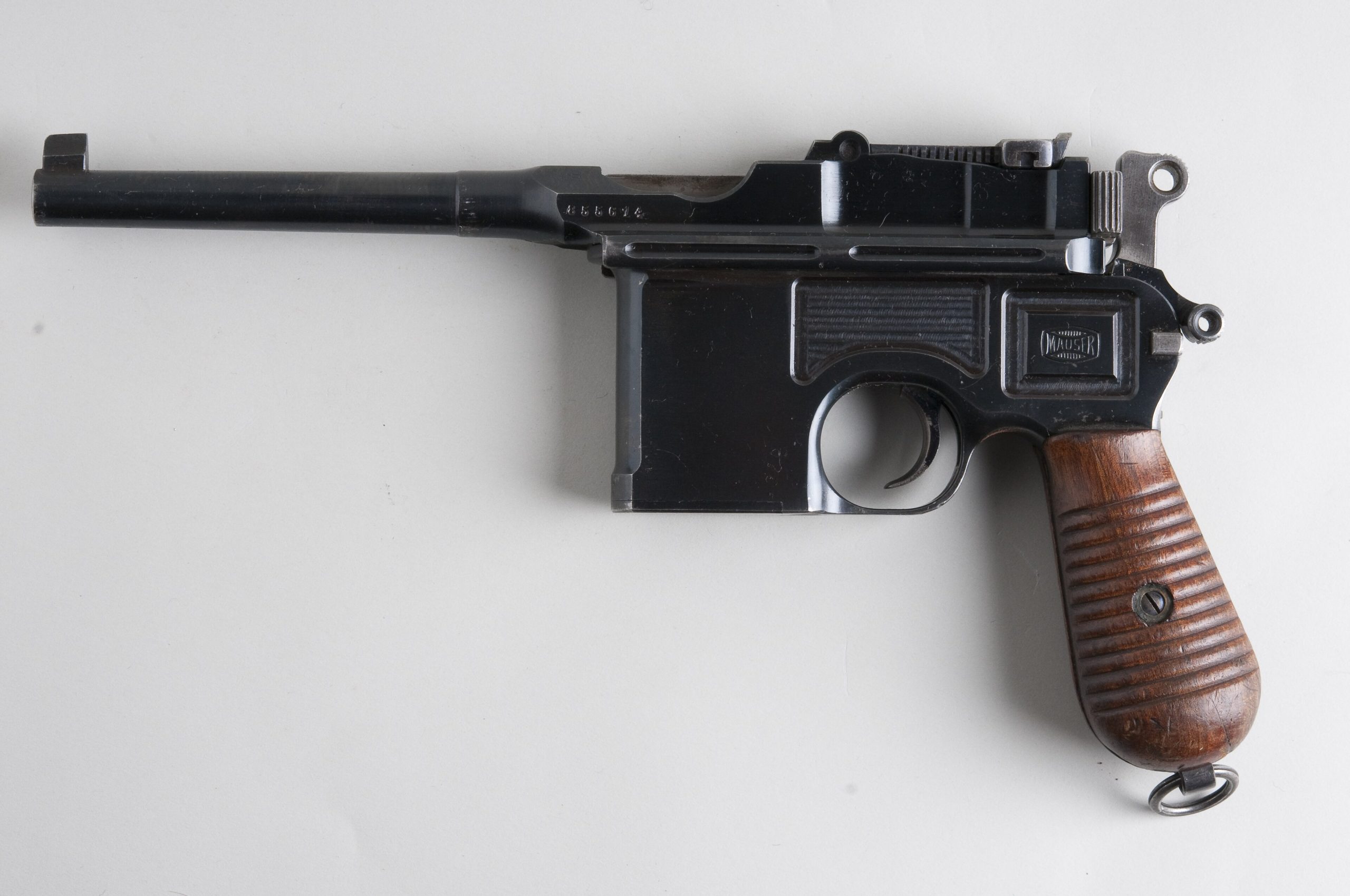
Long before Han Solo carried the DL-44, the Mauser C96 had already built an extraordinary reputation. Introduced in 1896, the German pistol looked unlike almost anything else of its era, with its long barrel, forward-mounted magazine and distinctive “broomhandle” grip. It became a commercial success, appeared in conflicts across several decades, and eventually inspired one of cinema’s most recognizable science-fiction weapons. The connection is real: the movie prop for Han Solo’s blaster was built around a modified C96.
1. It Was Already Famous Before Star Wars
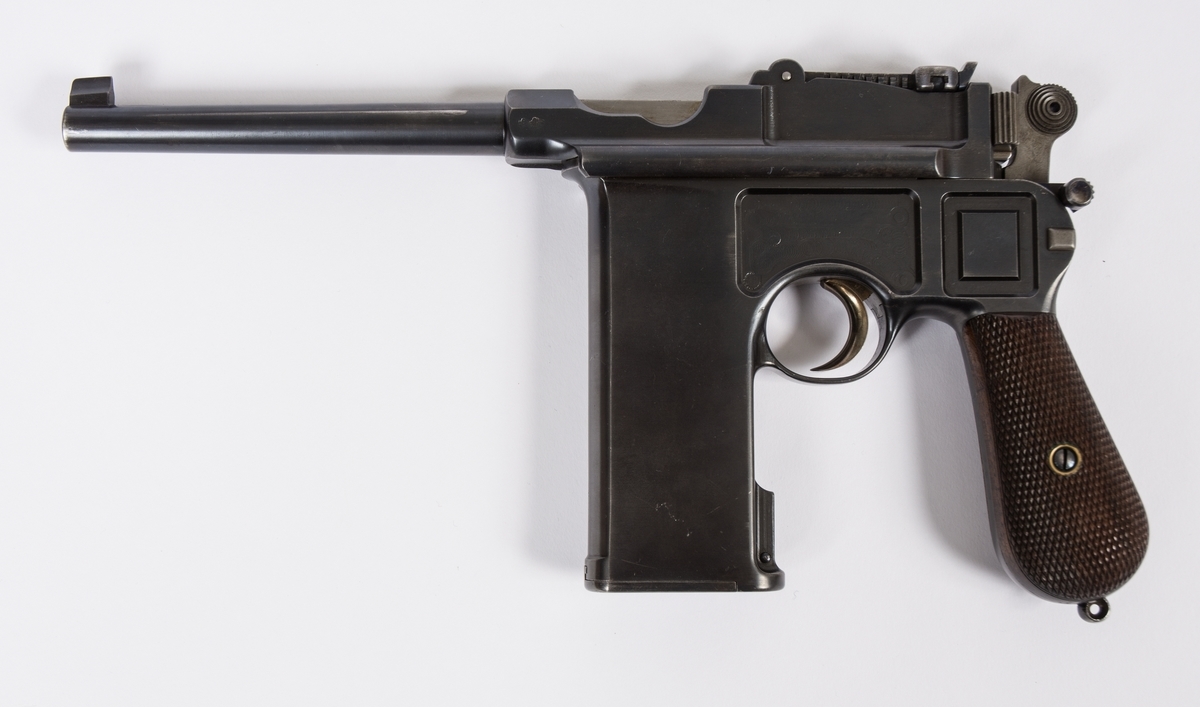
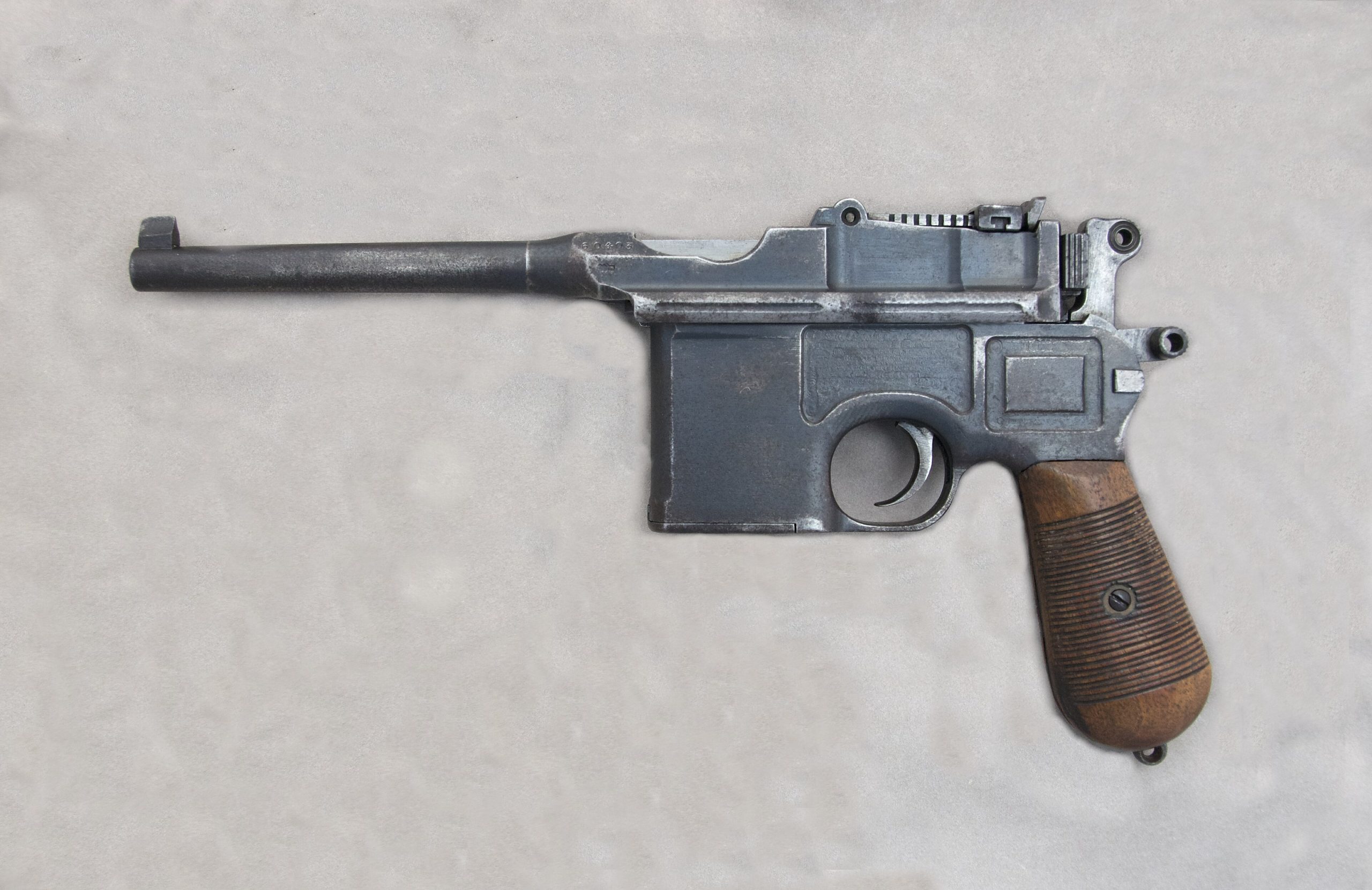
The C96 did not become iconic because of Hollywood; it arrived with a reputation decades earlier. Mauser introduced the pistol in 1896, making it one of the earliest commercially successful self-loading handguns. Its unusual architecture immediately separated it from conventional revolvers and early semi-automatics. The magazine sat ahead of the trigger rather than inside the grip, while the long barrel and narrow wooden grip created its unmistakable profile. Production continued until 1937, with more than 1 million examples made across the original and related production lines. By the time Star Wars appeared in 1977, the C96 was already an antique with a remarkable history.
2. The “Broomhandle” Name Came From Its Strange Grip
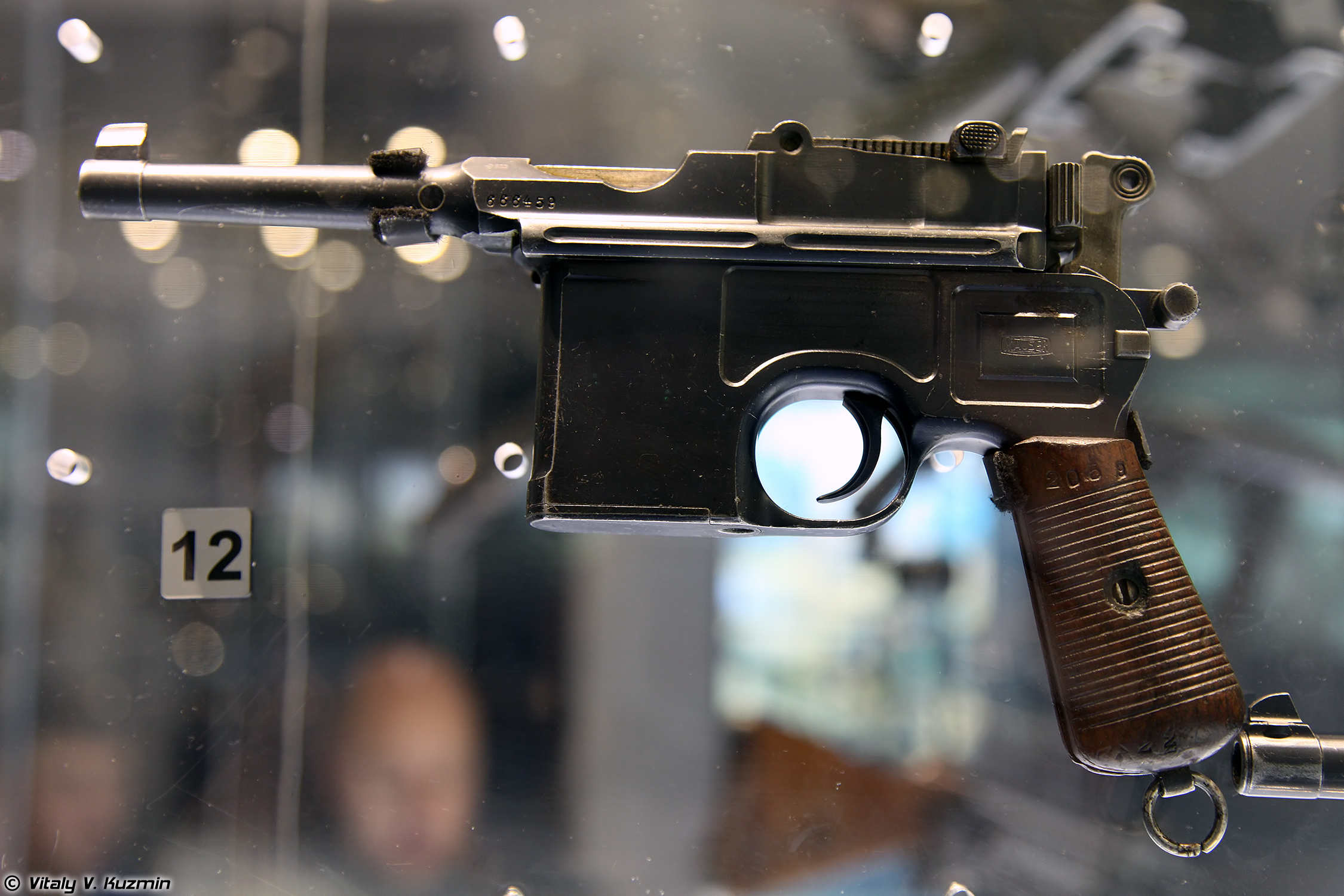
Few pistols have a silhouette as instantly recognizable as the C96. Its grip narrows toward the bottom and curves in a way that reminded English-speaking users of a household broom handle, creating the nickname “Broomhandle.” The design was not merely cosmetic; it was part of a pistol built around an unusual internal layout and long receiver. Standard examples weighed roughly 1.13 kilograms, while early versions measured about 312 millimeters overall with a barrel around 140 millimeters. That combination made the C96 considerably more substantial than many contemporary pocket pistols. Its appearance was so distinctive that filmmakers could modify the outline without losing its unmistakable identity.
3. Its Magazine Was in Front of the Trigger
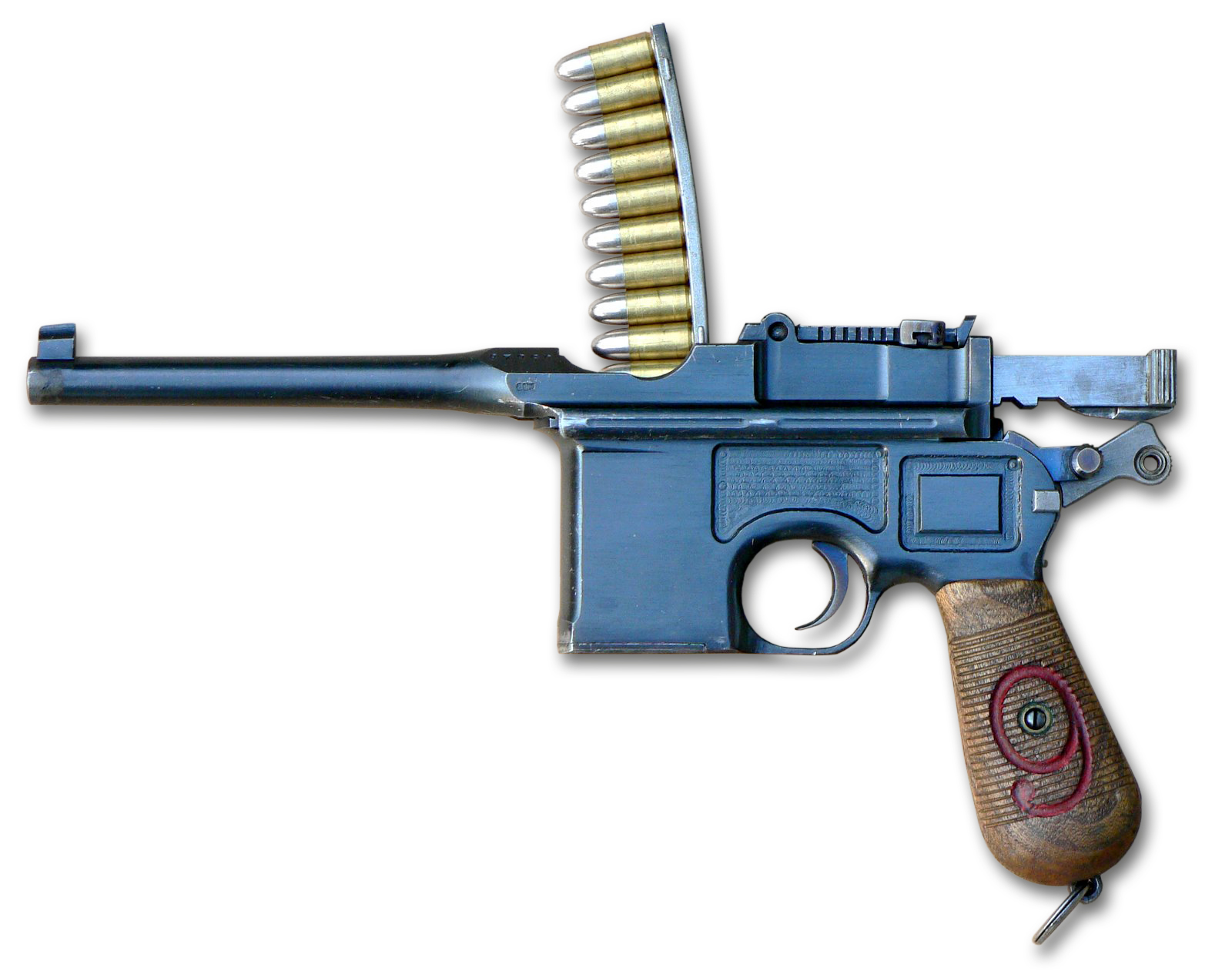
The C96’s most striking engineering feature was its 10-round internal magazine, positioned ahead of the trigger. Instead of inserting a detachable magazine through the grip, the shooter loaded cartridges from the top using a stripper clip. This arrangement gave the pistol its characteristic long, boxy front section and contributed heavily to the shape later recognized in Star Wars. The standard C96 was chambered for 7.63×25mm Mauser, a relatively high-velocity pistol cartridge for its period. Later versions appeared in other chamberings, including 9×19mm, while specialized models introduced different feeding arrangements. Its forward magazine therefore became both an engineering signature and a visual trademark.
4. It Could Become a Small Carbine
The C96 was unusual because Mauser offered a detachable wooden shoulder stock that also functioned as a holster. Attached to the pistol, the stock gave the user additional support and effectively transformed the handgun into a compact shoulder-fired weapon. This was especially interesting at a time when the boundaries between pistols and carbines were still developing. Some C96 configurations also featured longer barrels and adjustable sights graduated to remarkably ambitious distances, with certain sights marked as far as 1,000 meters. Those markings should not be mistaken for realistic handgun accuracy at such ranges, but they reveal the era’s fascination with extending pistol capability.
5. The C96 Traveled Through Decades of Conflict
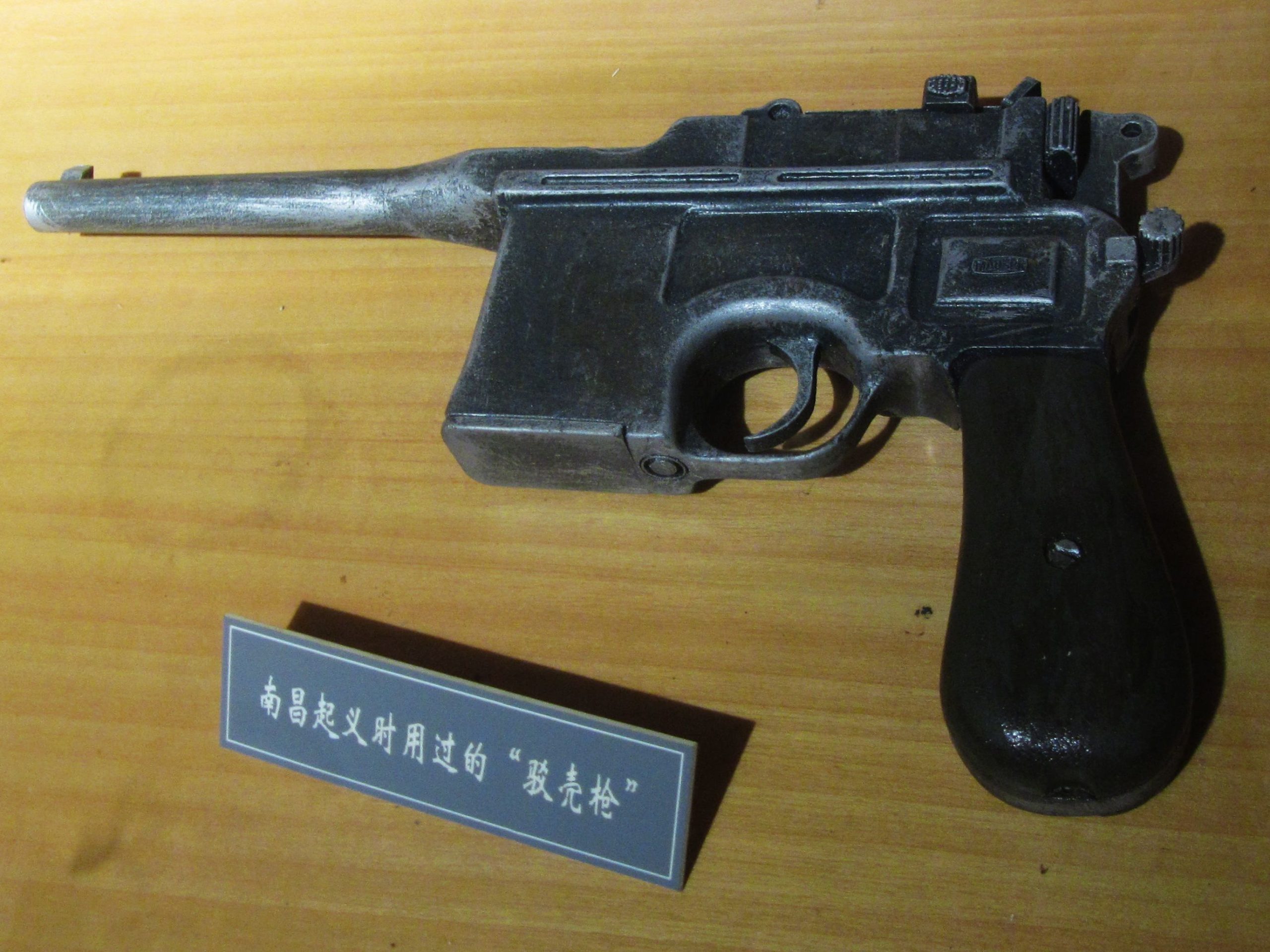
The Broomhandle was far more than a collector’s curiosity. Its military and political users spread across several continents during the first half of the 20th century. C96 variants appeared during the Boer War, World War I, the Russian Revolution, the Chinese Civil War, the Spanish Civil War, and World War II. China became particularly important, with local arsenals producing copies and variants. The pistol was also available in several chamberings and configurations, allowing different users to adapt it to their requirements. Its long production life, international distribution and unmistakable shape helped turn an experimental-looking 1890s handgun into one of the best-known pistols of its generation.
6. Star Wars Turned Its Old Shape Into a Blaster
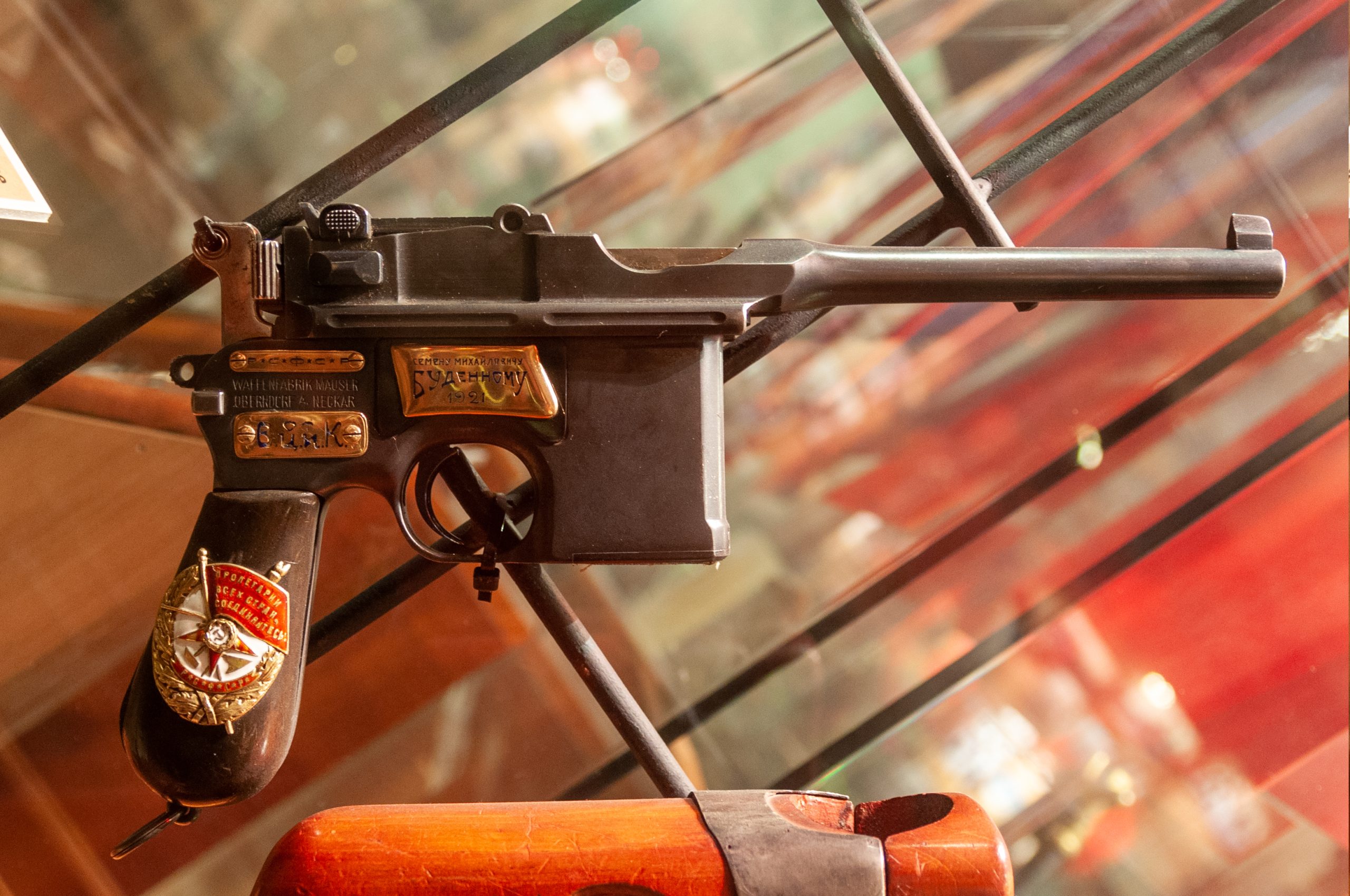
The connection to Han Solo is much more direct than simply saying the C96 “inspired” the blaster. For the original Star Wars films, the DL-44 prop was constructed around a modified C96-style pistol, then given additional components to create its futuristic appearance. A telescopic sight and prominent muzzle device were among the additions, transforming a recognizable historical handgun into something that looked convincingly otherworldly. Different movie props were not identical: surviving examples included an actual C96 firing blanks as well as metal and rubber replicas. The result became one of cinema’s most recognizable fictional firearms.
7. The Movie Prop Mixed History With Random Hardware
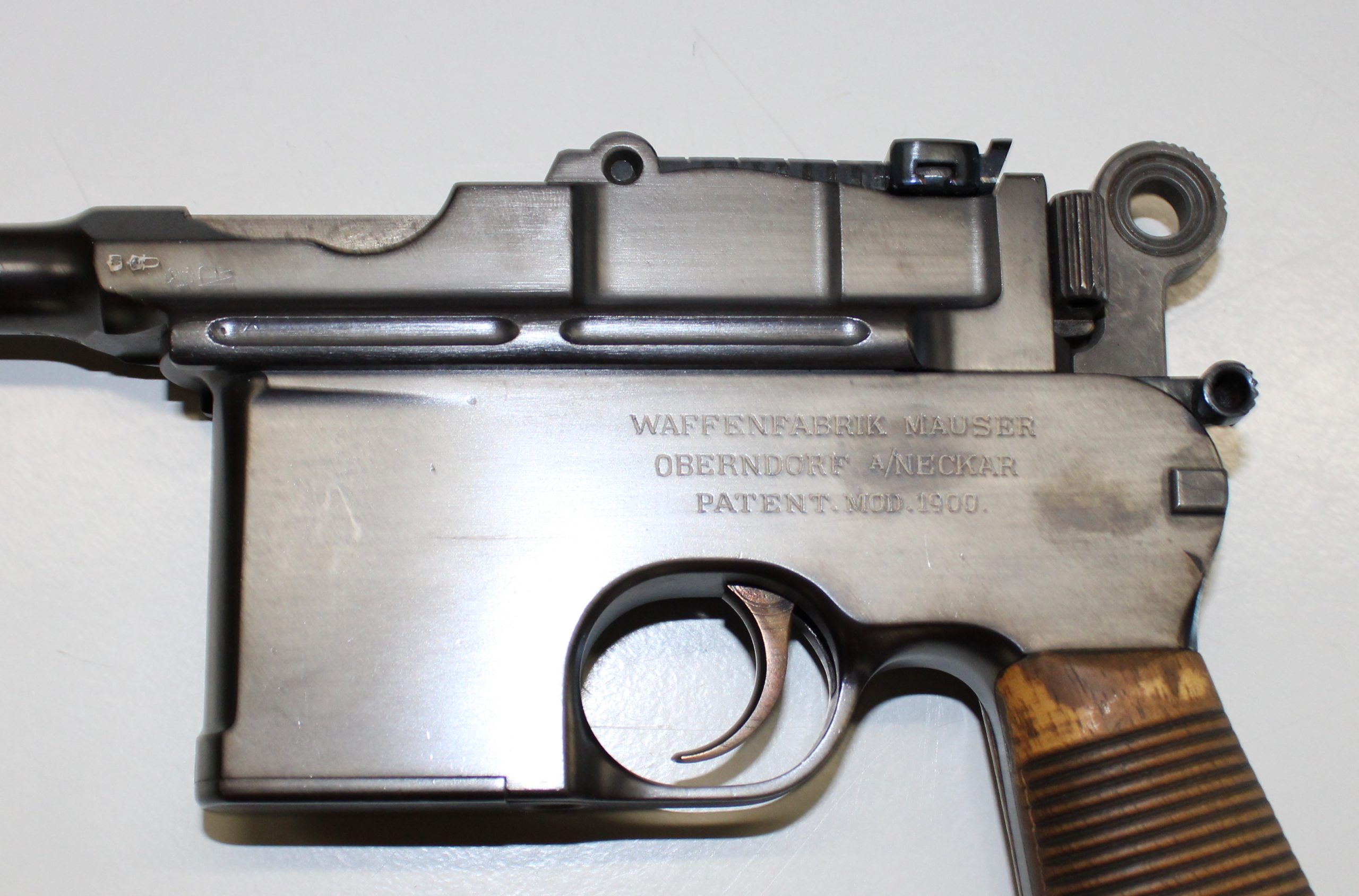
What makes Han Solo’s blaster especially fascinating is that it was not designed as a completely futuristic weapon from scratch. The production team combined the C96 foundation with surplus and fabricated components, producing the wonderfully improvised appearance associated with Star Wars. Sources identify a Hensoldt-Wetzlar optical sight and a large muzzle device among the recognizable additions. The Royal Armouries notes that the original concept drew heavily from a modified C96, while the U.S. Naval History and Heritage Command confirms that several prop versions existed. That practical mixture of real hardware and invented detailing gave the DL-44 an authentic, lived-in appearance rather than a polished science-fiction look.
8. Its Legacy Now Exists in Two Different Worlds
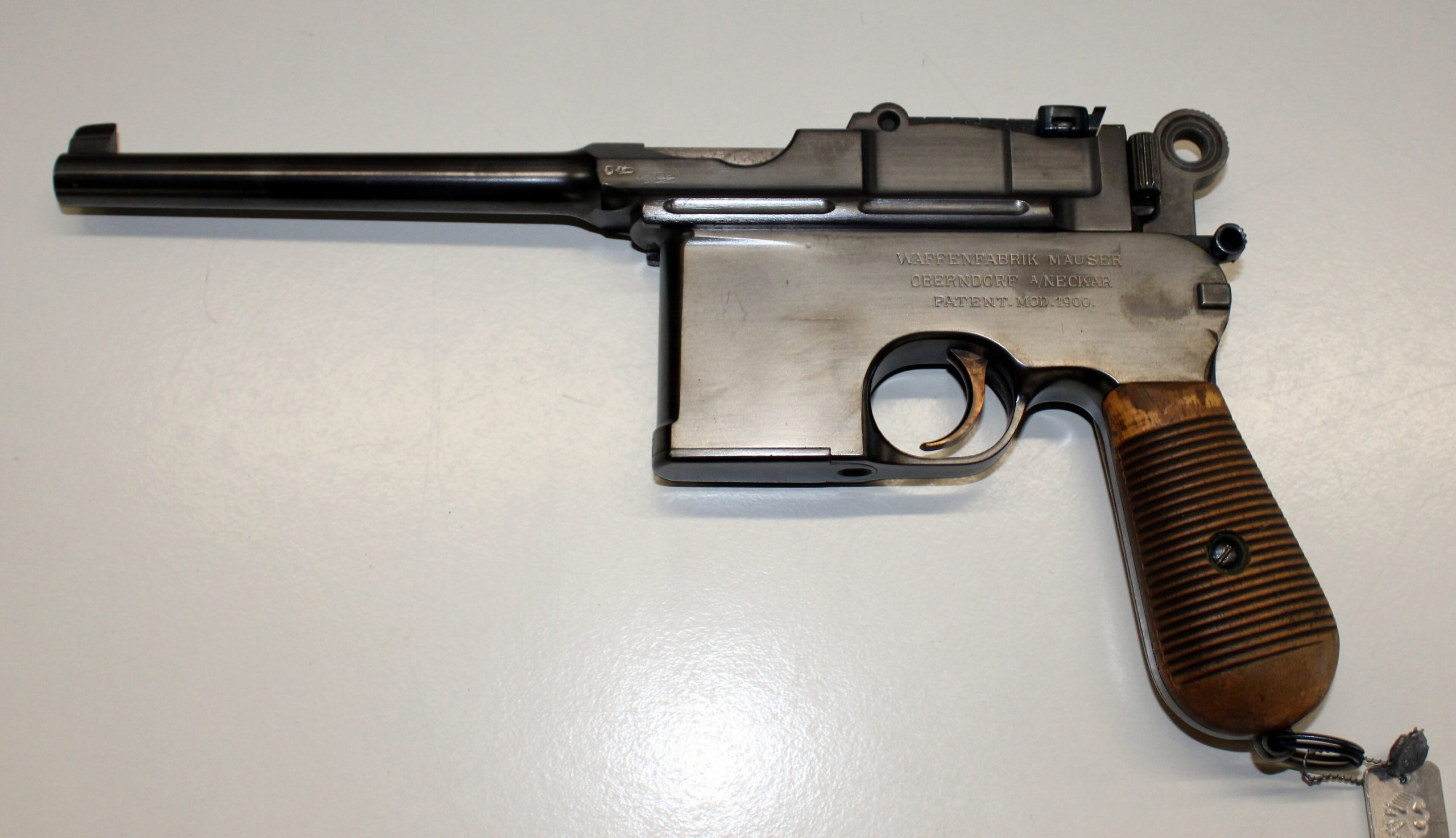
The C96 ultimately achieved something few historical firearms ever manage: it became important both as a genuine piece of military history and as a foundation for pop-culture design. Its original production ran from 1896 to 1937, while the Star Wars version first appeared on screen in 1977, creating an unexpected 41-year gap between the beginning of production and its transformation into a fictional blaster. The DL-44 gave the old Broomhandle a new generation of admirers, while collectors continued to value original Mauser examples for their historical significance. More than a century after its introduction, the C96 remains recognizable even to people who have never fired or handled one.