Park rangers working in law enforcement face responsibilities that extend far beyond routine patrols. Their assignments can involve remote wilderness areas, isolated roads, visitor emergencies, wildlife-related incidents, and encounters with potentially dangerous individuals. In these situations, a dependable sidearm is an important part of their issued equipment. However, there is no single handgun used by every park ranger agency. Firearm selections differ between federal, state, and municipal departments, depending on procurement policies, training requirements, and operational needs. The following 11 handguns highlight notable service-pistol designs used by park and conservation law enforcement, including historically significant models and established duty options.
1. Colt New Service
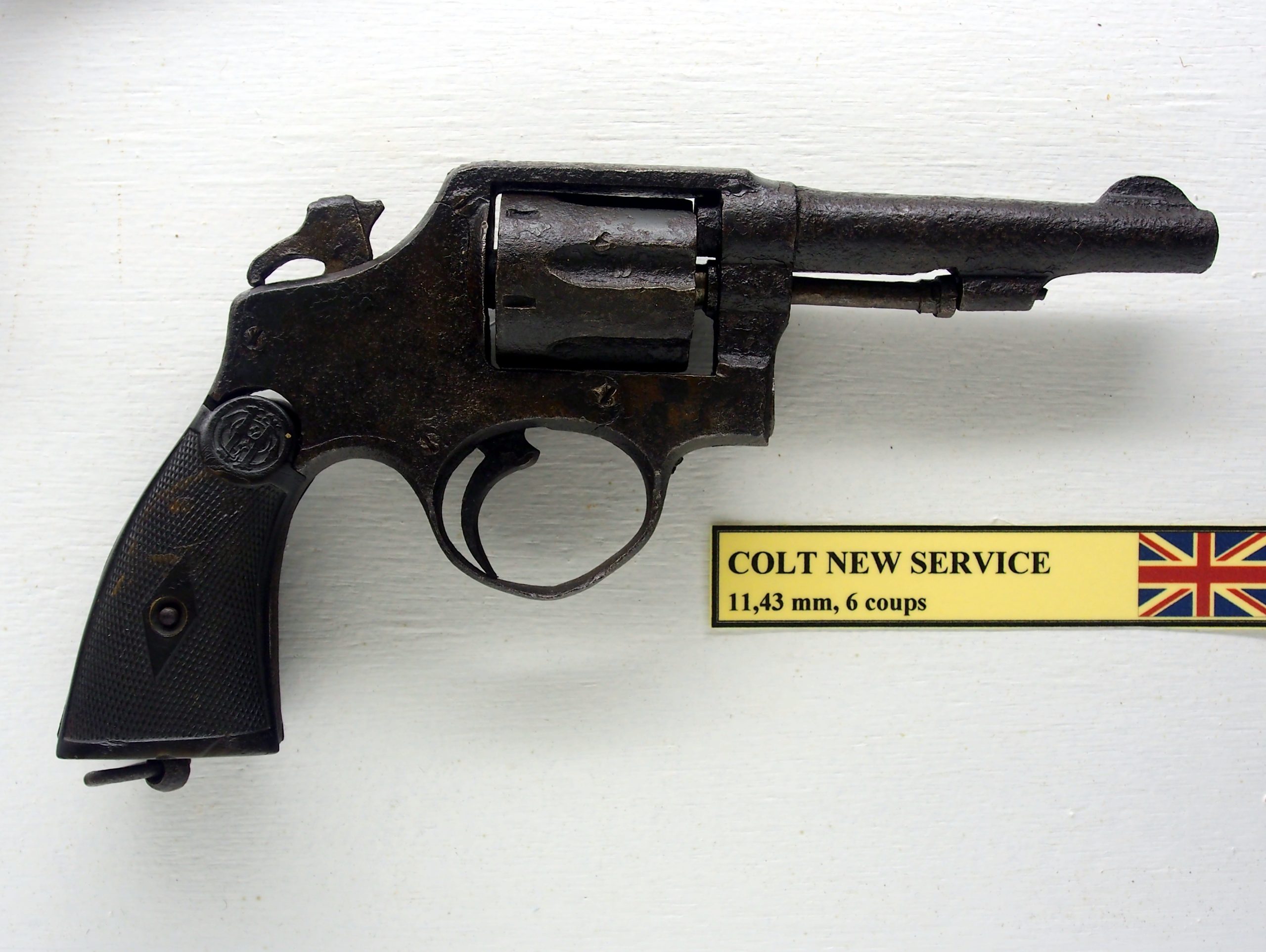
The Colt New Service holds a genuine place in early National Park Service law-enforcement history. In the 1910s, NPS director Stephen Mather used personal funds to purchase Colt Model 1917 .45-caliber revolvers for rangers. The New Service was a large-frame, double-action revolver built for demanding service, and its rugged construction suited the equipment standards of its era. It should not be mistaken for a current ranger sidearm: it represents a period when the Park Service was still developing its law-enforcement role. Its history makes it more than a collector’s revolver.
2. Smith & Wesson Model 10
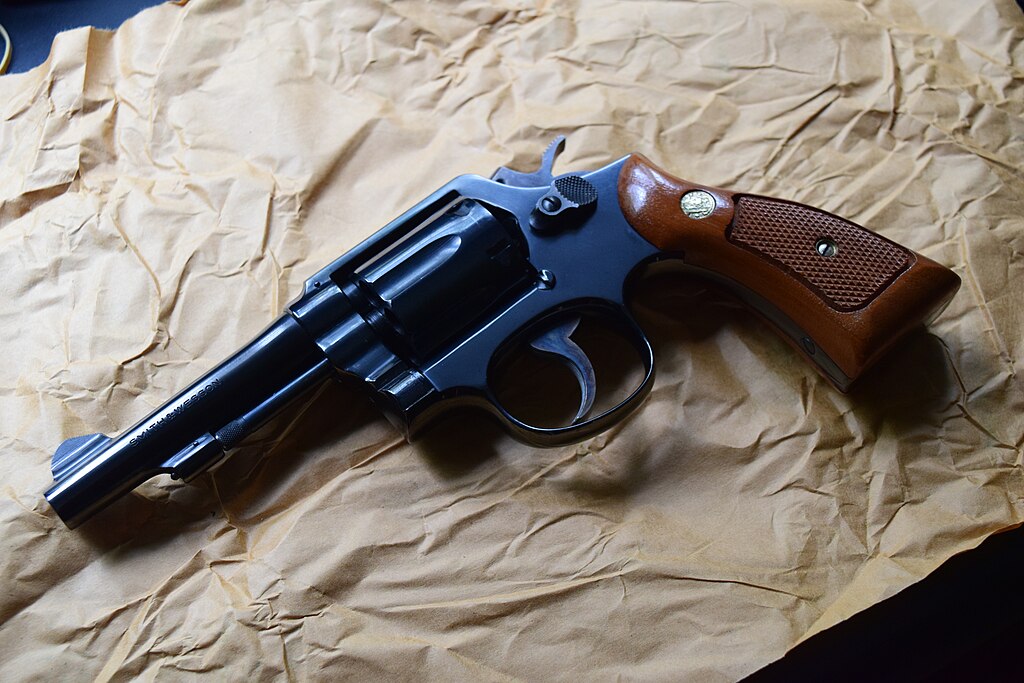
The Smith & Wesson Model 10 became one of America’s best-known police revolvers, with roots reaching back to the Hand Ejector introduced in 1899. Most examples use .38 Special ammunition and a six-shot cylinder, while the familiar four-inch barrel offered a practical balance of handling and sight radius. Revolvers of this type were common in public-safety work during much of the 20th century, including agencies responsible for parks and conservation. Agency records are needed before calling it a standard ranger handgun, but its long service history still deserves recognition.
3. Smith & Wesson Model 19
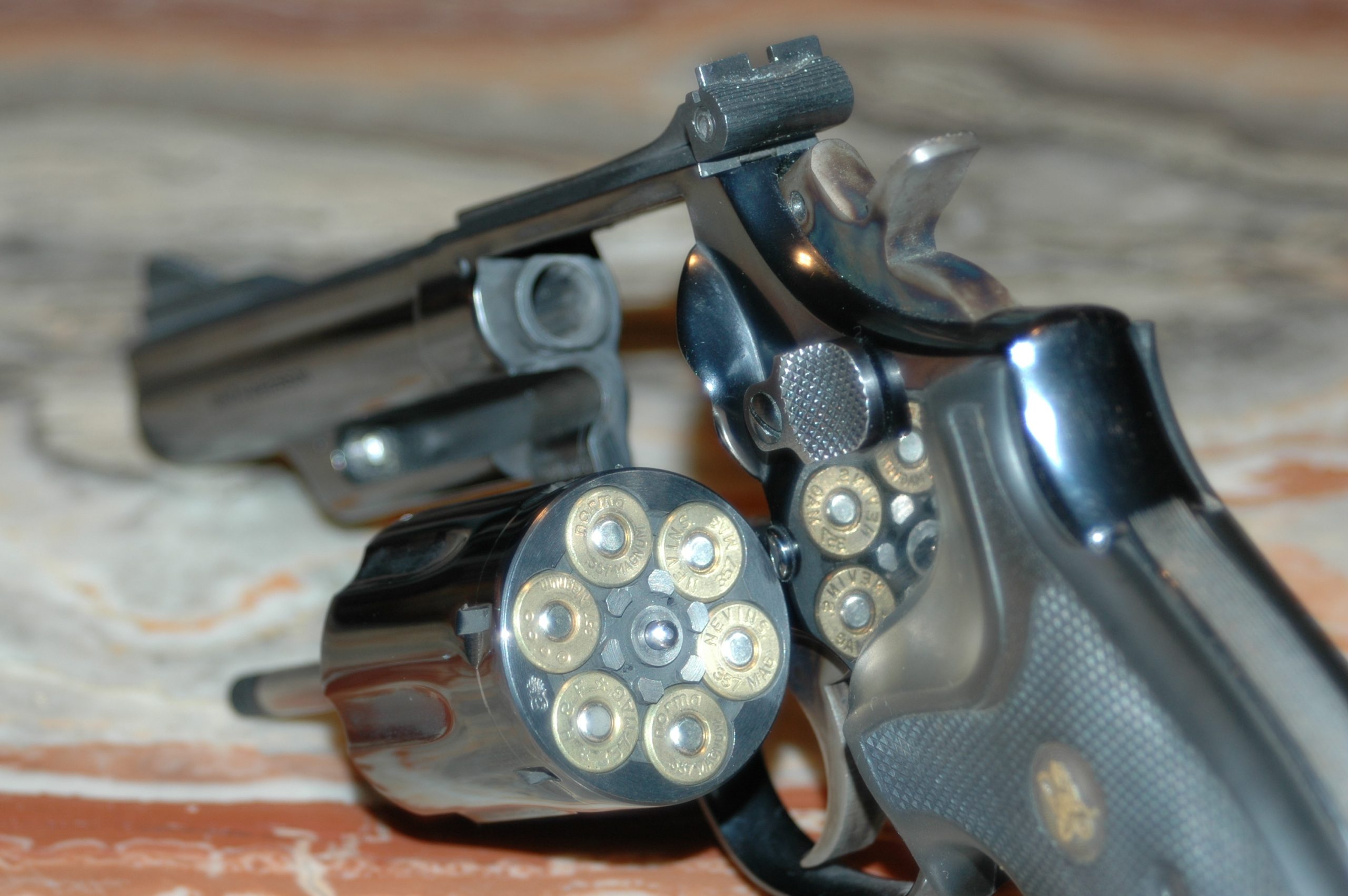
Introduced in 1955, the Smith & Wesson Model 19 brought a more powerful .357 Magnum option to the traditional service revolver. Developed with input from law-enforcement experience, it became popular with officers who wanted a versatile six-shot handgun. Its adjustable sights and K-frame dimensions made it handier than many larger magnum revolvers, although sustained use of heavy .357 Magnum loads can accelerate wear. The Model 19 belongs to the era when revolvers dominated American police holsters; it is a historical service choice, not evidence of a current park-wide issue.
4. Smith & Wesson 5906
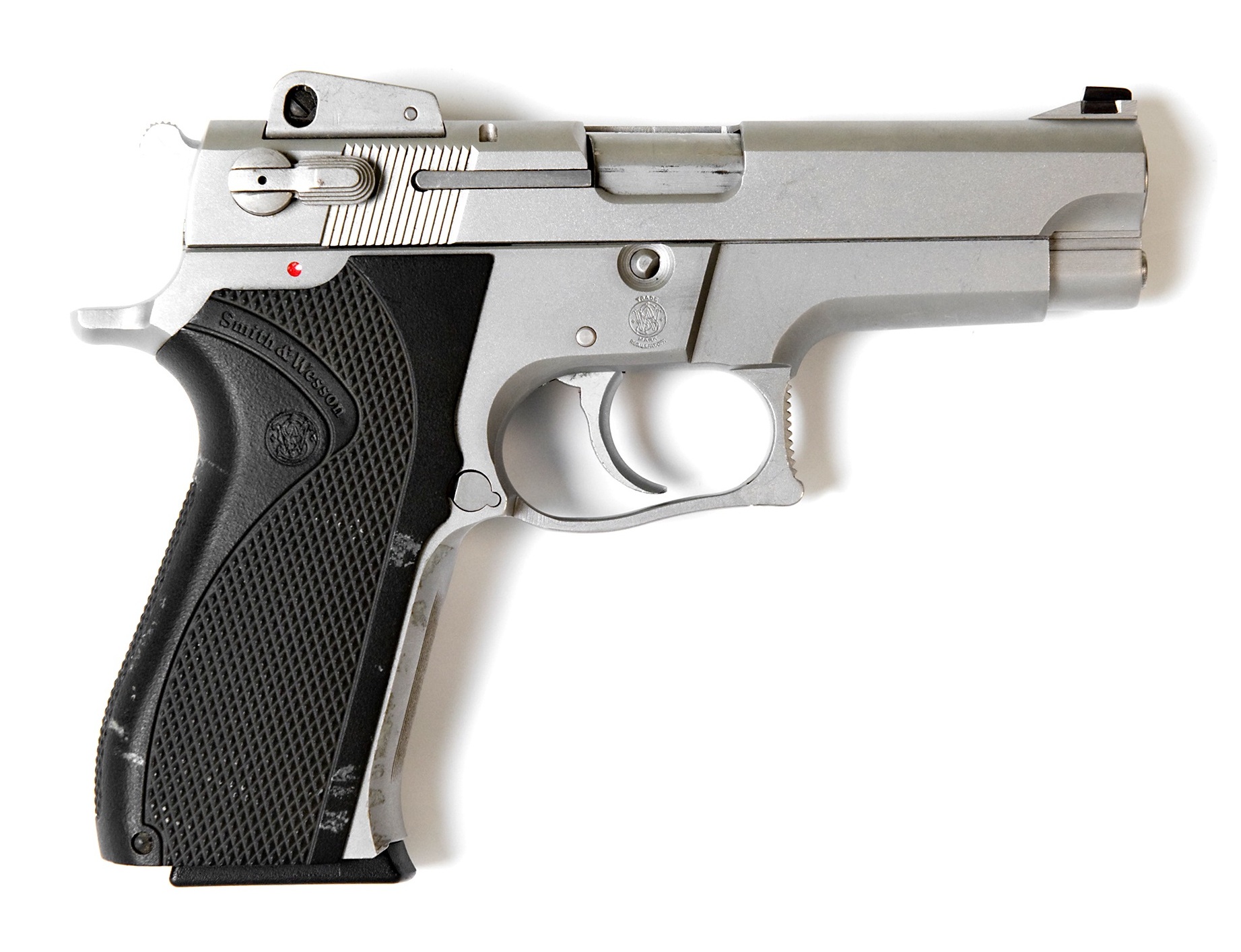
Smith & Wesson introduced the stainless-steel 5906 in 1990 as a full-size 9mm service pistol. Its double-action/single-action trigger, metal frame, and magazine capacity of up to 15 rounds reflected the transition from revolvers to higher-capacity semi-automatics. The pistol was adopted by a number of law-enforcement agencies, and its durable construction helped it earn a substantial service reputation. It is not established as a universal National Park Service handgun, but it represents the kind of traditional metal-framed duty pistol that served public-safety departments during the 1990s.
5. Glock 17
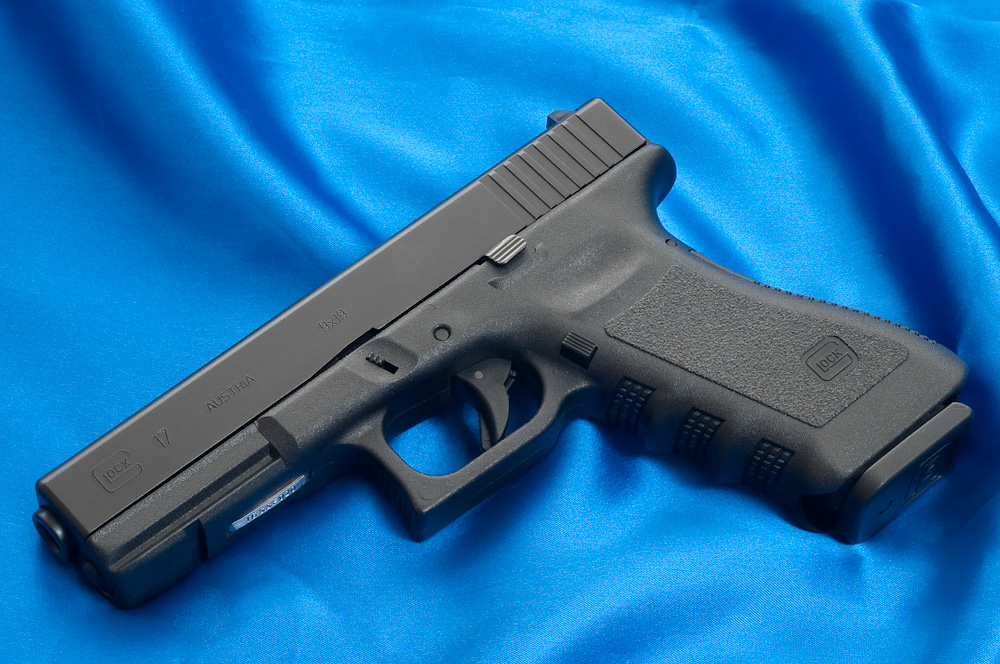
The Glock 17 helped change police handgun procurement after its introduction in the early 1980s. Chambered in 9×19mm, it uses a polymer frame, a striker-fired action, and a standard 17-round magazine in its original full-size configuration. Its relatively light construction and consistent trigger system made it attractive to agencies seeking a simpler alternative to traditional double-action pistols. Park and conservation departments set their own approved-firearm rules, so wider police use does not prove ranger adoption. It remains a relevant modern comparison.
6. Glock 19
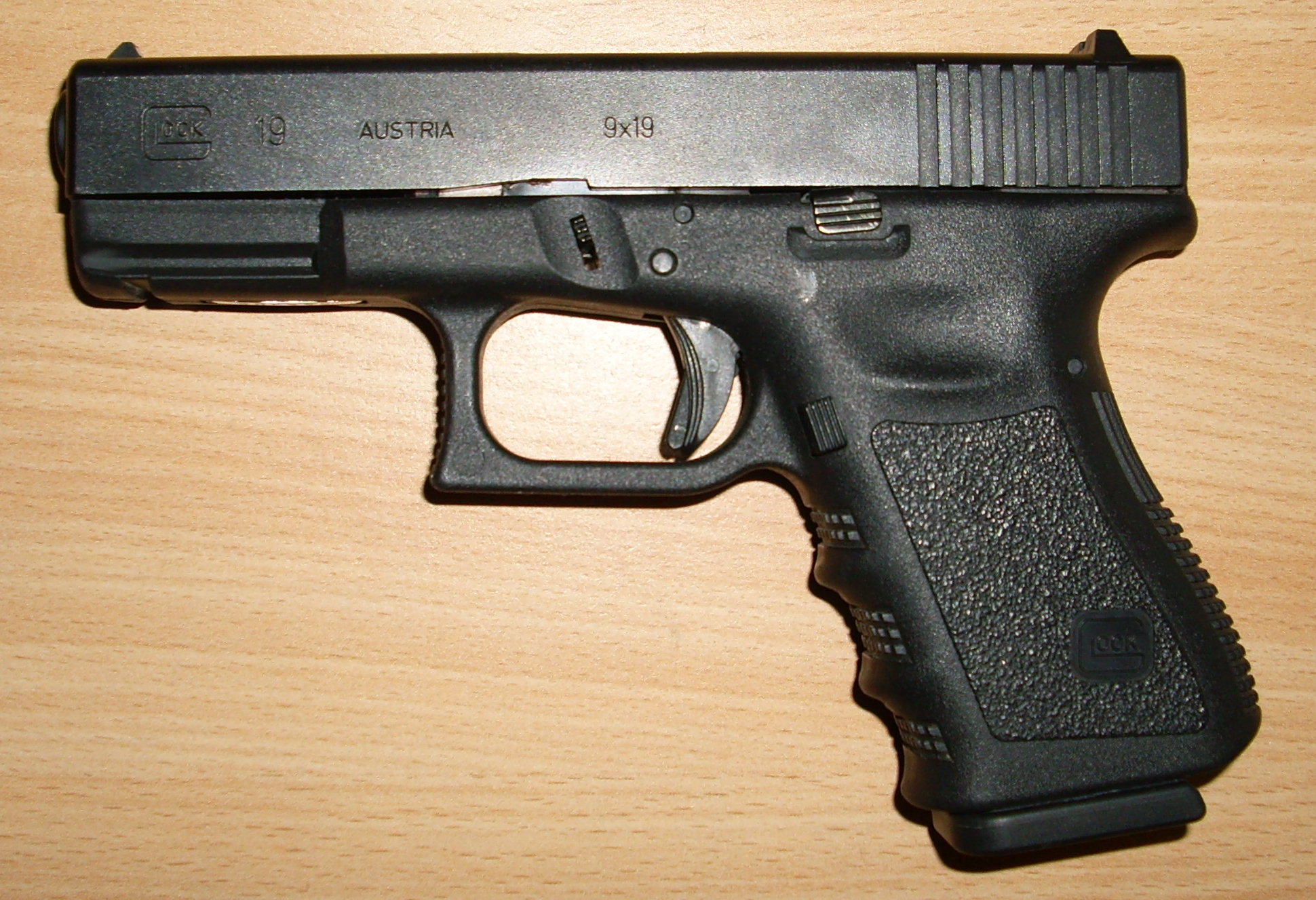
The Glock 19 offers much of the operating simplicity of the Glock 17 in a more compact package. Introduced in the late 1980s, this 9mm model traditionally uses a 15-round standard magazine and a shorter grip and slide than its full-size counterpart. Its dimensions suit different duty-belt and uniform setups. Agencies choose their own approved models, so the Glock 19 is a credible duty-pistol example, not a confirmed ranger standard. Its popularity in wider law enforcement demonstrates the continuing appeal of compact service handguns.
7. SIG Sauer P226
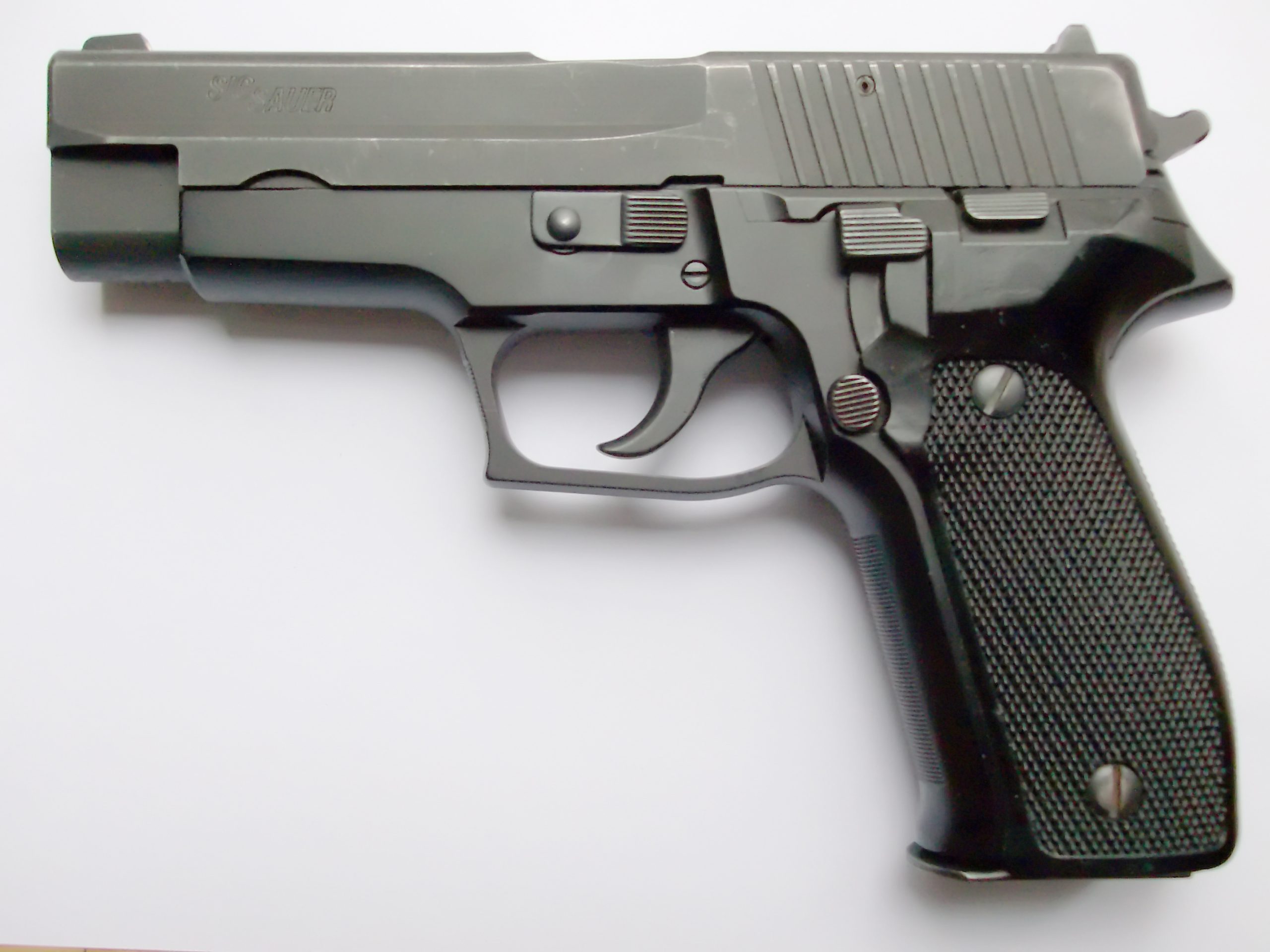
The SIG Sauer P226 entered the American service-pistol conversation during the U.S. military’s 1980s handgun trials. This full-size 9mm pistol uses a metal frame and a double-action/single-action trigger, with a standard 15-round magazine in many configurations. Military and police contracts built its reputation for dependable service. That does not establish it as a routine National Park Service issue, but it represents the robust metal-framed pistols agencies have evaluated. Its long-standing professional reputation makes it an important part of modern service-handgun history.
8. SIG Sauer P229
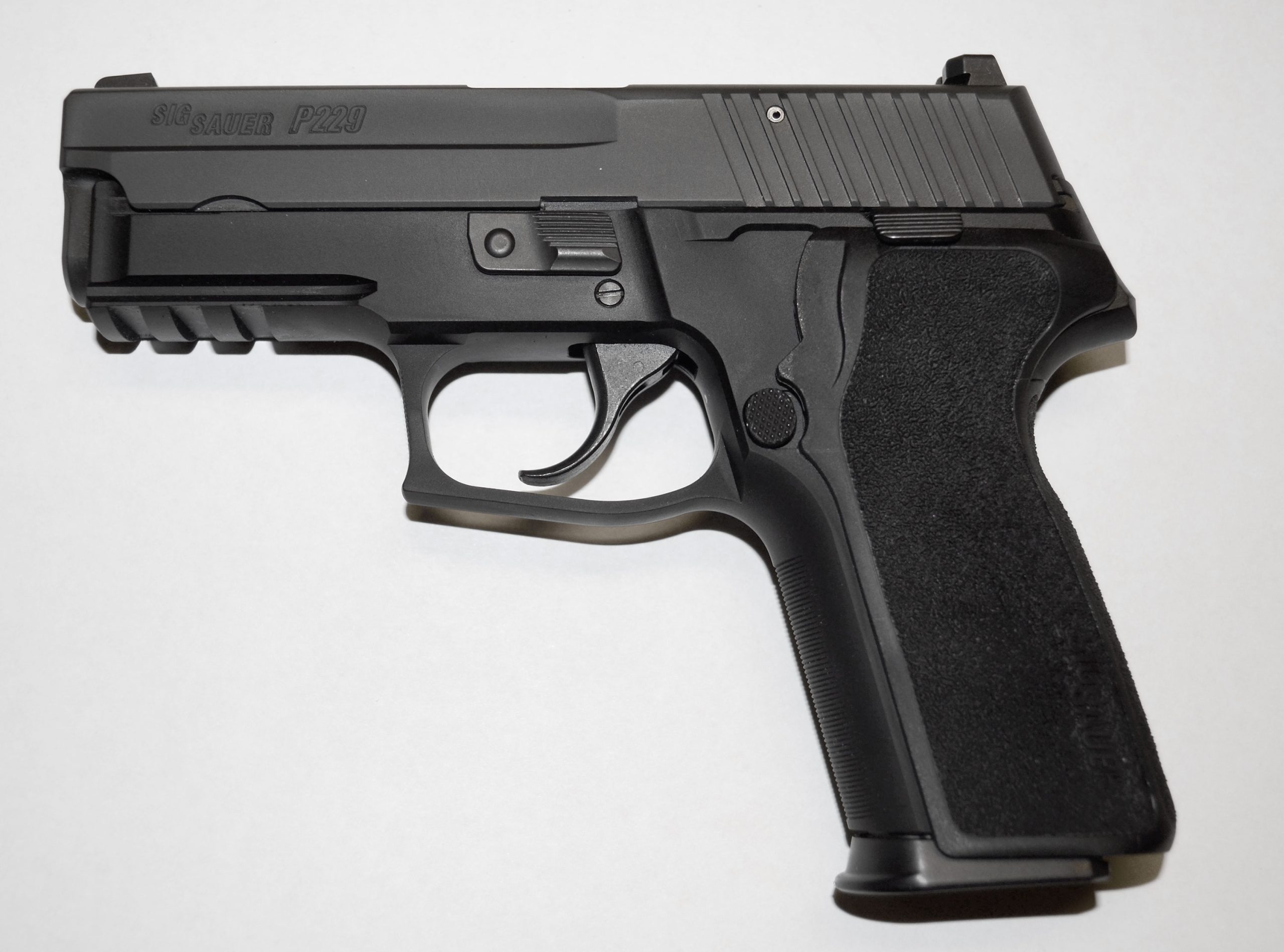
SIG Sauer introduced the P229 in the early 1990s as a more compact companion to the P226. It retained the familiar double-action/single-action operating system while using a shorter slide and grip, and versions have been chambered in 9mm, .40 S&W, and .357 SIG. Magazine capacity varies by caliber and generation, so a single figure does not describe every P229. Its compact dimensions and established law-enforcement history make it relevant to agencies balancing duty performance with carry comfort. Ranger adoption must be confirmed by each department.
9. Beretta 92FS
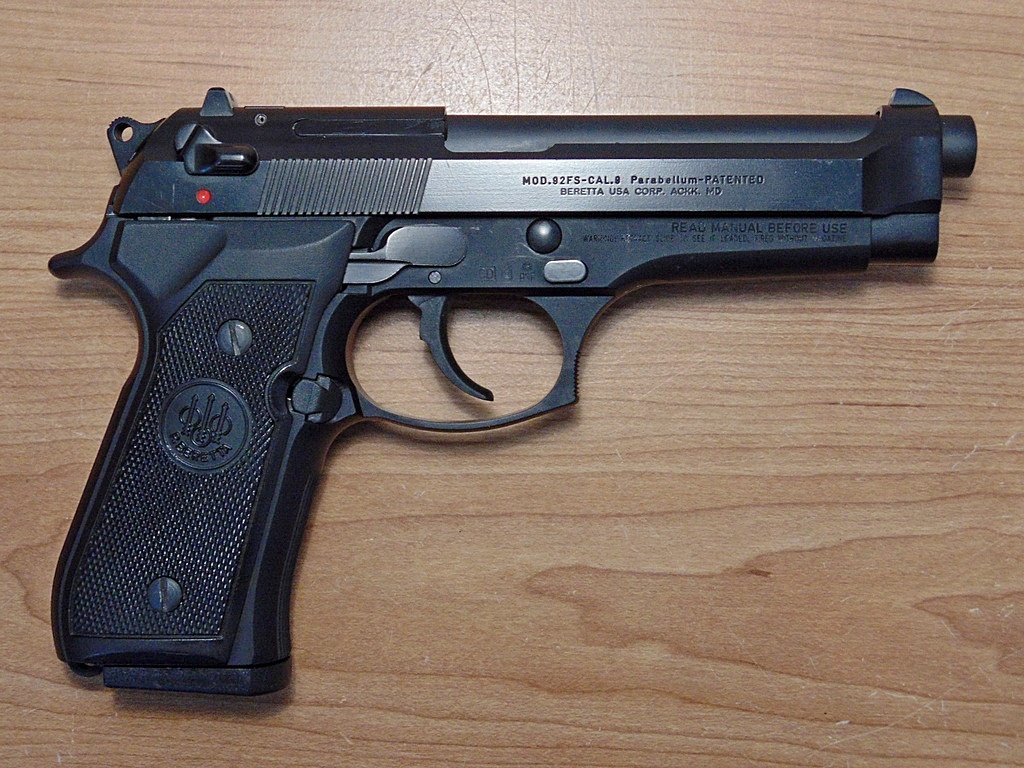
The Beretta 92FS is a full-size 9mm semi-automatic pistol recognized for its open-slide design and double-action/single-action trigger. The U.S. military adopted the M9, a closely related version, in 1985, helping make the 92 family familiar across American public-safety circles. Standard magazines commonly hold 15 rounds, although capacity varies with the magazine supplied. Its government service helped shape police preferences, but does not prove park-ranger issue. The pistol remains an important example of how military procurement influenced the wider service-handgun market.
10. Smith & Wesson M&P9
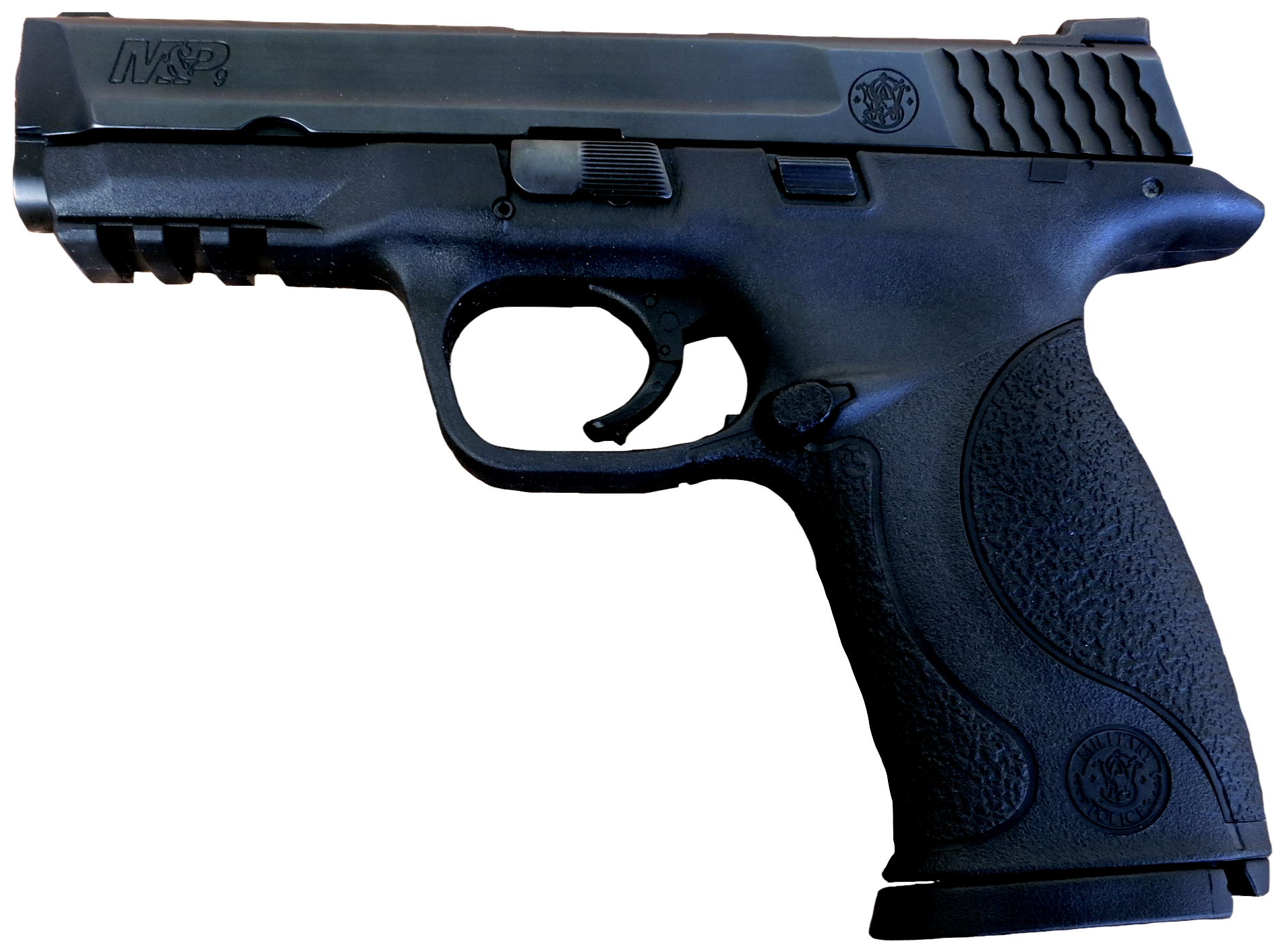
The Smith & Wesson M&P9 is a modern polymer-framed, striker-fired 9mm duty pistol designed for law-enforcement and civilian markets. Its interchangeable backstraps allow the grip to be adjusted to different hand sizes, while common full-size versions use 17-round magazines. There is a direct park-ranger connection here: the Los Angeles Park Ranger Division policy identifies the Smith & Wesson M&P 9mm as its issued handgun. That makes it a documented example, unlike models included only because they are common in wider policing. Variant and equipment approval depend on agency policy.
11. Glock 22
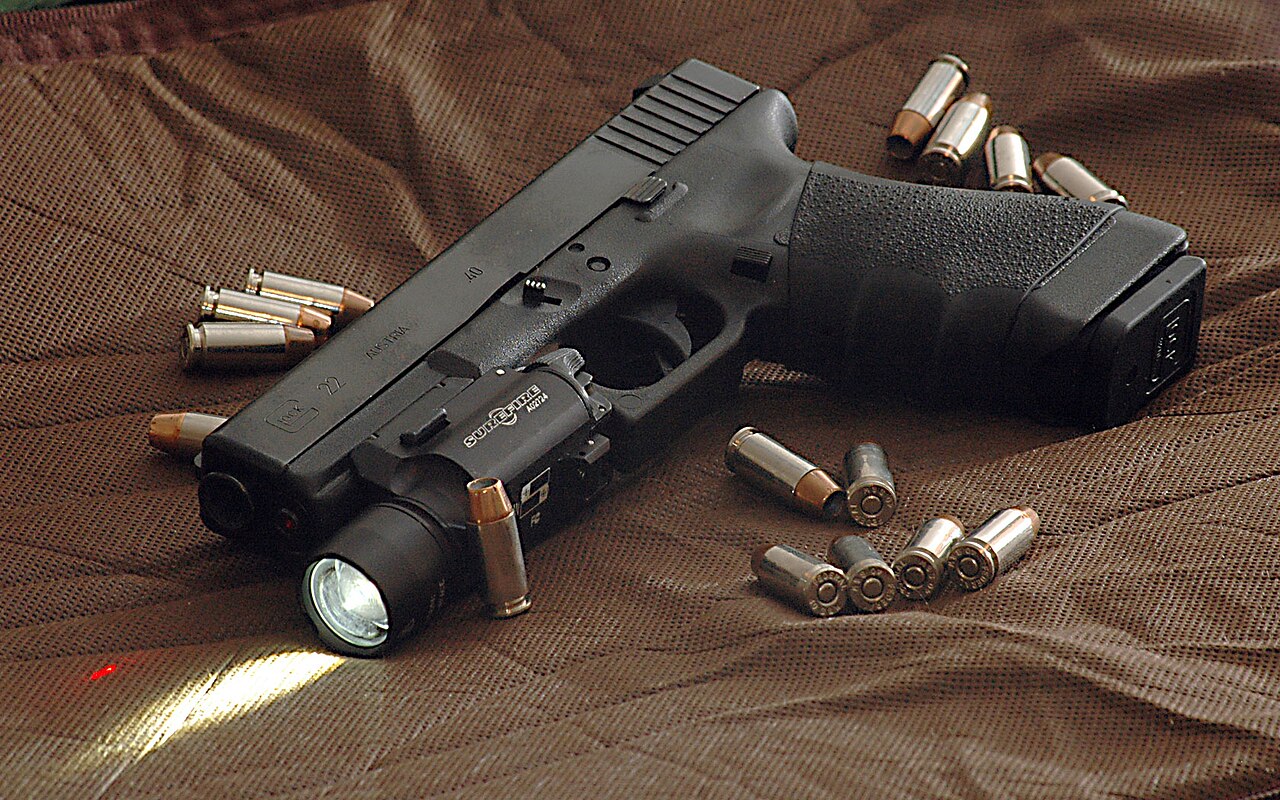
The Glock 22 became a prominent American police sidearm during the period when many departments moved from revolvers to .40 S&W semi-automatic pistols. Its full-size frame and standard 15-round magazine offered officers more ammunition than a typical six-shot service revolver. The model shares much of its layout with the Glock 17, but uses the larger .40 S&W cartridge. It is a historically important law-enforcement handgun, although its popularity has declined in some agencies as 9mm pistols regained favor. Its practical relevance comes from wider policing, not verified national issue.