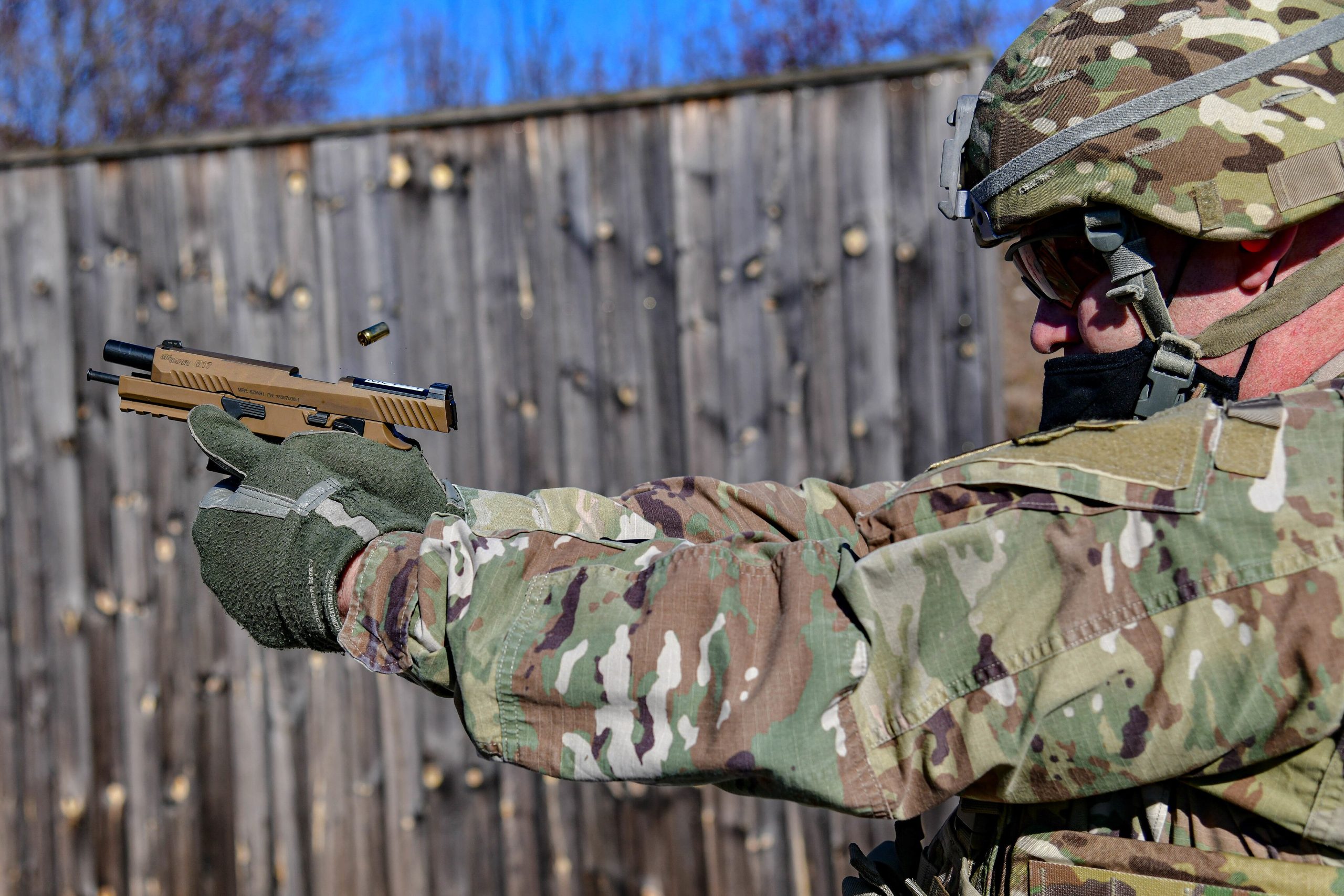
Artificial intelligence is changing security by making cameras, sensors, drones, digital mapping, and rapid data analysis increasingly important. That shift does not mean conventional firearms are disappearing. Instead, many established and newer platforms are being examined as components within larger technology-heavy systems. The interesting question is no longer just how a gun performs by itself, but how easily it fits alongside optics, communications, sensors, and other equipment. These 11 firearms illustrate different parts of that changing landscape.
1. M7 (XM7)
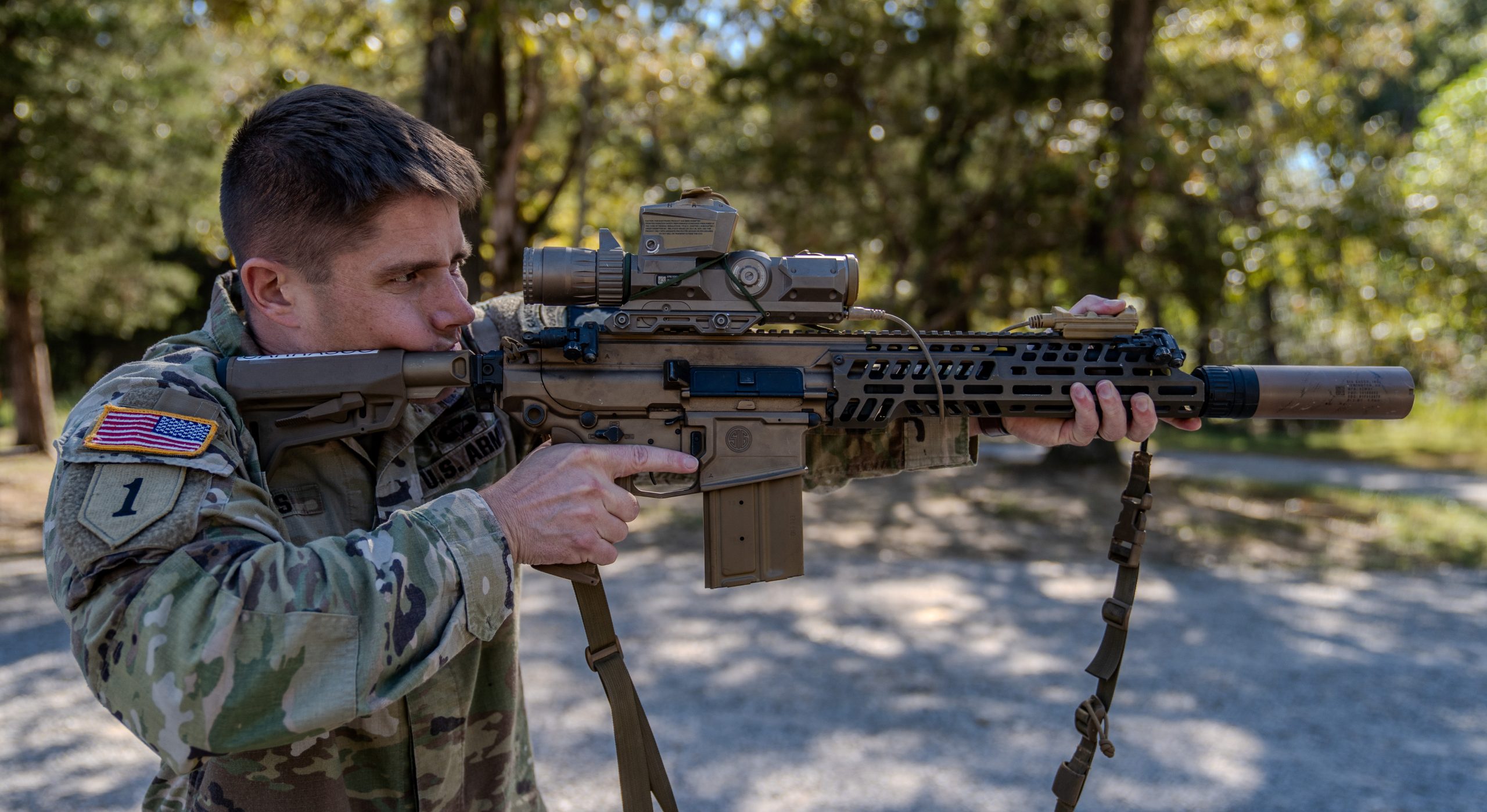
The U.S. Army’s M7 is a clear example of how a rifle is becoming part of a larger digital system. It uses 6.8x51mm ammunition and is paired with the XM157 fire-control optic, which combines a 1-8x sight, laser rangefinder, ballistic calculator,r and environmental sensors. That matters in an AI-shaped security world because data, sensing,ng and rapid decision support increasingly sit beside the firearm. The M7 is notable for its connected ecosystem, not simply its cartridge or power. Numerical data: 6.8x51mm; 1-8x optic; 120,000 soldiers targeted by the program.
2. SIG MCX SPEAR
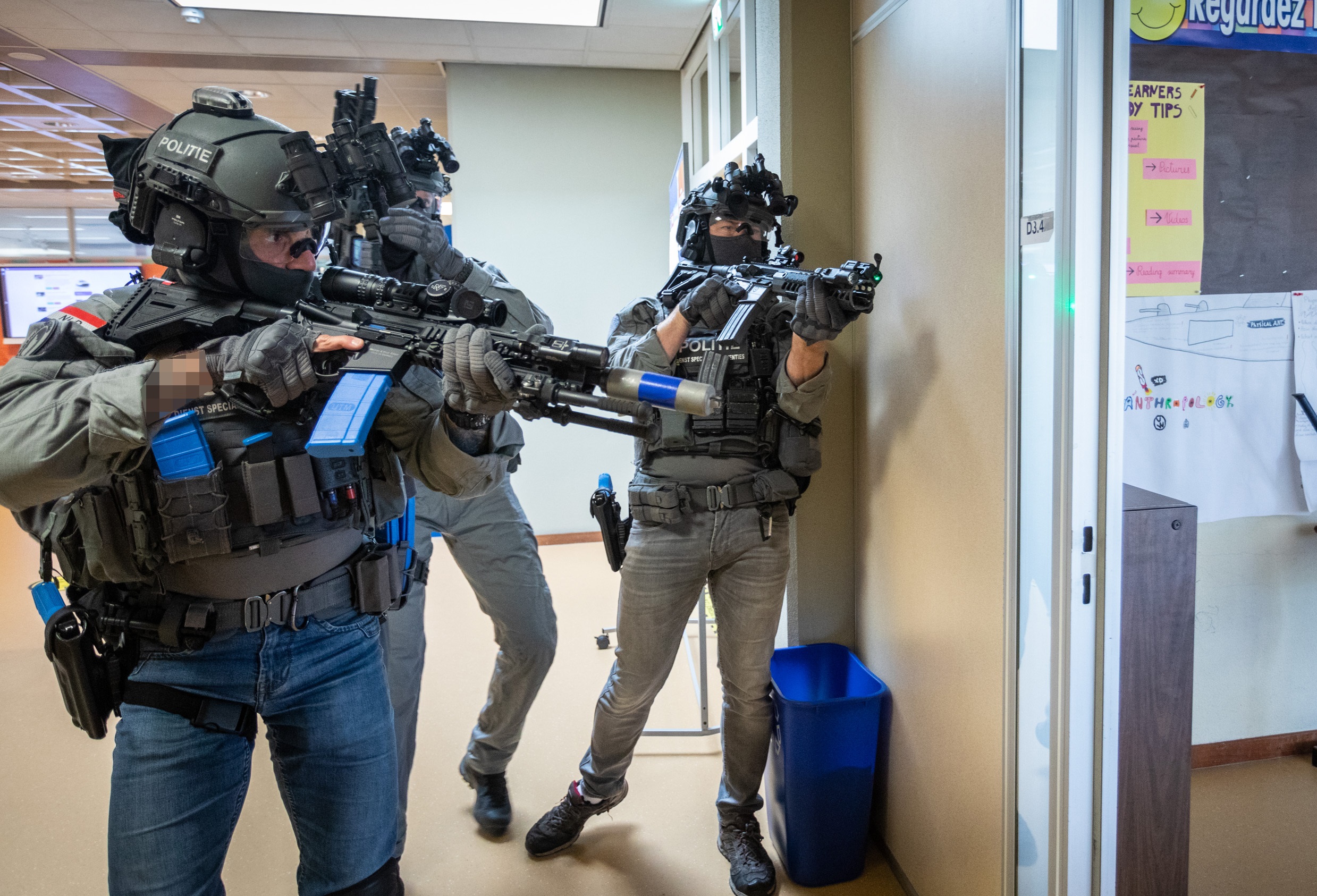
Mediacentrum Defensie (MCD), CC BY-SA 4.0/Wikimedia Commons
The SIG MCX SPEAR has drawn attention because it grew from the U.S. Army’s Next Generation Squad Weapon competition and became the basis for the M7. Its modular design supports 6.8x51mm, 7.62×51 mm, and 6.5 Creedmoor configurations, while the platform accepts modern optics and other equipment. In an AI-driven security environment, that flexibility matters because sensors and computing hardware can change faster than a basic firearm. The rifle represents adaptable hardware built around evolving technology. Numerical data: 3 listed calibers; 20-round magazine; M7 basis.
3. XM8 Carbine
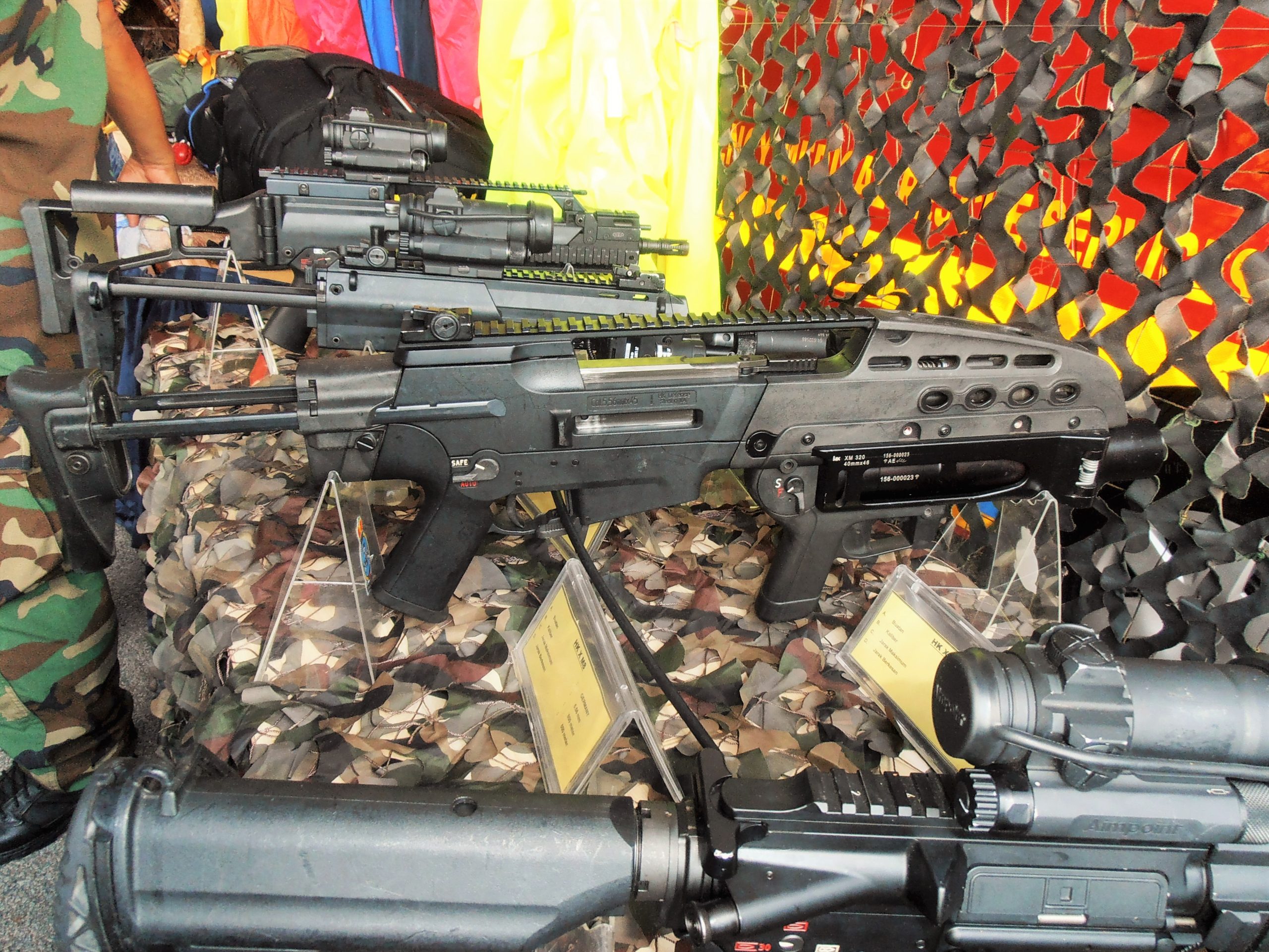
The XM8 is attracting attention as a shorter, more mobile member of the Army’s M7 family. The U.S. Army approved procurement of the carbine variant in December 2025 after soldier evaluations, describing it as a way to improve mobility while retaining the M7 program’s capabilities. Its significance in an AI-shaped security environment is less about autonomous firing and more about integration. Personnel operate with sensors, digital communications, and decision-support tools, making compact weapon platforms part of a wider network. Numerical data: 1 carbine variant; approved in 2026.
4. HK416
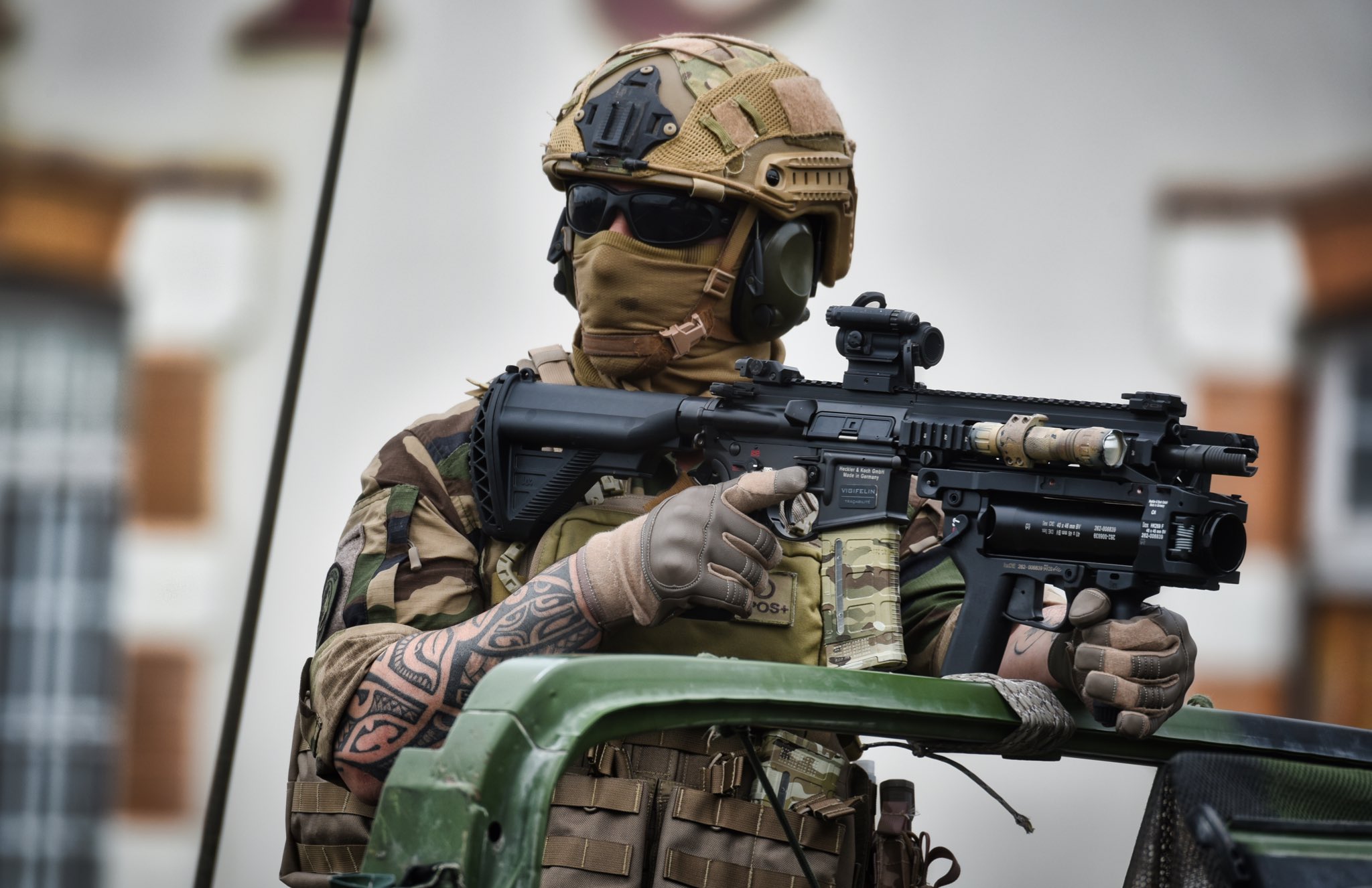
The HK416 remains relevant because modern security systems still depend on human-operated firearms alongside cameras, drones,s and digital sensors. Heckler & Koch lists it in 5.56x45mm NATO with magazines holding up to 30 cartridges, while its full-length rail supports optical and night-vision equipment. That makes it easier to fit into technology-heavy security teams without making the firearm autonomous. Its continued military and law-enforcement role shows why established platforms can remain important as surrounding technology changes. Numerical data: 5.56x45mm; 30-round magazine; 850 rounds/minute.
5. FN SCAR
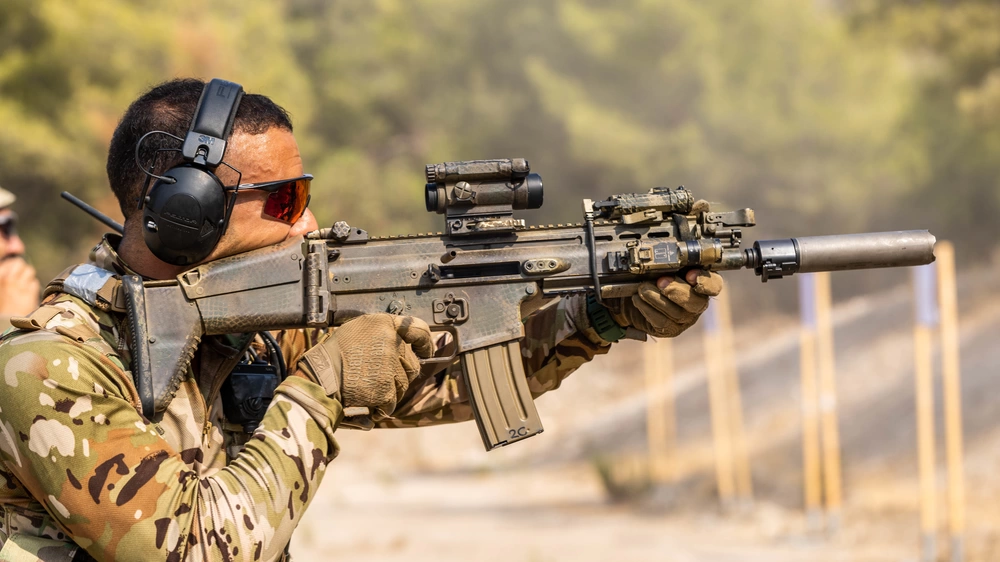
The FN SCAR gained its reputation through a U.S. Special Operations Command program seeking a versatile rifle family. FN says the system was designed around two calibers while maintaining substantial parts commonality, and it later entered operational service. In today’s security environment, that modular approach remains relevant because teams may combine firearms with optics, night vision, communications, and other sensors. The SCAR is interesting as adaptable hardware supporting a broader technology ecosystem. Numerical data: 2 core military variants; USSOCOM program began in 2003.
6. Glock 17
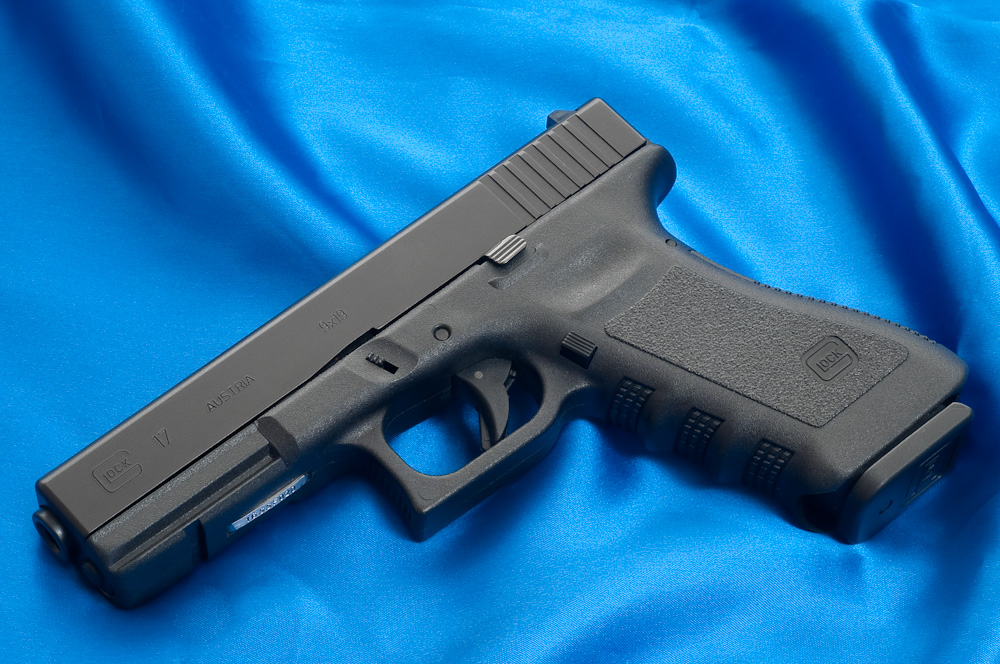
The Glock 17 shows why AI-driven security does not make conventional sidearms irrelevant. It remains a widely recognized professional pistol, and Glock lists a standard 17-round magazine, 9x19mm chambering,g and a 114mm barrel. Security organizations can add digital cameras, access-control systems,ms and automated monitoring around personnel, but the handgun remains a separate human-operated tool. Its importance comes from reliability, familiarity,ity and established service use rather than artificial intelligence built into the pistol. Numerical data: 9x19mm; 17-round standard magazine; 114mm barrel.
7. SIG Sauer P320
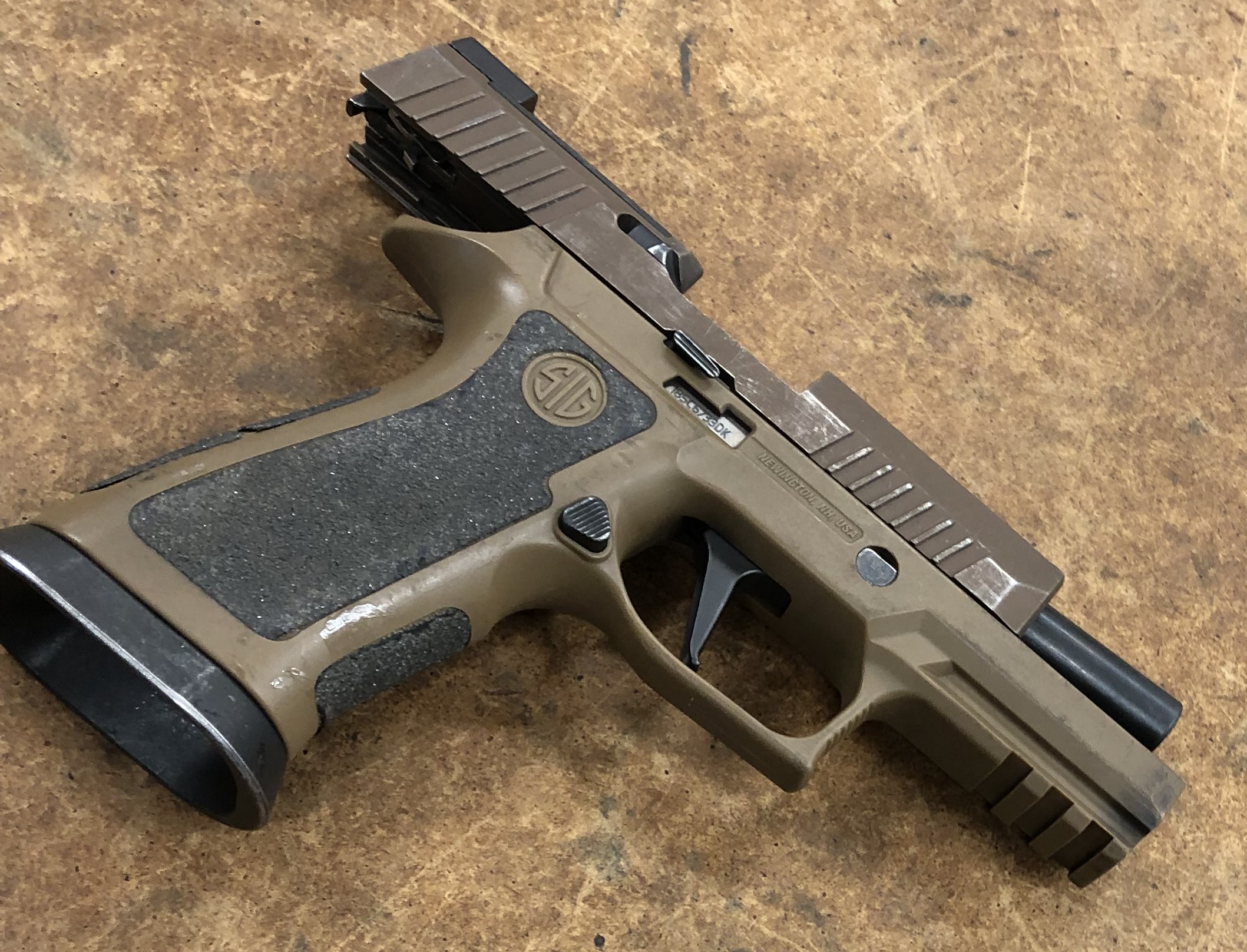
The SIG Sauer P320 is another pistol receiving attention in modern security because it has extensive military and law-enforcement use. SIG says the design has been tested by the U.S. military and agencies at federal, state,tate and local levels, while also addressing public questions about safety in its 2025 information update. In an AI-heavy security environment, such firearms highlight an important boundary: software can improve detection and information flow, but the firearm itself may still depend on human control. Numerical data: 1 modular pistol family; 2025 safety update.
8. CZ BREN 2
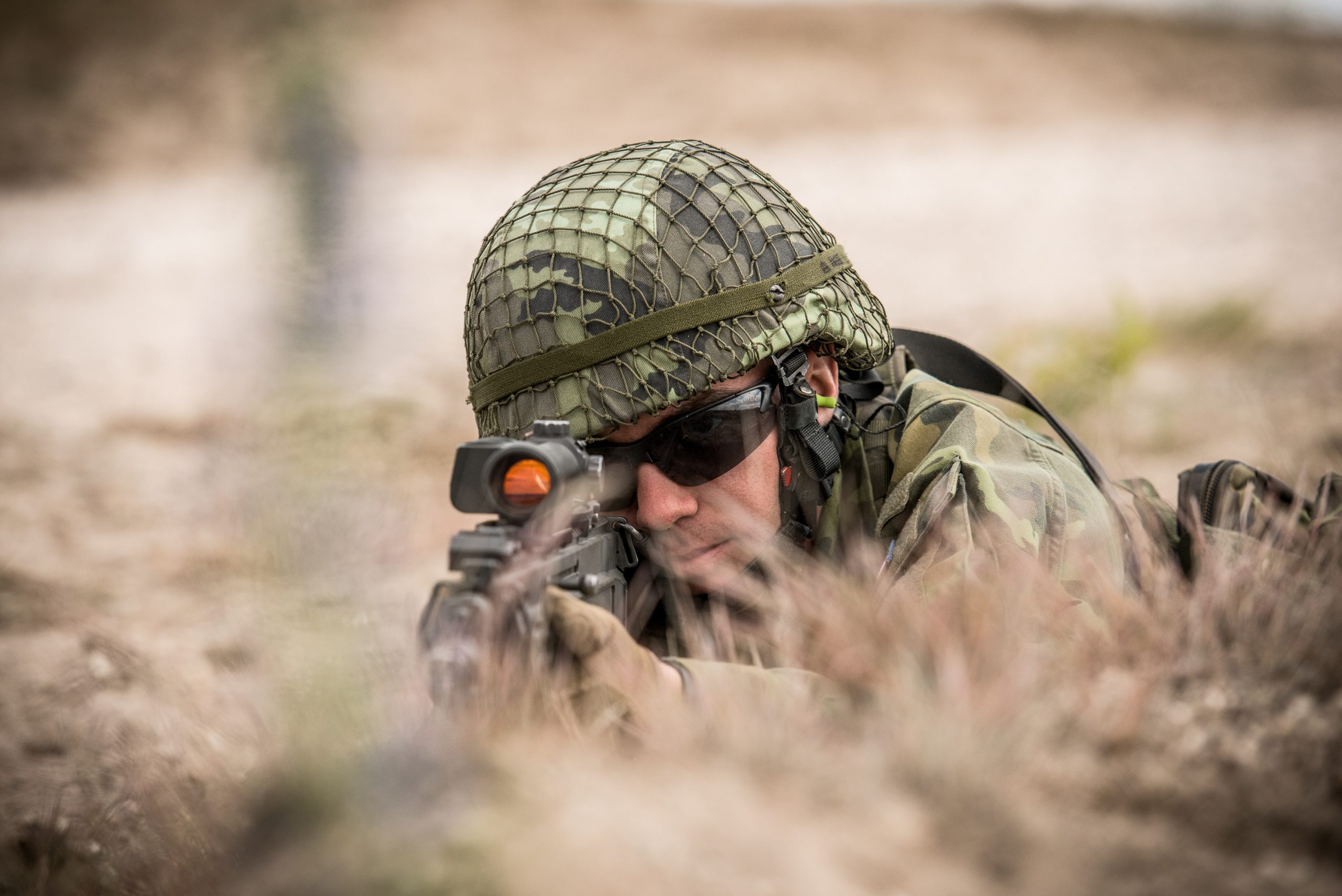
The CZ BREN 2 illustrates how modern rifles are designed around flexibility rather than a single fixed role. CZ describes it as a multi-caliber automatic firearm available in 5.56x45mm NATO and 7.62×39, developed with input from elite special units and first adopted by the Czech Armed Forces. That adaptability fits a security landscape where missions can change quickly, and digital equipment evolves rapidly. The BREN 2 is not an AI weapon, but its modular architecture makes it one component inside a larger system. Numerical data: 2 listed calibers; Czech Armed Forces first customer.
9. AR-15
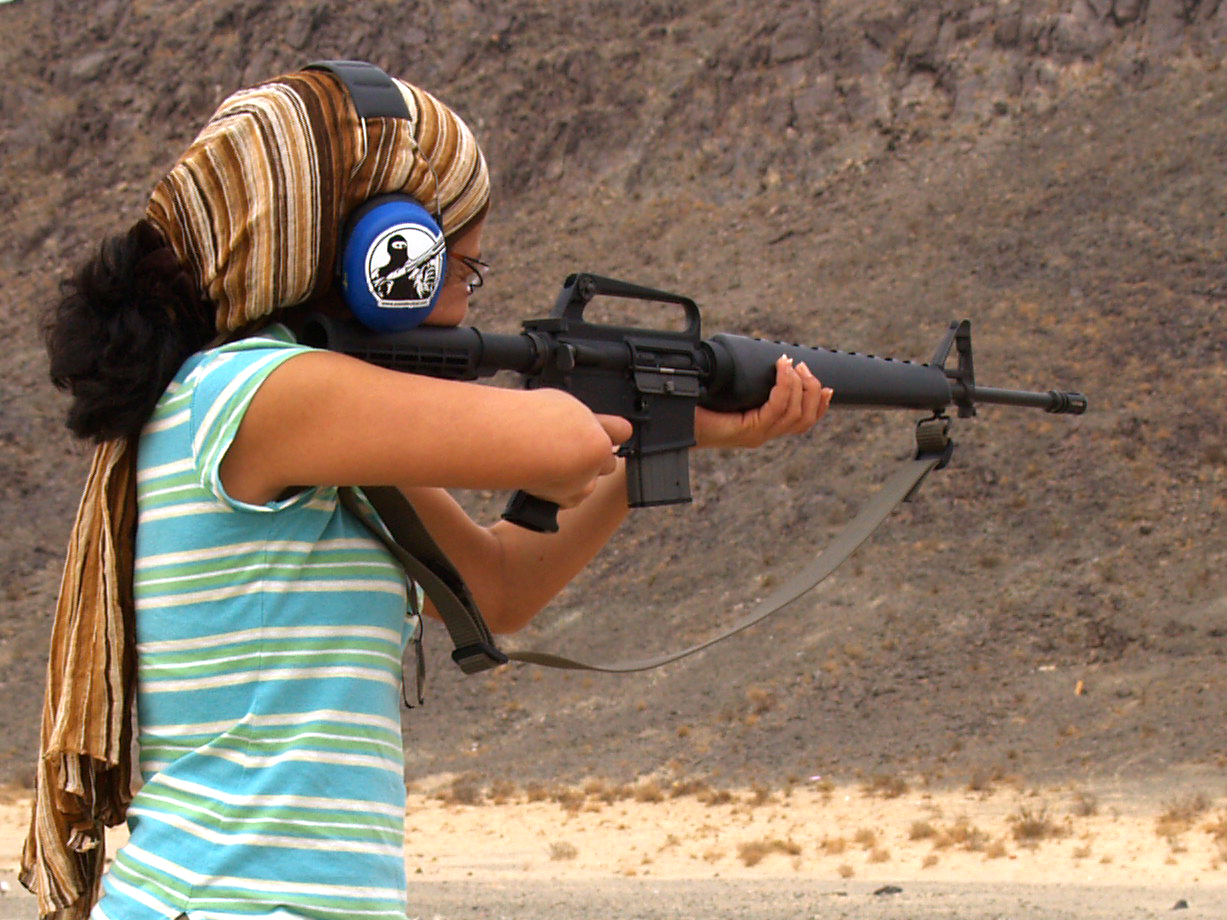
The AR-15 remains a highly visible rifle platform because its architecture supports many configurations. Its significance in an AI-shaped world is mostly ecosystem-based: optics, thermal devices, communications equipment,t and external sensors can surround a conventional firearm without making the rifle autonomous. That distinction matters when discussing AI and weapons. Technology may transform how threats are detected and information is processed while the underlying firearm remains familiar. Numerical data: platform lineage dates to the 1950s; U.S. military adoption followed in the 1960s.
10. Beretta 92
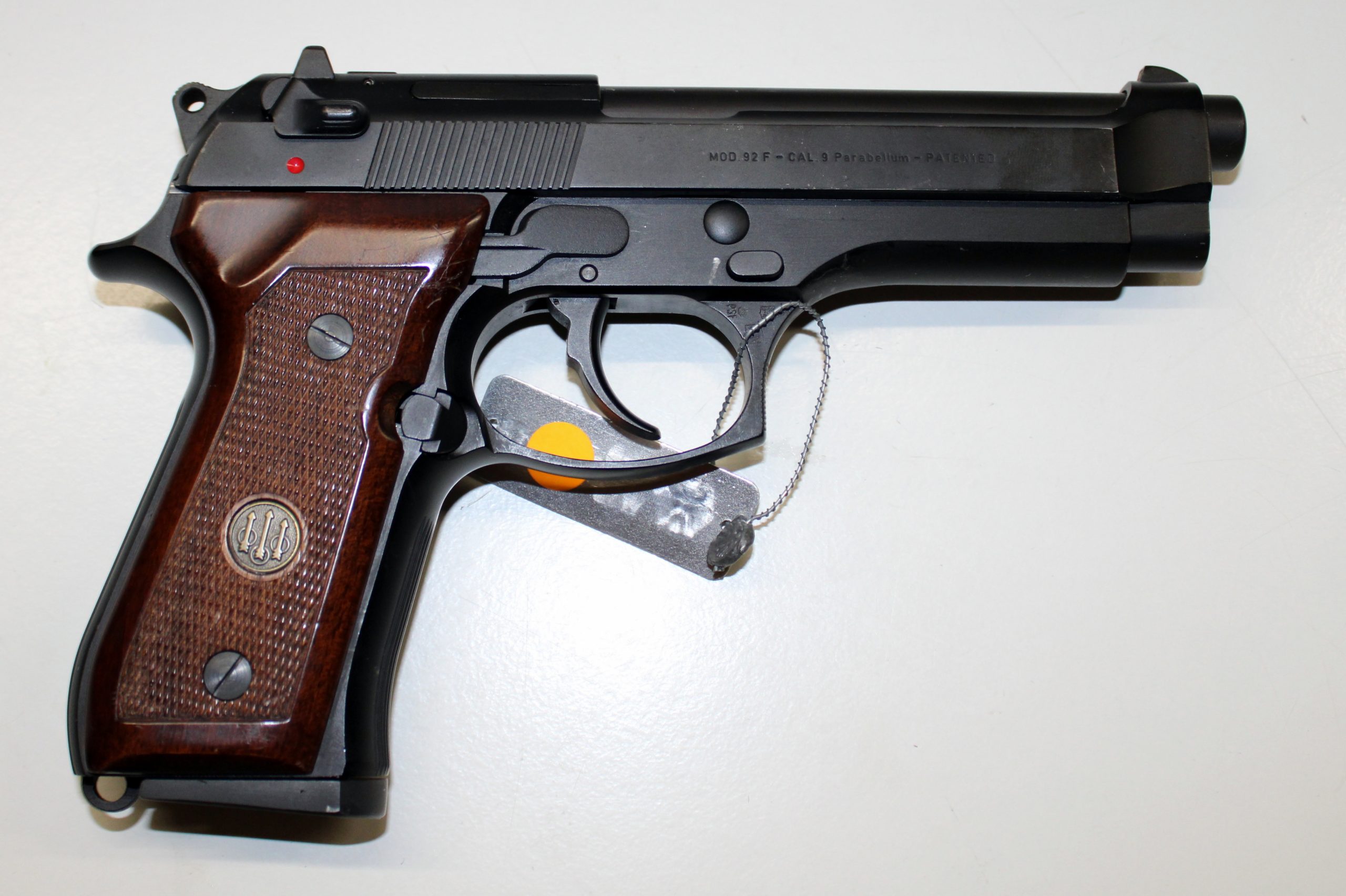
The Beretta 92 remains relevant while security technology moves toward networked surveillance and digital monitoring. Its long service history means organizations already understand its handling, maintenance, and training requirements, while newer technologies can be added around personnel carrying it. The broader lesson is that AI does not automatically replace proven hardware. In many security settings, the key change is the information surrounding the firearm, including cameras, communications, and automated alerts. Numerical data: 9x19mm; 15-round magazine in the original M9 configuration.
11. FN P90
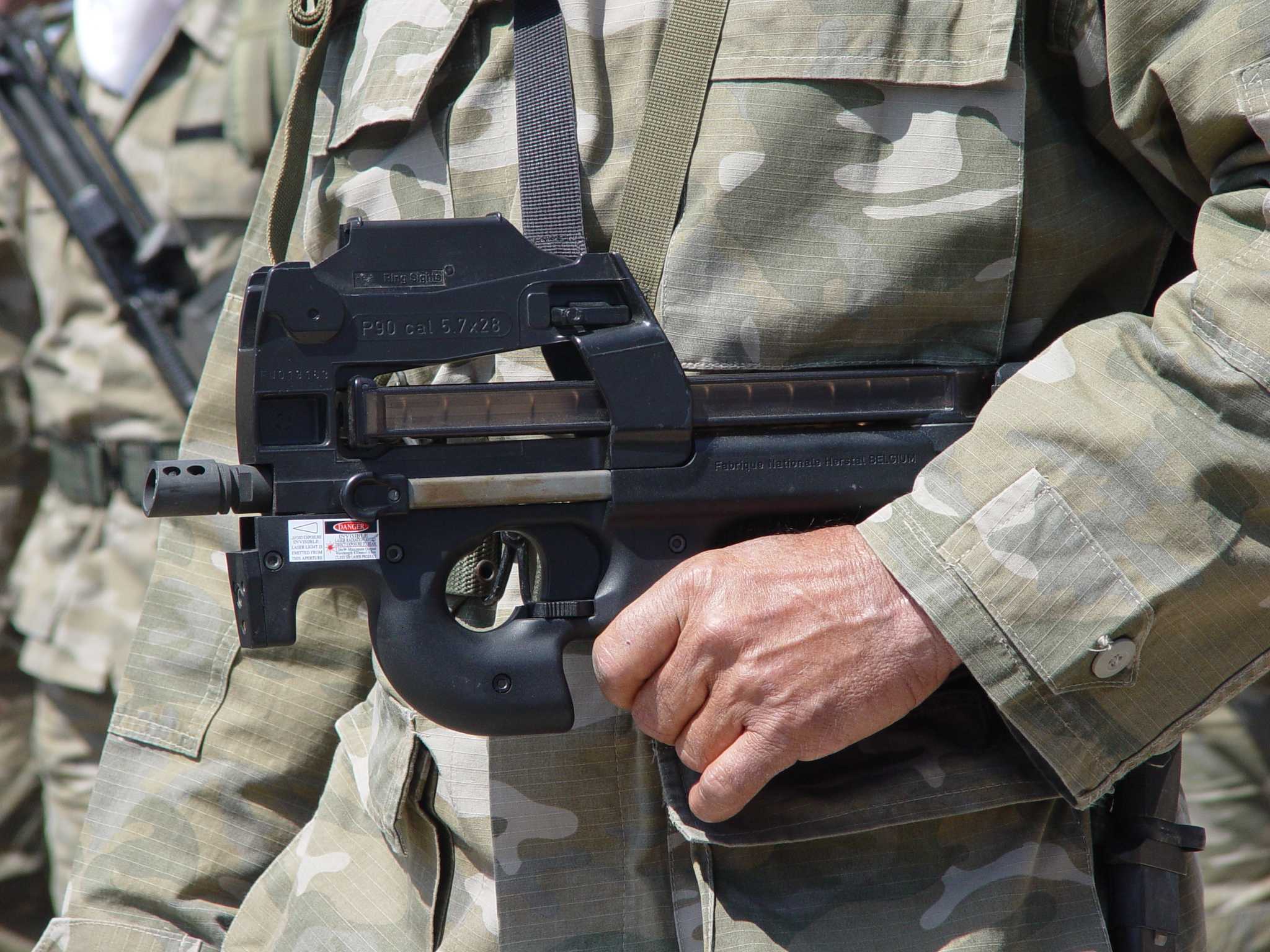
The FN P90 stands out because it was designed from the beginning as a compact personal-defense weapon for specialized users, giving it a distinct place in modern security discussions. FN says the system was introduced in 1990 and uses the 5.7x28mm cartridge, which later became standardized by SAAMI and adopted by more than 50 NATO nations, according to the company. Its compact format fits environments where space and mobility matter, while today’s sensors and AI tools increasingly shape how those environments are monitored. Numerical data: 1990 introduction; 5.7x28mm; 50+ NATO nations.