A lot of shooters assume that if a firearm is legal, a range has to allow it. That is almost never how it works.
Why ranges ban guns without calling them “banned”
Most ranges do not put up a giant sign that says your firearm is forbidden. Instead, they write broad rules about ammunition, barrel length, target type, rate of fire, muzzle energy, or safe handling, and those rules quietly knock certain guns out of the lineup.
That is why owners are often caught off guard. They show up with a perfectly lawful firearm, then discover the range officer is focused on things like steel-core bullets, excessive muzzle flash, damaged backstops, or whether the gun can be shot safely inside that facility. According to the NRA Range FAQs, steel core, steel jacketed, armor piercing, tracer, and incendiary rounds are commonly prohibited, and some indoor ranges limit shotguns to slugs only.
The bigger point is that ranges are managing risk, not making constitutional arguments. Their insurance carrier, ventilation system, bullet trap design, and neighbor complaints often matter more than what is technically allowed under state or federal law. That is why a gun can be welcome at one club and refused at another twenty minutes away.
AR-15s loaded with green-tip or steel-core ammo

The rifle itself usually is not the problem. The ammo is.
Many AR owners buy whatever 5.56 is affordable, and that often means M855-style green-tip or other magnetic loads. On paper, it feels like ordinary range fodder. In practice, many ranges ban it because magnetic or steel-containing projectiles can chew up steel targets, damage backstops, and create dangerous splash or sparks. The NRA Range specifically says steel core and steel jacketed ammunition are not allowed, and NRA competition materials also note bans on armor piercing, tracer, and similar ammunition.
This catches new owners because they think “green tip” means armor piercing in every case, or that if the bullet is not legally classified as armor piercing, a range cannot object. That is the wrong lens. Range staff are usually using a magnet, not a law book.
If your AR gets turned away, ask whether the restriction is on the rifle or on projectile construction. Very often, standard brass-cased, nonmagnetic .223 or 5.56 solves the issue immediately and gets the same gun back on the firing line.
Pistols chambered in rifle calibers

A lot of modern “pistols” blur the line between handgun and rifle performance. That becomes a range problem fast.
Think of AR-style pistols, AK pistols, or large-format handguns chambered in 5.56, 7.62×39, or .308-adjacent specialty rounds. Even when they are legally handguns, many indoor facilities see them as hard on bullet traps, brutally concussive to adjacent shooters, and more likely to create control issues for inexperienced owners. The paperwork says pistol. The lane design says otherwise.
This is one of the most misunderstood quiet bans in shooting sports. Owners assume a handgun lane means any handgun-caliber or legally classified handgun can be fired there. But many indoor ranges write rules around muzzle energy, velocity, or cartridge type instead of legal category. That lets them exclude rifle-caliber pistols without singling out one platform.
The decision is usually practical. Range officers know that one short-barreled 5.56 pistol can rattle every booth on the line, trigger complaints, and create safety concerns when newer shooters fight blast and flash inside a confined space.
Short-barreled rifles that trigger policy and paperwork anxiety
Short-barreled rifles are not banned everywhere, but they get extra scrutiny far more often than owners expect.
Part of that is simple administrative caution. ATF rules around National Firearms Act items remain a serious compliance issue, and ranges do not want staff making legal judgment calls at the counter. If an employee is uncertain whether a firearm is a properly registered SBR, a non-NFA rifle, or something configured questionably, the easiest answer is often “not today.”
Even when the paperwork is in order, SBRs can raise the same blast, flash, and control concerns as rifle-caliber pistols. A compact 10.3-inch or 11.5-inch gun is excellent for many legitimate uses, but indoors it can be punishing. One shooter may love it. Everyone in the next three lanes may hate it.
Quiet bans here often show up as vague language about management approval, case-by-case review, or restrictions on NFA items. The owner hears “we do not really allow those,” even though the posted rule may never say SBR in plain English.
Braced pistols that staff do not want to sort out
If there is one category ranges avoid out of pure hassle, it is the braced pistol.
ATF guidance on braces has shifted repeatedly over the years, and although federal guidance exists, many range employees do not want to become experts in real-time classification disputes. ATF has continued publishing brace-related rule and guidance material, which keeps the topic sensitive for businesses trying to stay compliant and avoid misunderstandings.
From the range perspective, the problem is not always what the gun is. The problem is what it appears to be. If a firearm looks like a compact rifle with a stock-like rear accessory, a staff member may decide it is easier to refuse it than debate shoulder use, barrel length, registration status, or local enforcement attitudes at the front desk.
Owners never expect this because they know their own build and often know the law better than the person checking them in. But range policy is about operational simplicity. If a gun causes confusion every time it comes out of the case, some facilities quietly decide it is not worth the argument.
Shotguns set up for buckshot or birdshot on the wrong range

Shotgun owners are often stunned to learn that the gun is fine, but the load makes it unwelcome.
Indoor and multiuse ranges frequently limit shotguns to slugs only because patterns spread, pellets damage target carriers, and shot can strike baffles or lane dividers. The NRA Range states plainly that shotguns must be fired with slugs only. On the public-land side, rules vary wildly by site, with some clay venues allowing birdshot only and other shooting areas allowing buckshot and slugs.
This creates constant confusion because many shooters think a shotgun lane is a shotgun lane. In reality, ranges are designed for very specific projectile behavior. Birdshot that is perfect on a skeet field may be completely unacceptable in a narrow indoor lane.
The ban feels personal when someone brings a defensive shotgun loaded exactly as it sits at home. But the range is not judging the shotgun’s purpose. It is trying to prevent pellet spread from wrecking equipment or sending impacts where the facility was never built to contain them.
.50 BMG rifles and other extreme long-range bruisers

Some guns are too much range for the range.
A .50 BMG rifle, or even a handful of other ultra-high-energy magnums, can exceed what a facility’s backstop, target system, noise envelope, or neighboring property agreements were built to handle. Some ranges that allow ordinary centerfire rifles still prohibit extreme cartridges because the engineering margin is different once velocity, bullet weight, and impact energy climb into another class.
Owners are often surprised because they assume any outdoor rifle range should handle any rifle. But many private clubs were built decades ago around hunting calibers and conventional firing distances. They may not have the berm depth, overhead baffling, or insurance appetite for fifty-caliber shooting.
This is also where community pressure matters. One giant muzzle brake and a thunderous report can generate more complaints than a dozen ordinary rifles. A club that wants to keep good relations with neighbors may quietly decide that allowing a few exotic heavy hitters is not worth the attention.
Black powder rifles and muzzleloaders indoors
Black powder fans know their guns are slower and often softer than many centerfire rifles. Range operators see a different set of problems.
Smoke is the obvious issue. Indoor ventilation systems are engineered around modern smokeless powder, and black powder or many substitutes can create dense clouds, residue, and cleanup burdens that a typical lane operation does not want. The NRA Range explicitly notes that black powder firearms are prohibited there, which reflects a broader pattern at indoor facilities.
There is also the handling factor. Loading procedures are slower, involve loose powder or pellets, caps or primers, and often more bench activity than a standard cartridge gun. None of that is inherently unsafe when done correctly, but it can be outside what a busy public indoor range is staffed and designed to supervise.
Owners are usually caught off guard because muzzleloaders feel traditional and low-tech. But from a facility management standpoint, they create ventilation, housekeeping, and procedural complications that many modern ranges simply choose not to absorb.
Rapid-fire friendly guns with binary or forced-reset style triggers
Some firearms get sidelined not because of caliber or design, but because of how quickly they can be fired.
Ranges routinely ban rapid fire, bump firing, and trigger systems that make cadence hard for staff to monitor. Binary and forced-reset style setups draw special attention because they can sound uncontrolled to other shooters and can overwhelm public-range supervision even when the owner believes they are operating the firearm correctly.
This category gets sensitive fast because federal and state rules can shift, and range owners do not want to navigate a moving legal target on the fly. Even when a particular trigger system is lawfully possessed, a facility may still decide it creates too much confusion, too many neighbor complaints, or too much risk of rounds escaping the intended impact area during fast strings.
The quiet ban usually appears as a rule against rapid fire or any device that simulates automatic fire. The gun comes out, the trigger gets explained, and the answer from the counter is basically over before the conversation begins.
Home-built or unserialized guns that create check-in headaches
Privately made firearms are a real category under federal regulation, but they often make range staff uneasy.
ATF has updated definitions and guidance around frames, receivers, and privately made firearms in recent years. That does not mean every homemade gun is unlawful. It does mean many businesses are cautious when a firearm lacks familiar markings or appears assembled from parts in a way that is not obvious to a front-desk employee.
Ranges are not forensic labs. If staff cannot quickly identify what they are looking at, confirm it appears safe, and satisfy house policy, they may refuse it. That is especially true at facilities where inexperienced shooters rent lanes and staff are expected to make rapid judgments in a crowded environment.
Owners are surprised because they know the build history and trust the gun. The range only sees uncertainty: unclear origin, unknown workmanship, possible policy conflict, and no upside in taking a chance when saying no is simpler.
Guns with aggressive muzzle brakes that make everyone miserable

This one angers people because the gun itself may be totally ordinary.
A standard AR, AK, or precision rifle fitted with a very aggressive side-port brake can produce a blast that hits neighboring shooters like a slap. Indoors, the concussion can be exhausting. Outdoors, it can still rattle benches, scatter gear, and trigger a stream of complaints to the range officer.
Very few ranges advertise a “muzzle brake ban,” but many enforce one indirectly through nuisance, safety, or staff-discretion rules. If one shooter’s setup disrupts the entire line, the facility may decide the firearm is not suitable in that configuration, especially during crowded public hours.
Owners rarely see this coming because they installed the brake for recoil control and faster follow-up shots. The range sees the social side of the equation. A gun that technically functions fine can still be unwelcome if it turns six neighboring lanes into a miserable place to shoot.
Oversized novelty handguns and specialty calibers
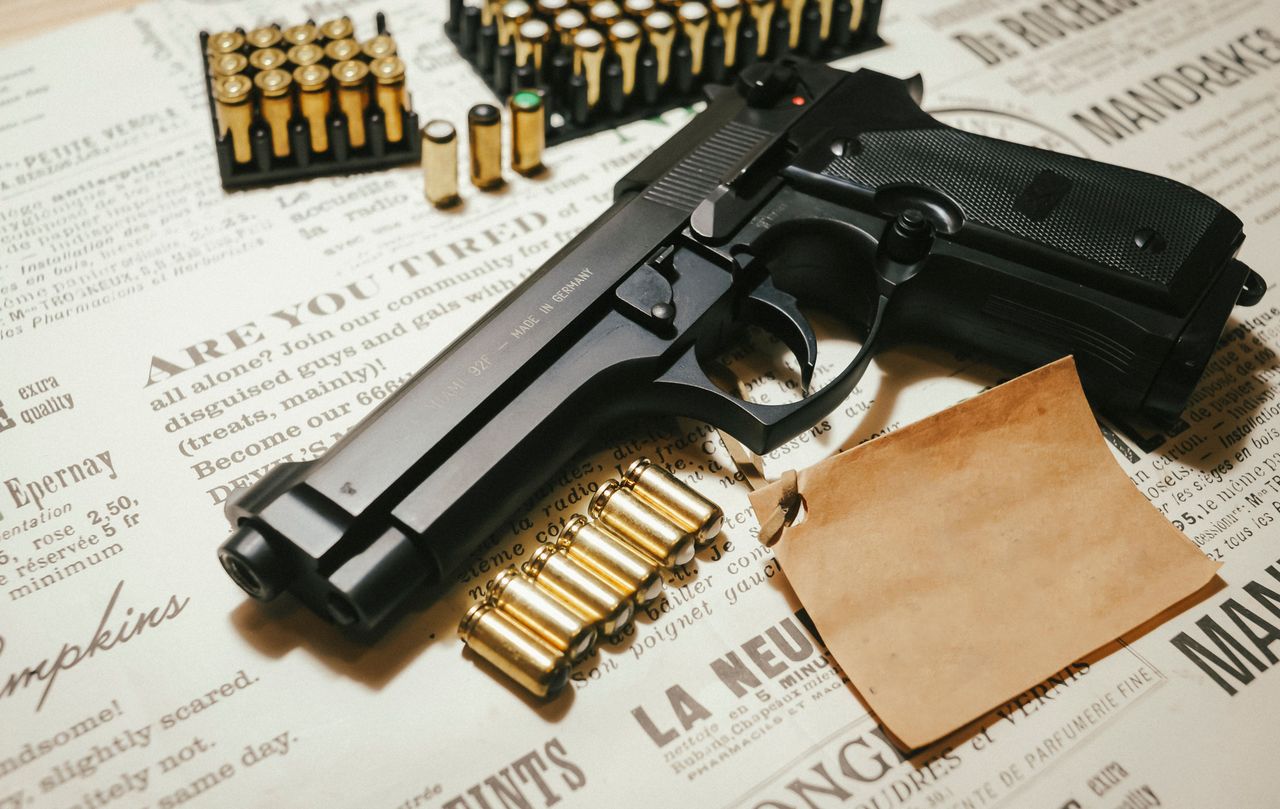
Finally, there is the class of firearms that are legal, dramatic, and just plain impractical for a public range.
Think giant revolvers in .500 S&W, massive semi-autos, or exotic specialty pistols that produce unusual blast, recoil, flash, or target damage. Many ranges do allow them. Others quietly steer them away because novice shooters rent the next lane over, staff have seen too many dropped guns or injured thumbs, and the gun adds more spectacle than discipline.
The owner often expects admiration. What they get is a cautious safety briefing and, sometimes, a refusal based on lane suitability or management discretion. The concern is not that these guns are illegitimate. It is that they dramatically increase the odds of poor control, accidental lane sweeping, and equipment abuse in a public environment.
The lesson across all eleven categories is simple: ranges do not just regulate firearms. They regulate consequences. If your gun, ammo, or setup creates unusual consequences for steel, air handling, noise, paperwork, supervision, or the people in the next booth, that is where the quiet ban usually starts.