Some firearms fade away because technology moves on. Others vanish even though they still did something unusually well, leaving behind a devoted crowd and a very real hole in the market. This gallery looks at 11 guns that slipped out of production quietly, yet continue to be remembered for balance, reliability, handling, or plain old usefulness.
Winchester Model 70 Pre-64

For many rifle fans, the pre-1964 Winchester Model 70 is the benchmark by which bolt actions are still judged. It combined controlled-round feed, strong construction, and the kind of fit and finish that made ownership feel like a long-term relationship rather than a simple purchase.
When Winchester redesigned it in 1964 to cut costs, shooters noticed immediately. The newer rifles often worked fine, but they lacked the aura and refined details that made the earlier gun special.
Modern rifles can match its accuracy and surpass it in manufacturing efficiency, yet few capture that same blend of elegance, field practicality, and confidence at the shoulder.
Colt Python Original Production

The original Colt Python was more than a premium revolver. It was a hand-fitted statement piece with a trigger pull so smooth that shooters still talk about it with a kind of reverence. The bright Royal Blue finish and ventilated rib gave it a look that stood apart even in a crowded display case.
Its quiet disappearance left a gap at the high end of the double-action revolver market. Plenty of revolvers are durable, accurate, and practical, but very few feel as if they were built with this much attention to tactile refinement.
The Python name returned, but for many enthusiasts, the original production guns remain the standard that modern examples still chase.
Browning Hi-Power Belgian Models

The Browning Hi-Power spent decades proving that a slim, all-steel 9mm service pistol could be both graceful and effective. Early Belgian-made examples in particular earned a reputation for natural pointing, excellent balance, and a profile that fit the hand better than many chunkier designs that followed.
As polymer pistols took over, the Hi-Power gradually slipped from center stage. It never vanished from memory, though, because it offered something hard to quantify and even harder to duplicate: mechanical elegance without sacrificing practical performance.
Today there are clones, updates, and tributes, but the original still occupies a distinct place between military history, carry practicality, and old-world gunmaking charm.
Remington 700 Classic

The Remington 700 Classic was an unusually smart idea that now feels almost impossible to recreate in the same way. Each year brought a limited chambering, giving hunters and collectors a reason to pay attention while keeping the familiar 700 platform at the center of the conversation.
It was not just marketing. The rifle offered a straightforward, handsome package that made less common calibers feel accessible rather than exotic. For a lot of shooters, it was the easiest path into owning a practical rifle in a cartridge they had always wanted to try.
When it disappeared, so did that annual sense of anticipation. Few factory lines since have combined affordability, tradition, and cartridge variety so effectively.
Smith & Wesson Model 547

The Smith & Wesson Model 547 never became a household name, but people who know revolvers remember it immediately. Built to fire 9mm without moon clips, it used an ingenious extractor system that made the gun far more distinctive than its modest production numbers suggest.
That engineering mattered because it delivered revolver simplicity with a cartridge shooters could find almost anywhere. It was practical, clever, and a little ahead of its time, especially for anyone who wanted ammunition commonality without giving up a wheelgun.
Once production ended, the market never really replaced it. There are 9mm revolvers today, but very few offer the same combination of elegance, usability, and mechanical originality.
Marlin 39A

The Marlin 39A represented the kind of rimfire rifle that could stay in a family for generations. It was solid, accurate, and beautifully familiar, with a lever action feel that made casual plinking, small-game hunting, and teaching new shooters all seem to belong to the same easy afternoon.
Its disappearance hit harder than many centerfire exits because the 39A occupied a uniquely broad role. It was a serious rifle that never felt intimidating, a traditional gun that still made complete sense in the modern world.
There are other .22 lever actions, of course, but the 39A had a durability and presence that gave it unusual authority. It felt less like a novelty and more like a permanent fixture.
Ruger Deerfield Carbine

The Ruger Deerfield Carbine arrived as a fast-handling .44 Magnum semi-auto that made immediate practical sense in brush country. Compact, rugged, and easy to carry, it gave hunters a lively little carbine that pointed quickly and hit with authority at realistic ranges.
It never enjoyed the cultural spotlight of military-style rifles, and that may be part of why it disappeared so quietly. But among the people who used one in the field, it built a reputation as a smart tool rather than a range toy.
That niche still exists. Shooters continue to look for a dependable, compact, traditional-looking big-bore semi-auto, and very few current offerings capture the Deerfield’s blend of simplicity and usefulness.
Colt Woodsman

The Colt Woodsman helped define what a quality .22 pistol could be. It was trim, accurate, and refined in a way that made target shooting feel elevated. Even people who were not especially sentimental about old guns often softened after handling one, because its proportions and trigger made such an immediate impression.
As production ended, something subtle left with it. The Woodsman sat in a sweet spot between field gun, training pistol, and precision plinker, with styling that felt clean rather than ornamental.
Modern .22 pistols can be more modular or easier to manufacture, but few project the same polished confidence. The Woodsman remains a reminder that utility and elegance never had to be separate categories.
Savage 99
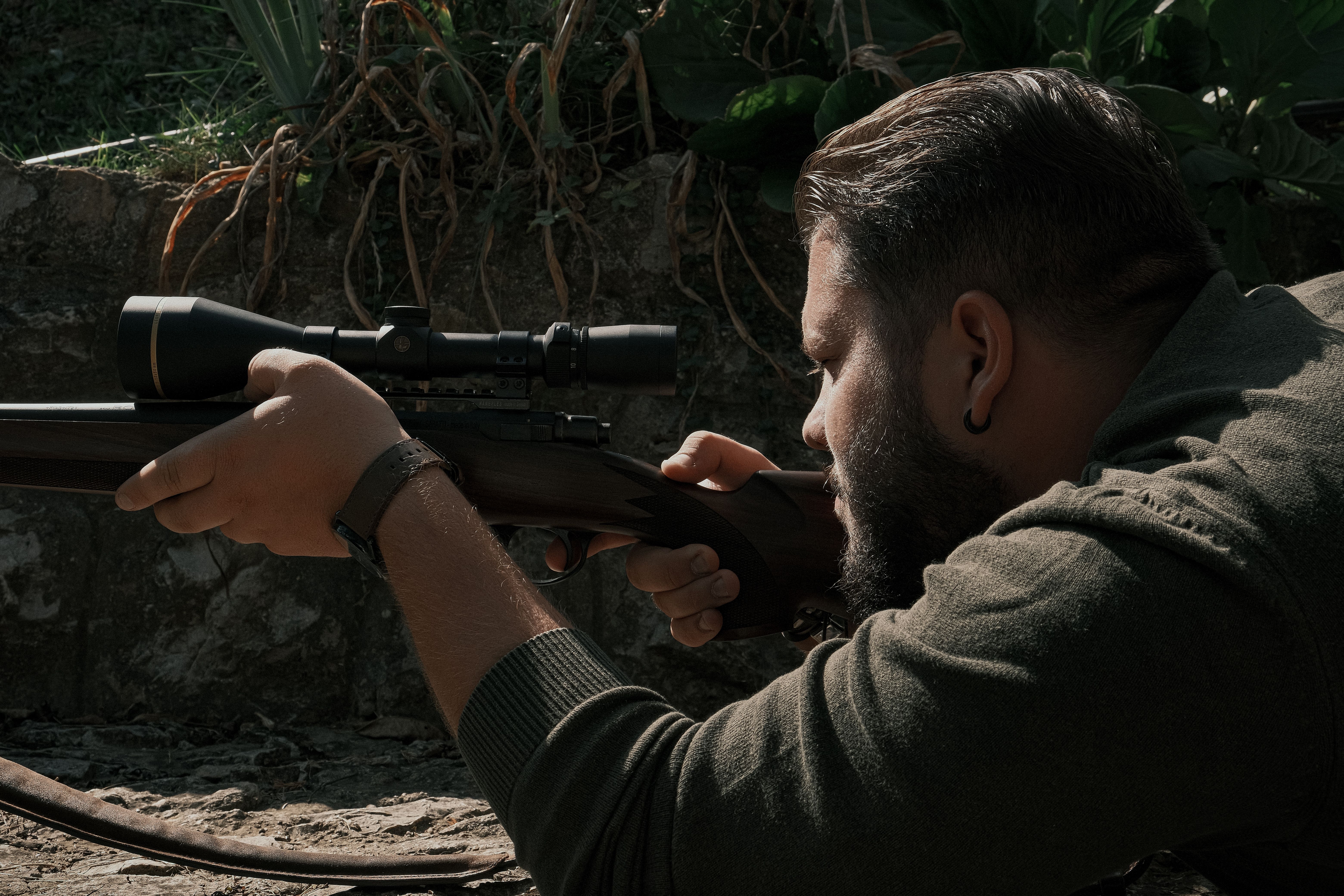
The Savage 99 was a lever action that refused to be limited by lever action expectations. Its rotary magazine allowed the use of spitzer bullets, and that single design choice helped the rifle bridge the gap between traditional handling and more modern ballistic thinking.
Hunters loved it because it carried well and felt alive in the hands. It offered speed, balance, and practical field accuracy in a package that looked classic without being technologically stuck in the past.
When it disappeared, the market lost one of its most intelligent hybrids. There are modern rifles that do individual parts of the job better, but very few combine innovation, heritage, and handling with the same easy confidence.
Heckler & Koch P7

The Heckler & Koch P7 remains one of the most original defensive pistols ever mass produced. Its squeeze-cocking system, low bore axis, and gas-retarded design gave it a compact shape with manners on the range that felt unusually controlled and unusually precise.
It also felt expensive, because it was. The very qualities that made the P7 remarkable made it difficult to build in a market increasingly driven by lighter materials and cheaper large-scale manufacturing.
That is why its departure still stings. Shooters did not just lose a carry gun. They lost a brilliantly overengineered answer to the question of how safe, compact, and shootable a serious sidearm could really be.
Weatherby Mark V Deluxe Early Production

Early Weatherby Mark V Deluxe rifles symbolized a very specific era of ambition in sporting arms. High-gloss wood, dramatic lines, and powerful chamberings gave them a presence that was unapologetically bold. They were hunting rifles, certainly, but they were also designed to impress from across the room.
Over time, the market shifted toward matte finishes, synthetic stocks, and stripped-down practicality. That made sense, but it also pushed aside the idea that a factory hunting rifle could be both lavish and genuinely field-worthy.
The Mark V never disappeared entirely as a name, yet those early deluxe rifles belonged to a world that has largely faded. Few modern production guns project that same blend of performance, flair, and confidence.