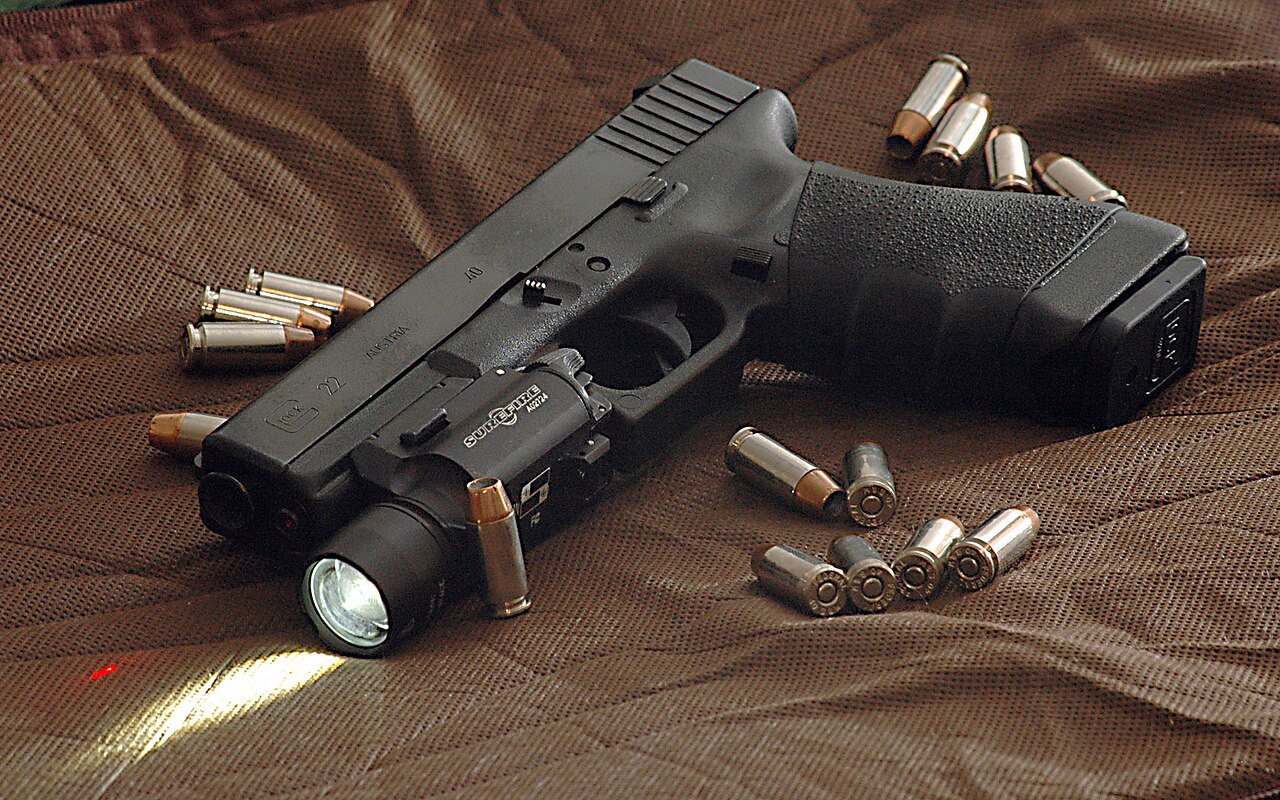
Some guns are built for the battlefield and never quite make it there. That does not mean they are bad guns, and history is full of models that flopped in trials but found a second life in civilian hands.
Colt Model 1900
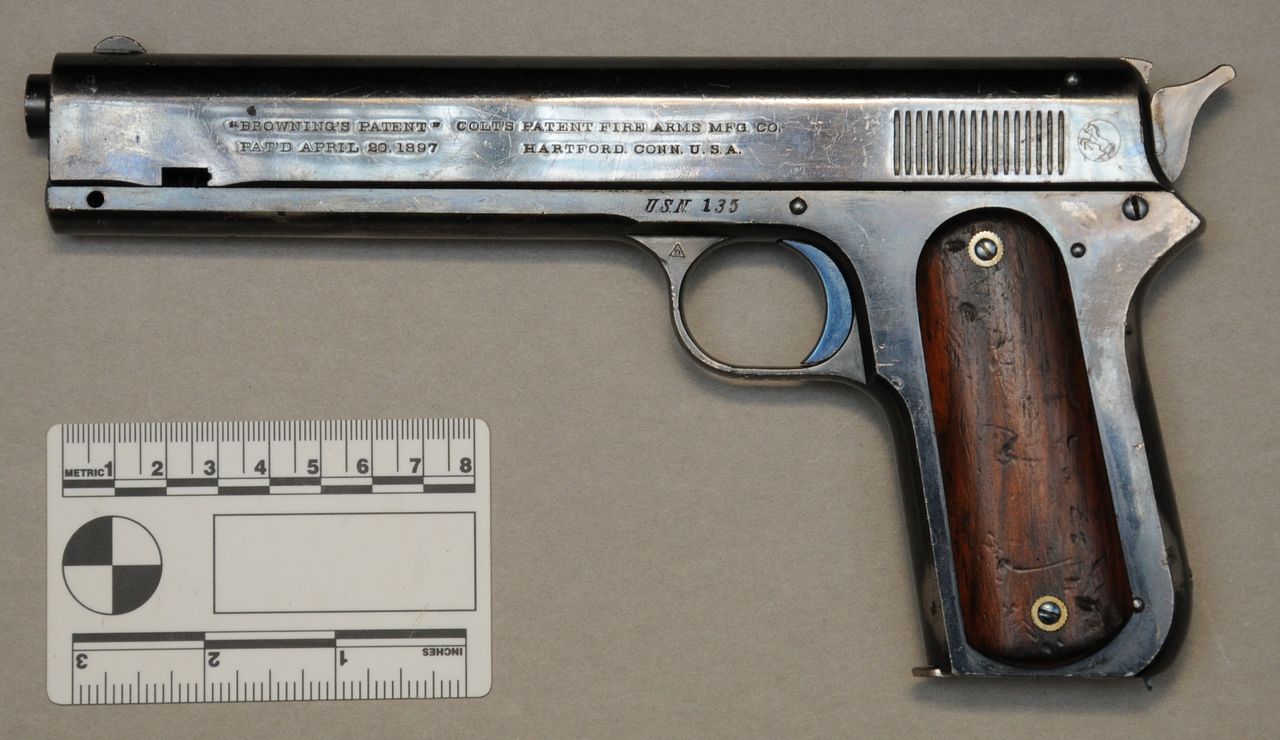
Colt’s Model 1900 arrived at a moment when the handgun world was shifting from revolvers to self-loaders. Colt itself notes that the Model 1900 was its first production automatic pistol and the first handgun to use short recoil operation, which makes it a landmark even before you get into sales numbers. It mattered technically, but it never became the U.S. military’s standard sidearm.
That was not for lack of trying. Early American pistol trials looked seriously at self-loading pistols, including Colt and Luger entries, but the Army kept refining what it wanted and eventually ended up on the path that led to the M1911. In other words, the Model 1900 was an important stepping stone that arrived before the final answer.
Civilian buyers, however, did not need a perfect service pistol spec sheet. They saw a modern, flat, magazine-fed handgun from a respected maker, and that was enough to create interest among sportsmen, officers buying privately, and enthusiasts fascinated by the newest mechanism in sidearms.
Its real success today is partly historical prestige. The Model 1900 was not the pistol that won the contract, but it helped normalize the semi-automatic handgun in America. Sometimes losing the trial still means winning the future.
Luger Model 1900 and .45 Trial Variants
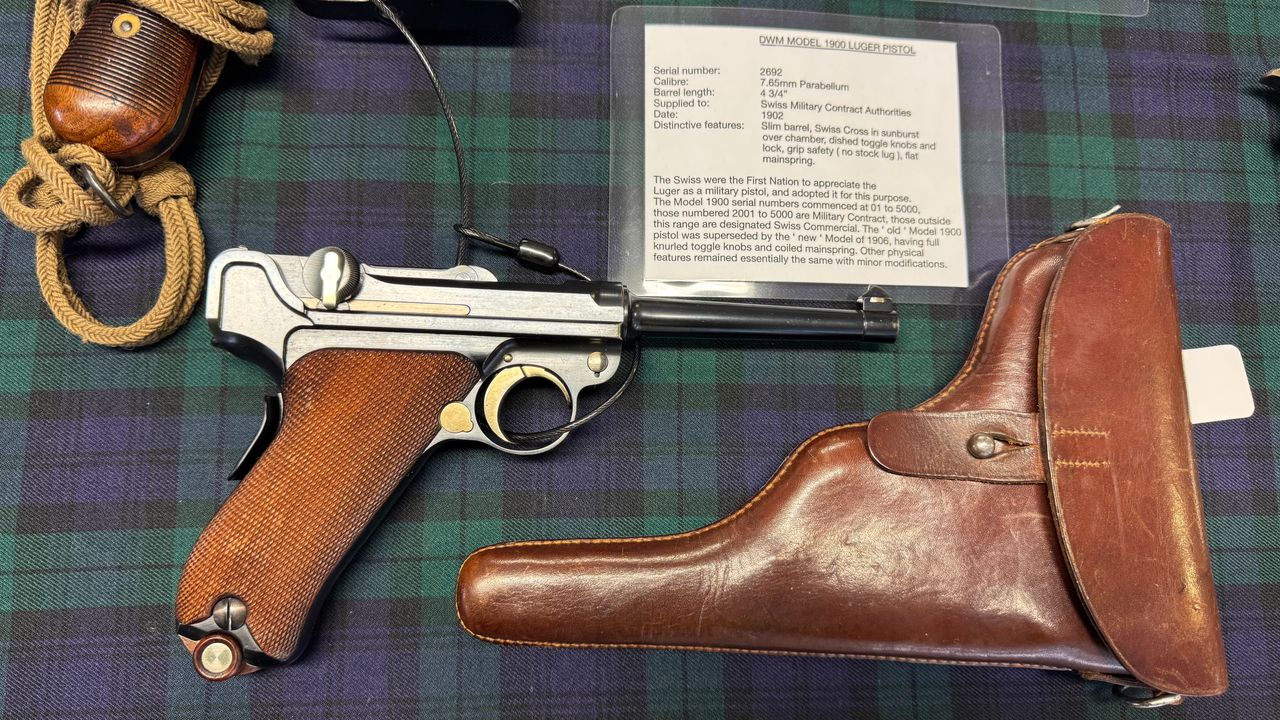
The Luger is one of the clearest examples of a gun that could lose one market and dominate another. American evaluators took a hard look at Luger pistols in the early 1900s, and American Rifleman has noted that the Army was intrigued enough to ask for a .45 caliber version during the pistol trials era. That sounds promising, but promising is not the same thing as adopted.
The Luger ultimately lost out to Colt’s Browning-derived design as the United States moved toward the Model 1911. Trial boards wanted reliability, power, and a pistol that could stand up to hard service, and Colt kept improving its entries until it crossed the finish line first.
Civilian shooters were drawn to the Luger for very different reasons. It had elegant lines, a distinctive toggle action, and a level of mechanical sophistication that made it feel imported, exotic, and a little ahead of its time. The commercial “American Eagle” models especially developed a mystique that outlived the trial loss.
That is the pattern you see again and again. A military board asks whether a pistol is the best general-issue tool for mud, cavalry, and mass procurement. Civilian buyers ask whether it is accurate, fascinating, and worth owning. The Luger scored much higher on the second test.
Savage Model 1907
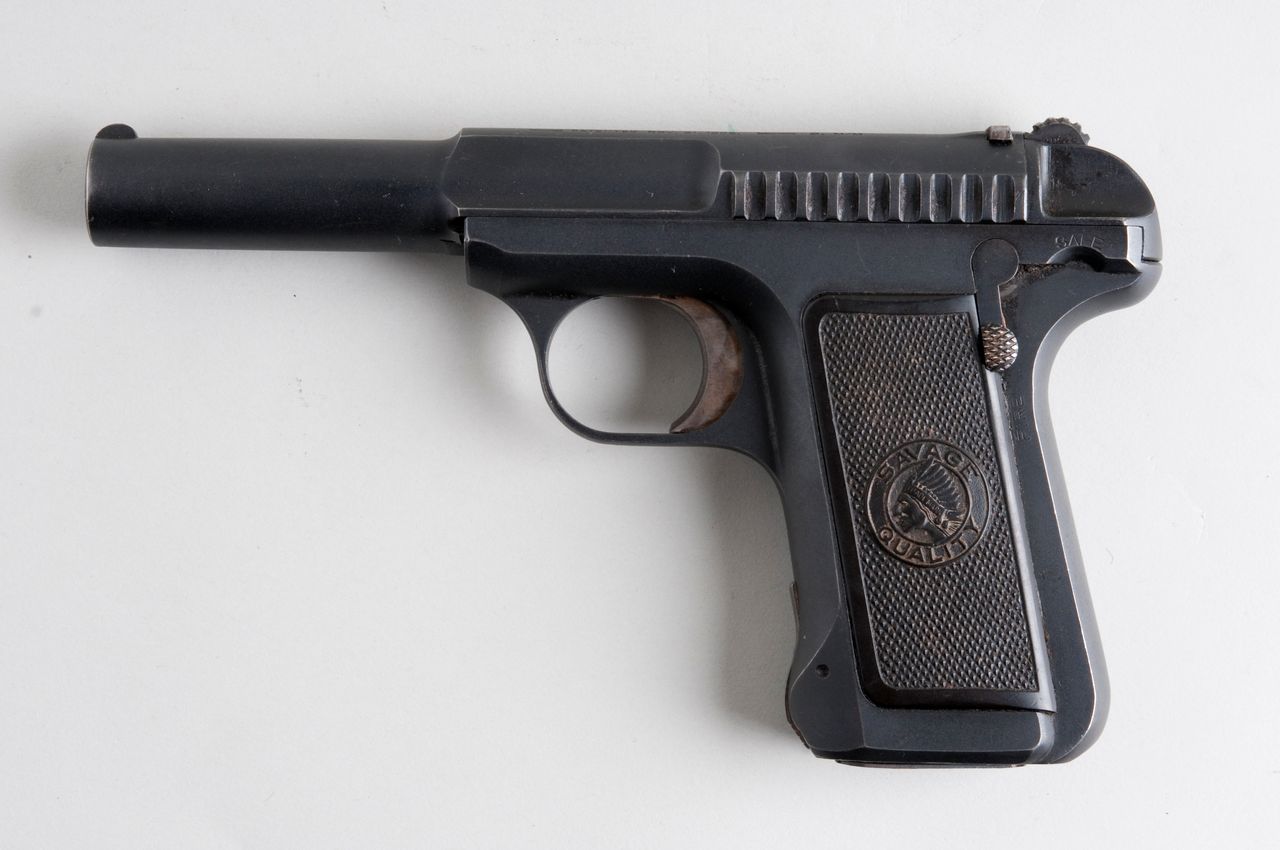
Savage came painfully close to military fame. During the U.S. Army pistol trials that led to the M1911, the Savage automatic was the last serious rival standing against Colt. According to Shooting Sports USA, by the end of the process only Colt and Savage remained, but the Savage suffered substantially more jams and misfires in testing.
That was a fatal flaw in a government competition where endurance and reliability were everything. If your pistol chokes more often than the other finalist, you are not getting the contract. Colt did, and history remembers the result.
Yet the Savage Model 1907 did not disappear. In civilian form, it was compact, modern-looking, and easy to market to people who wanted a personal defense handgun without the bulk of a service-size .45. Its styling helped too. The gun looked fast, sleek, and contemporary in a way many rivals did not.
Savage also did a strong job presenting the pistol as a serious everyday sidearm rather than a military almost-was. That matters. Civilian success often comes from changing the conversation. Instead of “the gun that lost,” it becomes “the gun that fits the hand, carries well, and offers quick repeat shots.” For many buyers, that was enough.
Remington Model 51
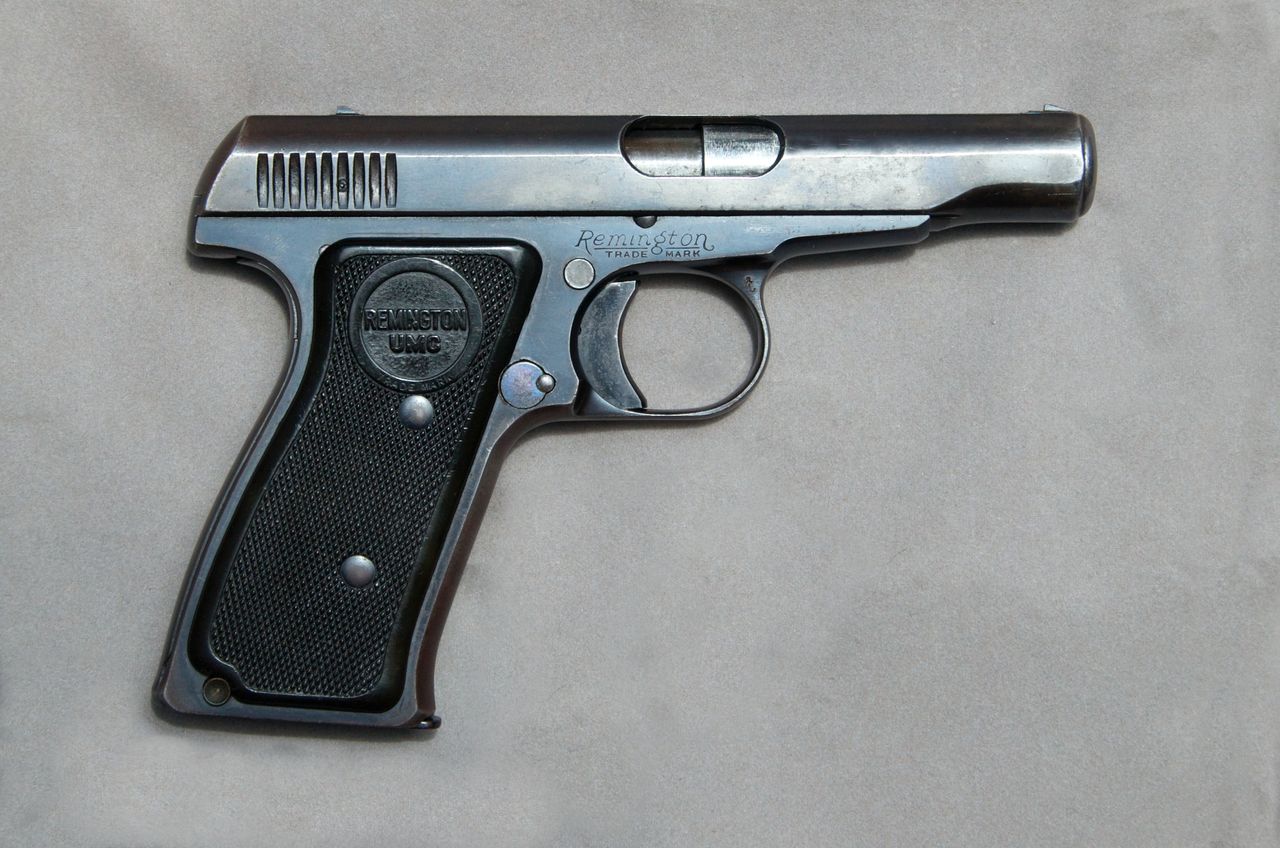
John Pedersen’s ideas were often brilliant and sometimes too clever for military bureaucracy. The Remington Society of America notes that the Model 51 was the commercial adaptation of Pedersen’s earlier .45 ACP military-oriented Model 53 or Model 1917. That military version had real promise, but it never became a standard service pistol.
World War I complicated the picture, and the American handgun market was already moving around the M1911. Rather than force a difficult military breakthrough, Remington pivoted. It brought out the Model 51 for civilians in .380 ACP and later .32 ACP, where the design’s slimness and mild manners could shine.
That was the right market. The Model 51 was sleek, low profile, and unusually refined for a pocket pistol. Its hesitation-lock system helped tame recoil, and the shape made it easy to carry under ordinary clothes. Those qualities matter far more to plainclothes users and private citizens than to a quartermaster buying sidearms by the crate.
In that sense, the Model 51 was not a consolation prize. It was a better fit for the real world of civilian carry than for trench issue. Pedersen missed the military contract, but he still created one of the most admired early 20th-century pocket pistols.
ArmaLite AR-180

The AR-180 is one of the most interesting “almost” rifles ever sold. The National Rifle Association’s museum notes that the AR-180 failed to gain military acceptance, in part because of production issues. That is a familiar story in procurement: a smart design can still lose if manufacturing, timing, or politics go sideways.
As a military rifle, the AR-18 and semi-auto AR-180 entered a crowded world already being reshaped by the AR-15 and other established service rifles. ArmaLite also lacked the industrial depth to push the design into major adoption. Even admirers admit the Costa Mesa guns often showed signs of hand fitting rather than polished mass production.
Civilian buyers were more forgiving because they were buying the concept as much as the execution. The rifle was lighter than many older battle rifles, used handy .223 ammunition, and offered a piston-driven system in a market increasingly fascinated by black rifles. It looked modern without requiring military approval to be interesting.
Its long-term influence may be even more important than its sales. The AR-18 operating system inspired later service rifles abroad, while the AR-180 kept the platform alive for enthusiasts and collectors. It failed the formal trial game, but it succeeded where many overlooked rifles do best: on the commercial rack and in the historical imagination.
Winchester Model 1873

Oliver Winchester always wanted military business, but the Model 1873 became something else entirely. A War History survey of Winchester arms notes that Winchester sought military acceptance and even saw trial interest, but the rifle became primarily a commercial success rather than a U.S. Army staple.
That was not because the gun lacked appeal. Quite the opposite. The Model 1873 was fast, handy, and chambered for practical centerfire cartridges like .44-40. For settlers, lawmen, ranchers, and travelers, those traits mattered every day. The Army, on the other hand, remained cautious about full commitment to repeating rifles in that era.
Civilian users did not share those institutional hangups. They loved rapid follow-up shots, manageable recoil, and the convenience of owning a rifle suited to frontier conditions. The rifle’s reputation grew through constant practical use, not through an adoption board’s paperwork.
This is one of the best reminders that “civilian success” can mean cultural dominance. The Model 1873 became the rifle of the American West in the public imagination, helped along by its real spread across towns, trails, and ranches. Losing the military argument hardly mattered when the commercial market made the gun a legend anyway.
Winchester Lee Model 1895 Sporting Rifle
The military version of the Lee Navy rifle did win a limited foothold with the U.S. Navy, but its larger story is still one of unmet potential and stronger civilian curiosity. Winchester records show it manufactured the 6mm Lee Straight Pull for the Navy, while collector sources note that commercial sporting versions with shorter barrels were also sold.
That split matters because the design looked futuristic. The straight-pull action was fast, the 6mm cartridge was high velocity for its day, and the whole package seemed to point toward the next generation of infantry rifles. Even so, the system had a short service life and never became the broad American military standard.
Civilian shooters could appreciate the same traits without demanding total doctrinal fit. A hunter or rifle enthusiast might see a trim sporting rifle with unusually quick action and flat-shooting ammunition. That is a far easier sell than convincing an entire armed service to rebuild doctrine, supply, and training around it.
Today, the sporting Lee variants are prized partly because they represent a road not taken. They show how a rifle can be too specialized or too transitional for military permanence, yet still be deeply attractive to civilian owners who value speed, novelty, and mechanical ambition.
Smith & Wesson Schofield
The Schofield is a slightly different case because it did see military service, but not the kind of long, dominant career its supporters imagined. The Army fielded it alongside Colt’s Single Action Army, yet the Schofield never became the enduring answer. Ammunition compatibility issues and institutional preference helped push Colt ahead in the long run.
That could have been the end of the story, but it was not. American Rifleman notes that many Schofields eventually flowed into the surplus market, where dealers refinished them, shortened barrels, and sold them onward to civilian channels, including express companies and private buyers. That afterlife became part of the gun’s legend.
The top-break system was the big attraction. It made reloading faster and more intuitive than many gate-loaded revolvers of the period. For a civilian user, especially one valuing convenience over absolute rugged simplicity, that was a real advantage and easy to appreciate without a cavalry board telling you otherwise.
In popular memory, the Schofield survives as more than a military footnote. It became a working revolver, a Western icon, and eventually a collector favorite. Even a partial military disappointment can become a civilian success when the gun solves everyday problems elegantly.
Browning Hi-Power
The Browning Hi-Power is globally famous as a military pistol, but its path began with a failed military requirement of a different sort. The design emerged from the long French search for a new service sidearm, and those trials never gave the final reward the project was meant to win. The pistol that grew out of that effort took on a life of its own instead.
That twist matters because the Hi-Power became one of the most commercially recognizable handguns in the world. Once FN put the design into its catalog, shooters had access to a high-capacity 9mm with excellent ergonomics, slim lines, and a natural pointing feel long before “wonder nine” became a common phrase.
For civilians, those strengths translated beautifully. The pistol balanced well, looked refined, and carried a serious service aura even in commercial trim. In the United States especially, Browning-branded Hi-Powers built a reputation with enthusiasts who appreciated old-school steel, crisp handling, and deep historical cachet.
So yes, the original trial goal slipped away. But the broader design succeeded beyond almost anyone’s expectations. The Hi-Power is proof that missing one government contract can still leave room for generations of private-market admiration.
Ruger Mini-14
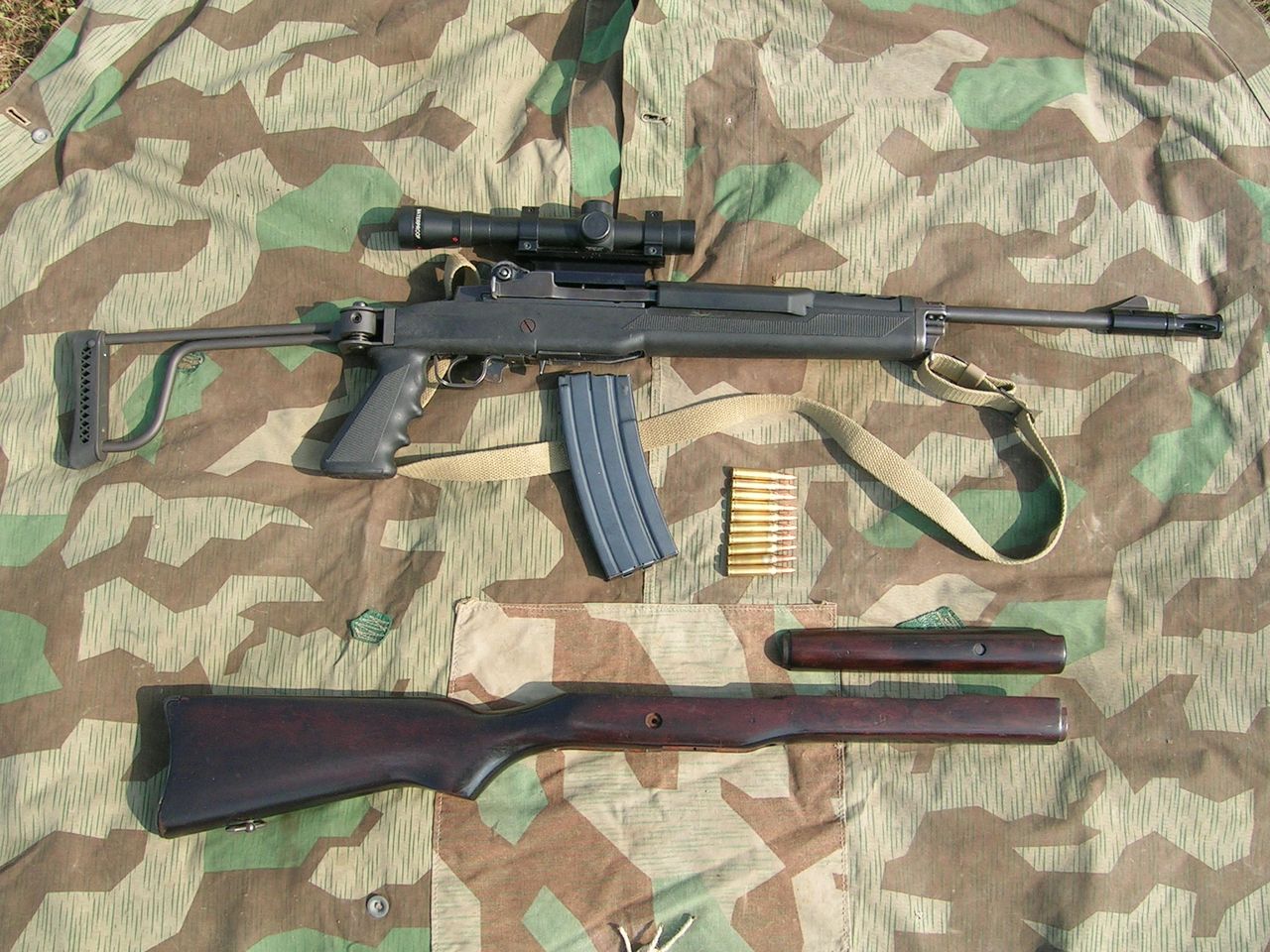
The Mini-14 is the modern example on this list, and maybe the easiest to understand. Ruger built it for the commercial sporting market, but the rifle’s whole visual language borrowed from military lineage, especially the M14. It looked familiar, sturdy, and practical, even though it never became a major U.S. military standard-issue rifle.
That did not stop people from buying it. Ruger’s own product positioning has long emphasized the Mini-14 as a rugged rifle for the commercial sporting market, and that is exactly where it found its audience. Ranchers liked it. Homeowners liked it. Truck-gun culture absolutely liked it.
Part of the appeal was what it was not. It was not as politically loaded in appearance as some black rifles, especially in earlier decades. It was not especially fussy. It handled like a traditional carbine, digested .223-class ammunition, and offered quick follow-up shots in a compact package.
In pure civilian terms, that is success. The Mini-14 never needed a big military contract to justify itself. It fit farms, fences, predator control, and informal range use better than it fit formal infantry procurement. Plenty of firearms fail the government test because they were really meant for everyone else all along.