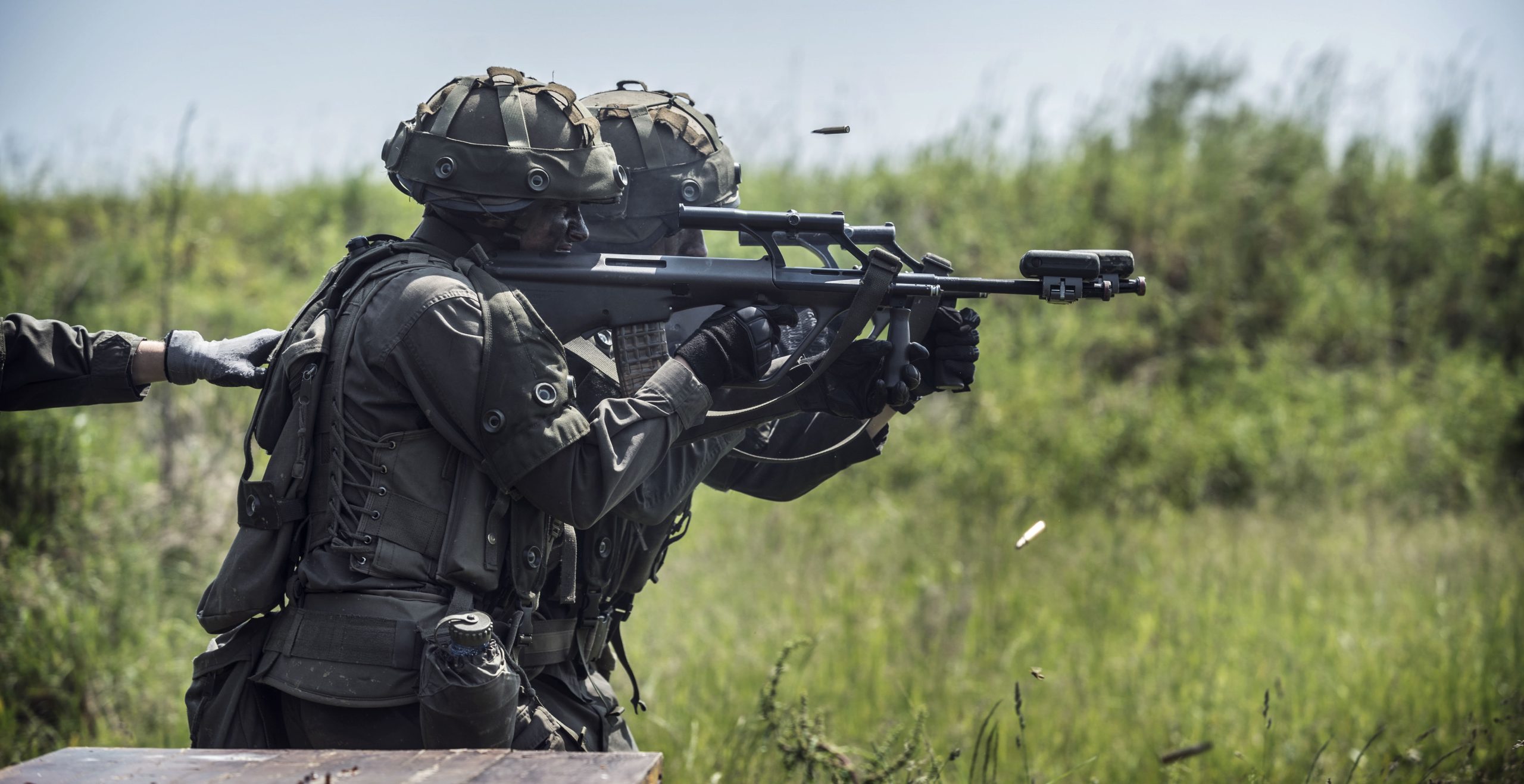
Bullpup rifles always start the same argument. One shooter sees smart engineering, and another sees a solution that creates just as many problems as it solves.
The layout is brilliant on paper
A bullpup moves the action and magazine behind the trigger, which lets designers keep a full-length barrel in a much shorter overall package. That is the whole appeal, and it is a real one. A compact rifle with less barrel sacrifice sounds like the best of both worlds.
That advantage is not theoretical. FN Herstal lists the P90 with a 10.4″ barrel in an exceptionally compact format, while Steyr has long built the AUG around the same space-saving logic. In civilian markets, that compactness matters even more because U.S. federal law treats rifles with barrels under 16″ very differently, making bullpups attractive to buyers who want legal length without the feel of a long gun.
In and around vehicles, doorways, and tight hallways, bullpups can feel almost unfairly handy. That is why military and police interest never really disappears. The design keeps coming back because the core idea is genuinely strong.
The trigger debate never goes away
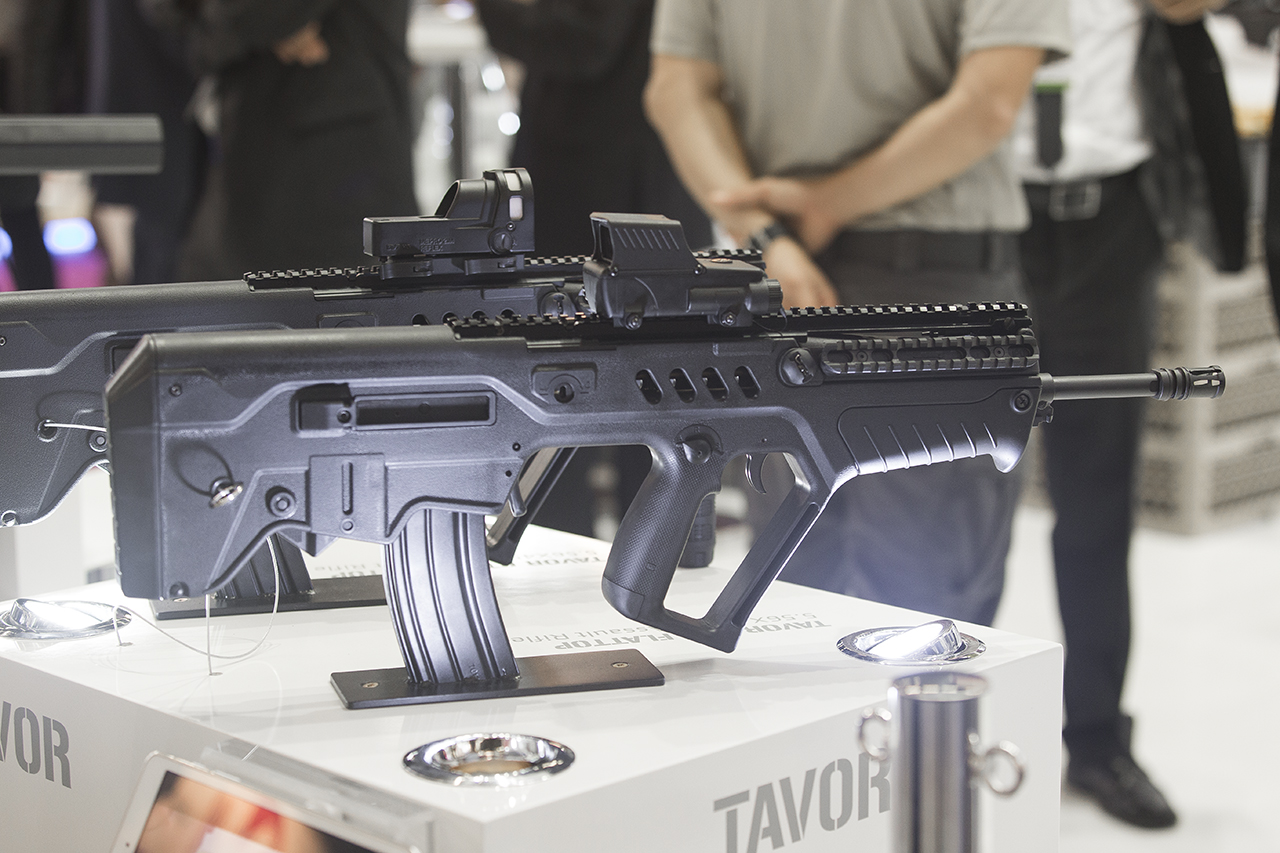
Then shooters pull the trigger, and the romance often cools. Because the fire-control parts sit farther back, bullpups usually rely on linkages connecting the trigger to the sear. That system can work well, but it rarely feels as crisp as a strong conventional rifle trigger.
This is one of the oldest complaints in the category, and it is still one of the fairest. Even modern bullpups that improve dramatically over earlier generations often have triggers described as good for a bullpup rather than simply good. That wording tells the whole story.
Manufacturers know this is a pressure point. Newer rifles like the IWI Tavor X95, Springfield Hellion, and updated Desert Tech designs have all tried to refine the feel, but the design penalty is hard to erase completely. For many shooters, especially those trained on AR-pattern rifles, that difference remains impossible to ignore.
Left-handed use is where theory meets reality
Bullpups also expose an uncomfortable truth about firearms design: compactness is easy to advertise, but ambidexterity is hard to execute. With the chamber and ejection port so close to the shooter’s face, left-handed use becomes a serious design challenge rather than a minor inconvenience.
Some companies have worked around it intelligently. IWI US has offered left and right hand conversion support for the Tavor family, and Springfield promoted the Hellion’s reversible ejection as a major feature. Those are meaningful solutions, not marketing fluff.
Still, many bullpups are less adaptable on the fly than modern conventional rifles. Shoulder transitions around cover can be awkward, and shooters who like fully mirrored controls often find bullpups less intuitive. A rifle can be compact and still feel less flexible when the shooting gets dynamic.
The military has liked them, then moved on

Bullpups are not fringe oddities. The Steyr AUG became one of the most recognizable service rifles in the world. Britain kept evolving the SA80 family into the L85A3, and a 2025 UK parliamentary answer said the projected out-of-service date for that variant is 2030.
But military history also shows the limits of the concept. France replaced the FAMAS with the HK416F, ending the run of one of the world’s most famous bullpups. That shift did not prove bullpups are bad, but it did show that many armies still prefer the familiarity, modularity, and simpler ergonomics of conventional layouts.
The U.S. military has tested bullpup ideas more than once and still has not embraced them as a general-issue answer. That says a lot. Bullpups solve a real problem, but not enough institutions agree that they solve more problems than they create.
Civilian shooters care about practical ownership
In the commercial market, the argument gets even sharper because ownership is not only about handling. Buyers care about magazines, aftermarket parts, armorer support, suppressor behavior, resale value, and long-term reliability. A rifle can be clever and still be a headache.
That is where bullpups often lose ground to AR-platform rifles. The AR has a massive ecosystem, simple manual of arms, and endless parts support. By comparison, many bullpups feel specialized. Even when the gun itself runs well, the ownership experience can feel narrower.
Desert Tech is a good example of the split reputation bullpups can create. American Rifleman noted that the MDR platform matured beyond early growing pains, yet the platform has also carried years of debate about consistency and support. That pattern is common in the bullpup world: strong fans, skeptical critics, and very little middle ground.
The divide survives because both sides are right
That is the real reason bullpups remain divisive. Supporters are not imagining the benefits. A compact rifle with serious barrel length, center-of-gravity advantages, and tight-space agility is genuinely useful. In some roles, bullpups make immediate sense.
Critics are not stuck in the past either. They are reacting to real compromises in trigger feel, reload ergonomics, off-shoulder shooting, and platform support. Those issues are not myths, and no amount of futuristic styling makes them disappear.
So the argument keeps going because bullpups are neither gimmicks nor universal upgrades. They are purpose-driven rifles with very visible strengths and equally visible weaknesses. In the firearms world, that is exactly the kind of design that never stops a debate.