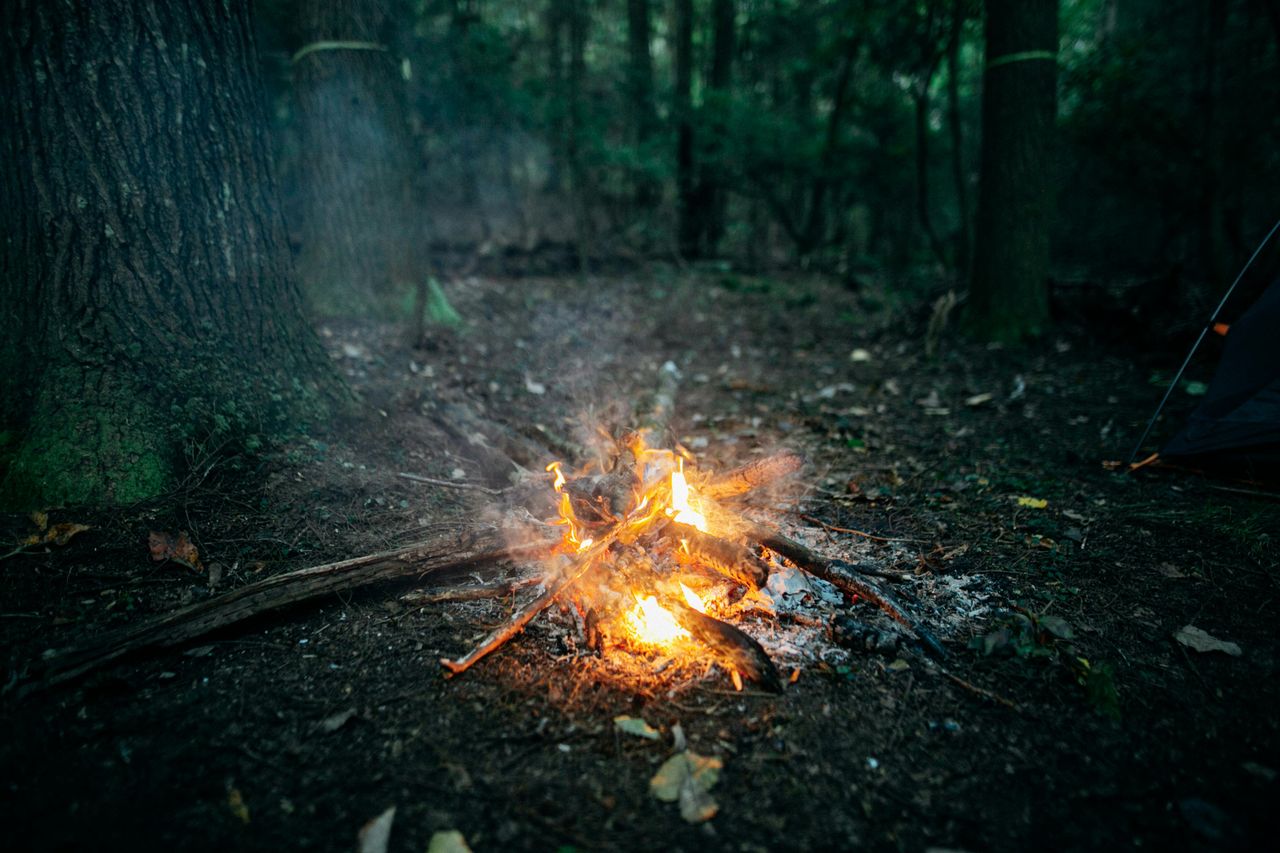
Wet ground, dripping branches, and cold hands can make a campfire feel impossible, but it usually comes down to method, not luck. The good news is that even in miserable conditions, there are dependable ways to create flame if you know where dryness hides and how to build around it. This gallery walks through 10 fire-starting approaches that still work when the landscape is soaked.
Feather sticks from the dry inner wood
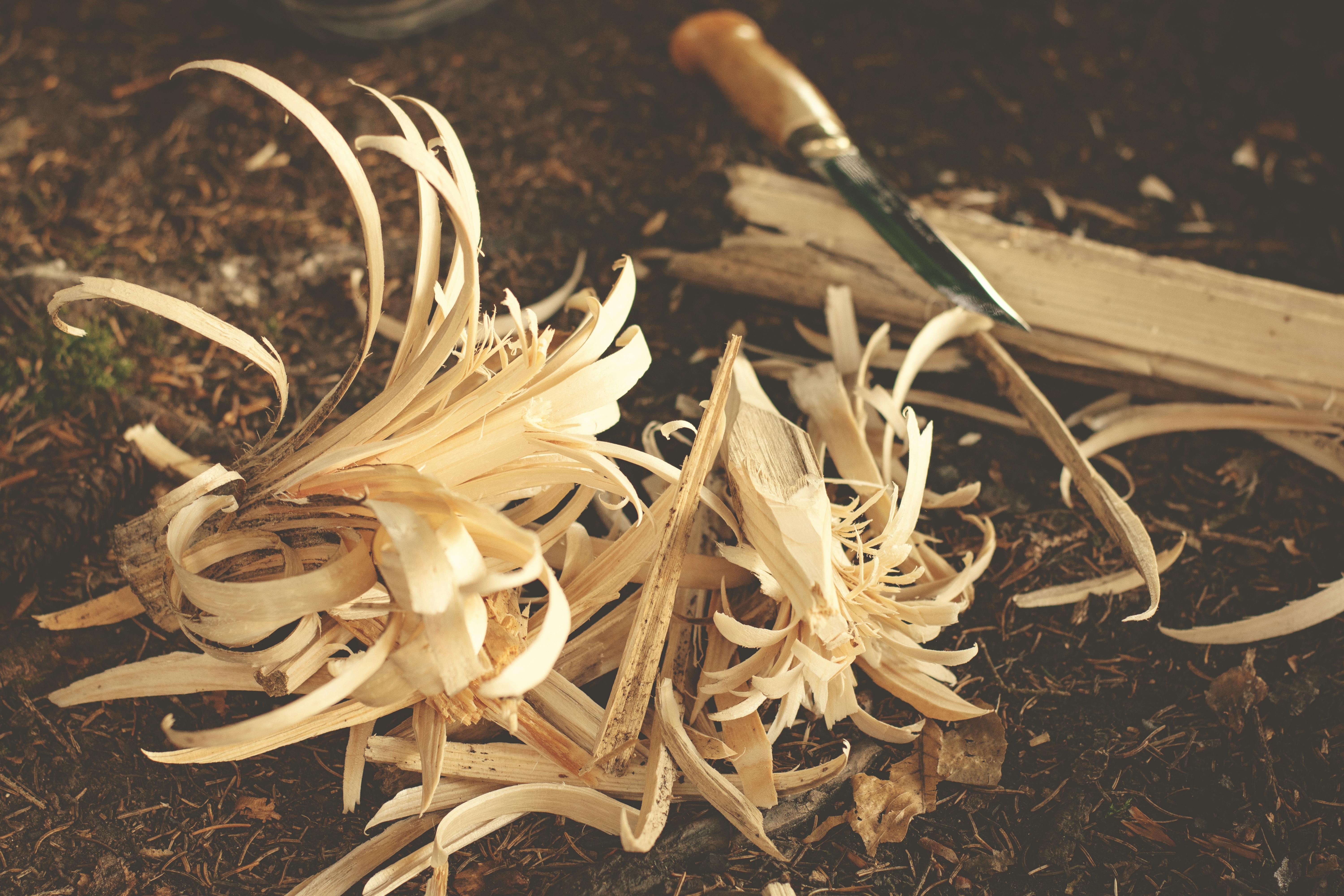
When everything on the forest floor feels like a sponge, the outside of a stick can fool you. Split a thumb-thick branch and the interior is often much drier than the bark. That protected core is where your fire really begins.
Use a knife to shave thin curls that stay attached, making a feather stick with lots of airy edges ready to catch a spark or match. The goal is surface area, not brute force.
Set those curls over a small dry platform and keep adding slightly larger split sticks. In wet weather, working from inner wood instead of outer bark is often the difference between smoke and a sustained flame.
Dead standing wood instead of ground wood

The soggiest mistake is grabbing twigs straight off the ground. Wood that has been lying in wet leaves or mud soaks up moisture fast and burns with all the enthusiasm of a wet towel.
Look instead for dead branches still attached to trees or shrubs. Because they have been off the ground and exposed to air, they are often far drier inside, even after steady rain.
Snap small pieces first and listen for a crisp break. If the wood bends and peels, keep searching. Building your fire from dead standing material gives you better odds before you ever strike a spark.
Bark tinder from sheltered trees
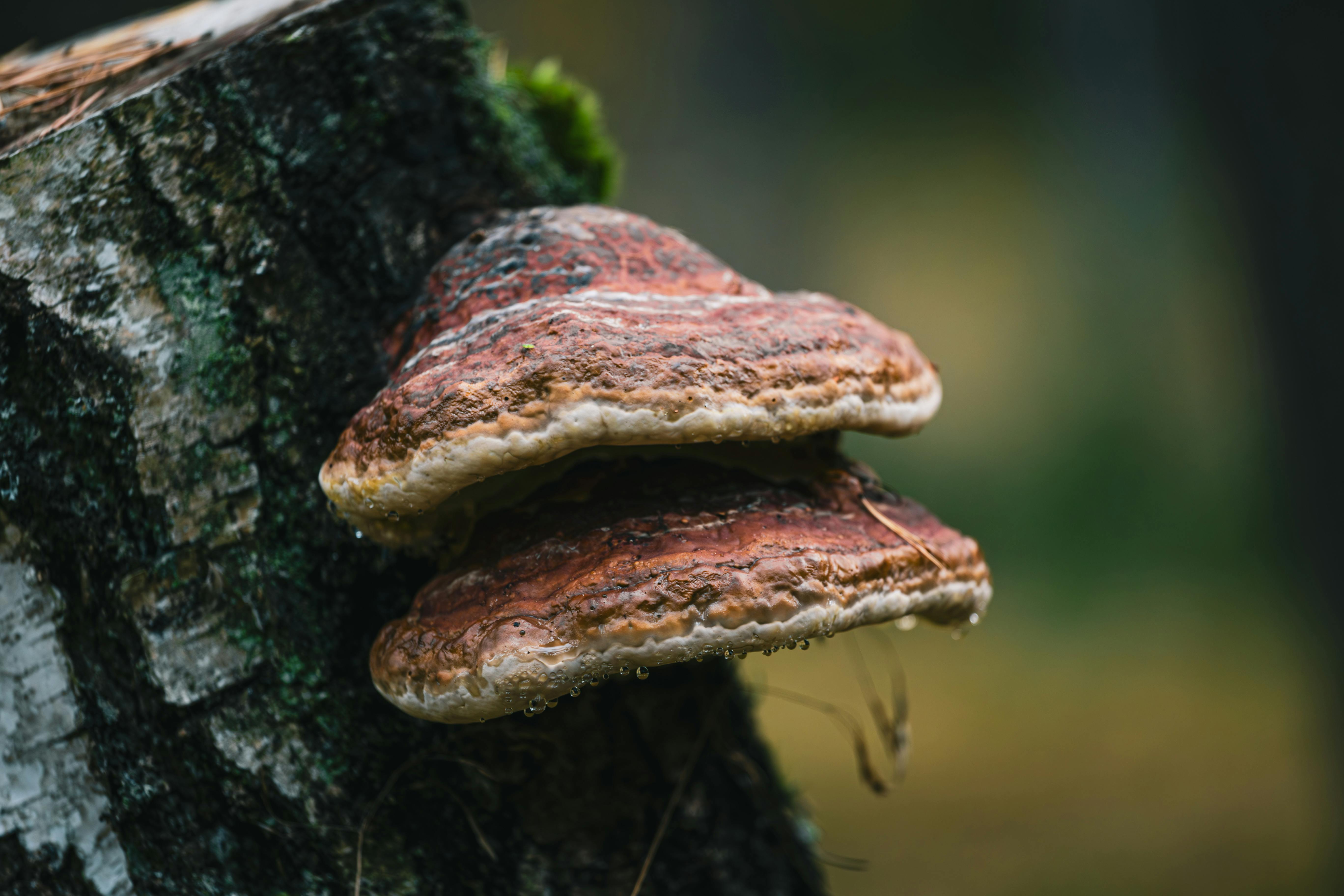
Not all bark is equal in wet weather. Some trees hold fibrous, resinous, or papery bark that stays useful long after the surface gets damp, especially on the sheltered side of a trunk.
Cedar, birch, and some pines are favorites because their bark can be teased apart into fluffy strands or thin curls that take flame quickly. Even if the outer layer is slick, the material tucked beneath can still be workable.
Collect modest amounts and process it well before lighting. Rub, shred, and loosen the fibers until they look almost nest-like. In rain, a carefully prepared bark bundle often catches faster than random twigs ever will.
Cotton balls with petroleum jelly
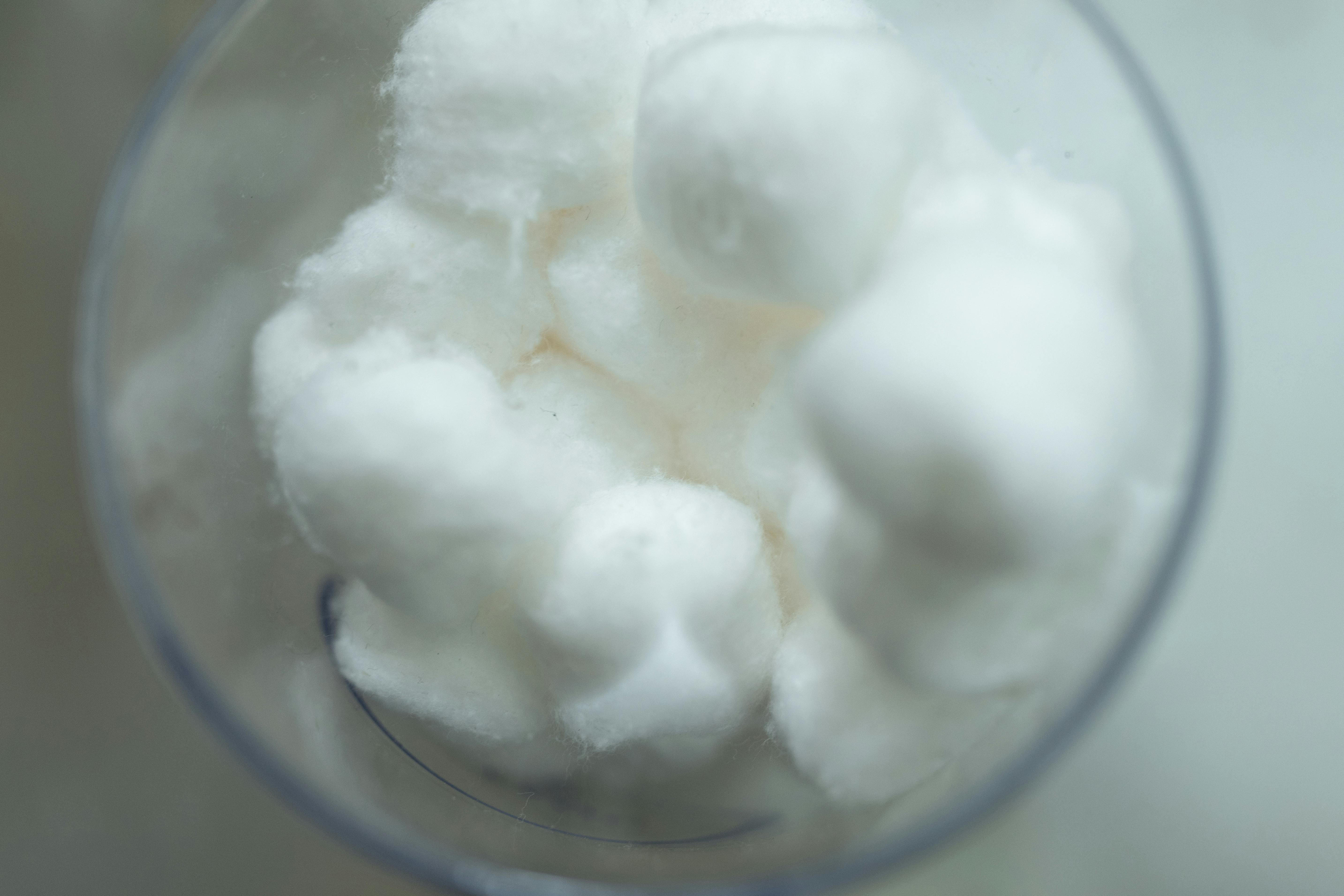
This is one of those simple camp tricks that earns its reputation. A cotton ball coated with petroleum jelly packs small, lights fast, and burns far longer than raw tinder, which matters when your kindling is less than perfect.
The key is not to mash it into a waxy lump. Pull the fibers open before lighting so the fluffy cotton can catch a spark or flame while the jelly acts as slow-burning fuel.
Keep a few in a sealed bag or tiny container and they will ride through rough weather without complaint. In truly wet conditions, that steady little flame buys valuable time to dry and ignite your first sticks.
Wax-coated tinder that shrugs off rain
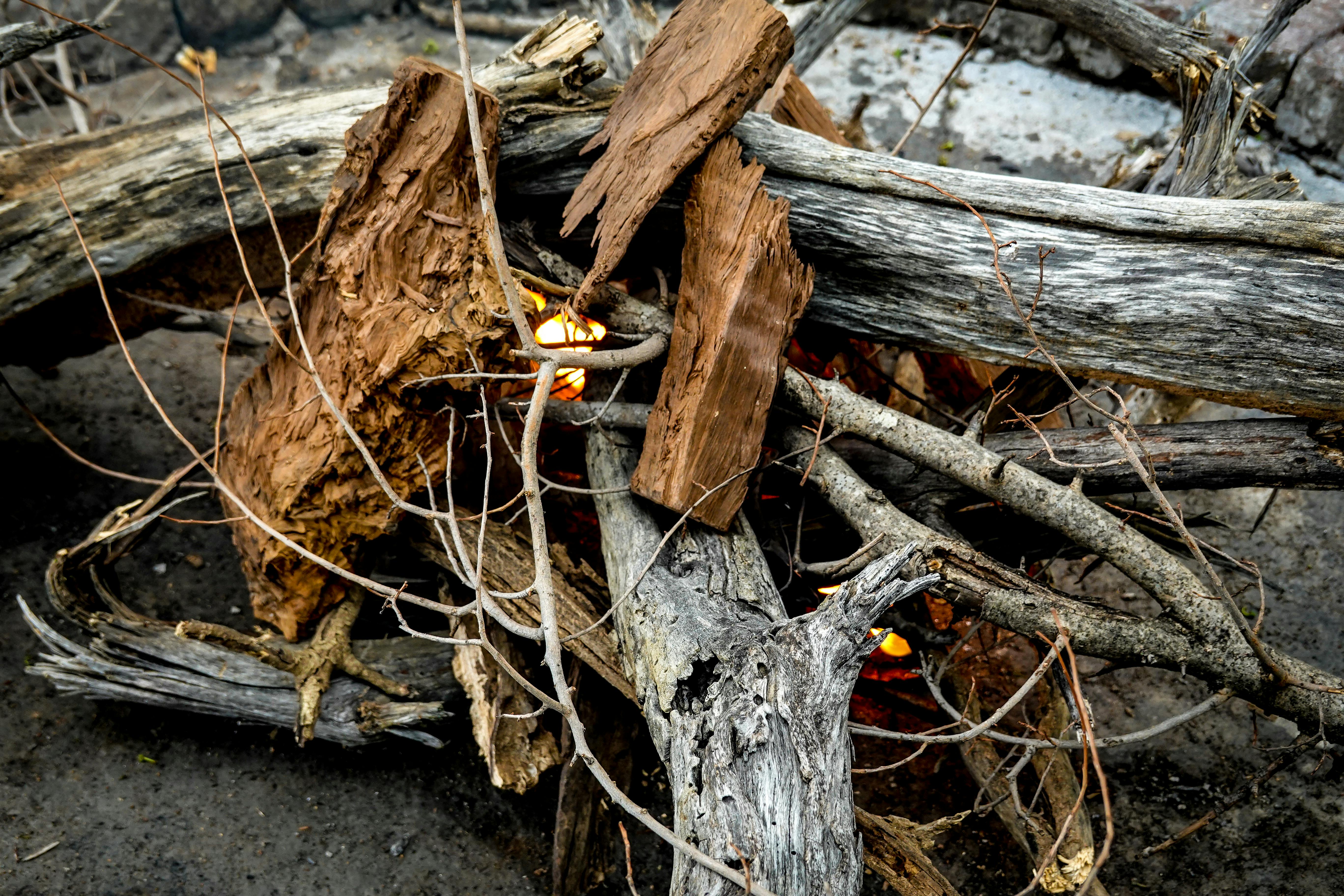
Homemade waxed tinder is built for bad forecasts. Dryer lint, cotton pads, sawdust, or shredded paper dipped in melted wax can stay usable after exposure to damp packs, fog, and steady drizzle.
To light it, break or tear the piece open so exposed fibers can catch. The outer wax helps repel water, while the inside gives you something easy to ignite. It is a smart balance of protection and quick flame.
This method shines when your environment is saturated and your patience is thin. A small waxed bundle can burn long enough to get hesitant kindling over the line and into real combustion.
Resin-rich fatwood for stubborn flames
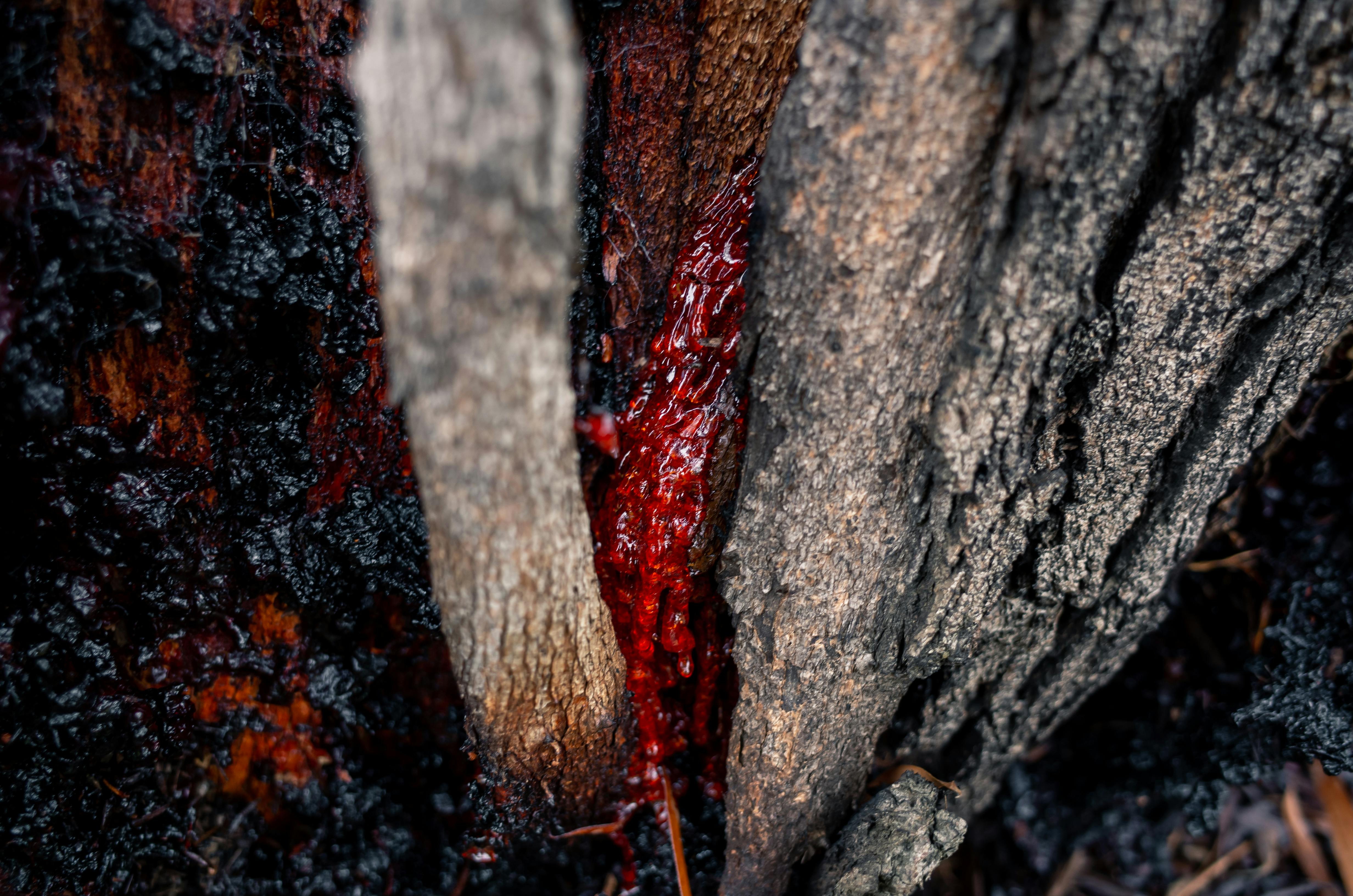
Fatwood is the overachiever of wet-weather fire starting. Found in old pine stumps, roots, or resin-heavy knots, it contains concentrated sap that lights readily and burns hot, even when conditions feel bleak.
Shave it into thin curls, scrape it into dust, or split it into pencil-size sticks. The resin catches quickly and throws a strong flame that helps damp kindling start acting like dry fuel.
It also smells great, which is a nice bonus when the rest of camp smells like wet socks and cold earth. If you carry a few prepared pieces, fatwood can turn a frustrating fire attempt into a very short job.
Stormproof matches with a wind shield

Regular matches can feel almost theatrical in a downpour. Stormproof matches are different. They burn hotter, resist gusts, and keep going in conditions that quickly embarrass cheaper options.
Still, technique matters. Crouch low, turn your back to the wind, and create a shield with your body, hat, or jacket while keeping safety in mind. Giving the flame a protected first few seconds makes a huge difference.
Light your tinder only when the fire lay is fully ready. In wet weather, you do not want to waste precious ignition fumbling with sticks after the flame appears. Preparation makes these matches live up to their name.
Ferro rod sparks into processed tinder

A ferro rod is a favorite because it works when wet and does not rely on fuel. What it does require is properly prepared tinder. Big sparks are impressive, but they need a fine, dry nest to become an actual fire.
Aim those sparks into scraped bark fibers, cotton, fatwood dust, or feather-stick curls from dry inner wood. Keep the rod close to the tinder and pull the striker back so you do not scatter your bundle.
In soaked conditions, this method rewards patience and prep more than force. Once the tinder glows and flames, feed it carefully with your smallest dry material before asking it to tackle anything thicker.
A raised fire platform over wet ground

Sometimes the issue is not ignition at all. You get a flame going, then the whole thing loses heat into mud, slush, or saturated duff. Wet ground can quietly kill a promising fire from underneath.
Build a base first using thicker sticks, split logs, bark slabs, or even flat stones if they are dry and safe to use. That platform lifts your tinder and kindling above the moisture and lets air move where you need it.
Think of it as giving the fire a floor instead of a puddle. In rainy campsites, a raised base often turns a fragile start into something stable enough to dry and burn its own fuel.
A small tarp or natural cover while lighting

You do not need to stand heroically in the rain while trying to start a fire. A little overhead protection, whether it is a tarp, poncho, rock overhang, or dense evergreen cover, can dramatically improve your odds.
The idea is not to build a huge shelter first. It is to create a dry working zone where tinder stays workable, matches stay useful, and your first flame is not immediately pelted by water.
Once the fire is established, it can handle more abuse. But that first minute is fragile. In wet conditions, a simple cover can be the quiet advantage that makes every other fire-starting method work better.