Everyday carry is no longer one fixed culture. It is becoming a set of overlapping habits shaped by age, technology, law, and lifestyle.
The older generation that normalized concealed carry built the modern template. Younger carriers are keeping the core idea of personal protection, but they are changing nearly everything around it.
The concealed-carry boom no longer looks like it used to

The biggest shift is simple: the user base changed. According to NSSF, the firearms industry has added an estimated 26.2 million first-time gun owners since 2020, including roughly 3.9 million in 2024 alone. That matters because a huge wave of newer owners did not inherit the habits of the concealed-carry generation from the 1990s and 2000s. They entered a market already flooded with smaller pistols, factory optics cuts, modular holsters, and a social-media-sized attention span for bad gear.
The older everyday-carry crowd often came from hunting, military service, law enforcement, or family gun culture. Younger carriers are more likely to arrive through a self-defense lens first. Pew found that 72% of gun owners say protection is a major reason they own a gun, and that protection-first mindset has become the center of the modern handgun market rather than one reason among many.
That new owner pipeline also looks more diverse. NSSF says 30% of first-time gun buyers in 2024 were under 30, and more than 29% were women. Pew has also found strong future interest in ownership among groups that were once underrepresented in gun culture, especially women and Black Americans. In practical terms, a broader audience tends to reject one-size-fits-all carry advice much faster.
Younger carriers are buying for comfort, not tradition
Ask an older concealed carrier what “serious” carry looked like a generation ago and you will usually hear some version of the same answer: a thicker belt, a larger handgun, maybe a spare magazine, and a strong preference for what had already proven itself over decades. Younger carriers are less sentimental. They care whether a setup disappears under summer clothes, works with a long commute, and does not punish them for carrying every day.
That is a major reason micro-compacts and slim 9mms have become so dominant. The concealed-carry pistol category has been one of the handgun market’s fastest-growing segments, and product launches across the industry keep reinforcing the same formula: small footprint, usable capacity, optics-ready slide, and better shootability than older pocket guns ever offered. In other words, younger buyers are choosing pistols built around real-world concealment rather than around old status markers.
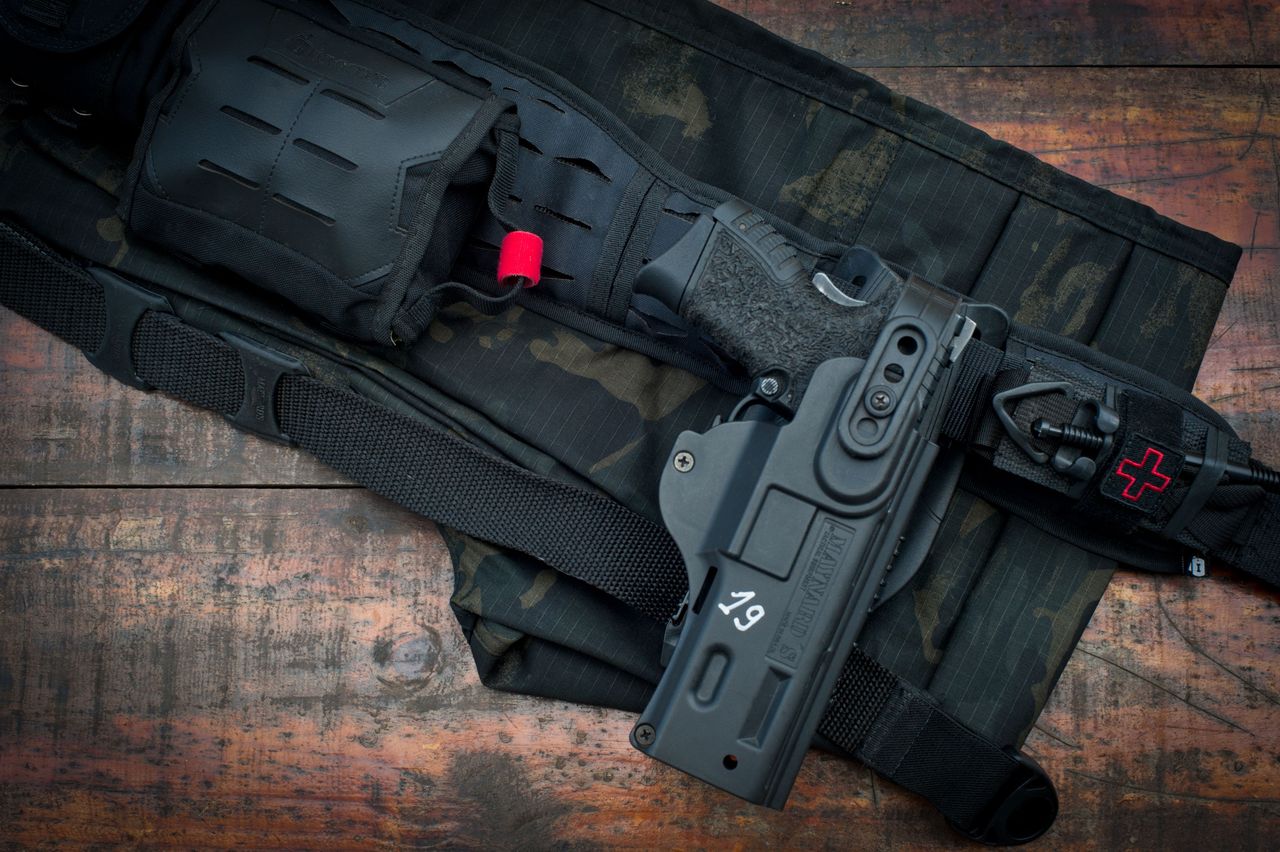
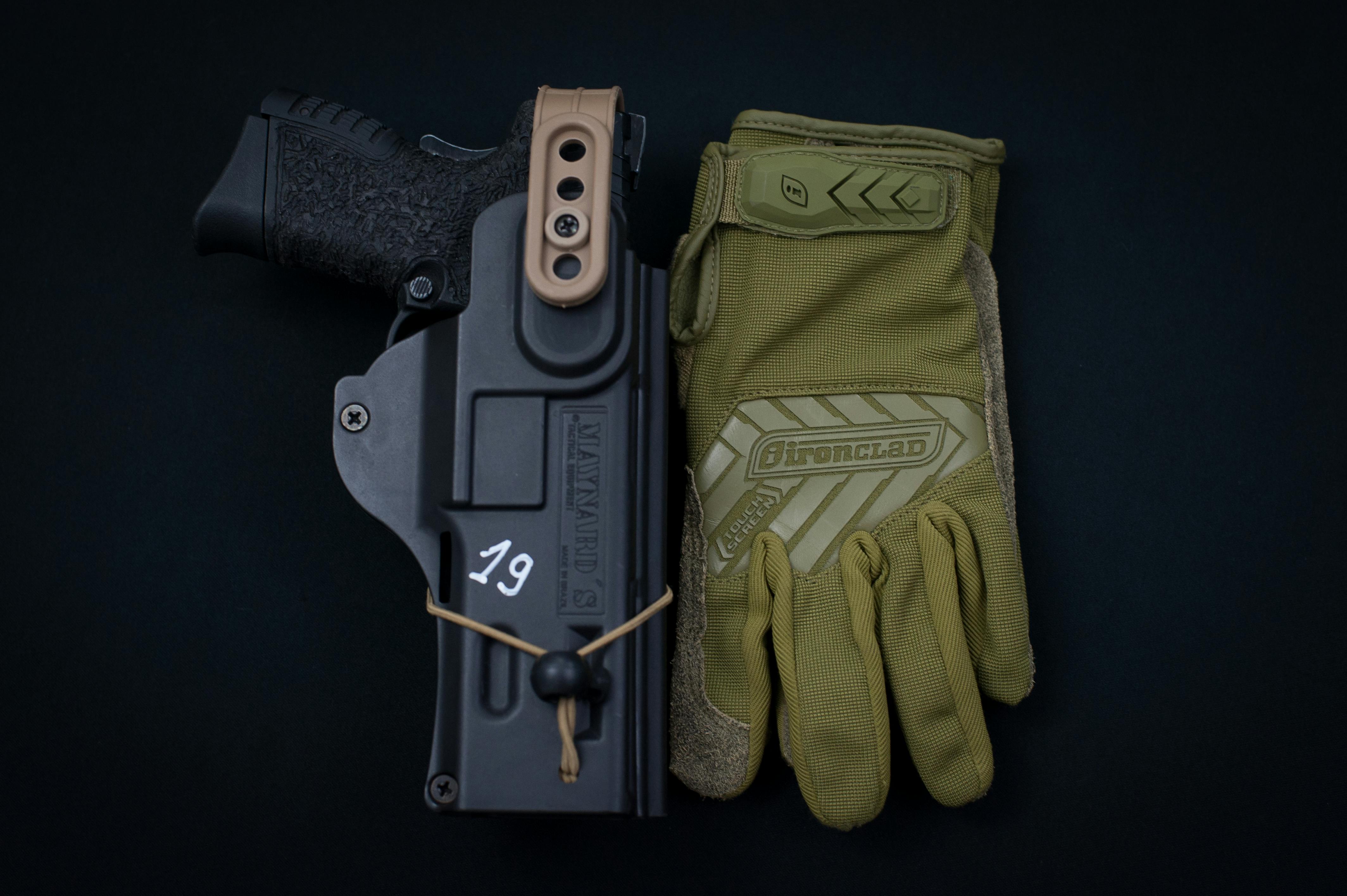
Holsters tell the same story. Younger users are much more likely to obsess over wedge kits, claw attachments, ride height, sweat guards, and whether a holster works with a tucked shirt or gym shorts system. That sounds cosmetic until you remember the central truth of concealed carry: uncomfortable guns get left at home. The younger generation has made carry comfort part of the reliability equation.
Optics, lights, and modularity feel normal to them
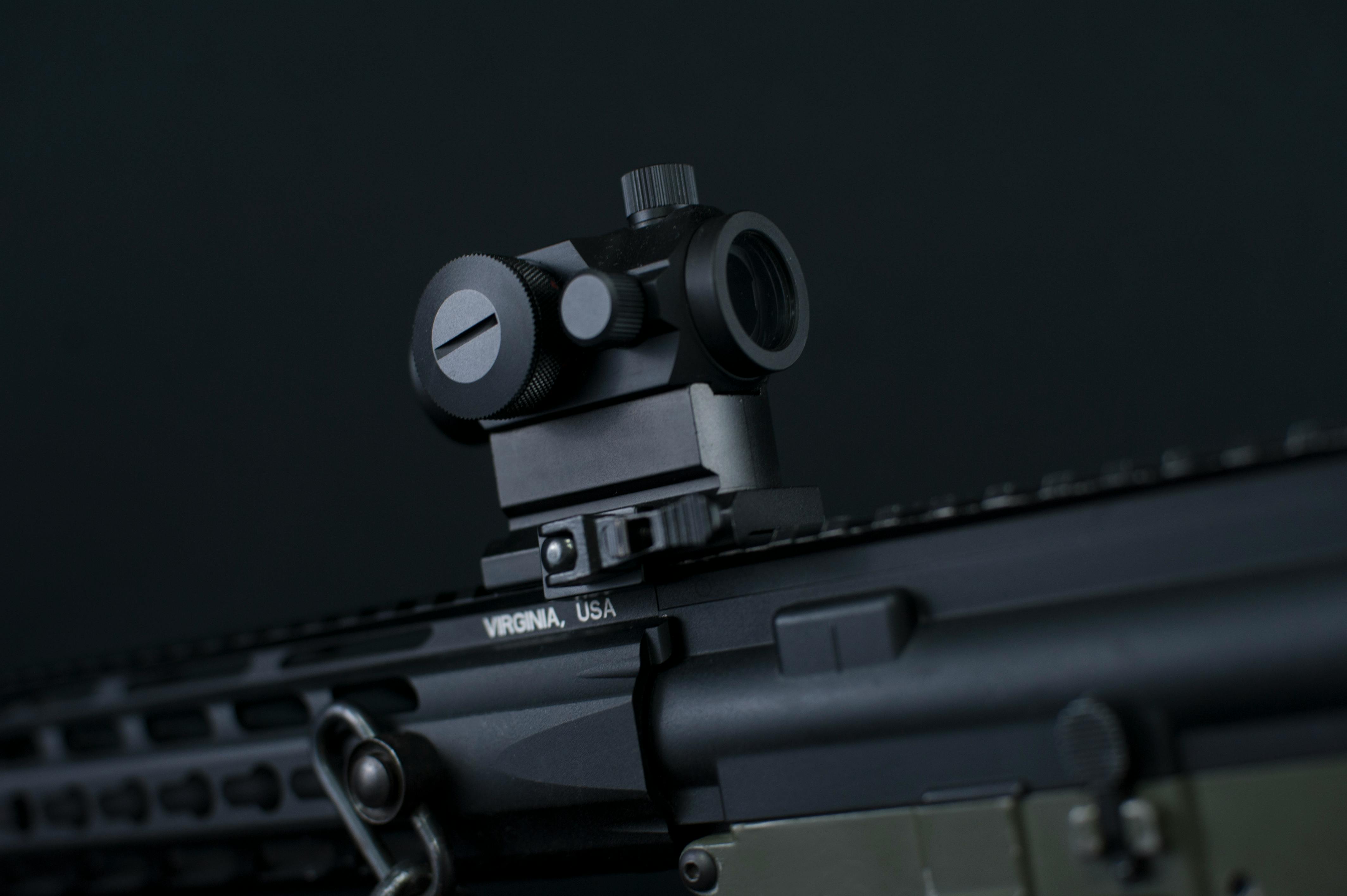
To many older carriers, iron sights were standard, and red dots were either competition gear or something to be viewed with suspicion. Younger carriers came up in a market where optics-ready pistols are increasingly treated as baseline rather than premium. Even many new micro-compacts now launch with factory optic cuts, and that has changed expectations. A younger buyer is less likely to ask whether a carry pistol can accept a dot and more likely to ask why it would not.
This is not just gadget worship. It reflects a broader generational bias toward modular tools. Younger carriers expect to configure a gun the way they configure a phone, a laptop, or a vehicle. They want choices in grip texture, trigger feel, magazine length, mounted light compatibility, and holster ecosystem. If a platform is hard to personalize, it feels dated even if it is mechanically excellent.
The same mindset explains why older “just keep it simple” advice lands differently now. Simplicity still matters, but younger carriers often define it as having one well-integrated system rather than one bare-bones pistol. A dot, quality light, and purpose-built holster may look more complicated from the outside, yet to a younger user it can feel more intuitive, more repeatable, and more confidence-inspiring under stress.
Training culture is shifting from qualification to performance
Earlier concealed-carry culture often treated the permit class as a milestone. You got the license, learned the rules, fired the required rounds, and joined the club. Younger carriers tend to see that as the beginning, not the achievement. NSSF has reported that nearly half of new first-time gun buyers asked about professional training at the point of purchase, and that is one of the clearest signs that the culture is changing.
The content of training is changing too. The older model leaned heavily on marksmanship, legal basics, and static range work. Younger carriers are drawn to courses built around concealment draws, red-dot presentation, movement, medical gear, force-on-force concepts, and scenario thinking. They want measurable performance, not just compliance. They are more likely to use shot timers, dry-fire apps, diagnostic targets, and video review because those tools fit the broader self-optimization culture they already live in.
At the same time, the bar for “good enough” is rising because information moves faster. A bad draw stroke, unsafe reholster habit, or sloppy gear choice can now be dissected instantly by instructors and peers online. That can produce noise, but it also means younger carriers are less likely to accept folklore as doctrine. They expect reasons, demonstrations, and evidence, not just rank or tenure.
Law changes have widened the path, but also raised the burden
The legal map changed dramatically while younger adults were coming of age. As of early 2026, permitless concealed carry exists in 29 states, according to major concealed-carry law trackers. That does not mean permits disappeared everywhere, and it certainly does not erase location-specific restrictions. But it does mean a younger adult can enter concealed carry in parts of the country with fewer bureaucratic barriers than the previous generation faced.
That easier access changes behavior in two different ways. On one hand, it normalizes carry for people who may never have pursued it under a permit-only system. On the other, it removes a layer of forced instruction, which puts more responsibility on the individual to learn use-of-force law, de-escalation, safe storage, and the realities of carrying in shared public spaces. Younger carriers know they are operating in a legally and socially visible environment, and many respond by seeking private training that is better than the minimum state standard ever was.
The broader legal climate also sharpens their practical mindset. They are less likely to romanticize carrying and more likely to treat it as risk management. In a world of workplace policies, posted businesses, rideshare routines, apartments, and digital footprints, concealed carry for younger adults often looks less like a political identity and more like a logistical discipline.
Safety expectations are becoming more visible and more personal
One of the most important generational differences is that younger carriers are coming up in a culture that talks more openly about safety failures, negligent discharges, domestic access, suicide risk, and children finding unsecured guns. CDC and public-health research continue to show wide variation in storage practices, and California BRFSS data released in 2025 found older firearm owners reported safe storage at higher rates than younger owners. That does not mean younger carriers are uniquely careless. It means they are under growing pressure to prove responsibility in concrete ways.
As a result, many younger gun owners think in systems. The carry gun may be on-body and immediately accessible, but the home setup often includes quick-access safes, cable locks for off-body storage, and more explicit rules about when a gun is loaded, staged, or locked. Rutgers research has also shown that firearm owners have clear preferences about locking devices, reinforcing the idea that safety products are part of the ownership experience, not an afterthought.
There is also a strong mental-health dimension to this generation’s thinking. Younger adults are generally more accustomed to discussing stress, depression, and crisis planning in plain language. In firearms culture, that can translate into a more candid approach to temporary off-site storage, access control, and honest conversations inside households. It is a quieter change than optics-ready slides, but it may be the more important one.
The new concealed-carrier identity is less uniform and more adaptive

The generation that normalized everyday carry helped make carrying a handgun publicly thinkable for millions of Americans. But it also built a recognizable archetype: male, routine-driven, gear-loyal, often politically legible, and deeply invested in doing things the proven way. Younger concealed carriers are harder to sort. They include more women, more urban and suburban professionals, more people of color, and more owners whose first frame of reference is not hunting camp or police culture.
That diversity changes the social meaning of carry. A younger carrier might dress around a gun one day and around a laptop bag the next. They may care as much about concealment in an office, coffee shop, or daycare pickup line as about caliber debates. They are often less interested in looking like “gun people” and more interested in carrying effectively without broadcasting it as a personality.
So the real divide is not seriousness versus unseriousness. It is adaptation versus inheritance. The older generation normalized the practice of everyday carry. The younger generation is normalizing something else: the idea that responsible concealed carry should fit the person, the place, the law, and the actual rhythms of modern life rather than forcing modern life to bend around an older template.