Big Western gun stories often get simplified. The real reason Wells Fargo favored a cut-down Schofield is much more practical and much more interesting.
The Schofield was already a smart fighting revolver
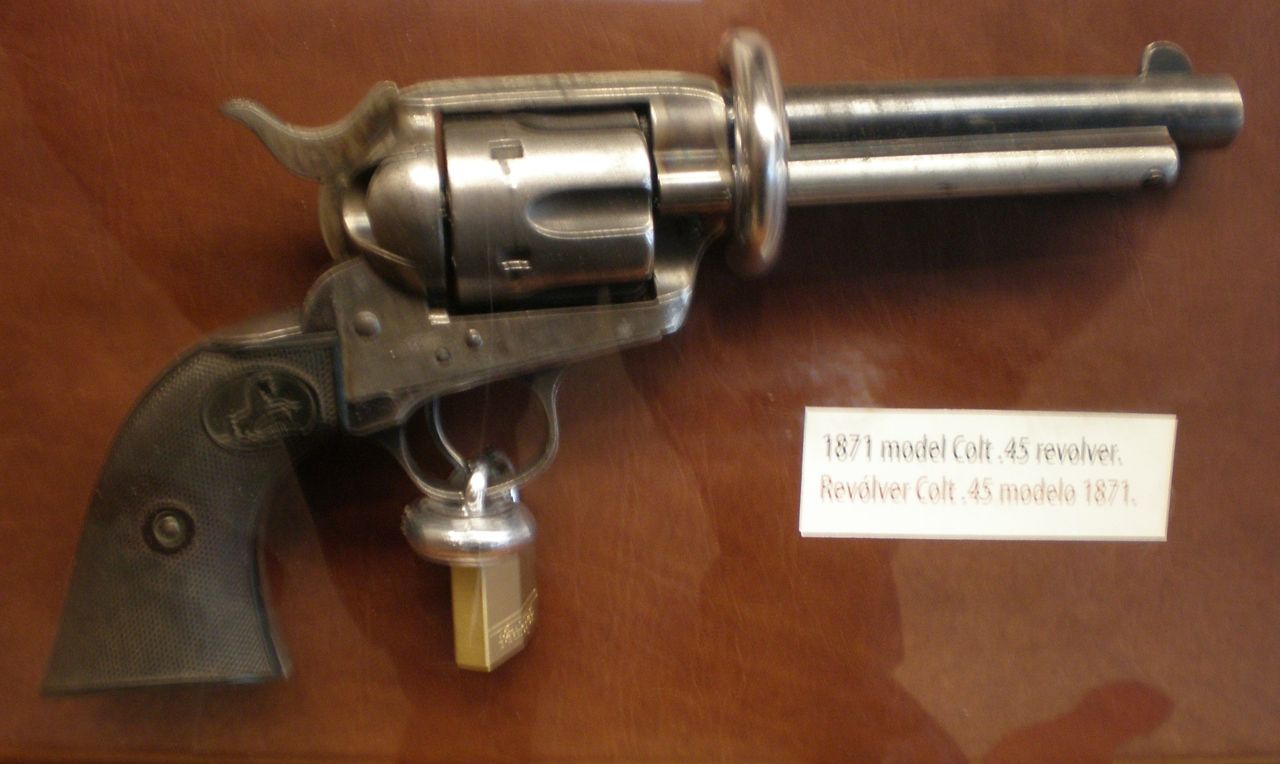
Before Wells Fargo ever shortened one, the Schofield had already earned a serious reputation. It was Smith & Wesson’s top-break single-action revolver, developed from the Model No. 3 and improved through Major George W. Schofield’s ideas for mounted service. Its greatest advantage was speed. Unlike a Colt Single Action Army, which had to be loaded and unloaded one chamber at a time through a side gate, the Schofield opened at the top and ejected all spent cases at once.
That was a major benefit in any fight that might involve hurried reloads. A man on horseback, or a guard bouncing along beside a treasure box, had little use for slow and delicate handling. One snap of the latch, one break of the frame, and the revolver was ready to clear empties and take fresh rounds.
The Schofield also had real frontier credibility. According to American Rifleman, it served with the U.S. Cavalry and later passed into civilian hands after military surplus sales. True West has also noted that most of the roughly 8,969 First and Second Model Schofields were bought by the military, which makes the Wells Fargo guns a fascinating second life for a former service arm.
What mattered to Wells Fargo was simple. The Schofield was robust, fast to reload, and already proven under rough field conditions. That made it a natural candidate for express and guard use.
Wells Fargo guards needed sidearms built for movement
The popular image of a stagecoach guard is a man sitting high with a shotgun across his lap, but the job was broader than that. Wells Fargo messengers and guards protected strongboxes, cash shipments, and valuable freight across rough country where robbery was a constant risk. True West has written that armed guards were hired as holdups increased in the late 1850s, and that these men were there to defend company property, not just the coach itself.
Their primary weapon was often a shotgun, and for good reason. At close range, from a violently moving vehicle, a shotgun was devastating. But a shotgun was not enough by itself. If the coach stopped, if the messenger had to move on foot, or if the fight got close and chaotic, a revolver became essential.
That is where barrel length mattered. A long cavalry revolver is fine in an open holster and on open ground. It is less ideal when a man is climbing in and out of a coach, crouching around baggage, or working in tight quarters with reins, strongboxes, passengers, and a scattergun all competing for space.
A shorter revolver drew faster, carried easier, and snagged less. For a Wells Fargo employee living in the cramped, dusty, always-moving world of frontier transport, that was not a small improvement. It was a working gun modification for a working man.
Why were the barrels cut to five inches
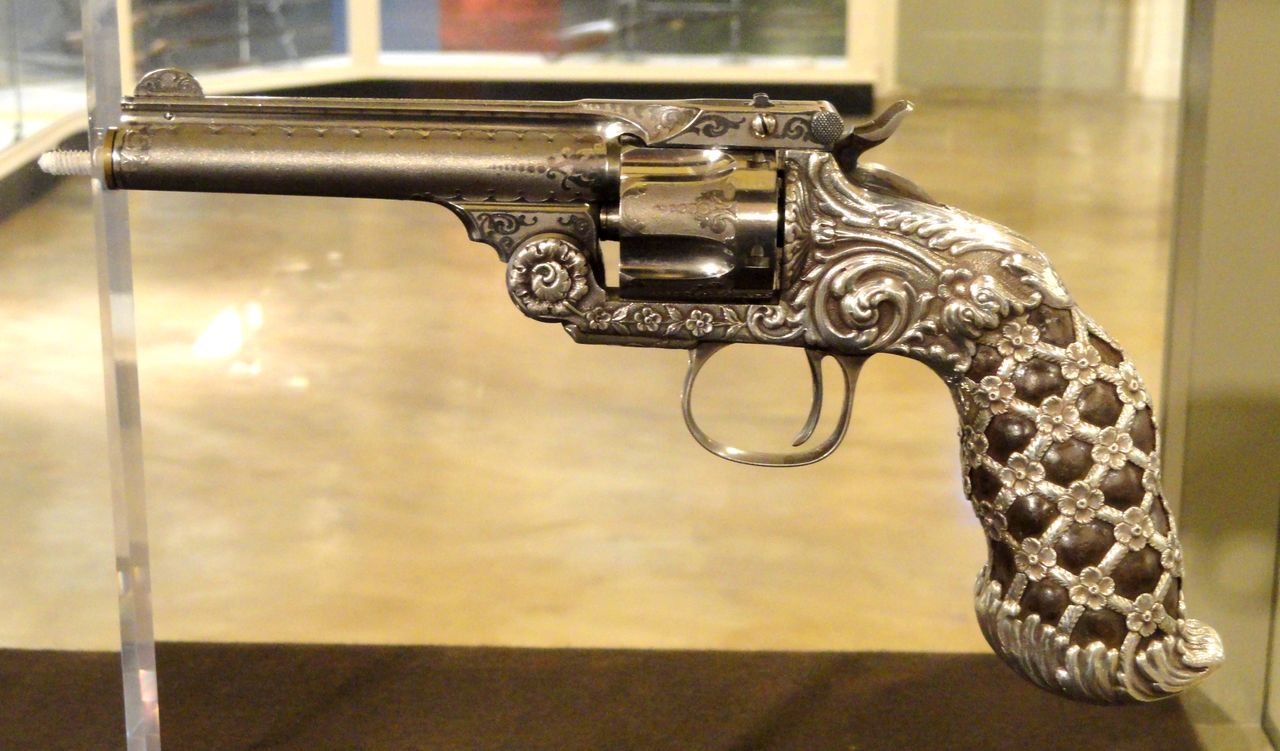
The best-known explanation comes from historical gun writing that has repeated the same core detail for years. After government service, surplus Schofields were sold through Schuyler, Hartley & Graham in New York, and the barrels were cut to five inches before the guns went to Wells Fargo, according to True West. American Rifleman likewise states that Wells Fargo bought surplus Schofields, shortened their barrels, and issued them to agents and employees for many years.
Five inches was a sweet spot. It preserved enough sight radius and ballistic usefulness to remain a serious .45 fighting revolver, but it stripped away the extra length that made a military sidearm awkward in close, cramped work. In practical terms, Wells Fargo was turning a horse-soldier’s revolver into an express guard’s revolver.
That decision tells you a lot about how the company thinks. Wells Fargo was not chasing fashion. It was standardizing a tool around the realities of daily use. A shorter barrel meant quicker presentation from a holster, less interference when seated, and better comfort over long hours of carry.
It also likely helped the gun feel handier as a backup to the shotgun. A messenger reaching for a revolver wanted something compact enough to clear leather quickly, yet still large enough to shoot accurately and hit hard. The five-inch Schofield fit that role very well.
The top-break design made sense for the coach’s defense
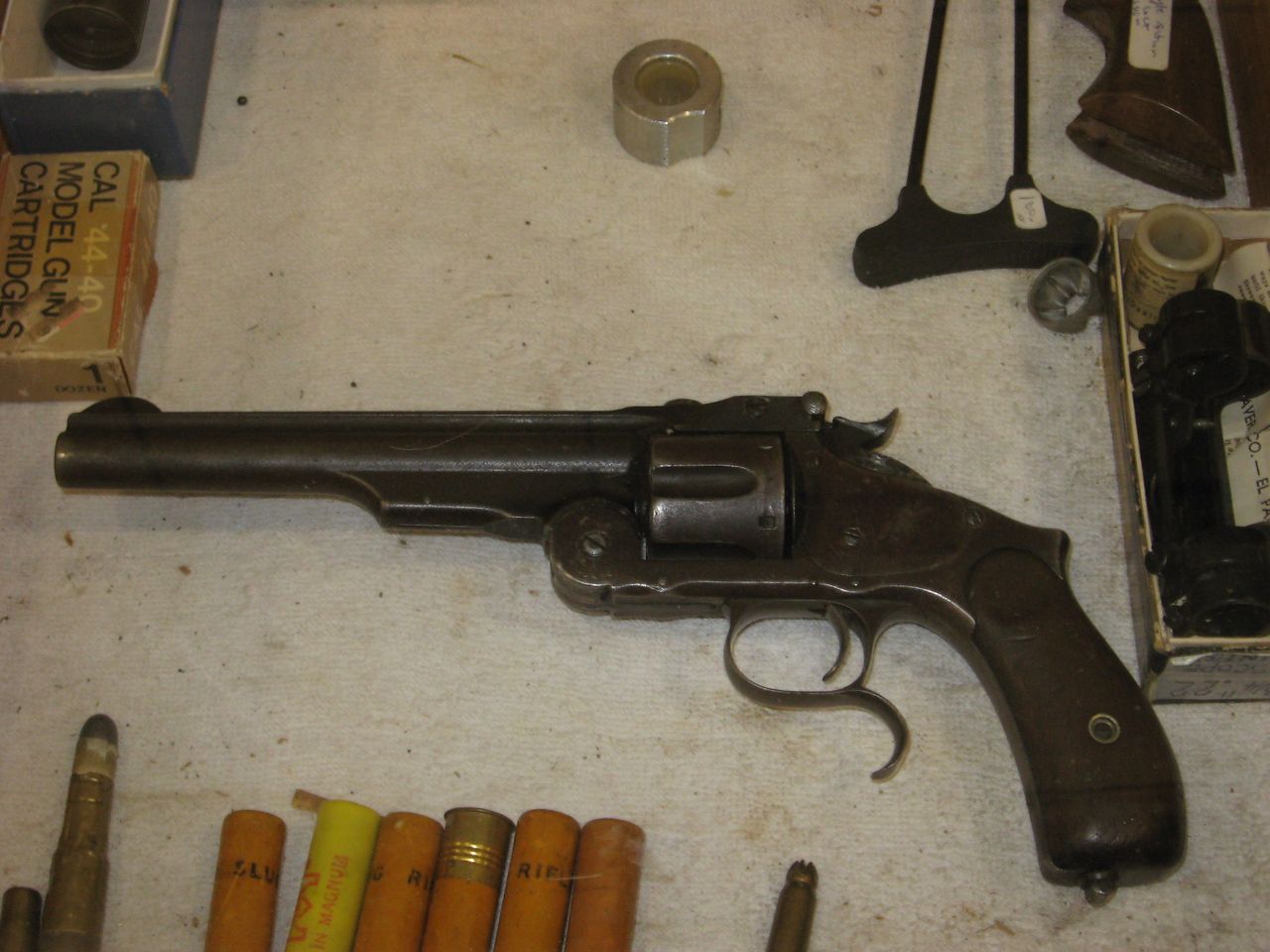
The cut-down barrel gets most of the attention, but the Schofield’s action was just as important. In a gunfight around a coach, reloading could be clumsy, hurried, and physically awkward. The top-break system gave Wells Fargo guards a genuine speed advantage over gate-loaded revolvers.
When the revolver hinged open, the extractor rose and pushed out all the empty cases together. That reduced fumbling and simplified the whole process. A man did not need to poke empties out one at a time while trying to keep his balance or maintain awareness of multiple attackers.
This mattered because Wells Fargo personnel often worked in exposed, unpredictable conditions. Rock Island Auction, discussing Wells Fargo messenger Aaron Ross, describes the kind of fast-moving defensive fight where a guard might be firing from the seat of a stage while the driver tries to keep the team running. In that sort of chaos, mechanical simplicity had real value.
The Schofield was not perfect. Its latch system and shorter cartridge requirements were part of its historical baggage. But for express duty, its strengths lined up neatly with the job. Fast unloading, quick recharging, and one-handed accessibility made it more than just an old Army castoff. It became a specialized frontier security gun.
Wells Fargo cared about utility, not romance
Modern collectors tend to see the cut-down Schofield as a glamorous Old West variation, but Wells Fargo almost certainly saw it as inventory. The company had money on the line, routes to protect, and employees who needed dependable weapons. If shortening surplus revolvers made them better for field use, that was reason enough.
The Wells Fargo approach to arms was usually practical. Guards might carry locally purchased or company-issued weapons, and period descriptions often mention combinations of shotgun, revolver, and sometimes rifle. The goal was not elegance. The goal was to survive an ambush and get the strongbox through.
A cut-down Schofield fit that company mindset beautifully. It reused a proven military revolver, adapted it for civilian security work, and gave guards a sidearm more suitable for life on and around a stage. That is the kind of modification a hard-nosed express company would appreciate.
There is also a broader pattern here in Western arms history. Guns were frequently altered after leaving military service. Barrel lengths changed, finishes wore off, grips got replaced, and holsters were selected for local needs. The frontier was not a museum. It was a place where equipment got modified until it fit the task.
The stagecoach environment demanded compact firepower
It is easy to forget how punishing stage travel could be. Dust, weather, bad roads, hard seating, and constant jostling shaped every piece of gear a messenger carried. A revolver with too much barrel could jab into the seat, catch on clothing, or simply become annoying enough that the user shifted how he carried it. Small discomforts become big problems on long routes.
Shorter handguns were often favored whenever concealment, comfort, or quick handling mattered. In Wells Fargo’s service, the issue was not concealment in the modern sense. It was accessibility. The revolver had to be ready when the shotgun was empty, out of reach, or impossible to bring to bear.
That helps explain why the five-inch format makes so much sense. It balanced power and portability in a way that a longer barrel could not. It still looked and handled like a full-size fighting revolver, but it was better adapted to coaches, depots, and mounted or seated work.
So when people ask why Wells Fargo had this revolver cut down for stagecoach guards, the answer is not mysterious. The company needed a sidearm that was quicker, handier, and easier to live with under real working conditions. The Schofield’s barrel was shortened because efficiency beats tradition when lives and payroll are on the line.
What the cut-down Schofield represents today
Today, the Wells Fargo Schofield stands as one of the clearest examples of an authentic Old West modification with a strong practical logic behind it. It was not a gimmick and not a modern custom fantasy projected backward. It was a real adaptation made for a specific job in a dangerous business.
Its appeal also comes from the overlap of several important stories. It connects U.S. military surplus history, Smith & Wesson design innovation, Wells Fargo express operations, and the day-to-day dangers of frontier transportation. Few revolvers sit at that crossroads so neatly.
For collectors and historians, the cut-down Wells Fargo Schofield is compelling because it shows how institutions shaped firearms just as much as inventors did. Major Schofield helped create the revolver, but Wells Fargo helped define one of its most famous forms by deciding what its employees actually needed in the field.
In the end, the cut-down Schofield was a business decision expressed in steel. Wells Fargo shortened it because stage and express guards needed a faster-handling backup gun, not a parade-ground sidearm. That practical choice is exactly why the revolver still captures attention today.