Triage sounds clinical and modern. In reality, it was forged in mud, smoke, speed, and mass casualties long before it became standard hospital practice.
Battle Created the Problem Hospitals Had Not Faced

Eighteenth-century hospitals treated patients in a relatively controlled setting. Even when care was rough by modern standards, doctors usually were not dealing with thousands of badly wounded people arriving at once from artillery and musket fire.
Napoleonic warfare changed that scale completely. Large conscript armies and fast-moving campaigns produced casualty surges that overwhelmed older medical routines, according to historical reviews in military medicine and disaster medicine literature.
Before this shift, many wounded soldiers simply waited where they fell until fighting ended. That delay killed people who might have survived with faster evacuation and earlier treatment.
In other words, triage was invented because battlefields created a logistical crisis hospitals had not yet solved. The immediate question was not just how to heal, but who needed help first and who could safely wait.
Dominique-Jean Larrey Changed the Rules

The key figure was Dominique-Jean Larrey, the French surgeon who served during the Revolutionary and Napoleonic wars. Multiple medical histories describe him as a founder of modern military surgery and an early architect of triage.
Larrey is best known for insisting that treatment should follow urgency, not social class or military rank. That was a radical break from older systems in which officers and elites often received priority.
He also pushed care closer to the fighting. Rather than accepting that the wounded would be collected hours later, he argued for rapid retrieval and immediate surgical attention when possible.
That principle is the heart of triage even now: sort first, act fast, and match scarce resources to the patients whose outcomes can still be changed.
The “Flying Ambulance” Made Triage Possible
An idea is one thing; a transport system is another. Larrey’s famous ambulances volantes, or “flying ambulances,” were light, mobile wagons designed to move onto or near battlefields and evacuate casualties quickly.
Histories from the Royal College of Surgeons and medical journals note that these vehicles borrowed from the speed and mobility of horse artillery. The design mattered because triage only works if the wounded can actually be reached.
Once casualties were collected sooner, surgeons could sort them by severity and urgency. Men with survivable but time-sensitive injuries could be treated earlier instead of dying unattended on the ground.
So triage did not emerge as a hospital theory first. It emerged as part of a battlefield system that linked transport, sorting, and treatment into one practical chain.
Early Triage Was Brutal, Practical, and Different From Today
Modern triage is often described as a life-saving ethical framework. Early battlefield triage was more blunt. Scholars note that in its first form, it also served military needs by returning as many soldiers as possible to action or preserving fighting strength.
That does not make it inhuman; it makes it realistic. Battlefield surgeons worked under extreme scarcity, with limited staff, primitive anesthesia, and pressure from commanders who needed armies to keep moving.
Larrey still stood out for treating according to medical need rather than rank, and some accounts note that he even cared for enemy soldiers under the same principle. That was remarkably forward-looking for the era.
But the original system was never gentle. It was a wartime answer to mass suffering, designed under pressure where delay itself was often fatal.
Hospitals Adopted the Logic Later
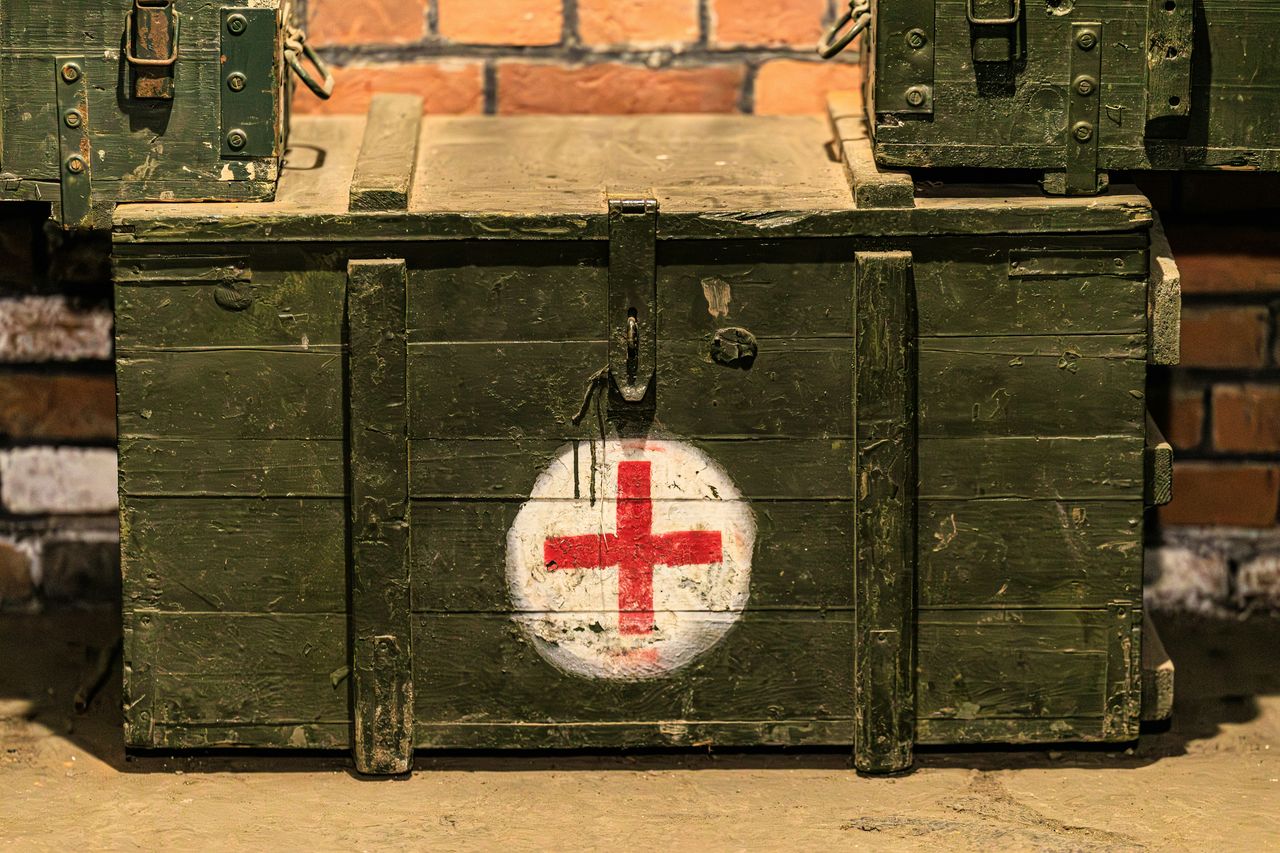
The term “triage” comes from the French verb trier, meaning to sort. Historical sources suggest the concept existed in military practice before the medical term became widely formalized in later hospital and wartime systems.
That sequence matters. The battlefield produced the method first because it concentrated urgency, scarcity, and volume in one place. Hospitals later recognized that the same logic applied in disasters, emergency rooms, and mass-casualty events.
Over time, armies in other countries adapted similar practices. Later conflicts, including the American Civil War and World War I, helped spread organized casualty sorting, ambulance services, and front-line stabilization.
By then, the innovation no longer looked purely military. It had become foundational to emergency care more broadly.
Why Napoleon’s Wars Were the Turning Point

Napoleon did not invent triage personally, but his wars created the environment that demanded it. Massive armies, rapid campaigns, and industrial-scale injury forced medicine to become more organized, mobile, and selective.
Medical historians repeatedly point to this period as a turning point in military trauma care. The old habit of waiting until the guns fell silent was no longer adequate for the number of wounded on the field.
Larrey’s response was organizational genius as much as surgical skill. He saw that speed, classification, and mobility could save lives before any hospital bed was involved.
That is why triage belongs first to battlefield history. It was born where chaos exposed medicine’s delays most cruelly.
The Legacy Is Still With Us
Every emergency department, ambulance service, and disaster response team still uses the core insight Larrey helped establish: not everyone can be treated at once, so patients must be sorted by urgency and likely benefit.
Today that process is far more sophisticated, with color codes, trauma protocols, and ethical frameworks. But the underlying problem is the same one faced on Napoleonic battlefields: too many injured people and too little time.
What began in war was later refined by hospitals, not the other way around. Triage feels medical because medicine absorbed it so completely.
Its origin, though, is unmistakably martial. The first true triage system was invented not in a quiet ward, but amid cannon fire.