Some pistols get popular. Others get remembered.
The CZ 75 did something rarer: it built a quiet, stubborn fan base that never really went away.
It arrived from the wrong place at the wrong time.

The CZ 75 was introduced in Czechoslovakia in the mid-1970s, and that timing mattered more than many Americans realized. It came from behind the Iron Curtain, into a global market where politics often shaped reputation before shooters ever touched a firearm. In the United States, that immediately limited visibility, distribution, and the kind of mainstream trust that brands from Western Europe or domestic makers could more easily earn.
That mattered because American handgun culture in the late 1970s and 1980s was heavily influenced by familiar names, law enforcement adoption, and gun magazine coverage. Smith & Wesson had the revolver market sewn up, Colt still carried mystique, and later Glock would redefine the service pistol conversation. A Czech pistol, no matter how good, entered that crowded field with almost none of the built-in advantages.
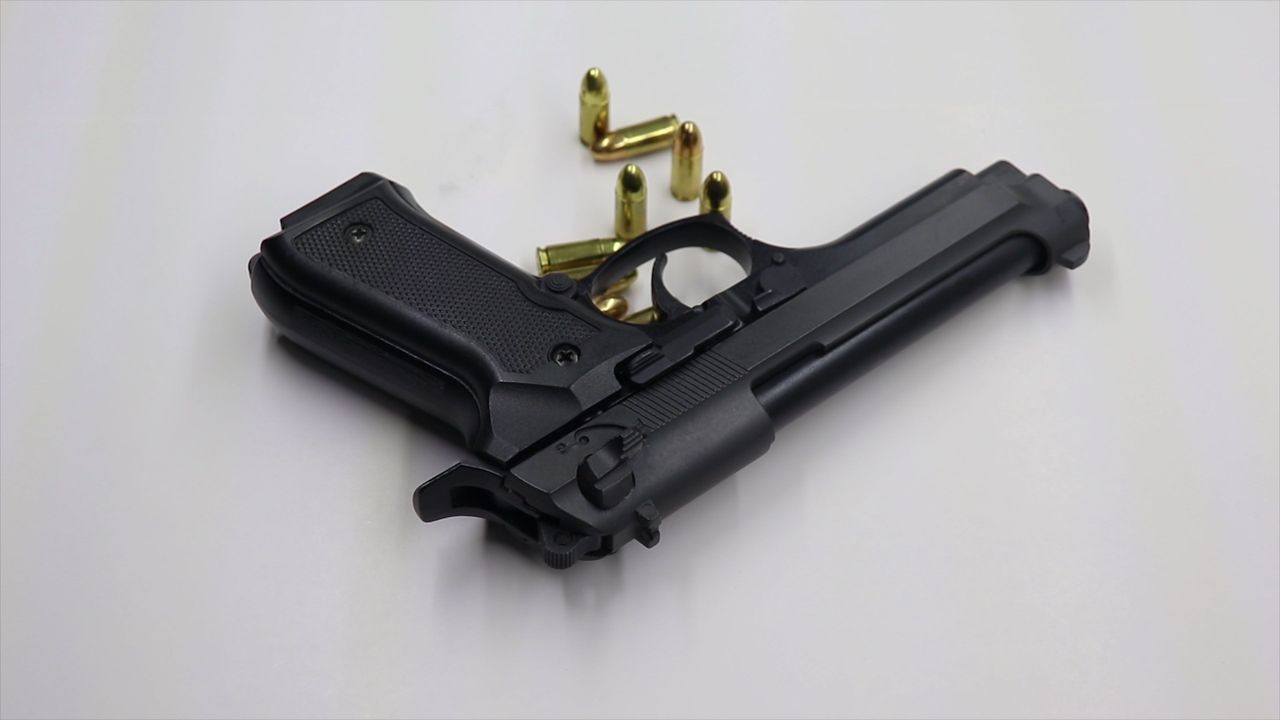
Compounding the problem, the design spread through clones and copycats before many American buyers even saw an original. Italian, Israeli, and other manufacturers borrowed heavily from the CZ 75 pattern. For a lot of shooters, the shape became recognizable before the brand did. That diluted credit in a way that hurt CZ’s identity in the American market for years.
The grip and handling sold believers almost instantly

Ask longtime CZ 75 fans what hooked them, and many will start with the way it feels in the hand. The pistol has a reputation for natural pointing, helped by a grip shape that seems to fit a remarkable range of shooters. Its contour, angle, and balance give it an ease that people often notice within the first magazine, sometimes within the first few seconds.
This was not an accident of aesthetics. The frame is all steel on classic models, and that weight changes the shooting experience in practical ways. Recoil feels softer, muzzle rise is more controlled, and follow-up shots tend to be easier than with lighter polymer handguns of similar size. Many shooters who first handled a CZ 75 after years with striker-fired pistols were surprised by how settled and planted it felt.
There is also the low slide profile, which contributes to the pistol’s distinct character. Because the slide rides inside the frame rails rather than outside them, the bore axis feels lower and the gun tracks differently under recoil. Some shooters love that sensation immediately. Others need time with it, but once they understand it, they often become unusually loyal to the platform.
It offered features ahead of what many buyers expected.d
Part of the CZ 75’s appeal is that it was, in several ways, ahead of its era. It combined double-action and single-action operation with a high-capacity 9mm magazine at a time when that combination still felt advanced. Before the so-called wonder-nine wave fully reshaped the American market, CZ had already built a pistol that pointed toward where service sidearms were going.
It also offered flexibility that appealed to serious shooters. Traditional CZ 75 variants could be carried hammer down for a double-action first shot or cocked and locked like a 1911, depending on the model and user preference. That was a meaningful selling point for enthusiasts who wanted options instead of a one-size-fits-all manual of arms. For knowledgeable handgun owners, that versatility was not a gimmick. It was part of the pistol’s identity.
American buyers, however, often encountered the gun without the broader context that made those features impressive. By the time imports became more common and awareness improved, the market had already shifted. Polymer frames, striker-fired triggers, accessory rails, and lighter carry guns began dominating attention. The CZ 75 was still excellent, but it increasingly looked like a traditionalist’s choice in a market chasing newer ideas.
Its trigger and accuracy made it a shooter’s pistol.ol

The CZ 75 earned much of its reputation where hype matters least: on the range. Out of the box, many examples showed excellent mechanical accuracy, and tuned versions became famous for even better performance. Competitive shooters, action pistol fans, and dedicated hobbyists noticed that the design rewarded time and skill. It was the kind of pistol that seemed to get better the more seriously you approached it.
The single-action trigger on a good CZ 75 is a major part of that story. Factory triggers varied by era and model, but many had a crisp break that encouraged precise shooting once the first double-action pull was past. In practical terms, that meant the gun felt more refined than many duty-oriented pistols sold to the same buyers. For shooters who value trigger quality, that distinction mattered a great deal.
Its competitive legacy helped cement that image. CZ-pattern pistols became common in IPSC, USPSA, and other practical shooting circles, where speed and controllability reveal weaknesses quickly. Models derived from the CZ 75 architecture, including premium competition builds from firms like Tanfoglio and later CZ’s own Shadow line, proved the design had serious sporting merit. American casual buyers did not always follow those worlds closely, so they often missed how much respect the platform had earned.
The American market moved toward convenience, not character.ter
A big reason the CZ 75 was never fully understood in the United States is simple: the market changed around it. American buyers increasingly prioritized lighter weight, easier maintenance, simpler triggers, and larger accessory ecosystems. The rise of the concealed carry market accelerated those preferences. A steel-framed, double-action/single-action pistol was suddenly competing in a world that rewarded convenience over nuance.
Glock’s success is the clearest comparison. It offered fewer controls, lower weight, huge parts availability, and a straightforward manual of arms that agencies and civilians alike could grasp quickly. That does not make the Glock better for every shooter, but it does explain why it became easier to recommend broadly. The CZ 75 asked more from the owner, and in return offered a more tailored shooting experience.
That tradeoff became harder to sell as gun buying became more practical and less romantic. Many newer buyers wanted a reliable tool first and a personality second. The CZ 75 absolutely is reliable, but its appeal often reveals itself through feel, balance, trigger behavior, and long-term familiarity. Those are not always things that stand out in a gun store display case or a quick online comparison chart.
Owners tended to become advocates, not just customers.

One of the most interesting things about the CZ 75 is how often ownership turns into evangelism. People do not just buy one and shrug. They talk about the way it fits their hand, the softness of recoil, and the surprising precision they get at speed. In gun communities, that kind of owner-to-owner praise has sustained the pistol’s reputation even when mainstream attention drifted elsewhere.
There is also a collector’s angle that deepened the bond. Pre-B models, Cold War-era imports, compact variants, SP-01s, PCRs, and Shadows all built out a family tree that enthusiasts could explore without leaving the platform behind. Unlike pistols that feel interchangeable across generations, CZ models often inspire comparison and debate over details like safeties, decockers, trigger geometry, and manufacturing eras. That creates a culture, not just a customer base.
In the American market, that devotion sometimes looked niche, but niche is not the same as insignificant. It reflected a gun that rewarded deeper involvement. People who learned the system, shot it well, and lived with it over time often came away feeling they had discovered something others had overlooked. That sense of being in on a secret helped the following endure.
The real appeal was always more than nostalgia.a
It is easy to dismiss the CZ 75’s following as old-school affection for steel guns and classic lines. Nostalgia is part of the picture, but it is not the whole picture. The pistol still speaks to modern shooters because it solves familiar problems in a distinctly satisfying way. It points naturally, shoots flat, offers excellent practical accuracy, and has a mechanical personality that many current designs intentionally smooth away.
That is the key thing many American buyers never fully understood. The CZ 75 was not loved simply because it was different. It was loved because it combined comfort, shootability, and craftsmanship in a package that made people want to keep shooting it. In an era increasingly defined by modularity and standardization, the gun felt personal.
And that is why the following persists. Even now, when the market is flooded with capable handguns, the CZ 75 continues to attract people who care about how a pistol behaves, not just what it costs or how many features fit on a spec sheet. Plenty of guns are easier to buy, lighter to carry, or simpler to explain. Very few leave the same impression after the first range session.