Some pistols earn respect. The CZ 75 tends to earn loyalty.
That difference explains why so many experienced shooters try one, raise an eyebrow after the first magazine, and then start comparing everything else against it.
It fits the hand like it was custom made

The first thing most shooters notice about the CZ 75 is not a spec sheet detail. It is the way the gun settles into the hand with an almost suspicious naturalness. The grip shape, contour, and angle seem to guide the wrist into alignment without much conscious effort, which is one reason the pistol has built such a devoted following over decades.
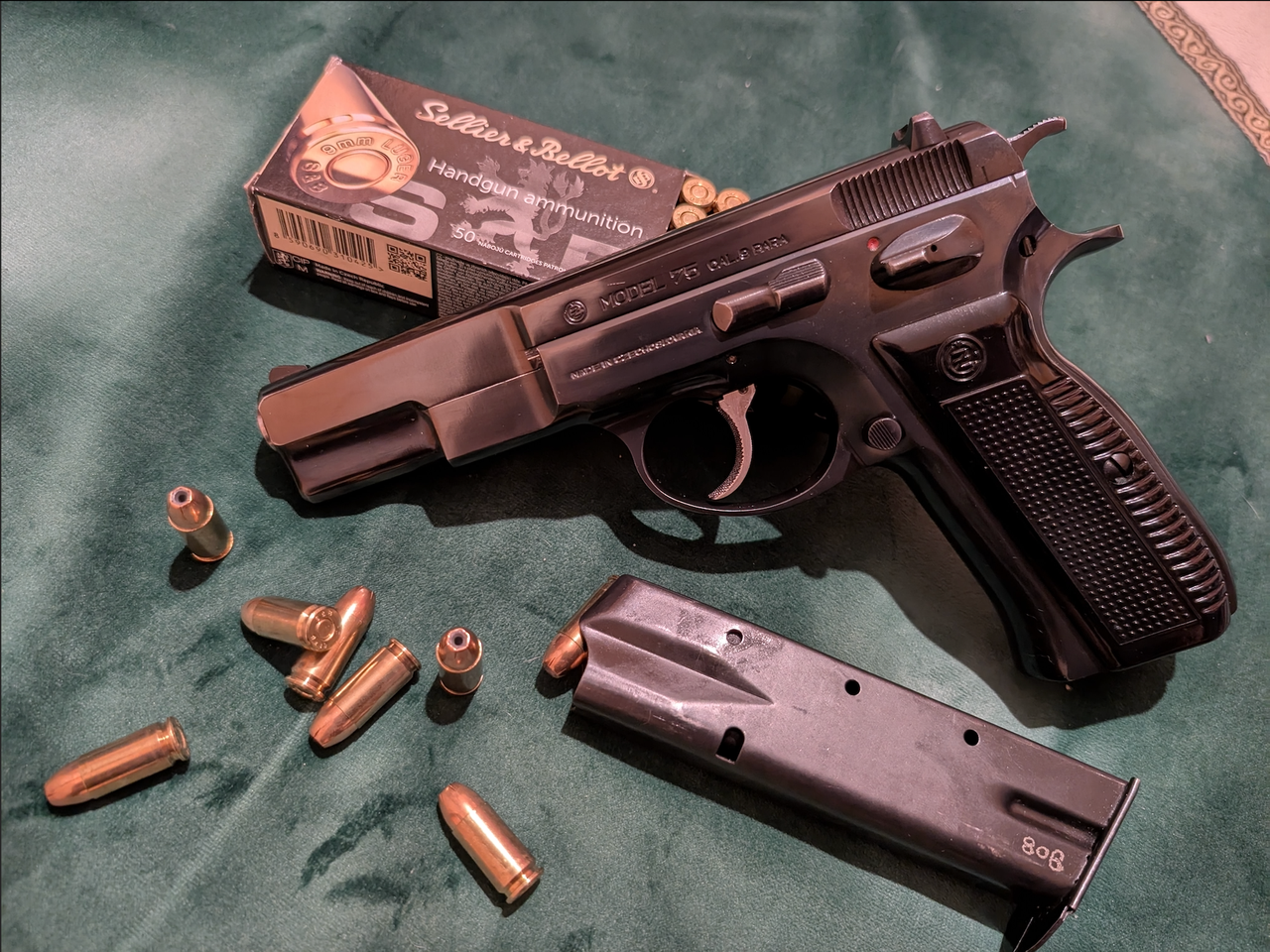
That reputation is not just gun-counter folklore. The platform, introduced in 1975, became the foundation for an enormous family of pistols and inspired a long line of clones and derivatives, a sign that its basic layout got something very right from the beginning. According to CZ’s own catalog, the classic CZ 75 B remains a steel-framed, full-size 9mm with 16+1 capacity, which tells you the company still sees enduring value in the original formula.
Shooters often describe the gun as pointing naturally, and that matters more than people think. A pistol that consistently comes up on target with less adjustment reduces mental load, speeds up follow-up shots, and builds confidence quickly. It is hard to return to a blockier or more awkward handgun once you have spent serious range time with something that feels this intuitive.
The extra weight works in your favor
The CZ 75 is not a featherweight modern polymer pistol, and for many serious shooters that is the point. Its steel frame gives it reassuring heft, and that mass helps absorb recoil in a way that makes long practice sessions more pleasant and fast shooting more controllable. A lighter gun may be easier to carry, but a heavier one is often easier to shoot well.
That advantage shows up most clearly when the timer comes out. The gun tracks flatter, settles faster, and tends to feel calmer during recoil, especially in 9mm. Shooting Illustrated, in a hands-on review after more than 1,100 rounds, described the CZ 75 pattern as accurate, trouble-free, and unusually easy to shoot fast, noting the role of its weight and manageable single-action trigger.
This is where a lot of serious shooters quietly change camps. They discover that a pistol can feel stable instead of snappy, and precise instead of merely adequate. Once that sensation becomes familiar, many common striker-fired pistols start to feel less planted, especially during longer range sessions where recoil management and fatigue become impossible to ignore.
The trigger system rewards skill instead of hiding it

Part of the CZ 75’s appeal is that it gives the shooter options. The classic design is a DA/SA pistol, which means a longer, heavier first pull followed by lighter single-action pulls afterward. For shooters willing to train with it, that system offers a blend of security, control, and shootability that many find deeply satisfying.
There is also the matter of how the gun can be run. Traditional CZ 75 variants can be carried with the hammer down for a double-action first shot or cocked-and-locked with the manual safety engaged, a flexibility that impressed influential handgun thinkers decades ago and still attracts enthusiasts who prefer a more deliberate manual of arms. Shooting Illustrated noted exactly that appeal in its discussion of the design’s enduring respect.
More importantly, the trigger tends to scale with the shooter. Beginners can use it competently, but experienced hands often get much more out of it as technique improves. That creates a rare sense of growth. Instead of feeling like the gun is flattening everything into the same generic experience, the CZ 75 often feels like it is revealing better shooting as the shooter earns it.
Its competition record is hard to ignore
If you want to know whether a pistol design truly works, look at what happens when performance matters and excuses disappear. The CZ 75 family has been enormously influential in practical shooting, and that competitive credibility is one reason serious shooters keep coming back to it. The line did not just survive in competition. It became one of the benchmarks.
The IPSC Production Division list includes a wide range of CZ 75 variants, from the original CZ 75 and CZ 75 B to SP-01 and Shadow models, showing how deeply the platform is embedded in serious match use. USPSA and IPSC shooters have long favored CZ-pattern pistols because they combine controllability, accuracy, and tunability without abandoning the practical roots of the design.
Competition does not automatically prove a gun is right for every person, but it does reveal what experienced shooters trust when tenths of a second matter. That matters because enthusiast opinion can be noisy, while match performance is brutally honest. When a platform keeps showing up in the hands of strong shooters year after year, it tells you the appeal is based on results, not romance.
Reliability builds attachment faster than hype ever can
A pistol can have great ergonomics and still lose people if it chokes under pressure. The CZ 75’s staying power comes from the fact that it generally backs up its feel with dependable performance. Serious shooters do not stay attached to a handgun because it looks cool or has mystique. They stay attached because it works, over and over again.
That reliability reputation has been repeated for years across reviews, training circles, and competition use. One of the more telling recent examples came from Shooting Illustrated, where the reviewer reported 1,159 rounds through a CZ 75 B Omega without a single malfunction, including cheap steel-case ammunition that caused issues in another tested pistol. That kind of real-world report sticks with experienced shooters because it mirrors what many of them value most: consistency without drama.
Reliability also changes how a shooter practices. When the gun runs predictably, attention shifts away from troubleshooting and back toward grip, sights, trigger press, and speed. Over time, that creates trust, and trust is what makes people reluctant to switch platforms. Once a shooter bonds with a pistol that feels good and runs cleanly, the search often stops.
The design has character without sacrificing usefulness

A lot of modern handguns are efficient, capable, and forgettable. The CZ 75 is capable, but it also has personality. It carries the mechanical charm of a classic all-metal service pistol while remaining genuinely practical, which is a rare balance in an era dominated by modular polymer guns that often differ more on paper than in the hand.
Its history adds to that pull. The pistol was designed in communist Czechoslovakia primarily for export, not domestic military use, and its influence spread widely enough that it inspired many copies around the world. Forgotten Weapons has highlighted that unusual origin story, and the sheer number of CZ-pattern clones over the years is its own form of testimony. Weak designs do not get copied this much.
Yet none of that history would matter if the gun were merely nostalgic. It is not. The reason people stay with the CZ 75 is that the old-school feel comes with real-world shootability. It scratches the enthusiast itch while still delivering practical performance, and that combination is much harder to replace than many buyers expect before they try one.
Once expectations change, everything else gets judged harder

This is the real answer to the question in the headline. Serious shooters who try the CZ 75 rarely go back because the pistol resets their standards. It changes what they expect a handgun to feel like in recoil, how naturally it should point, and how much confidence a trigger and steel frame can inspire when rounds start going downrange quickly.
After that, plenty of other pistols still make sense. Some are lighter, cheaper, easier to customize, or better suited to concealed carry. But “makes sense” is not the same as “feels better,” and the CZ 75 often wins on feel in a way that is hard to quantify until you have lived with it. That is why owners so often speak about the platform with a kind of evangelical certainty.
In other words, the CZ 75 is not magic. It is just unusually complete. It blends ergonomics, recoil control, history, reliability, and competitive credibility into one package that rewards serious shooting. Once a person experiences that combination, going back can feel less like returning to normal and more like settling.