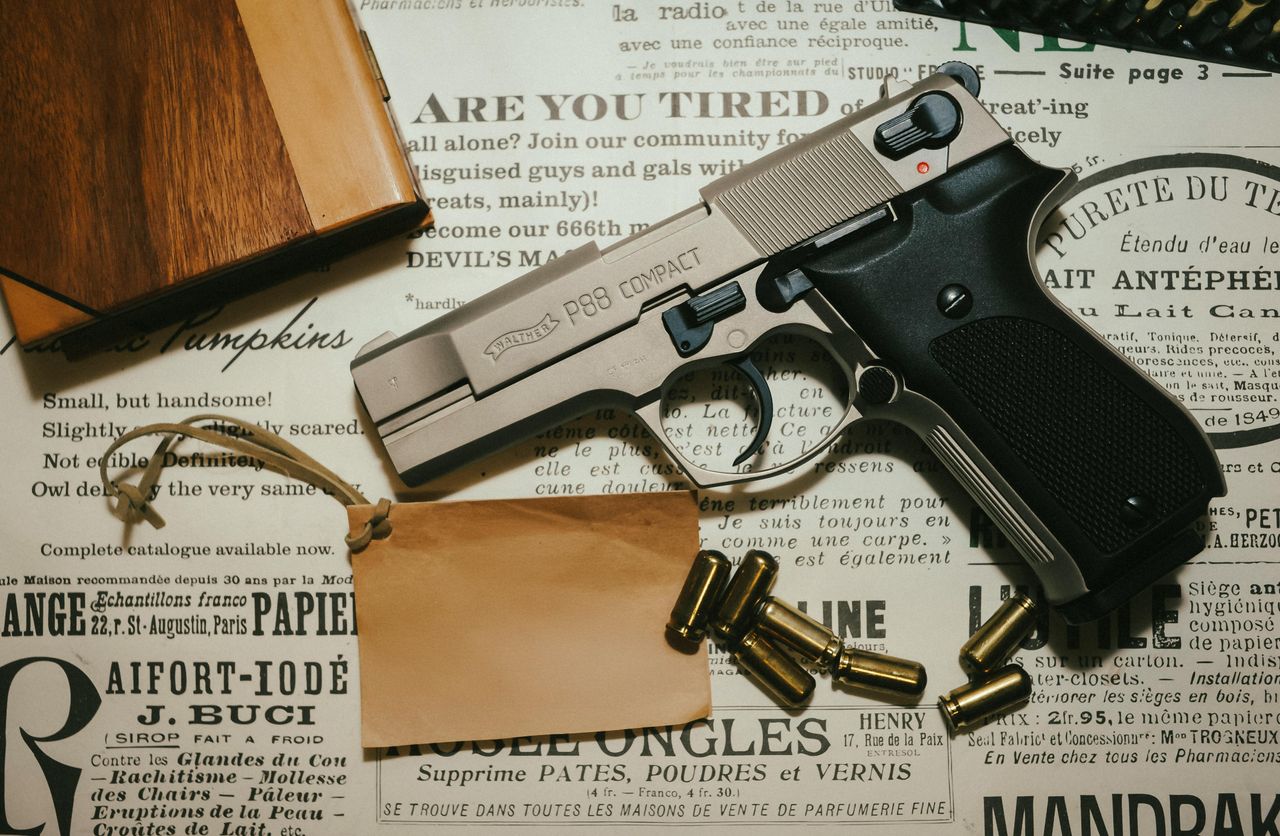
The Walther PPK is one of the most recognizable handguns ever made, but its story is much bigger than tuxedos, martinis, and movie posters. Long before and long after its Bond fame, the PPK earned a reputation for compact engineering, police use, and pop-culture staying power. This gallery explores the details that made it a genuine firearms icon in its own right.
Its name actually explains its purpose

The Walther PPK’s name is not just a cool-sounding label. It comes from the German Polizeipistole Kriminalmodell, which is usually translated as police pistol detective model. That wording tells you a lot about what the gun was meant to be from the start: a more compact sidearm for plainclothes carry.
In other words, the PPK was designed with concealment and practicality in mind, not cinematic glamour. It was built for people who needed a sidearm that could disappear under a jacket while remaining quick to draw. That mission shaped nearly every detail of the pistol’s size, profile, and controls.
It arrived during a major shift in handgun design

When the PPK appeared in the early 1930s, handguns were evolving fast. Designers across Europe were moving away from bulky service pistols and revolvers toward slimmer, more portable semi-automatics that better fit modern police and civilian needs.
The PPK landed at exactly the right moment. It offered a compact frame without feeling crude or compromised, and it reflected the era’s growing interest in practical concealed carry. That timing helped make it influential. The pistol did not just ride a trend; it helped define what many people would come to expect from a small defensive handgun.
It helped popularize the double-action trigger

One of the PPK’s most important features was its double-action/single-action trigger system. That meant the first shot could be fired with a longer, heavier trigger pull while later shots used a lighter single-action pull after the slide cycled.
Today that sounds familiar, but at the time it was a meaningful step in handgun handling. It gave users a ready-to-carry pistol with an added margin of confidence, especially when paired with the manual safety. The PPK helped normalize a trigger system that would become hugely influential in service and defensive sidearms for decades afterward.
The safety and decocker were ahead of their time
The PPK combined a manual safety with a decocking function, a pairing that gave users more control over how the pistol was carried and made ready. Rotating the safety lever could safely lower the hammer, which was a sophisticated feature for a compact pistol of its era.
That mattered because small handguns often involve tradeoffs between convenience and confidence. The PPK’s system suggested that a concealable pistol did not have to be simplistic. It could include thoughtful engineering that addressed real-world handling concerns. That practical sophistication is a big reason the design still gets studied and discussed today.
Its fixed barrel gave it a reputation for accuracy

Unlike many semi-automatic pistols that use a tilting barrel, the PPK uses a fixed barrel design. The barrel stays in place while the slide moves around it, a setup that can contribute to good inherent accuracy in a small handgun.
For shooters, that translated into a pistol that often felt surprisingly precise for its size. It also helped create the PPK’s reputation as more than just a hideout gun. People appreciated that it could be compact, elegant, and mechanically respectable all at once. That blend of concealability and shootability became one of its strongest selling points.
It was chambered for practical European cartridges

The PPK became closely associated with cartridges like .32 ACP and .380 ACP, rounds that matched its compact role and European roots. These were not oversized service cartridges, but they made sense in a pistol designed for discreet carry and manageable recoil.
That caliber choice says a lot about the gun’s identity. The PPK was never about brute force or battlefield theatrics. It was about balance: enough power for its intended purpose, in a frame slim enough to carry comfortably. That practical approach helped it appeal to police, civilians, and later collectors who admired thoughtful design over raw spectacle.
Police and plainclothes users embraced it
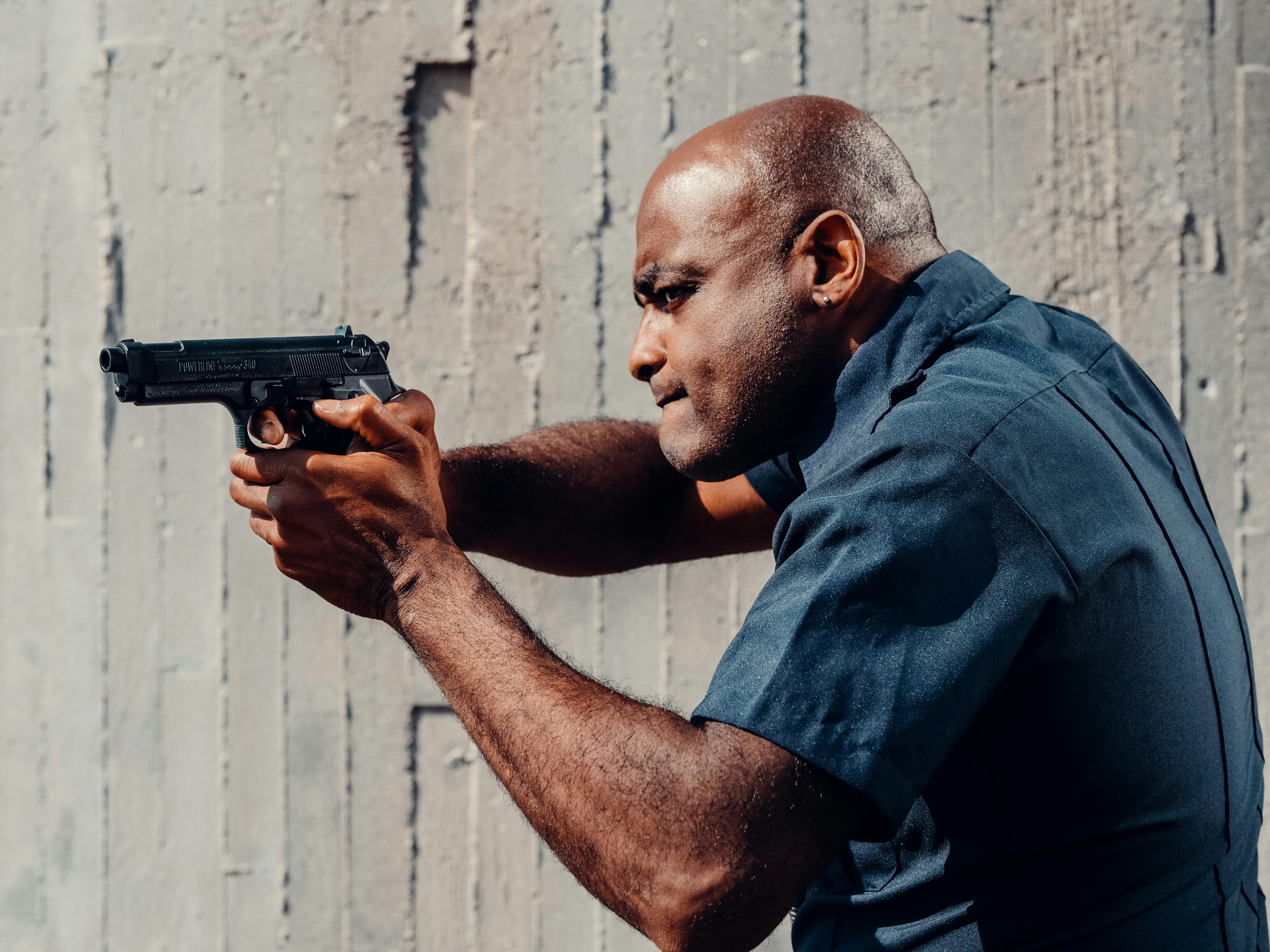
The PPK’s compact dimensions made it attractive to detectives, undercover officers, and others who needed something more discreet than a full-size duty sidearm. It fit naturally into a world of shoulder holsters, coat pockets, and close urban carry.
That real-world use gave the pistol credibility that no movie role could manufacture. It was not merely stylish; it solved a practical problem for professionals who valued concealment and dependable operation. Even for people who know it mainly from pop culture, the PPK’s law-enforcement history is a reminder that its fame began with function rather than fantasy.
Its size made it a true concealed-carry pioneer

Today the market is crowded with slim, pocketable pistols, but the PPK helped establish that category long before concealed carry became a major consumer trend. It showed that a handgun could be compact enough for discreet everyday wear without looking or feeling like a desperate compromise.
That was part of its genius. The PPK was small, but it also had a finished, almost refined presence that set it apart from many utilitarian backup guns. For generations of owners, that mattered. It felt like a serious sidearm in miniature, and that formula still influences how compact pistols are judged.
It became a benchmark for elegant industrial design

The PPK’s appeal has always been partly visual. Its lines are clean, its proportions are tight, and its silhouette is instantly recognizable even to people who could not identify many firearms by name. It manages to look mechanical and refined at the same time.
That design balance is a major reason it endured. The gun feels like a product from an era when industrial objects were expected to be functional but also dignified. In photos, on screen, or in a display case, the PPK has presence. It communicates precision and restraint, which is a big part of why it still fascinates enthusiasts and non-enthusiasts alike.
It has been built in more than one country

Although strongly associated with Germany, the PPK’s production history has stretched beyond a single place and a single era. Variants and licensed production over the years have involved different factories, import arrangements, and manufacturing partnerships, especially for the American market.
That layered production story is part of what makes collecting PPKs so interesting. Two pistols that look similar at a glance may differ in markings, finish, origin, or subtle details. For historians and enthusiasts, the PPK is not just one gun. It is a family of closely related versions shaped by politics, law, commerce, and changing consumer demand.
Collectors pay close attention to small details
The PPK attracts collectors because tiny differences can mean a lot. Finish type, proof marks, grip style, import stamps, wartime production, and postwar manufacturing all influence how a specific pistol is viewed and valued.
That kind of detail-oriented interest says something important about the model’s place in firearms history. The PPK is familiar enough to be iconic, yet nuanced enough to reward serious study. For collectors, it offers the best kind of rabbit hole: recognizable on the surface, but full of distinctions once you start looking closer. It is a compact pistol with an unexpectedly expansive paper trail.
Its recoil surprised many first-time shooters
Because the PPK is small and stylish, newcomers sometimes assume it will be especially gentle to shoot. In reality, compact blowback-operated pistols can feel snappier than their polished image suggests, particularly in .380 ACP.
That contrast between looks and feel is part of the PPK legend. It may seem elegant in the hand, but it reminds you quickly that size and operating system matter. Many shooters come away with a new respect for the gun after a range session. It is not harsh for the sake of it, but it definitely proves that classic compact pistols often ask more of the shooter than modern expectations suggest.
It inspired generations of compact pistols

Even manufacturers that never copied the PPK directly worked in a market shaped by its success. The idea of a concealable semi-automatic with serious controls, respectable accuracy, and polished styling became much easier to sell after the PPK proved there was demand.
Its influence shows up in everything from mid-century European pocket pistols to later defensive handguns that emphasized discreet carry. Designs moved on, materials changed, and capacities increased, but the template remained recognizable. The PPK helped establish the compact auto as a legitimate primary sidearm for certain users, not just a novelty or a last-ditch backup weapon.
Its Bond fame sometimes overshadows its real legacy

There is no denying that James Bond turned the PPK into a global celebrity. For many people, it is the movie handgun, instantly linked with espionage, tailoring, and cold-war cool. That image is so powerful that it can flatten the rest of the story.
But the PPK mattered before Bond and would still matter without him. Its engineering, police history, and design influence stand on their own. The films amplified the pistol’s mystique, yet the mystique had to be there first. Bond made it famous, but the gun’s real-world credentials are what made that fame stick across generations.
It remains one of the most recognizable handguns ever made

Very few firearms have a silhouette that broad audiences can identify almost instantly, but the PPK does. Its outline has appeared in films, television, books, posters, collector catalogs, and museum displays for so long that it has become part of visual culture.
That kind of recognition is rare because it requires more than commercial success. A design has to be distinctive, repeatable, and emotionally resonant. The PPK checks all three boxes. Whether people admire it for engineering, history, or style, they tend to remember it. That lasting visual identity may be the clearest sign that the pistol transcended its original role.