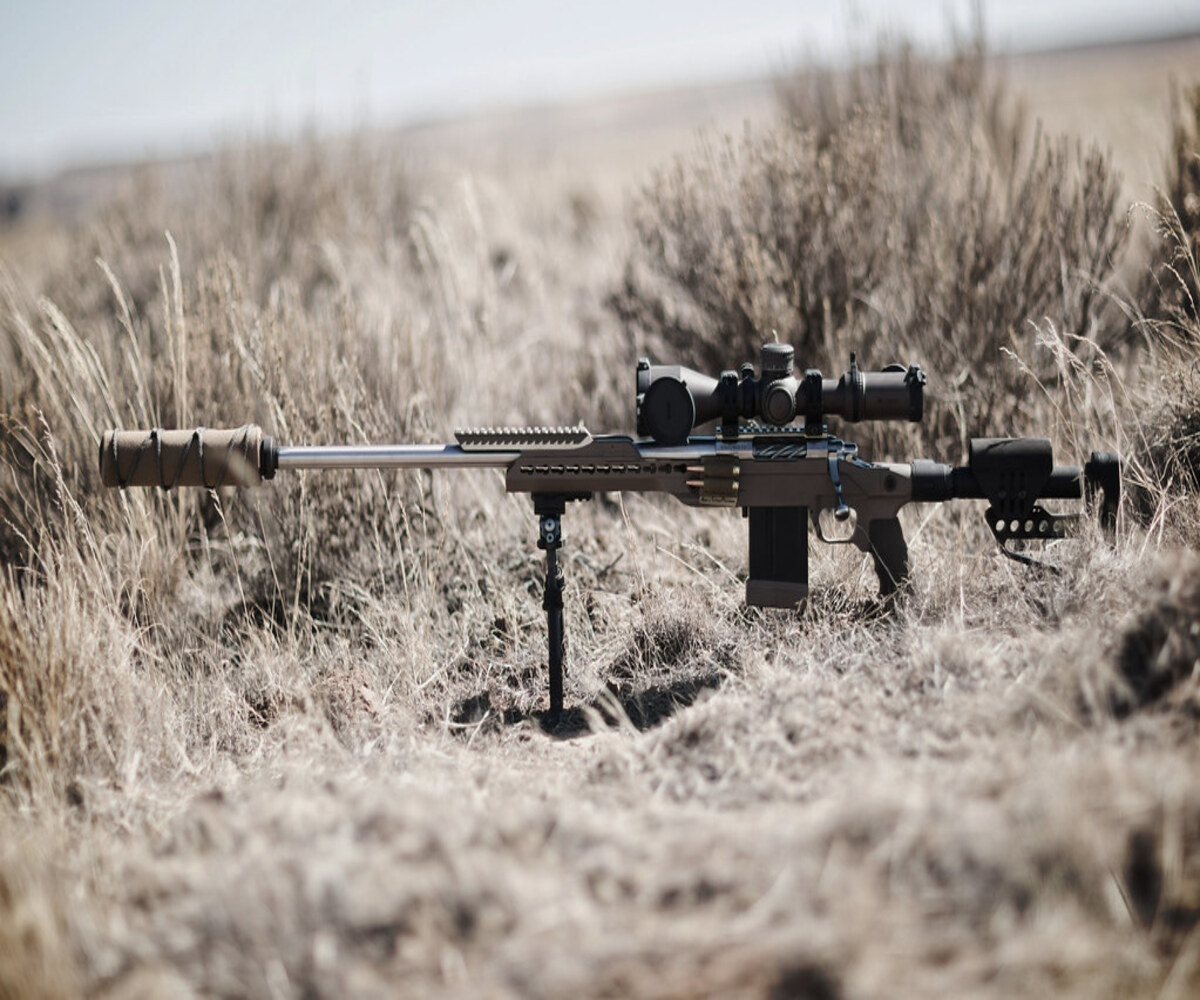
Big rifles always get attention, but very few have the kind of name recognition the Barrett M107 carries. At $14,795, this one is selling not just raw capability, but a reputation built over decades.
Why this M107 command a premium

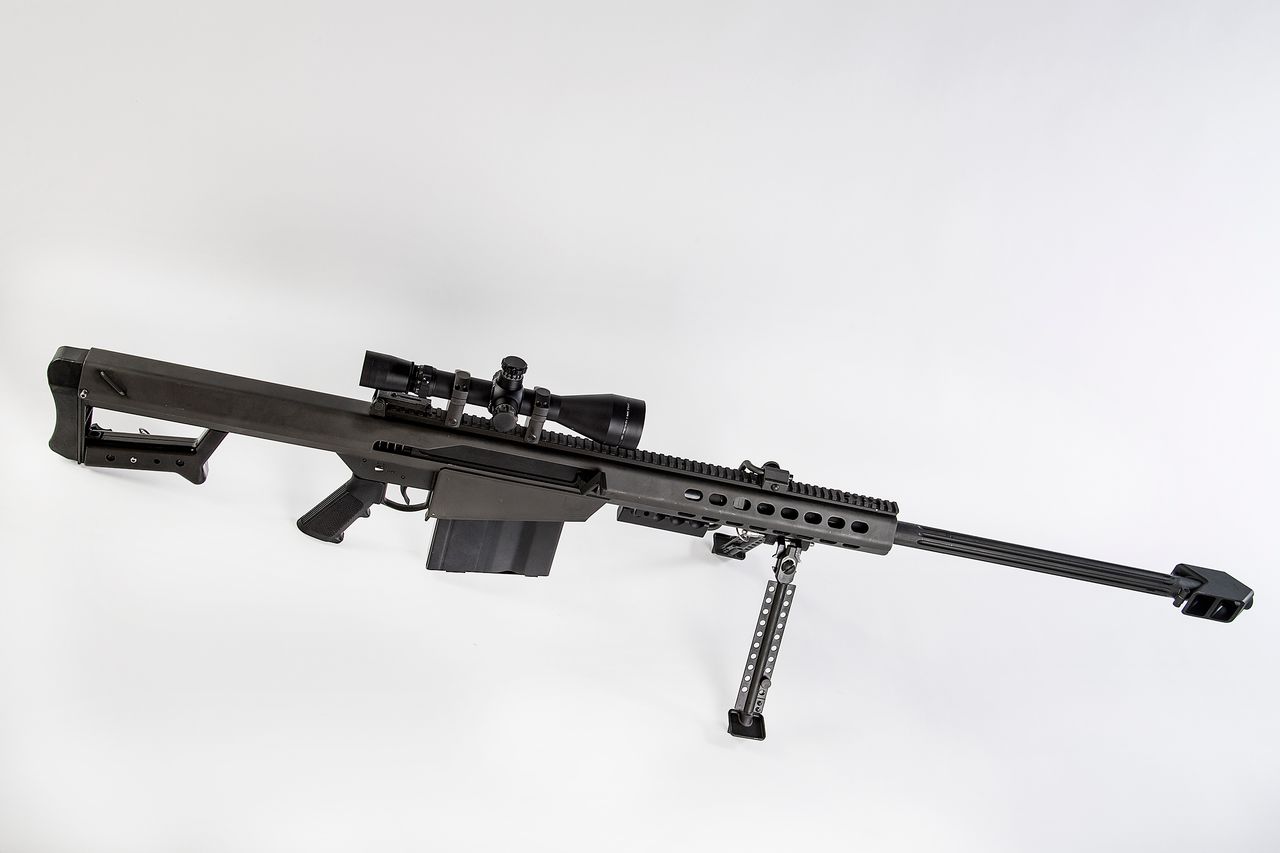
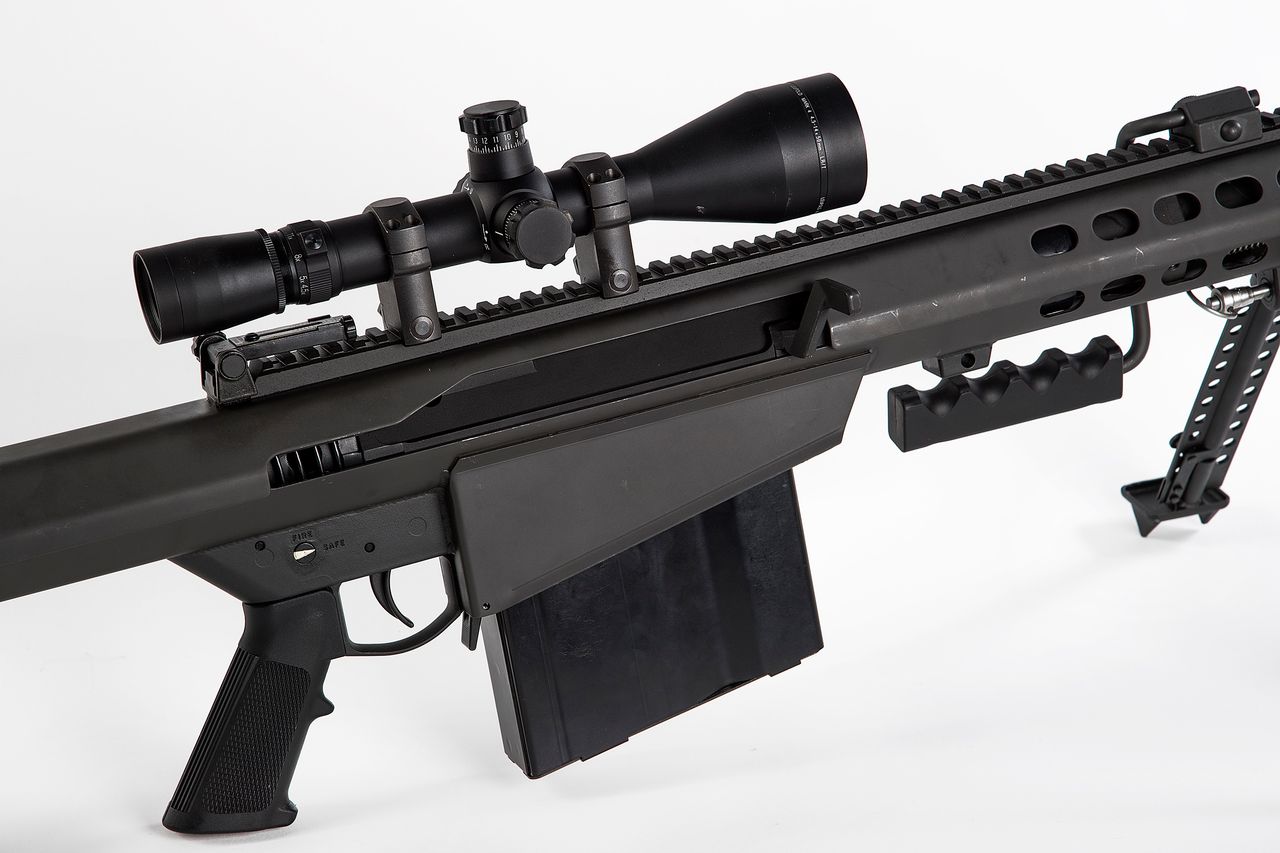
A Barrett M107 is never an impulse buy, and that is exactly the point. In this case, the asking price of $14,795 reflects a rifle system package rather than a bare-bones entry.50 BMG ownership. The listing describes a Barrett M107 US Rifle System chambered in .50 BMG with a 29-inch barrel, 10+1 capacity, parkerized finish, synthetic stock, and a Leupold Mark 4 4.5-14×50 LR/T already included.
That scope matters more than casual shoppers might think. Leupold’s Mark 4 line earned a long military-service reputation, and the 4.5-14×50 LR/T has long been associated with serious duty rifles rather than range-toy builds. When a rifle arrives as a complete system with a proven optic, monopod, sling, and hard case, buyers are paying for a turnkey package instead of starting from scratch.
There is also the Barrett effect. The company’s .50-caliber rifles occupy a rare space where civilian demand, military association, and iconic design all overlap. Plenty of large-bore rifles hit hard, but very few carry the same instant recognition as the M107 pattern, which helps explain why well-specified examples continue to attract premium pricing.
The battlefield pedigree behind the name

The M107’s appeal starts with lineage. Barrett’s official history notes that the Model 82A1 was adopted by the U.S. Army as the M107, and the company says the rifle was recognized by the Army as one of its “Top Ten Greatest Inventions” for soldiers performing their mission. That kind of institutional recognition is a huge part of why the platform remains so culturally visible.
This is not just a rifle that looks military-adjacent. The M107 designation is tied directly to real service use, and that matters to enthusiasts who want a firearm with an authentic operational backstory. Civilian buyers often chase provenance, and few modern long guns offer a backstory as immediately legible as a Barrett .50-caliber semi-auto that traces directly into U.S. military nomenclature.
Barrett has also continued to support the rifle system in military channels. The company announced a U.S. Army contract for the M107 rifle system and related variants, reinforcing that the platform’s identity is not frozen in the past. For collectors, that continuing institutional relevance adds something intangible but powerful: the sense that this is not merely an old design, but a still-recognized piece of modern martial history.
What buyers are actually getting in this package
The package itself helps explain the number. According to the retailer listing, this rifle comes as a complete US Rifle System with the Leupold Mark 4 4.5-14×50 LR/T, a detachable 10-round magazine, monopod, sling, and hard case. For a buyer who wants the military-style presentation and immediate shootability of a factory-configured setup, that is a meaningful value-add
The core dimensions also tell you what class of rifle this is. The listing specifies a 29-inch barrel, 57-inch overall length, and 32-pound weight, making it a true full-size .50 BMG platform rather than a trimmed-down specialist variant. This is a rifle built around stability, energy management, and long-range anti-materiel heritage, not portability in the hunting-rifle sense.
Barrett’s own materials on the M107A1 show how the family evolved, with the later model cutting significant weight compared with earlier guns. That matters because it highlights what some buyers may actually prefer about the heavier classic-style system: less emphasis on modernization, more emphasis on the original look and feel. For collectors, historical character often beats optimization, especially when the rifle is expected to spend as much time admired as fired.
Performance is only part of the story
On paper, the M107 is a recoil-operated semi-automatic .50 BMG rifle designed for extreme range and hard-target capability. In practice, that means tremendous presence, punishing ammunition costs, and a shooting experience that is as much about managing blast, setup, and logistics as it is about pulling the trigger. This is not a casual Sunday plinker, and nobody shopping in this segment should pretend otherwise.
Yet the performance case remains real. A semi-auto .50 BMG with a full-length rail and proven optic opens the door to long-range shooting that is simply outside the normal envelope of most enthusiasts. Even people who never stretch the rifle to its practical limits understand they are buying access to that capability, and aspirational performance is part of what drives demand in prestige firearms.
There is also the emotional factor. A Barrett M107 is one of those rare rifles that delivers immediate mechanical theater the moment it comes out of the case. The scale, the silhouette, the magazine, the optic, and the unmistakable profile all contribute to a sense that this is ownership at the top end of the modern military-style collector market.
Collector demand is fueled by configuration and markings
Not every Barrett commands the same kind of excitement. Collector demand rises when a rifle is close to military issue in look, configuration, and included accessories. That is why listings emphasizing “US Rifle System” language, correct optics, and contract-style presentation tend to get more attention than a stripped commercial package with aftermarket parts bolted on.
There is a powerful collector instinct around guns that feels adjacent to official procurement history. Enthusiasts often place a premium on examples that preserve the right barrel length, correct finish, and recognizable military-style setup. Even when two rifles are mechanically similar, the one that better reflects the institutional image of the M107 generally carries stronger cachet.
That same dynamic appears across the Barrett brand. The company’s .50-caliber rifles have become symbolic objects in American firearms culture, to the point that Tennessee named the Barrett Model 82/M107 the official state rifle. Once a firearm crosses over from niche tool to cultural artifact, price stops being driven by utility alone. Identity, rarity of configuration, and perceived authenticity begin to matter just as much.
The market logic behind a $14,795 tag
At first glance, $14,795 sounds almost surreal, even in the world of premium rifles. But the logic becomes easier to follow when you separate commodity value from collector-system value. A buyer here is paying for the Barrett name, the M107 designation, the .50 BMG chambering, the complete accessory package, and the rifle’s closeness to the image people already carry in their heads when they hear “Barrett.”
The optic package alone is part of that equation. Leupold has explicitly highlighted the Mark 4’s long military service, including its association with the M107 family. That does not mean every buyer is calculating component pricing line by line, but it does mean the included glass reinforces legitimacy in a way a random scope never could.
Then there is scarcity in the broader sense. These rifles are never mainstream-volume products, and complete examples appealing to both shooters and collectors occupy a narrow band of the market. When a firearm serves as a status object, a conversation piece, and a serious long-range platform all at once, the price can remain high even when the practical user base is relatively small.
Who this rifle really makes sense for
The M107 at this price is not aimed at the average firearms owner. It makes the most sense for a collector who values military lineage, a serious long-range enthusiast who specifically wants a Barrett-system .50, or a buyer who has always wanted the iconic semi-auto rather than a cheaper alternative that merely checks the caliber box.
For that buyer, the appeal is easy to understand. This rifle offers name recognition that extends well beyond gun circles, plus a configuration that feels faithful to the platform’s service reputation. It is the kind of purchase people make when they want the real thing, not a substitute that saves money but loses the story.
That is ultimately why $14,795 can feel expensive and rational at the same time. The Barrett M107 is selling power, yes, but also heritage, image, and collector gravity. In a market where authenticity carries real monetary weight, this .50 BMG giant is exactly the sort of rifle that keeps commanding attention long after the sticker shock fades.