It looked compact, almost plain. In the frozen forests of Finland, though, the Suomi KP/-31 earned a reputation that reached far beyond its size.
A gun built for a hard country
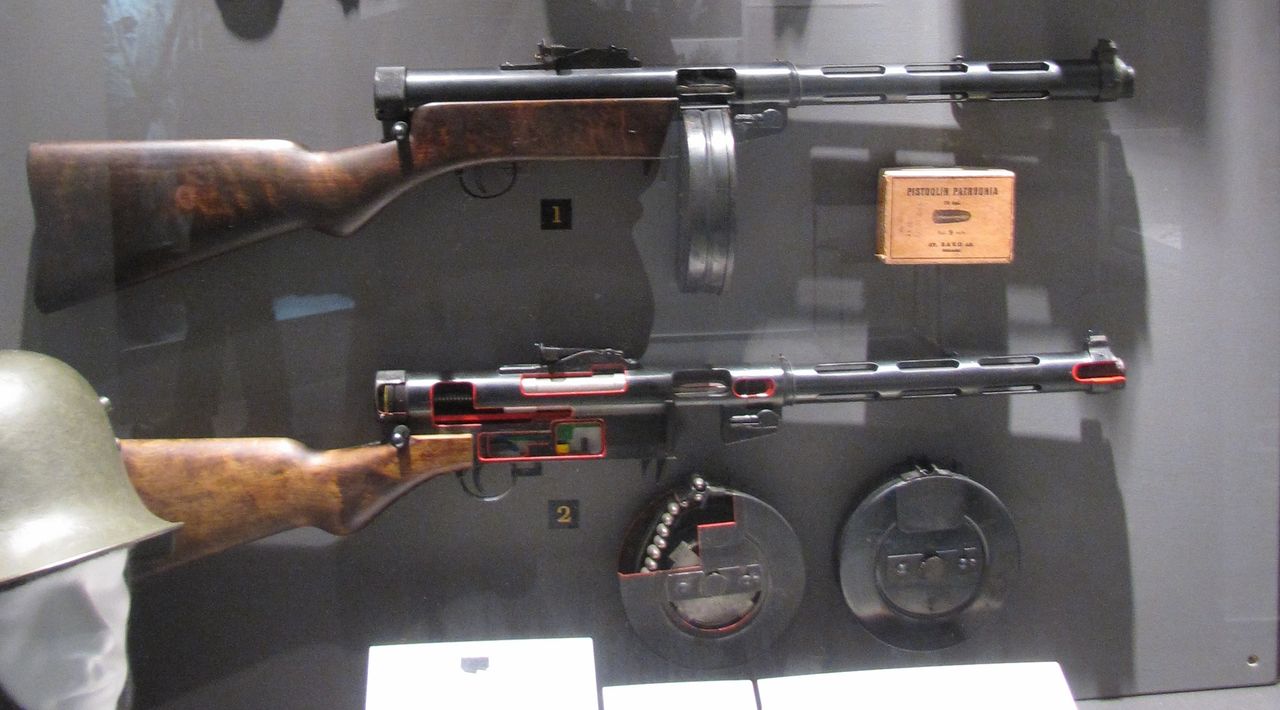
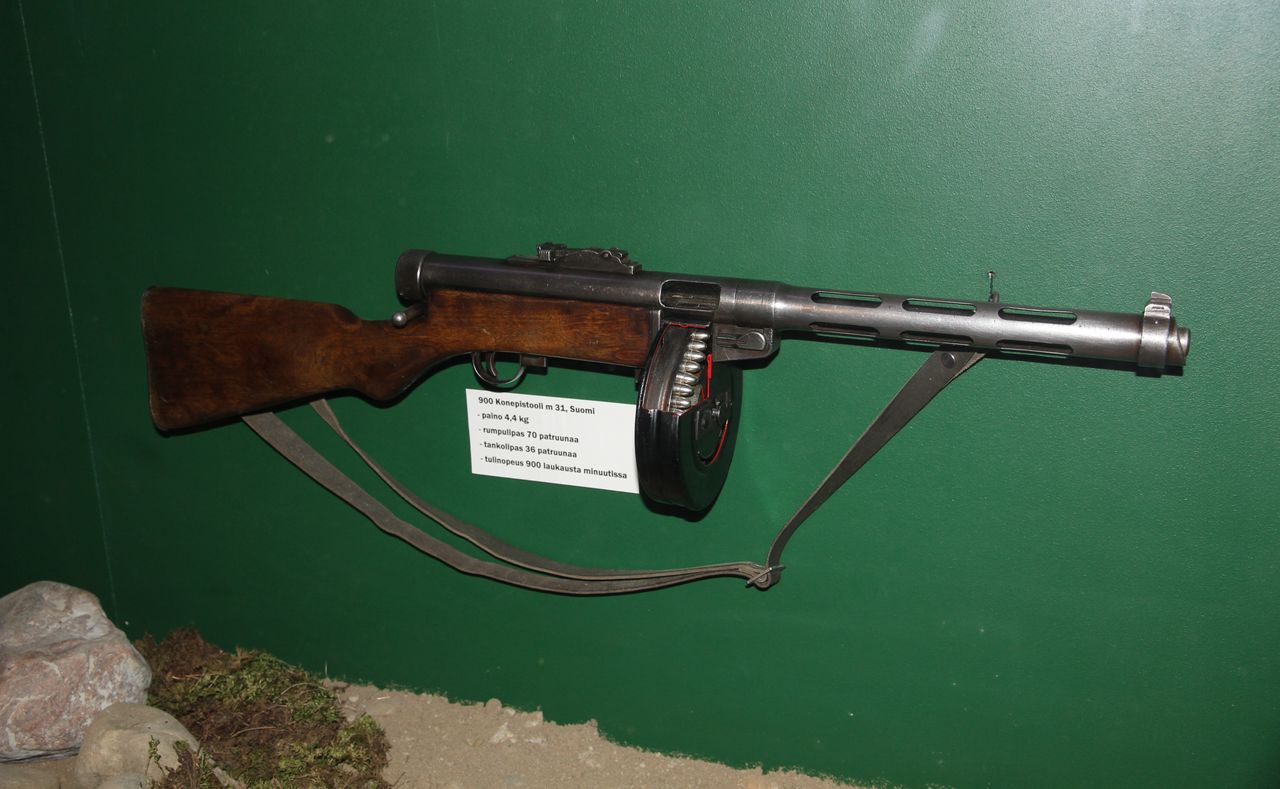
The Suomi KP/-31 was designed by Aimo Lahti and formally adopted by Finland in 1931. It fired the 9×19mm Parabellum cartridge, used a simple blowback action, and weighed about 4.6 kg unloaded, which made it heavy for a submachine gun but also unusually steady in automatic fire.
That weight mattered. The gun’s solid construction helped tame recoil, and soldiers quickly learned it could deliver bursts with better control than many rival designs of the era. Contemporary histories and Finnish military researchers alike note that its accuracy was one of the weapon’s standout traits.
Production was never truly massive by great-power standards. Roughly 80,000 were built, mainly by Tikkakoski, yet that was enough for the KP/-31 to become one of the best-known Finnish small arms of the Second World War.
Why winter fighting changed everything
The Winter War of 1939-1940 forced Finland to fight a much larger Soviet army in forests, on narrow roads, and in extreme cold. Those conditions favored close ambushes, sudden flanking attacks, and short, violent engagements rather than long open-field firefights.
That environment played directly to the KP/-31’s strengths. According to military histories of the conflict, Finnish troops found its cold-weather reliability, rapid fire, and practical accuracy especially useful in hit-and-run attacks against Soviet columns moving through wooded terrain.
Ski troops and light infantry could appear fast, strike at close range, and disappear back into cover. In those moments, a bolt-action rifle was still valuable, but a submachine gun that could pour out automatic fire in a few seconds gave small Finnish units a powerful equalizer.
The magazine made it a fearsome ambush weapon
One reason the KP/-31 hit so hard in combat was its magazine system. The weapon became strongly associated with high-capacity drums, especially the 70-round drum that gave Finnish soldiers a large reserve of fire before reloading under pressure.
That was ideal in snowbound ambushes. A Finnish patrol could open up at close range on a road-bound enemy, cut down the lead and rear elements, and create confusion before the Soviets could organize a response. In winter fighting, those first seconds often decided the whole clash.
The drum was not perfect. Finnish sources note it was complicated and costly to produce, and simpler box magazines had their own reliability issues. Even so, the combination of capacity, controllability, and fast fire made the KP/-31 one of the nastiest close-range weapons of its time.
Tactics mattered as much as machinery
The KP/-31 did not win battles on its own. What made it formidable was how neatly it fit Finnish doctrine: small-unit initiative, local knowledge, camouflage, and relentless movement through terrain the invader struggled to master.
Finnish squads increasingly pushed submachine guns down to frontline troops as the war experience accumulated. Early on, armies everywhere were still figuring out how to employ such weapons, but Finland learned quickly that the KP/-31 belonged close to the point of contact, not held back as a niche specialty arm.
That shift helped offset Soviet numerical strength. In dense woods, where visibility collapsed and range shortened, a soldier carrying a Suomi could deliver sudden volume of fire that felt out of proportion to the size of the unit using it.
Cold-weather reliability was not just a slogan
Winter weapons had to do more than fire on a test range. Metal contracted, lubricants thickened, snow packed into mechanisms, and exhausted soldiers handled guns with gloves, numb fingers, and freezing breath turning to ice on steel.
Here the Suomi developed its hard-earned reputation. Accounts from wartime historians consistently describe it as rugged and dependable in severe cold when properly maintained. Its sturdy build, enclosed barrel jacket, and generally robust manufacture helped it survive the punishment of field use in arctic conditions.
There were tradeoffs, of course. The weapon was not light, and hauling drums, ammunition, and winter gear across deep snow was no small burden. But Finnish troops often accepted that cost because the gun gave them confidence when an ambush had to work the first time.
The Suomi’s legacy went well beyond Finland
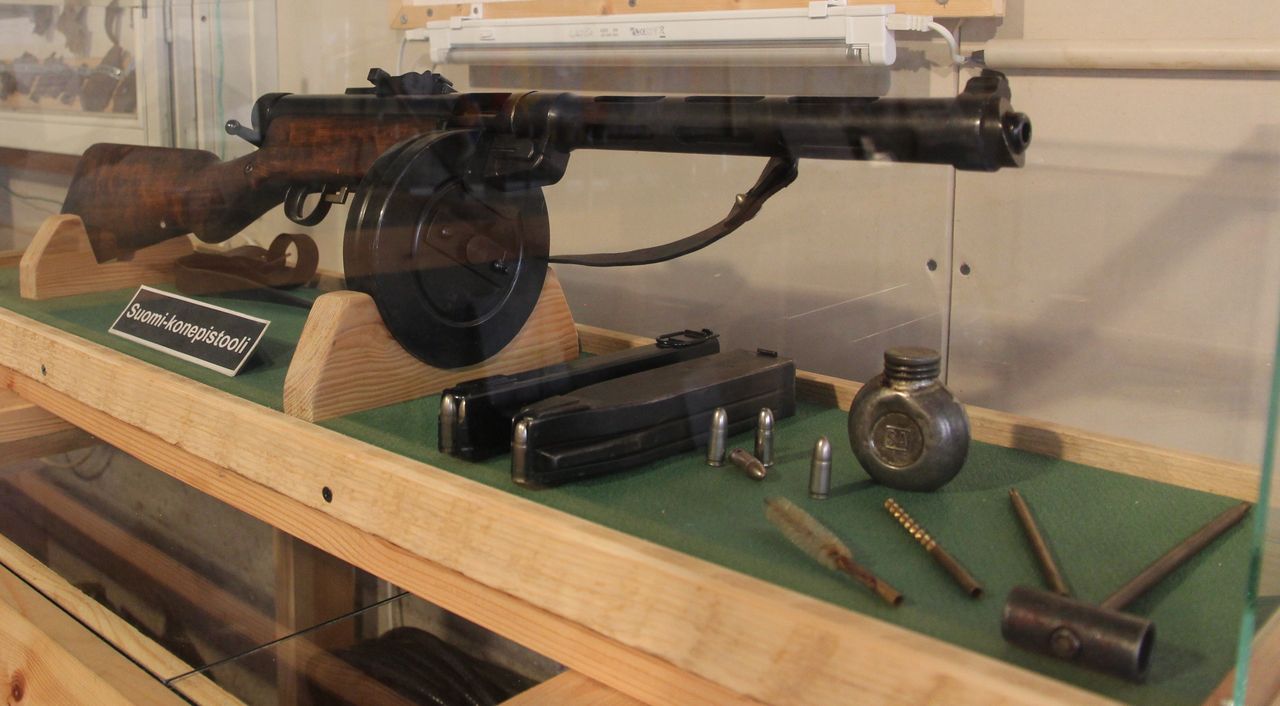
The KP/-31 left a mark larger than Finland’s wartime production numbers suggest. Historians have long argued that Soviet forces, initially skeptical of submachine guns, were strongly impressed by Finnish use of the weapon during the Winter War.
That lesson mattered. Later Soviet designs, especially drum-fed wartime submachine guns such as the PPSh-41, reflected the growing belief that massed automatic fire had real value in close combat. The Suomi was not the only influence, but it was clearly one of the important ones.
In the end, the KP/-31 became a symbol of a very Finnish kind of battlefield problem-solving: practical, tough, and suited to brutal conditions. It was heavy, expensive, and not especially glamorous, yet in winter forest war, it was exactly the right tool.