For a weapon that looked like the future, the Gatling gun spent years trapped in the past. It could spit out fire faster than most officers could even imagine, yet the armies that bought it often had no clear idea what to do with it.
A machine gun before the machine-gun age
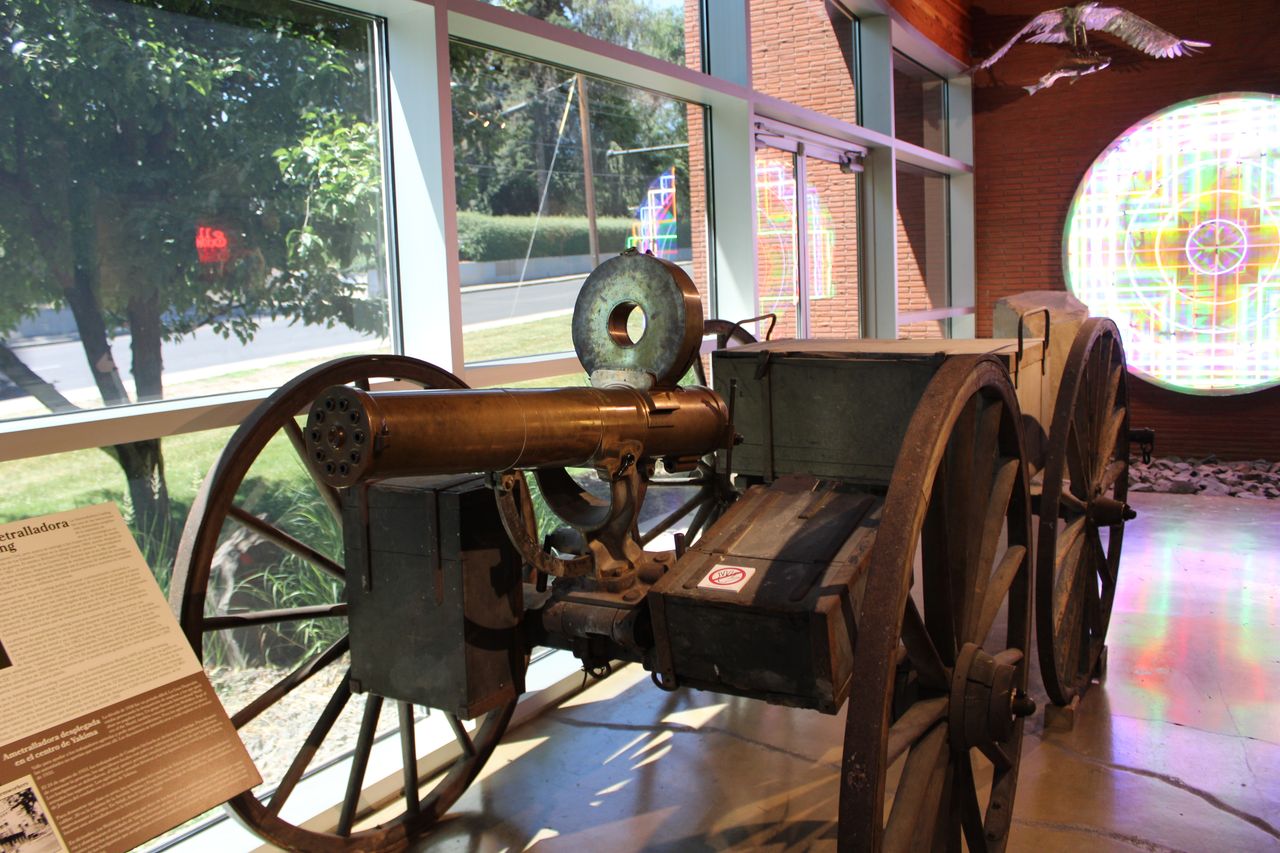
Richard Jordan Gatling patented his famous gun in 1862, during the American Civil War. It used multiple rotating barrels and a hand crank, with one operator turning the mechanism while another fed cartridges into the weapon. According to the U.S. Army Center of Military History, early models already offered rates of fire that seemed astonishing for the era, and Gatling kept refining them almost immediately after the first patent.
That should have made the weapon irresistible. Instead, many officers saw it as a curiosity, an expensive novelty, or an awkward substitute for artillery. The problem was not only the gun itself. Military institutions were still organized around muzzle-loaders, line formations, horse transport, and commanders trained to think in terms of volleys rather than sustained mechanical fire.
Gatling himself claimed he had humanitarian motives. He argued that if one machine could do the work of many men, armies might shrink and disease exposure might fall. That idea now sounds grimly ironic, because the gun’s real legacy was to preview a much deadlier industrial style of war.
Why armies hesitated
The first obstacle was trust. Senior ordnance officials had already rejected other repeating arms, and one early U.S. ordnance chief reportedly dismissed the whole idea with a shrug, believing a traditional weapon killed just as effectively. In that environment, a hand-cranked gun with moving parts looked risky, fragile, and maybe unnecessary.
The second obstacle was doctrine. A Gatling gun was not quite artillery and not quite infantry. It needed ammunition supply, trained crews, and some protection, but it also invited aggressive forward use. Armies of the 1860s and 1870s had few field manuals explaining how to integrate that kind of weapon into formations built around cannon batteries and rifle lines.
Then there was mobility. Mounted on wheeled carriages, Gatlings could move, but not effortlessly over broken ground. George Armstrong Custer’s refusal to take Gatlings on the Little Bighorn campaign became famous precisely because officers worried such guns could slow a fast-moving column. In frontier warfare, speed and rough-country movement often mattered more than theoretical firepower.
Early combat showed both promise and confusion
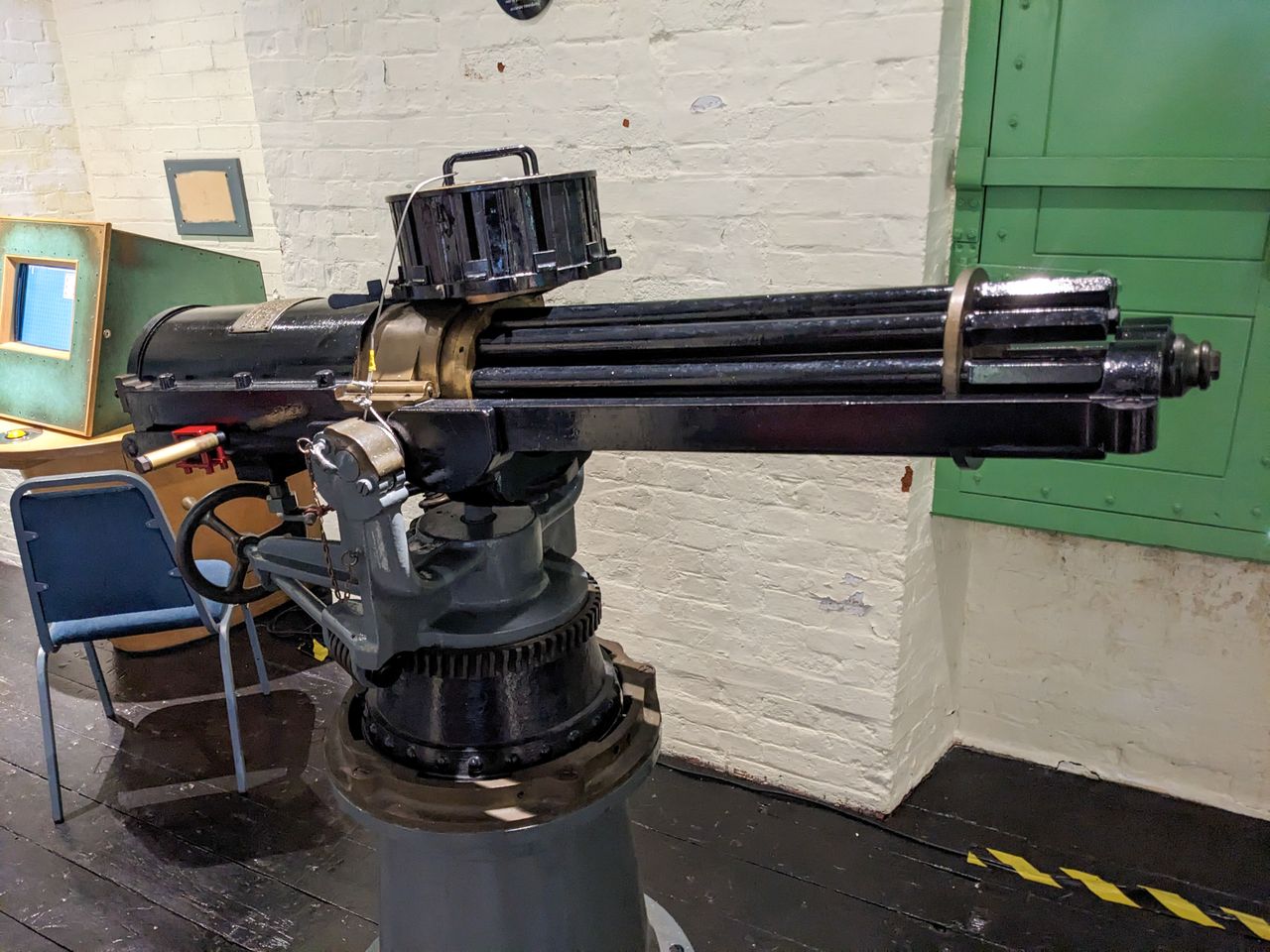
The Gatling saw only limited Civil War service, including guns privately purchased by Maj. Gen. Benjamin Butler and used around Petersburg. That small role mattered. It showed the weapon could work, but it did not produce the kind of dramatic battlefield transformation needed to overcome institutional skepticism all at once.
Elsewhere, imperial wars provided clearer demonstrations. During the Anglo-Zulu War, British forces used Gatling guns at Ulundi in 1879, where the National Army Museum notes their long-range fire cut down attacking Zulu forces. The lesson seemed obvious: concentrated rapid fire could break mass assaults before they closed the distance.
But even those victories could mislead. Colonial battlefields often pitted industrial armies against opponents with very different weapons and tactics. A gun that looked decisive in Zululand did not automatically solve the harder question of how to use rapid-fire weapons against entrenched, disciplined, rifle-armed opponents who could shoot back effectively.
Technology moved faster than tactics
What the Gatling really exposed was a gap between invention and doctrine. Armies could purchase new hardware faster than they could rewrite field tactics, officer education, supply systems, and command habits. A weapon that delivered hundreds of rounds per minute demanded new thinking about cover, dispersion, suppressive fire, and coordinated movement.
Those ideas were still immature in the late 19th century. Many commanders continued to think offensively in terms of courage, momentum, and shock. They appreciated firepower, of course, but often treated it as support for traditional assaults rather than as a force that fundamentally changed how troops should advance, defend, and survive.
The Gatling also sat in an awkward technical middle ground. It was a precursor to the machine gun, but not fully automatic. The U.S. Army’s own historical publications draw that distinction clearly: mechanically powered Gatling-type guns appeared in the Civil War era, while truly automatic machine guns emerged later, especially in the 1880s and beyond.
San Juan Hill proved the idea at last
By the Spanish-American War, the U.S. Army had more practical experience, and officers like Lt. John H. Parker used Gatlings in a way that looked much more modern. During the fighting around San Juan Hill on July 1, 1898, Army histories describe Parker’s Gatling detachment providing close support for the American advance. That was a major conceptual leap.
Instead of sitting far to the rear as a kind of odd little artillery piece, the guns were pushed forward to help infantry move. American accounts describe Gatling fire helping suppress Spanish defenders in trenches and blockhouses. The result was not just raw destruction. It was a preview of the battlefield logic that would later define machine-gun support, base-of-fire tactics, and combined-arms thinking.
Even then, the lesson arrived only partially learned. The full horror and full tactical implications of machine-gun warfare would not become undeniable until the automatic weapons of the early 20th century met mass armies in Europe. The Gatling had arrived early, and the world needed decades to catch up.
The real legacy of the Gatling gun
The most important thing about the Gatling gun is not that it instantly changed war. It is that it did not. That failure tells us something profound about military history: technology alone rarely transforms battle on contact. Institutions, training, logistics, and imagination have to change with it.
In that sense, the Gatling was less the first modern battlefield master than the first warning. It showed what industrial firepower could become, long before generals fully understood the consequences. Later machine guns would dominate defensive warfare, tear apart frontal assaults, and reshape armies from the squad level upward.
So the Gatling gun’s story is not about a miracle weapon that conquered the world overnight. It is about a machine that arrived before doctrine, before organizational readiness, and before most commanders were prepared to think mechanically about killing. That is exactly why its history still matters.