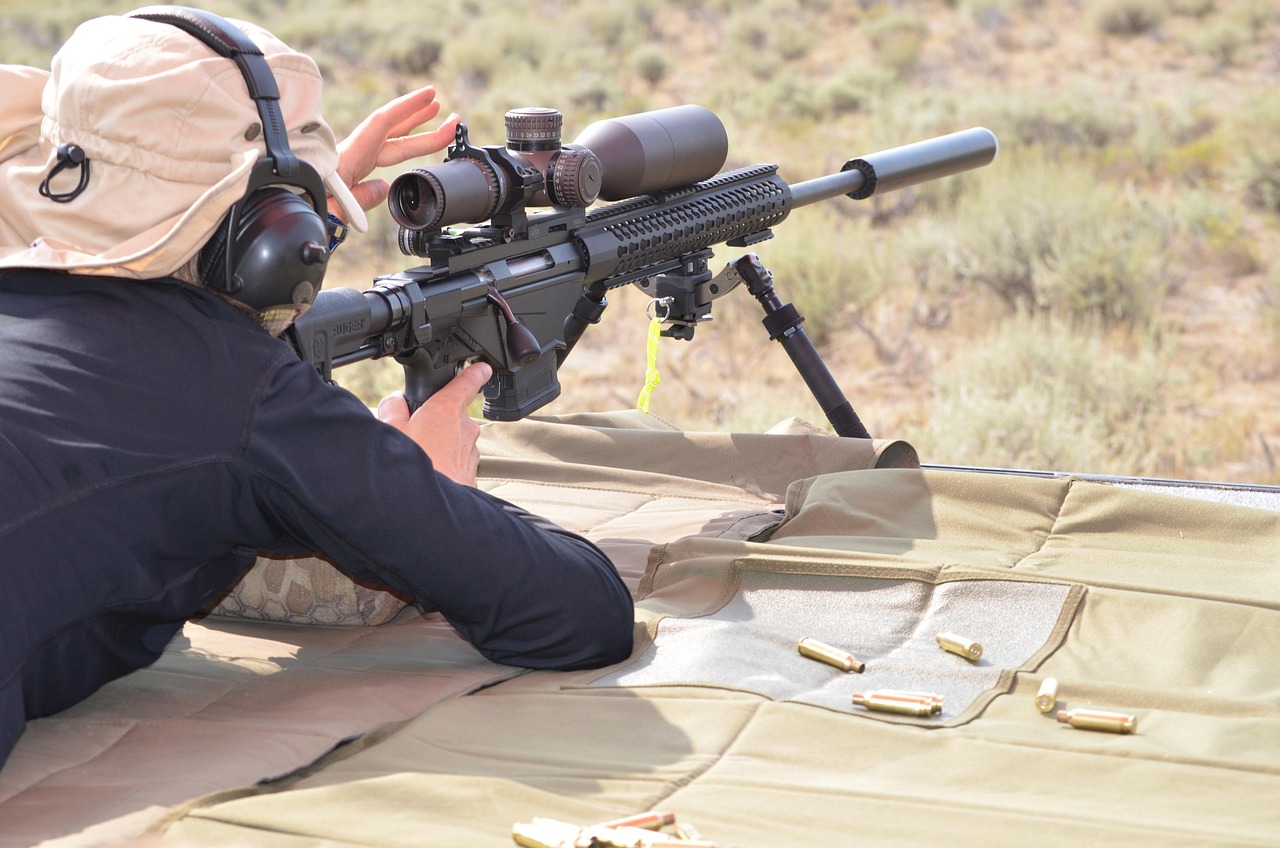
The surprise in 2025 was not that suppressor reform came back. It was that the pitch suddenly sounded familiar to people far outside the usual gun-rights crowd.
What changed was not only politics. It was the frame.
The debate stopped sounding like a niche gun-world argument

For years, suppressor reform lived in the same political bucket as other firearms fights: intensely partisan, industry-backed, and easy for opponents to caricature. In 2025, that changed because the argument became easier for casual observers to understand. Instead of centering identity or absolutist Second Amendment rhetoric, supporters talked about a product that reduces blast noise, limits hearing damage, and is already legal in most states.
That shift mattered because the public discussion around suppressors has always suffered from a language problem. The word “silencer” still carries a Hollywood image of whisper-quiet gunfire, even though real suppressors do not make firearms silent. Reporting from the Associated Press noted that the House Republican proposal in 2025 would remove suppressors from the National Firearms Act framework, including the $200 tax and an added layer of federal processing, which made the issue sound less like a culture-war symbol and more like a question of whether an old regulatory category still fits the product.
The more ordinary the product looked, the more ordinary the reform argument sounded. That did not automatically make the proposal popular. But it did make it legible to suburban voters, hunters, recreational shooters, and even some non-gun owners who otherwise tune out firearms policy fights. That is a far bigger change than the industry expected.
The strongest argument was not about rights, but about hearing
The real breakthrough was that suppressor reform became easier to explain as a hearing and safety issue than as a pure gun-rights issue. A peer-reviewed review in the National Library of Medicine found that suppressors reduce gunshot noise exposure and lower auditory risk, even though they should not be treated as making firearms fully “hearing safe.” That nuance actually helped the mainstream case, because it sounded measured instead of ideological.
Public-health framing works when it feels concrete. Most Americans have experienced loud noise as a real physical problem, whether from machinery, concerts, or power tools. Recreational firearms create extremely intense peak sound levels, and the hearing literature has long treated impulse noise as a serious hazard. When supporters emphasized that suppressors are a noise-mitigation device, not a magic stealth accessory, they tapped into a form of common sense that resonates beyond gun shops and advocacy groups.
This is where the firearms industry underestimated the moment. It had spent years assuming suppressor reform would rise or fall with hard-core gun politics. In reality, the argument gained traction once it sounded like a familiar consumer-safety discussion. People did not need to become gun enthusiasts to understand why reducing blast noise might be a legitimate policy goal.
Bureaucracy became part of the story, and that widened support.t
Another reason support broadened in 2025 is that the policy could be framed as a complaint about process, not just principle. The ATF says it received 1,170,028 National Firearms Act registration and transfer applications in fiscal year 2024 alone. That number reinforced the impression that suppressors sit inside an administrative system handling a very large volume of lawful transactions.
Once the issue is presented that way, the politics shift. The question stops being “Should dangerous devices be tightly controlled?” and becomes “Why does a common legal accessory still sit inside a 1934 tax-and-transfer regime?” Even people who were not ready to endorse full deregulation could see why supporters called the framework outdated, cumbersome, or mismatched to present-day consumer behavior.
The Hearing Protection Act also reappeared in the 119th Congress in 2025, while a broader Republican tax package attempted to move suppressor relief through budget legislation. According to AP reporting, the Senate parliamentarian later ruled that key suppressor and short-barreled firearm provisions would need to meet a 60-vote threshold, slowing that route. But the mainstreaming had already happened. Once regulatory friction becomes the headline, the reform effort no longer looks like a fringe ask.
The market got bigger, more visible, and more normal
Mainstream support also grew because suppressors were no longer a small, exotic corner of the firearms market. Industry and regulatory data both point to a category that has expanded rapidly. Congressional Research Service material cited more than 1.36 million silencers registered to federal firearms licensees, law enforcement, and unlicensed individuals in figures it discussed, while later reporting based on federal records showed a much larger installed base by 2024.
At the same time, the National Shooting Sports Foundation’s 2025 suppressor owner research indicated that roughly 40% of respondents bought their most recent suppressor in 2024. That suggests a buying wave recent enough to change who the typical suppressor customer is. The owner is not just a collector, tactical hobbyist, or niche enthusiast. Increasingly, it is a mainstream consumer who buys one for range use, hunting comfort, or noise reduction.
Visibility changes politics. Once more, re ordinary gun owners know someone who owns a suppressor legally, the old mystique fades. Products become harder to demonize when they are seen as routine equipment used by neighbors rather than props from action movies. That normalization, more than any single lobbying campaign, helped expand support in 2025.
Support expanded because the culture-war temperature dropped just enough
There is a second-order reason suppressor reform traveled farther in 2025: it slipped into a period when some voters were more open to selective deregulation arguments, especially when they could be framed as technical cleanups rather than sweeping ideological revolutions. That does not mean the country suddenly embraced gun deregulation as a whole. Pew’s broader gun-policy findings still show that the public is generally more supportive of restrictions like background checks than of loosening gun laws.
But suppressors occupy an unusual space. They are controversial enough to attract attention, yet specific enough to be argued on narrow grounds. Supporters benefited from that. They were not asking the public to rethink every firearms rule at once. They were asking whether one category of item, already widely legal, should continue to carry a Depression-era tax treatment and specialized transfer process.
That is politically more manageable than the industry itself may have expected. In fact, the more suppressor reform was discussed as a narrow, practical carveout, the less it triggered the immediate all-or-nothing response that usually defines national gun debates. In a polarized country, issue-specific arguments can travel farther than identity-heavy ones.
Opponents helped prove the issue had become mainstream

A curious sign of mainstreaming is that opposition sharpened. Gun-control groups and some law-enforcement voices pushed back hard in 2025, arguing that suppressors remain dangerous because they can make it harder for first responders and bystanders to identify gunfire. AP’s June coverage captured that reaction clearly after the Senate parliamentarian’s ruling. The pushback showed that suppressor reform was no longer being treated as symbolic legislation destined to go nowhere.
That matters because mainstream issues attract organized counterarguments. Once an issue becomes electorally relevant, opponents stop dismissing it and start contesting it in detail. The suppressor debate reached that point in 2025. It was no longer just an internal gun-industry priority. It had become a visible public-policy fight with real stakes, competing expert claims, and a broader audience paying attention.
In a strange way, the resistance validated the shift. If suppressor reform had remained marginal, there would have been little need for an aggressive public campaign against it. The fact that it drew serious national rebuttal meant it had crossed into a more consequential tier of debate.
The real reason was normalization, not persuasion alone
So what is the real reason suppressor reform got more mainstream support than the firearms industry expected in 2025? It was not simply that advocates became more persuasive. It was that the country had already moved closer to seeing suppressors as normal consumer products trapped inside an old regulatory frame.
That normalization came from several directions at once: years of legal ownership in most states, a larger installed base, faster and more visible NFA processing, more hearing-focused messaging, and a cleaner argument against outdated administrative burdens. By 2025, the reform case no longer relied solely on committed gun-rights voters. It could appeal to people who dislike unnecessary bureaucracy, understand noise risk, and do not automatically equate suppressors with criminal intent.
That does not mean reform became consensus policy. It did not. The politics remain divisive, and federal change still faces procedural and substantive obstacles. But the surprise of 2025 is that suppressor reform stopped looking weird to many Americans. Once that happened, broader support was no longer so surprising after all.