Some rifles fade away because they fail. Others disappear because they arrive far too early.
A Rifle From The Future, Stuck In 1945
The oddball in this story is the Model 45A, a little-known prototype photographed in Manila in October 1945. According to Forgotten Weapons, it appears to have been a one-off concept put together by Army Ordnance personnel in the Philippines just as World War II ended. That alone makes it unusual, because most serious U.S. rifle development was centered at Springfield Armory, not improvised at the edge of the Pacific.
What grabbed attention then, and still does now, was the shape. The Model 45A wore a pistol grip, a compact layout, and a visual profile that looks startlingly modern in surviving photos. In an era defined by walnut stocks and conservative lines, this thing looked like it had wandered in from a much later generation.
That futuristic silhouette may also explain why the rifle became more of a curiosity than a contender. Several firearms historians have argued that, based on the available photographs, it may not even have been a working firearm at all. Even so, the concept captured a real postwar question: what should the next infantry rifle look like?
Why The Army Was Not Ready For It
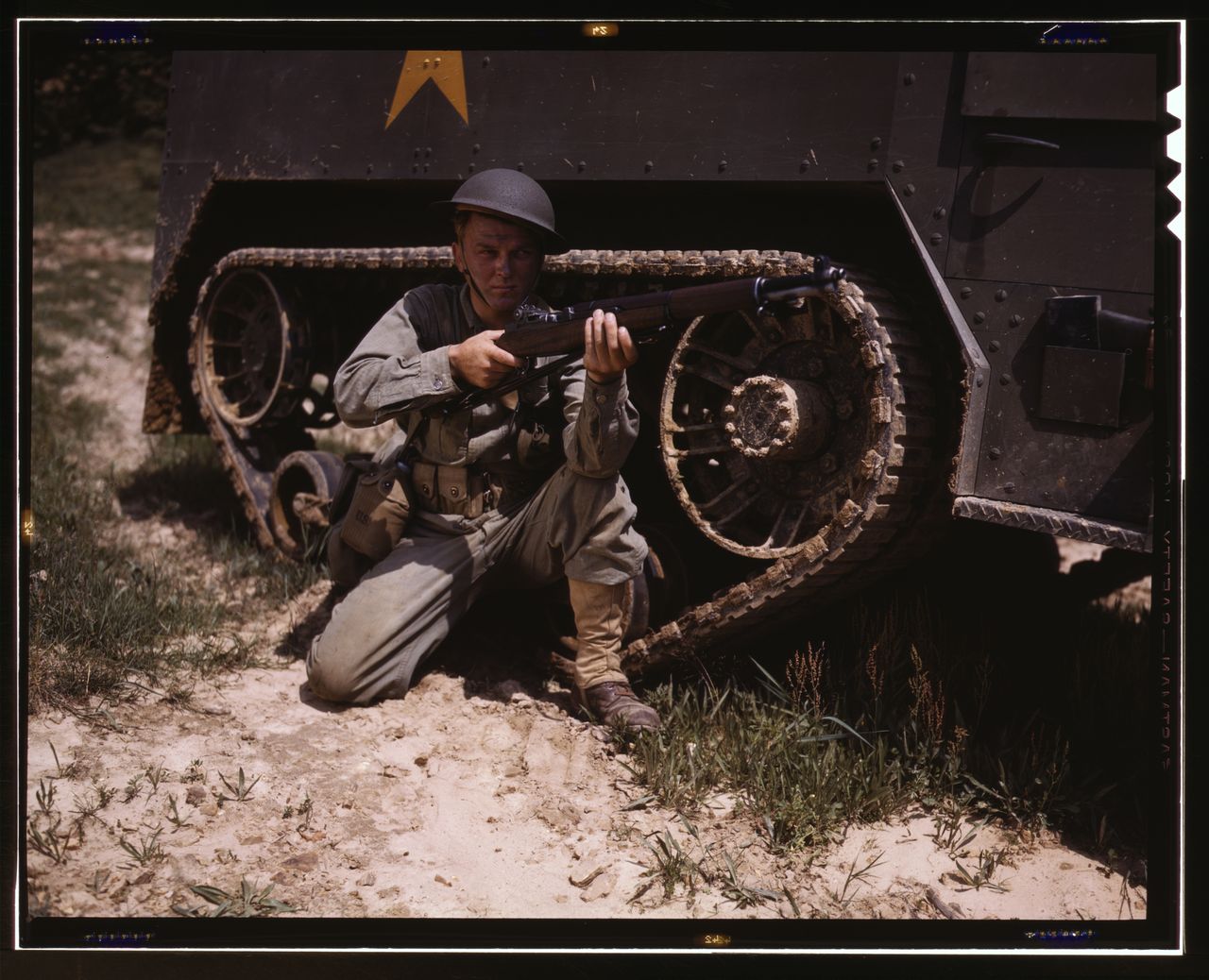
In 1945, the Army already had a battle-proven standard rifle in the M1 Garand. The Garand had earned enormous credibility during the war, and the Ordnance establishment was focused on refining known systems rather than embracing something radically unfamiliar. A strange-looking prototype had to do more than work; it had to clearly outperform a weapon that had already won trust in combat.
That was a high bar. As Forgotten Weapons notes in its reporting on the T25 program, by March 1945 U.S. small-arms planners were already studying a future “light rifle” concept under designer Earle Harvey. But those efforts still came through formal channels, testing programs, and conventional engineering logic rather than a visually shocking one-off like the Model 45A.
Institutional culture mattered too. Armies tend to reward reliability, standardization, and supply-chain sanity. A rifle that looked radically different from the Garand risked being seen not as visionary, but as a logistics headache waiting to happen.
What Made It Look So Strange
The most obvious feature was the pistol grip, which looked almost alien on a 1945 military long gun. Today that detail feels ordinary, but at the time it suggested a new way of handling recoil, controlling rapid fire, and packaging a fighting rifle into a more compact form. The Model 45A hinted at the ergonomic thinking that would later become normal.
Its receiver area also seemed unusual, with a cover that some observers have described as crude or flimsy. That tension is part of the rifle’s mystique. It looked advanced in concept, yet rough in execution, almost like a workshop mock-up trying to sell a bold idea before the engineering had fully caught up.
That mismatch probably hurt it. Soldiers and ordnance officers may tolerate ugly, but they dislike uncertainty. If the Model 45A looked experimental to the point of fragility, its futuristic styling may have worked against it rather than for it.
The Postwar Moment Changed Everything
Timing was another problem. Japan surrendered in 1945, and the immediate wartime urgency behind emergency weapons development evaporated almost overnight. As the T25 history shows, Army planners quickly shifted toward longer-term rifle studies, including lighter weapons and shorter cartridges that would eventually influence the 7.62 NATO family.
In other words, the Army was willing to think ahead, just not recklessly. It wanted future rifles backed by endurance trials, technical reports, and production logic. That is why structured programs such as Harvey’s T25 moved forward, while oddball concepts on the margins struggled to gain traction.
The Model 45A was trapped in that transition. Had it appeared earlier, it might have been dismissed as impractical wartime improvisation. Appearing after victory, it faced a bureaucracy suddenly patient enough to demand proof.
Was It Brilliant Or Just A Mock-Up?
That question is still unsettled. Forgotten Weapons has noted that many writers doubt the Model 45A was ever a live, functioning arm. The surviving evidence is mostly photographic, and there is no widely cited Army test record placing it in serious competitive trials against mainstream designs.
Still, writing it off entirely would miss the point. Prototype history is full of dead ends that forecast the future better than accepted service weapons do. The Model 45A’s value may lie less in what it achieved and more in what it anticipated.
It previewed a world in which military rifles would become shorter, more ergonomic, and more adaptable. Even if it never fired a meaningful shot, it may have seen the shape of tomorrow more clearly than many official designs around it.
Why Collectors And Historians Still Care
Collectors love the Model 45A because it compresses a big story into a single weird object. It reflects the uncertainty of 1945, when the U.S. Army knew the Garand would not be the last word, but had not yet agreed on what came next. That makes the rifle a snapshot of institutional imagination at the exact moment war gave way to planning.
Historians care for a different reason. The Model 45A reminds us that weapons development is not a straight line from old to new. Sometimes the future appears in awkward, half-formed shapes that established systems are simply not ready to accept.
And that is why this strange rifle still matters. It may have looked too odd for the Army in 1945, but from a modern perspective, odd was exactly the point.