It looks old, awkward, and a little anachronistic. But the Nagant M1895 pulled off a mechanical trick that made gun designers pay attention for generations.
A revolver built around one unusual idea
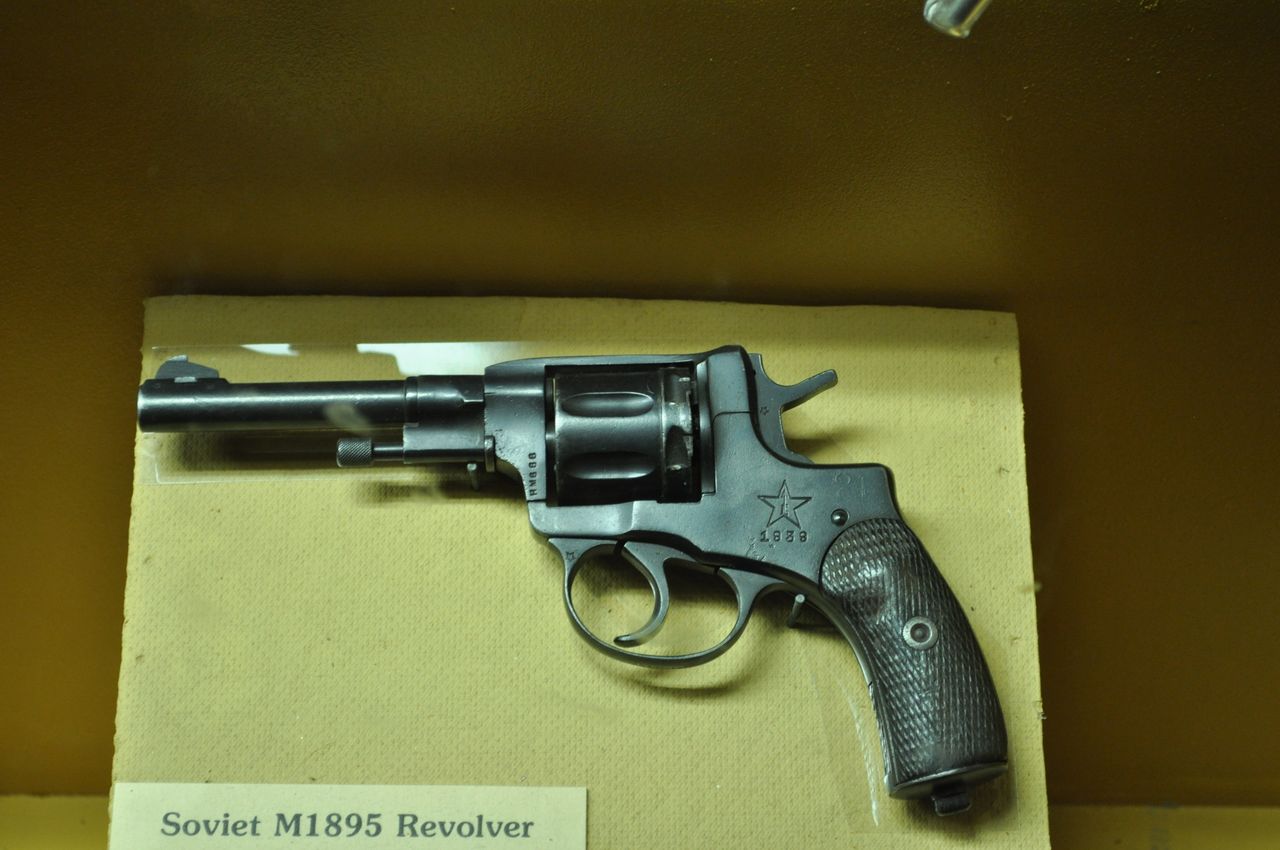
The Nagant M1895 was adopted by Imperial Russia in 1895 as a seven-shot service revolver, replacing earlier handguns in military use. It was designed by the Belgian Nagant brothers, Léon and Émile, whose work also intersected with the broader story of Russian arms development in the late 19th century. According to Forgotten Weapons, the Russian requirements called for a seven-round revolver that could use smokeless powder and be economical to manufacture.
What made the M1895 special was not its basic layout. At first glance, it was a gate-loaded, solid-frame revolver with more in common with older 19th-century sidearms than with swing-out-cylinder revolvers that would become standard elsewhere. It was slower to load and unload than later designs, and even in its own era, it could feel conservative.
Its brilliance was hidden in the relationship between the cylinder, the barrel, and the cartridge. In most revolvers, there is a small gap between the front of the cylinder and the rear of the barrel. When the gun fires, some gas escapes sideways through that gap. The Nagant was engineered so that the cylinder moved forward during the firing cycle, reducing that gap dramatically and creating the famous gas seal.
That sounds like a small detail, but it changed the revolver’s behavior in a way almost no rival design could match. Rock Island Auction notes that ordinary revolvers lose gas and burning powder at the cylinder gap, while the Nagant’s system was meant to close it off during firing. That one feature turned a quirky service pistol into one of the most mechanically distinctive revolvers ever fielded.
How the gas-seal system actually worked
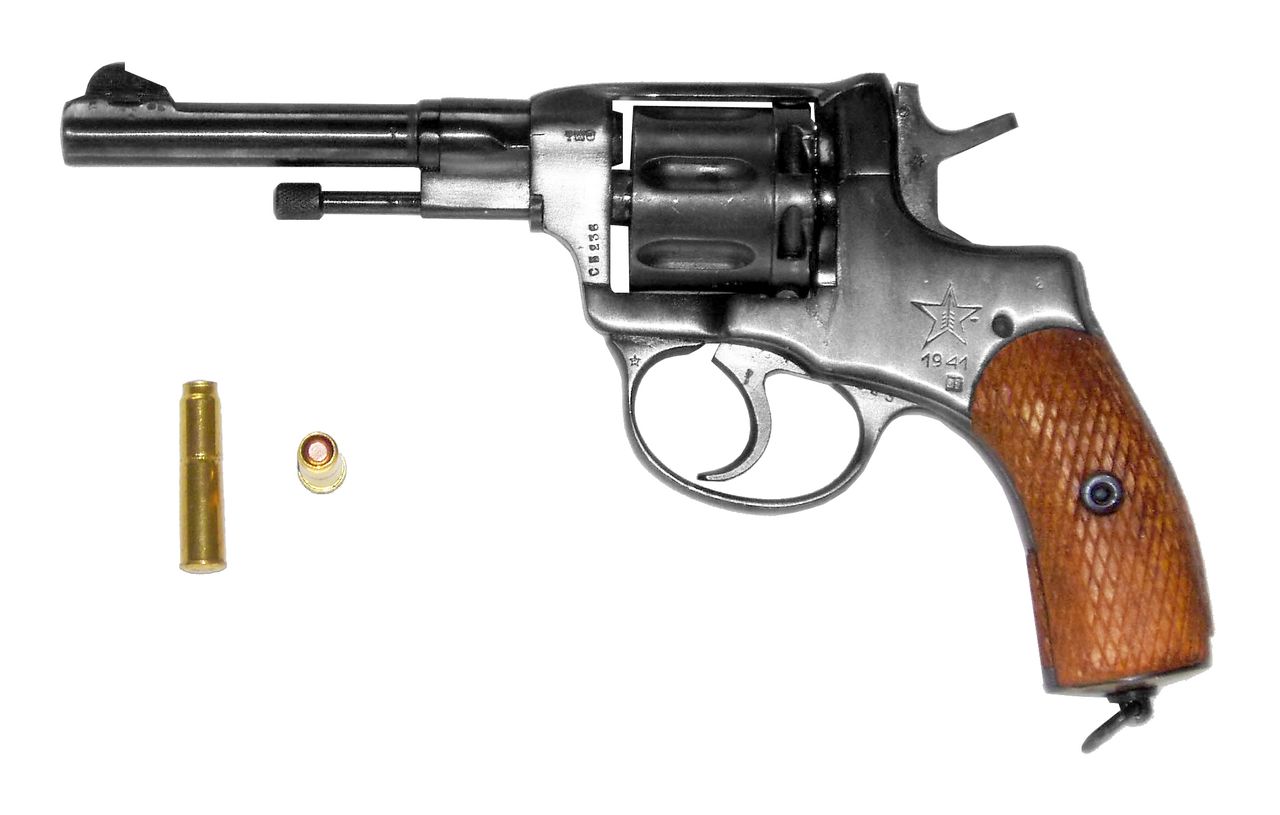
The M1895 did not rely on the cylinder alone. Its special behavior depended just as much on its ammunition, the 7.62x38R cartridge. Unlike a normal revolver round, the Nagant cartridge seated the bullet deep inside an unusually long case, with the case mouth extending beyond the projectile. That odd shape looked strange to anyone familiar with standard revolver cartridges, but it was essential to the gun’s sealing system.
When the shooter cocked the hammer or pulled through the double-action trigger stroke, internal parts cammed the cylinder forward. As the chamber aligned with the barrel, the mouth of the cartridge case entered the rear of the barrel. On firing, the case expanded and helped seal the junction. Forgotten Weapons describes this as the key reason the design minimized the usual gas escape seen in revolvers.
Mechanically, that was clever. Practically, it came with trade-offs. The trigger pull, especially in double action, became famously heavy because it had to rotate the cylinder, advance it forward, and fully cock and release the hammer. Anyone who has handled a Nagant notices that effort immediately, and it is one reason the design never became a mainstream template for revolver development.
Still, from an engineering standpoint, the system was a genuine achievement. Designers had long accepted the cylinder gap as a built-in limitation of the revolver platform. The Nagant did not eliminate every downside of the type, but it attacked a problem most gunsmiths simply worked around. That made it less elegant in the hand, yet more ambitious on the drafting table.
Why other revolvers could not do the same thing
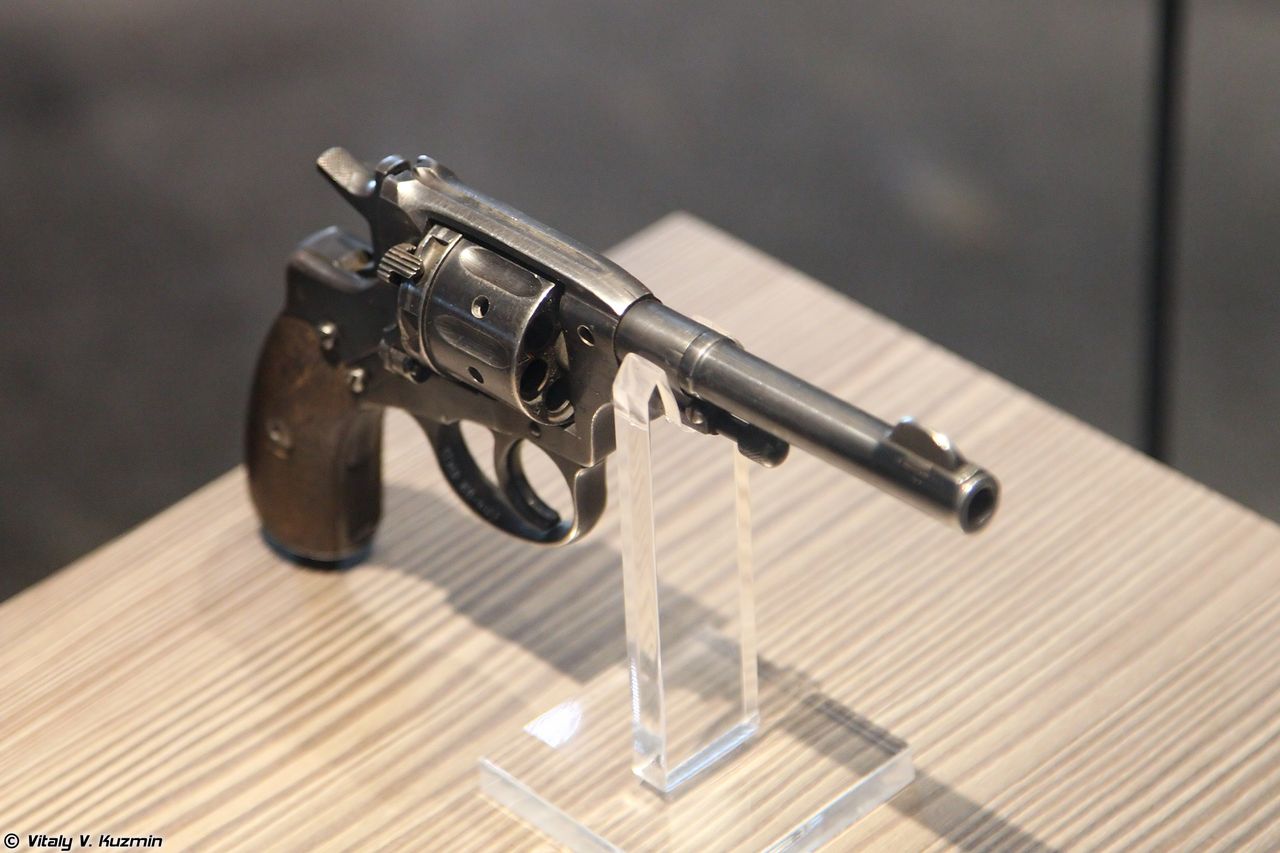
The usual revolver cylinder gap is not an accident or a flaw in the cheap sense of the word. It is a necessary part of how most revolvers function. The cylinder has to rotate freely, and there must be enough clearance to keep fouling, heat expansion, and manufacturing tolerances from binding the gun. That practical gap is why revolvers are often admired for reliability, but it also guarantees some gas loss.
Because of that escaping gas, a conventional revolver can never behave quite like a sealed-breech firearm at the moment of discharge. Hot gases and unburned powder vent from the side before they ever reach the muzzle. According to Rock Island Auction and a U.S. Army small arms design text hosted by Forgotten Weapons, this is the main reason a standard revolver cannot be completely silenced in the way a closed system can.
The Nagant’s feature was therefore more than a novelty. It addressed a fundamental limitation that nearly every other revolver simply accepted. Plenty of revolvers were faster to reload, simpler to train with, or stronger in modern calibers. But none of those traits answered the specific problem of gas leaking out of the cylinder gap.
That is why the M1895 stands alone in gun lore. There have been a few other attempts at gas-reducing revolving systems, but they were rare, limited, or only partial solutions. The Nagant reached mass military service with a working answer, and that made it exceptional. Even people who do not especially like the gun usually concede that its central idea was real, practical, and genuinely different.
The suppressor angle made it famous

If one sentence explains the M1895’s legend, it is this: it was one of the very few revolvers that could be effectively suppressed. That point comes up again and again in firearms writing because it goes against everything shooters expect. The common rule is that suppressors and revolvers do not mix, since noise escapes at the cylinder gap instead of being contained for the suppressor to manage at the muzzle.
The Nagant changed that equation. Because the cylinder moved forward and the special cartridge helped seal the barrel gap, much less gas escaped sideways at the instant of firing. Forgotten Weapons and Guns.com both note that this made the M1895 an unusually viable host for a suppressor, something almost unheard of in service revolvers.
This fact helped cement the gun’s mystique, especially in stories about covert use and Soviet security services. Some of those stories have been dramatized or exaggerated over time, as gun lore often is. But the underlying technical point is sound: the gas-seal system gave the Nagant a suppressor compatibility that ordinary revolvers lacked.
That does not mean it became the perfect quiet sidearm. The ammunition was not especially powerful, the trigger was heavy, and the platform was dated even before the 20th century was far advanced. But in a narrow and fascinating category, the M1895 could do something that other revolvers simply could not. For firearms history, that is enough to make it unforgettable.
Service history gave the design a long life
A clever mechanism alone does not guarantee military success, yet the Nagant M1895 stayed in service for decades. Forgotten Weapons notes that the first 20,000 revolvers were made in Liège, Belgium, before Russian production shifted to Tula once manufacturing capacity opened up. Production continued for years, and the revolver remained visible through the Imperial period, the Russian Revolution, and well into the Soviet era.
That longevity says as much about logistics and institutions as it does about the gun itself. Armies often keep older handguns around because sidearms are secondary weapons, and replacing them is rarely the first budget priority. A rugged, already-standard revolver with an established ammunition supply can survive much longer than its technical fashion might suggest.
The M1895 also existed in several forms, including single-action and double-action versions in its broader history, along with later Soviet variations such as compact officer models. Forgotten Weapons has highlighted post-revolution officer variants made after Tula resumed production in 1924. Those evolutions show that the platform was not frozen in time, even if its core design remained firmly 19th-century.
By World War II, semiautomatic pistols were clearly the future. Even so, the Nagant did not disappear overnight. It lingered because it worked well enough, was already in the system, and filled roles where absolute modernity mattered less than availability. That kind of institutional endurance is part of why the revolver still fascinates collectors and historians today.
The trade-offs kept it from changing the whole market
For all its ingenuity, the M1895 never rewrote revolver design across the world. The reason is simple: its greatest strength came bundled with real compromises. The loading system was slow, since spent cases had to be ejected one at a time through a loading gate rather than dumped all at once with a swing-out cylinder and star extractor. Even in the 1890s, that was hardly the last word in convenience.
Then there was the trigger. Because the mechanism had to do more work than a normal revolver, double-action pulls became notably heavy and often unpleasant by modern standards. That is not a minor ergonomic complaint. In practical shooting, a heavy trigger can slow accurate fire and make the gun harder to master for ordinary users.
The cartridge itself was also highly specialized. The 7.62x38R was designed around the gas-seal concept, which meant the gun and ammunition formed a tightly integrated system. Guns.com notes that substituting other cartridges undermines the very feature that makes the Nagant unique and can produce poor results. In other words, its brilliance was not modular. It was locked into a specific mechanical recipe.
So the wider handgun market went another way. Designers favored simpler revolvers, faster reloads, and eventually semiautomatic pistols with greater capacity and quicker handling. The Nagant’s idea solved a real problem, but not one that most armies considered worth the extra complexity. That kept it special, but also kept it isolated.
Why the M1895 still matters now
Today, the Nagant M1895 matters less as a fighting handgun and more as a case study in how inventive gun design can be. It shows that even mature technologies still have room for strange, elegant detours. Revolvers were already a well-established form by 1895, yet the Nagant brothers found a way to challenge one of the type’s oldest weaknesses with a fresh mechanical answer.
Collectors love it for that reason. Historians appreciate that it sits at the crossroads of Belgian design, Russian procurement, and the long transition from black-powder-era thinking into the age of smokeless powder and industrial warfare. Shooters, meanwhile, tend to remember it because it feels unlike almost any other revolver when the action cycles and the cylinder glides forward into lockup.
It also remains a reminder that “best” and “most interesting” are not the same thing. The M1895 was not the fastest revolver, the most ergonomic, or the easiest to maintain in every context. But it did one thing that nearly every other revolver could not do. In firearm history, that is often enough to secure a permanent place.
That is the real legacy of the Nagant M1895. Its defining feature was not cosmetic, and it was not marketing fluff. It was a functional solution to a genuine mechanical limitation, executed at military scale. More than a century later, that still makes the old Russian revolver feel a little bit like a machine from an alternate timeline.