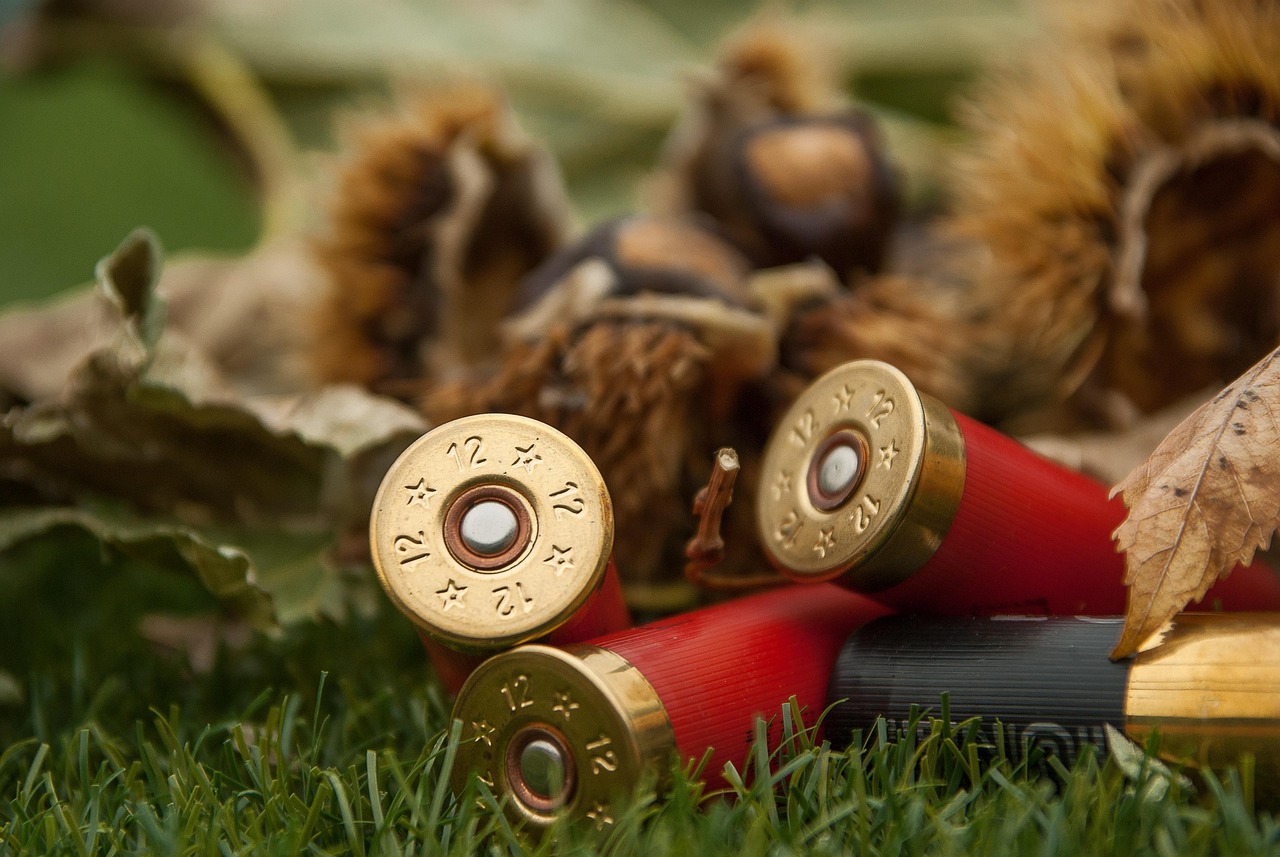
Some guns become icons because they are rare. The Mossberg 500 became one because it was everywhere.
That is exactly the point of its story: a hard-working pump shotgun built for ordinary people, then tough enough to earn extraordinary duty.
Built for the hunter first

Mossberg introduced the 500 in the early 1960s, and the design quickly became the company’s breakout success. Mossberg’s own history notes that the platform went on to become its best-selling firearm and crossed the 10 million mark faster than any other gun the company had built.
That popularity was not an accident. The 500 arrived as a practical pump gun for hunters who wanted reliability without paying premium-polished prices. In duck country, that matters more than romance. Mud, reeds, cold fingers, and wet shells do not care how elegant a shotgun looks.
The 500 fit the real world. It was light enough to carry all day, simple enough to maintain at camp, and versatile enough to wear different barrels and furniture for birds, deer, or home use. For the average American gun owner, it felt like one shotgun could do nearly everything well enough.
Why duck hunters embraced it
Waterfowl hunting is a brutal product test. A shotgun gets bounced in jon boats, sprayed with marsh water, stuffed into layout blinds, and asked to cycle when the weather is miserable and the shooter is wearing gloves.
The Mossberg 500 earned loyalty because its controls made sense under stress. The top-tang safety is naturally ambidextrous, which is a genuine advantage in awkward shooting positions and heavy outerwear. Twin action bars, dual extractors, and the anti-jam elevator also helped build its reputation for slick, dependable operation.
Hunters liked the platform’s flexibility just as much as its toughness. Over time, Mossberg offered field models, slug variants, combo packages, synthetic stocks, and finishes better suited to foul weather. That allowed the 500 to serve the budget-minded first-time hunter and the seasoned public-land regular without changing its basic identity.
The leap from marsh to military
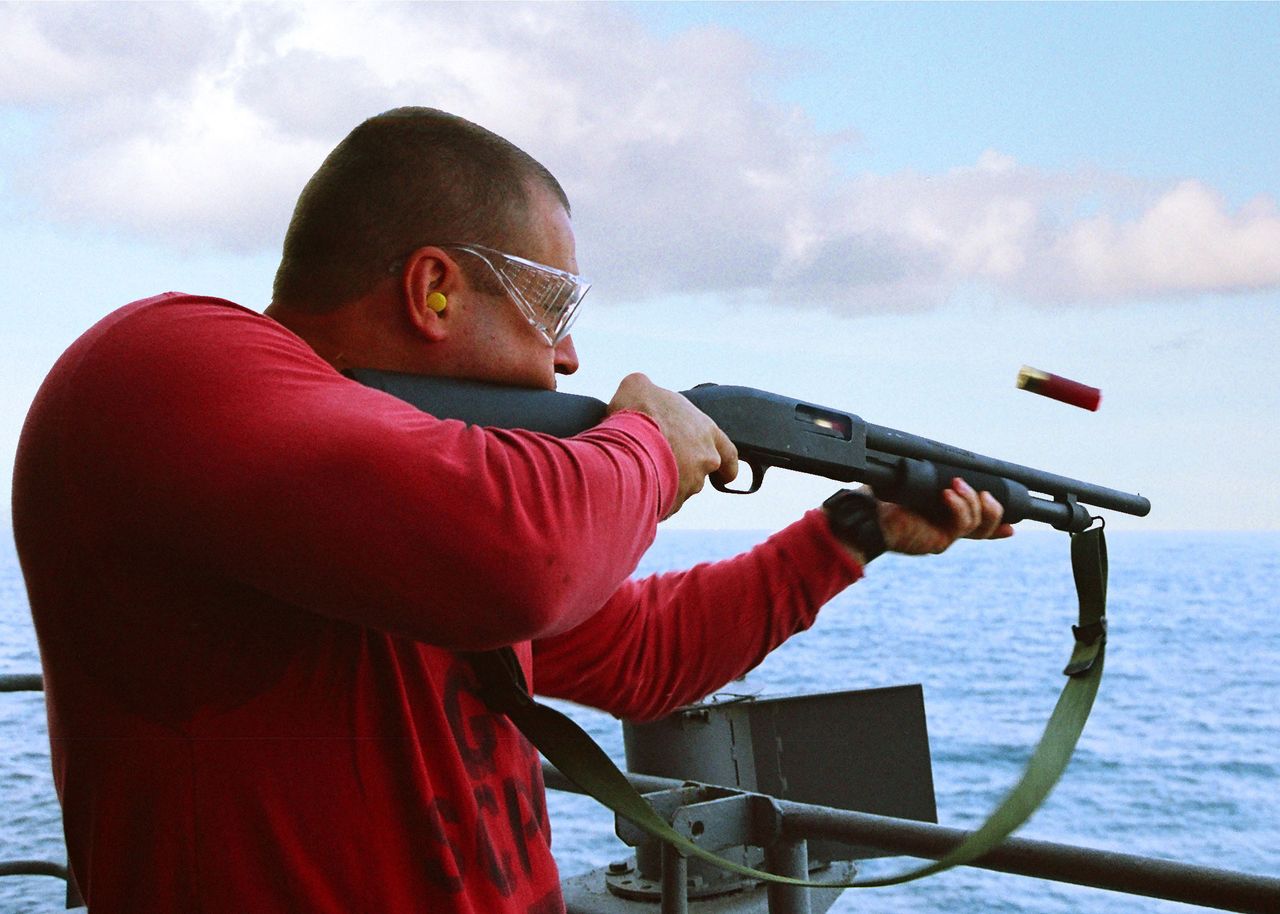
Civilian success did not automatically guarantee military acceptance. Mossberg’s own retrospective says the company pushed the 500 line toward military evaluation during the 1970s, and those efforts helped shape what came next.
The armed services were looking for a combat pump gun that could survive punishing endurance and parts-interchange testing. According to Mossberg’s law-enforcement division, Mil-Spec 3443 became the benchmark, and the company says its military pump shotguns ultimately met or exceeded those requirements.
That mattered because military use is not a marketing costume. A shotgun in service may be used for guard duty, close-quarters work, breaching roles, and shipboard security. Reliability has to survive neglect, recoil, rough handling, and institutional abuse by thousands of different users.
Enter the 590 and 590A1
Here is where the family tree matters. The Mossberg 500 laid the foundation, but the 590 and later 590A1 were the purpose-built military evolutions of that basic system. Mossberg says the 590 proved itself by completing the MIL-SPEC 3443E protocol, and the 590A1 followed as a strengthened version for hard service.
Those changes were not cosmetic. The military variants emphasized features like heavier-duty components, easy magazine-tube cleanout, and construction suited to sustained use in ugly conditions. Mossberg has repeatedly described the 590A1 as a battle-proven shotgun developed from the time-tested 500 platform rather than a clean-sheet replacement.
That distinction explains the article’s title. The gun in the duck blind and the gun in the armory were not always identical model numbers, but they shared the same mechanical DNA. The civilian 500 made the reputation; the military 590 and 590A1 formalized it.
Why the design traveled so well
Most firearms do one job best and become awkward when asked to do another. The Mossberg formula traveled because it balanced cost, durability, and modularity better than many flashier rivals. It was not precious, and that turned out to be a strength.
An anodized aluminum receiver kept weight manageable, while the steel lock-up happened where it needed to. The gun also adapted easily to different barrels, capacities, sighting systems, and stock setups. In practical terms, that meant one platform could be tuned for ducks, turkeys, slugs, patrol work, or naval security.
There is also a cultural piece to this. Americans tend to respect tools that work hard without demanding attention. The 500 family became the shotgun equivalent of a dependable pickup: not exotic, rarely fussy, and trusted because millions of people had already learned the same manual of arms.
A shotgun that earned two very different kinds of trust
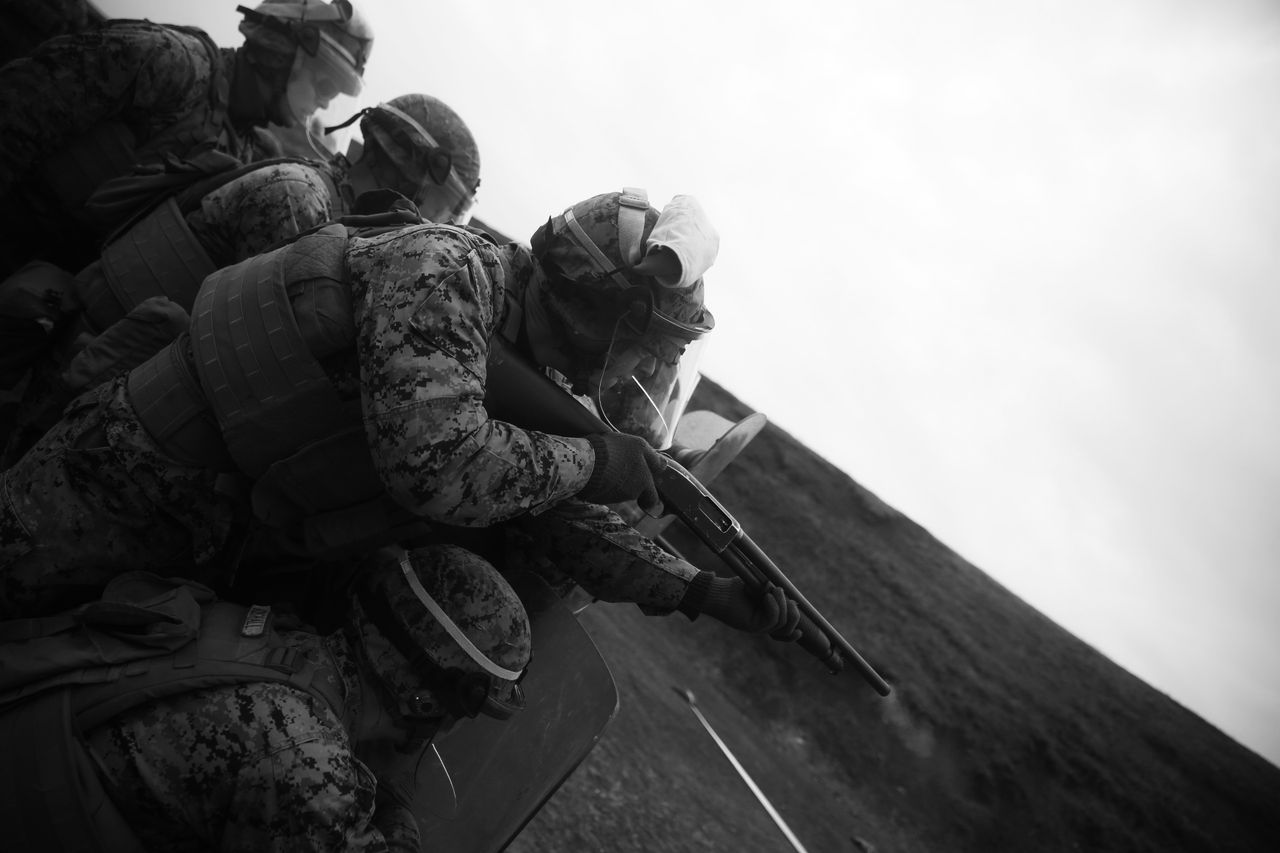
The deepest reason the Mossberg 500 story endures is that hunters and service members judge equipment differently, yet both groups kept coming back to this platform. Hunters want a gun that will not quit on opening day. Military buyers want standardization, durability, and confidence across large inventories.
Very few shotguns can credibly claim both worlds. Mossberg’s own materials say the 500 platform led directly to the military 500, 590, and 590A1 line, while the sporting side kept evolving with countless field-ready configurations. That is not an accidental overlap. It is proof that a fundamentally sound design can survive very different missions.
So the Mossberg 500 did not become famous by chasing glamour. It became famous by being useful, adaptable, and tough enough that a duck hunter in chest waders and a sailor standing watch could both look at it and think the same thing: this will do.