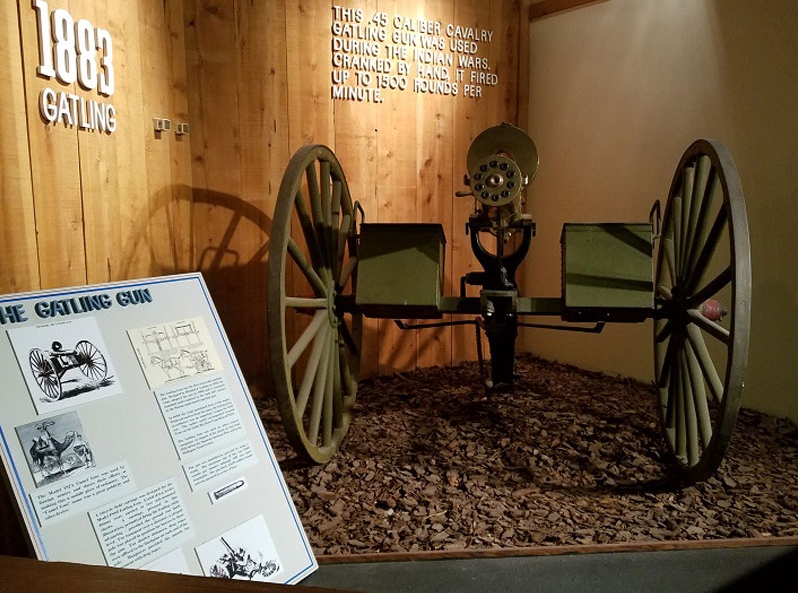
It looked like the future long before generals knew what to do with it. The Gatling gun was a battlefield breakthrough that arrived into a military culture still thinking in rows, volleys, and horse-drawn speed.
A weapon born ahead of doctrine
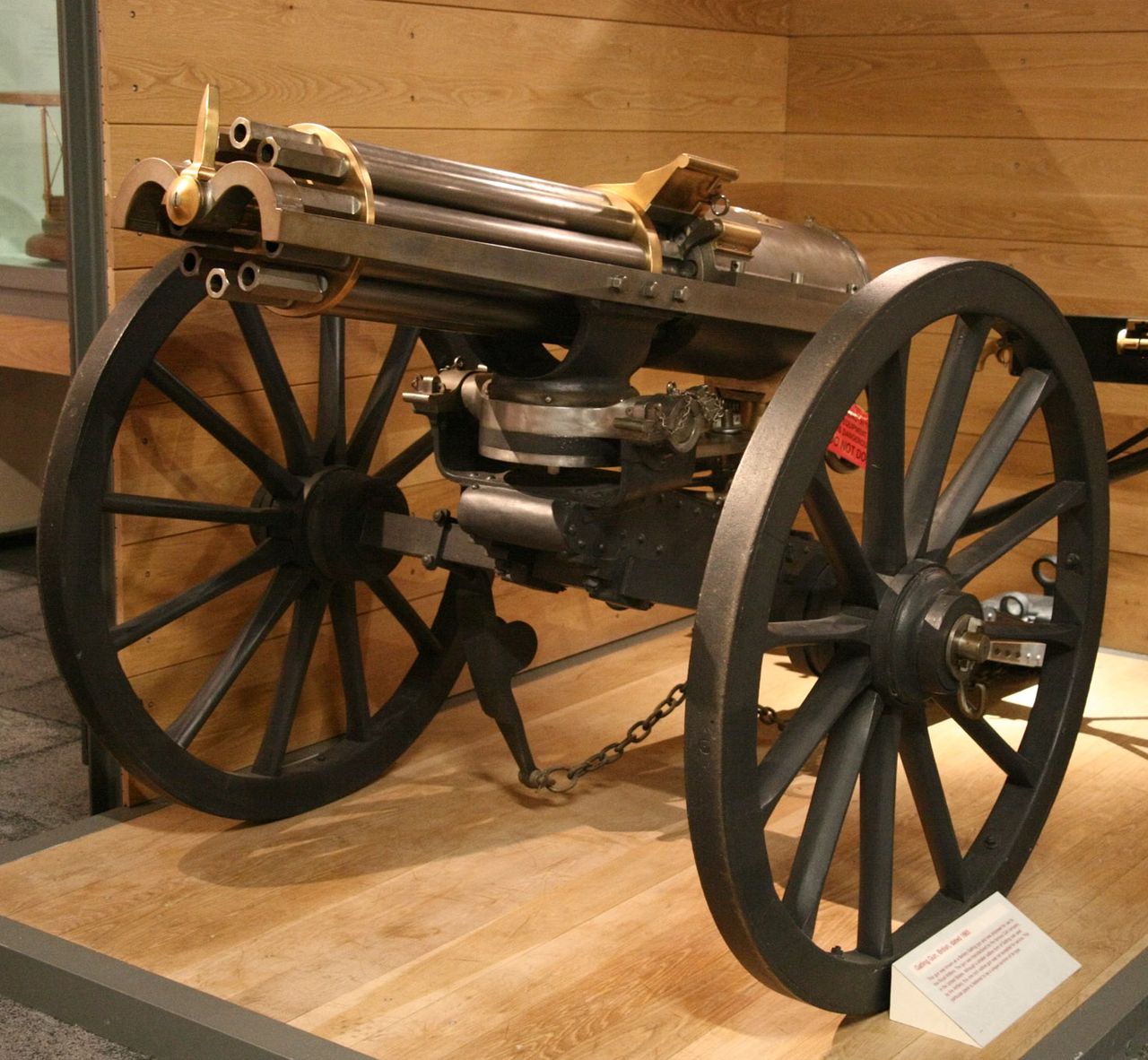
Richard Jordan Gatling patented his rotating, hand-cranked gun in 1862, during the American Civil War. Early versions used multiple barrels and a feed system that let crews fire far faster than standard infantry weapons. History and the U.S. Army both note that its earliest practical rate of fire reached roughly 200 rounds per minute, with later improvements pushing higher.
That alone should have transformed combat. But invention is one thing, adoption is another. Armies in the 1860s were still organized around muzzle-loaders, massed formations, and the idea that courage and maneuver would decide most battles.
Gatling himself imagined a grimly rational benefit. He argued that if one machine could do the work of many soldiers, armies might shrink and disease and battlefield losses might fall. It was a humanitarian pitch wrapped around terrifying efficiency.
Why the Civil War barely used it
The Gatling gun appeared too late, and too strangely, for Civil War institutions to embrace it. The U.S. Army Center of Military History records that only a small number saw limited service before the war ended, including use connected to the siege operations around Petersburg. That was nowhere near enough to rewrite the conflict.
Part of the problem was technical skepticism. Early military leaders worried about reliability, ammunition supply, crew training, and whether such a complex gun belonged in ordinary field operations. In a period when many officers still distrusted repeaters, a crank-driven volley machine looked exotic.
There was also bureaucracy. The Ordnance establishment had to choose what to buy, transport, repair, and standardize, and revolutionary tools often lose to familiar ones. The weapon was not officially adopted by the U.S. Army until August 24, 1866, after the war was over.
Empire, frontier, and the proving ground
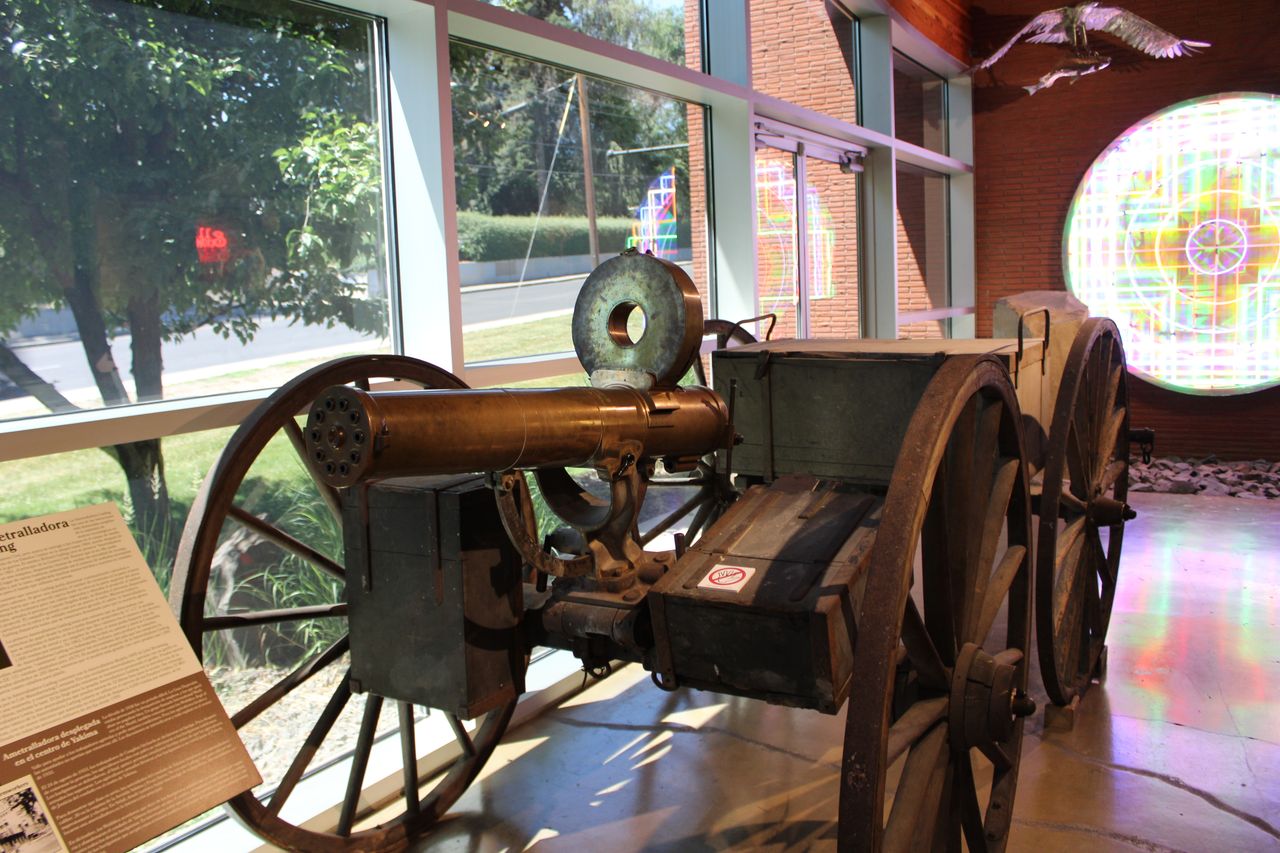
Once adopted, the Gatling gun found more room on colonial and frontier battlefields than in set-piece European-style war. The weapon could be devastating against forces advancing in dense formations or attacking fixed positions. In those settings, concentrated fire mattered more than elegant maneuver theory.
British experience in the Anglo-Zulu War showed the point starkly. The National Army Museum notes that at Ulundi on July 4, 1879, Gatling guns and artillery helped break Zulu attacks at range. The gun did not act alone, but it amplified what disciplined troops and prepared positions could already do.
American officers noticed similar possibilities in frontier campaigning. Even then, mobility remained a constant complaint. Commanders wanted the firepower, but not always the weight, crew demands, or ammunition burden that came with it.
The tactic armies had to learn
The biggest lag was intellectual, not mechanical. The Gatling gun was often treated as artillery, parked defensively, or held back as a special device. That limited its usefulness because rapid-fire weapons mattered most when integrated directly with infantry movement.
The Spanish-American War offered the clearest American lesson. During the assault on San Juan Hill on July 1, 1898, Lieutenant John H. Parker pushed Gatling guns forward in close support of attacking troops. The U.S. Army later described that move as the Army’s first use of close-support machine guns in attack.
That was the real breakthrough. The gun was no longer just a curiosity or a fortress piece; it became part of fire and maneuver. Once commanders saw that suppressive fire could let infantry advance, modern battlefield logic began to emerge.
Why the Gatling was not yet the final answer
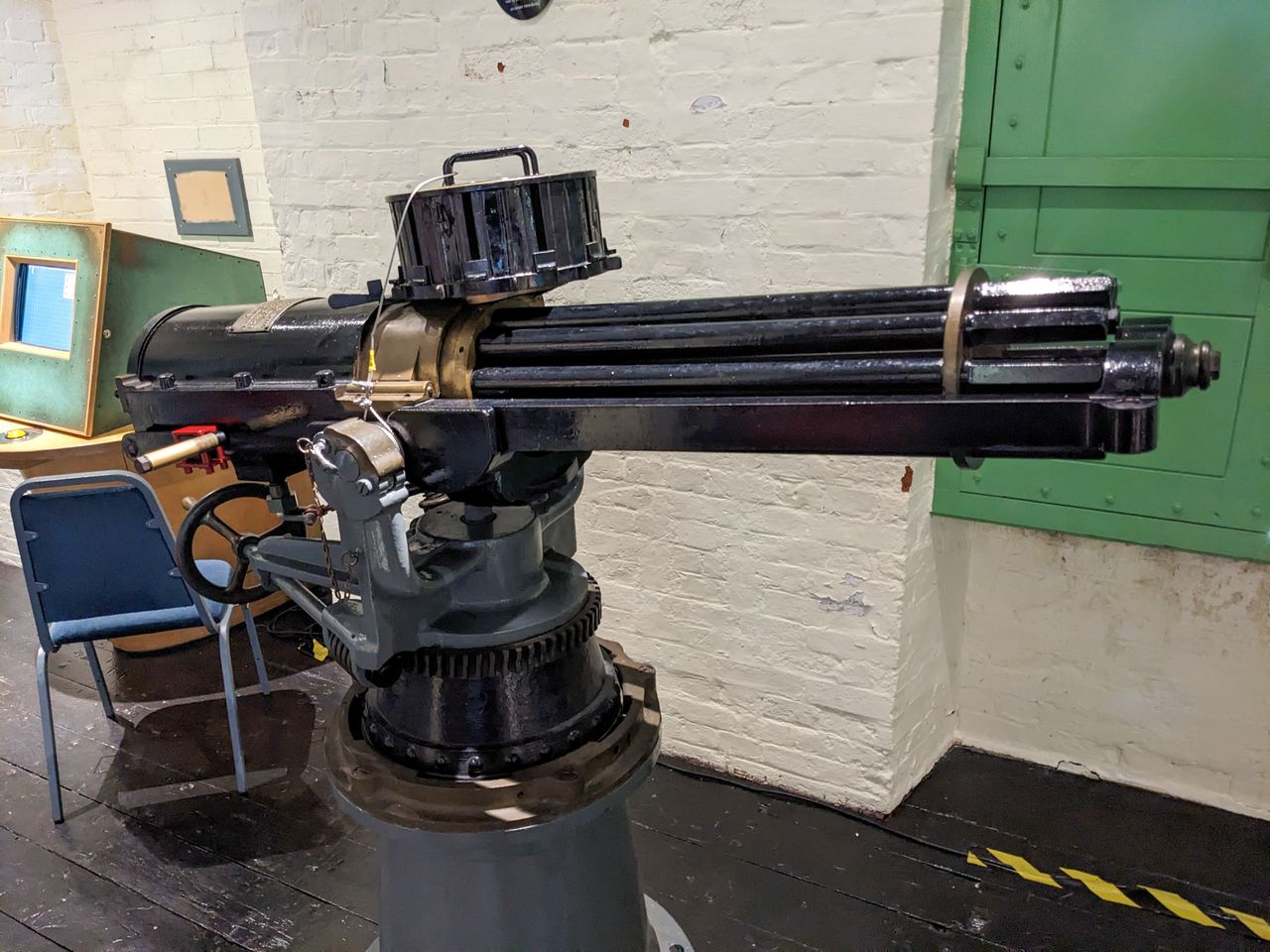
For all its shock value, the Gatling gun was not the fully modern machine gun people often imagine. It still relied on human muscle turning a crank, which meant its output depended on the operator. It was deadly, but it was not yet automatic in the later Maxim sense.
That distinction matters. According to U.S. Army histories, Hiram Maxim’s 1883 recoil-operated design represented a major leap because it removed the need for manual cranking. In simple terms, the weapon itself now used energy from firing to keep firing.
So the Gatling was both revolutionary and transitional. It proved that sustained rapid fire could dominate a battlefield, but it did not fully solve the problems of portability, automation, and doctrine. It opened the door that later weapons kicked off the hinges.
The gun that taught armies they were obsolete
The deepest lesson of the Gatling gun is that technology can be ready before institutions are. Generals were trained in an older world, and armies tend to absorb new tools slowly, especially when those tools threaten existing habits, hierarchies, and battlefield myths.
By the time machine-gun warfare truly matured, the logic behind Gatling’s invention had become unavoidable. More fire from fewer men changed formations, fortifications, logistics, and the cost of frontal attack. The weapon’s early history is really a story about military delay.
That is why the Gatling gun still matters. It was not merely a clever gun; it was an early warning. The future of industrial warfare had arrived, but for a generation, most armies could not yet read it.