Some battles end with a winner. A few become legends for both men in the sky.
A Duel That Captured The World
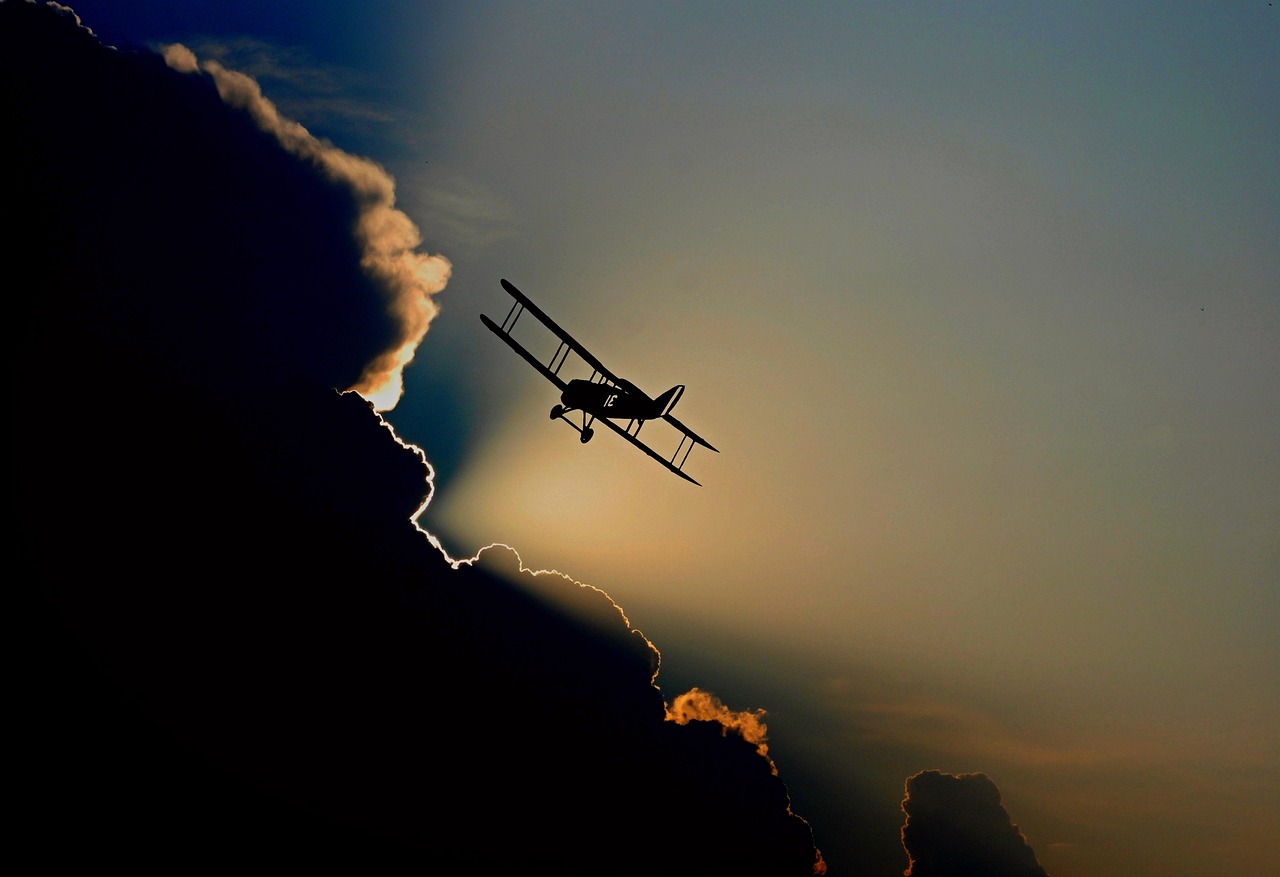
On November 23, 1916, over the Somme, two of the best-known fighter pilots of World War I collided in a deadly contest above the trenches. One was Major Lanoe Hawker of Britain, already famous for daring attacks and a Victoria Cross. The other was Manfred von Richthofen, a rising German ace who had not yet become the fully mythic Red Baron.
What made this fight unforgettable was not just its outcome, but the balance of reputations involved. Hawker represented the aggressive, improvisational spirit of the Royal Flying Corps. Richthofen represented a new, colder, more methodical style of aerial hunting that German air doctrine was beginning to perfect.
According to accounts preserved in squadron histories and later biographies, pilots on both sides quickly understood they had witnessed something exceptional. This was not a quick ambush or a chaotic melee. It was a long, circling, intensely personal engagement between men who knew exactly what the other was trying to do.
The public later embraced it as more than a military episode. It became a story about mastery under pressure, about the romance and brutality of early flying, and about how heroism could be claimed by enemies at the same time.
Who Hawker Was Before The Fight
Lanoe Hawker was already one of Britain’s pioneering air warriors before he ever met Richthofen in the sky. He had won the Victoria Cross in 1915 after a remarkable mission in which he attacked enemy aircraft and ground targets with extraordinary boldness. At a time when air tactics were still being invented, Hawker was one of the men writing the first rough draft.
He also had a reputation as a designer and innovator, not merely a fearless pilot. Hawker helped refine equipment, thought hard about aerial gunnery, and approached combat with a practical intelligence that impressed fellow aviators. In an era of fragile machines and unreliable weapons, that mix of nerve and ingenuity mattered enormously.
By late 1916, however, Hawker was fighting in a changing air war. The British Airco DH.2 he flew had once helped challenge the Fokker menace, but newer German aircraft were beginning to outclass it. Speed, climb, and firepower increasingly determined survival, and technical inferiority could erase even the advantage of experience.
That contrast is central to understanding the duel. Hawker was brave, seasoned, and tactically sharp, but he was entering battle in a machine already slipping behind the curve of front-line aviation.
Richthofen’s Rise And The New Air War

Manfred von Richthofen was only 24, but he was learning very quickly how to turn aerial combat into a science. After joining Jagdstaffel 2, he came under the influence of Oswald Boelcke, the great German tactician whose rules stressed surprise, discipline, altitude advantage, and refusing unnecessary risk. Richthofen absorbed those lessons completely.
Unlike some early pilots who treated combat like reckless sport, Richthofen saw it as a problem to be solved with patience. He stalked targets, conserved energy, and attacked when odds favored him. That mindset would eventually make him the war’s highest-scoring ace, credited with 80 victories, but in late 1916 he was still proving himself.
He also possessed an aircraft better suited to the moment. His Albatros D.II was faster and more heavily armed than Hawker’s DH.2, with twin synchronized machine guns and stronger performance in a chase. In early fighter warfare, those advantages could be decisive, especially once a duel stretched beyond the first burst of fire.
The battle therefore placed more than two men against each other. It matched two generations of air combat thinking: the improvising pioneer and the disciplined modern predator.
How The Dogfight Unfolded
The engagement began after Richthofen and other German pilots encountered British aircraft near Bapaume. In the confused fighting, Hawker became separated and eventually found himself in a one-on-one struggle with Richthofen. What followed was not a straight chase at first, but a prolonged series of turns, dives, and evasive maneuvers at very low altitude.
Richthofen later described the encounter in his memoir with striking respect. He wrote that Hawker turned skillfully for a long time, making it difficult to get a clean shot. That detail matters because it confirms what British pilots believed: Hawker was not simply caught and destroyed, but fought with exceptional ability against a dangerous opponent.
As the duel continued eastward, the German pilot’s advantages began to tell. The Albatros could maintain pressure more effectively, while Hawker’s DH.2 bled speed and options. Eventually Hawker tried to escape by heading for British lines, but Richthofen stayed with him, closing the distance bit by bit.
Near the end, flying low and fast, Richthofen fired the burst that killed Hawker instantly. Hawker crashed near Luisenhof Farm. The chase had carried both men deep across the sky in a battle remembered for endurance as much as violence.
Why Both Men Became Heroes

Hawker became a hero in Britain because he embodied sacrifice at the sharp edge of a new kind of war. He was already decorated, already admired, and his death in combat with a formidable enemy only deepened public respect. In British memory, he stood for courage against worsening odds and for the inventive spirit of the early flying services.
Richthofen, meanwhile, gained enormous stature in Germany because defeating an aviator of Hawker’s rank signaled his arrival as a first-rate ace. He himself recognized the victory as a turning point. Later historians often point to Hawker’s death as the moment Richthofen’s confidence hardened into the calm certainty that defined his career.
There was also the powerful appeal of mutual recognition. Richthofen praised Hawker’s skill, and that admiration mattered because it fit the era’s image of the fighter pilot as a knight of the air. The reality of trench warfare below was industrial slaughter, but aerial duels were often narrated as intensely personal contests between elite combatants.
That combination elevated both names. One man died and became a martyr to bravery; the other won and became the face of German air power. Each needed the other for the legend to reach full size.
The Myth And The Reality

It is tempting to romanticize this dogfight as pure chivalry in the clouds, but the truth is more complicated. Early aviators did cultivate a language of honor, and some opponents genuinely respected one another’s skill. Yet these fights were still lethal encounters shaped by technology, fatigue, luck, and the grinding demands of total war.
Hawker’s last battle especially shows how machinery could decide destiny. Even a superb pilot could only do so much in an outmatched aircraft. Aviation historians repeatedly stress that by late 1916 the performance gap between some British pushers and newer German scouts was becoming critical, and Hawker paid the price in the most dramatic way imaginable.
At the same time, Richthofen’s triumph was not accidental or merely mechanical. He executed Boelcke’s principles with discipline, maintained pressure, and refused to waste his chance. That blend of superior machine and superior method is what made him so dangerous.
So the legend survives not because it was simple, but because it contains both romance and hard reality. It was heroic, unfair, skillful, and ruthless all at once.
Why The Story Still Endures
More than a century later, this duel still appears in books, documentaries, museum exhibits, and military history debates. It endures because it offers a human-scale story within the vast impersonality of World War I. Instead of anonymous armies, we see two individuals making split-second decisions in open cockpits with death only yards away.
The fight also marks a hinge point in aviation history. Hawker represented the bold experimental phase of air combat, when talent could compensate for almost anything. Richthofen represented the future: standardized tactics, better machines, and systematic pursuit of air superiority. In that sense, their meeting was not just dramatic but historically revealing.
For general audiences, the appeal is easy to understand. The contest has the clean shape of a classic duel, yet it also carries tragedy, respect, and transformation. Few wartime episodes allow both sides to claim a hero without erasing the other man’s courage.
That is why this dogfight remains legendary. It was not simply about who fired the fatal shot, but about the rare moment when two enemies became immortal together.