Some air battles end when the shooting stops. This one kept echoing through classrooms, simulators, and training ranges for decades.
The Fight That Exposed A Dangerous Illusion

The air battle that changed pilot training was not just one dogfight, but the shock of Vietnam-era air combat, especially the brutal encounters over North Vietnam in the mid-to-late 1960s. American pilots entered that war with fast jets, radar-guided missiles, and deep faith in technology. What they found instead was that speed and hardware did not guarantee success.
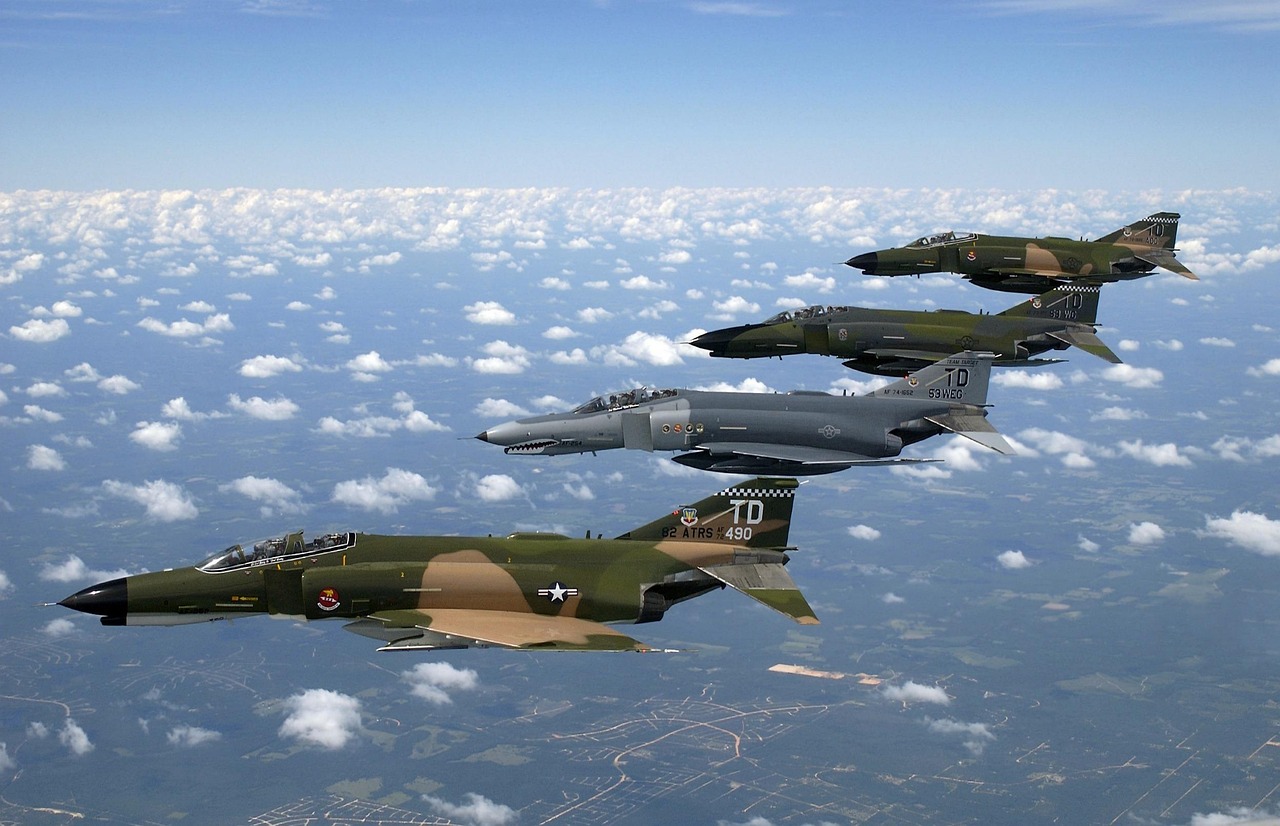
The F-4 Phantom, for example, was built around missiles and originally carried no internal gun in early variants. That reflected the belief that future air combat would happen at longer range, guided by electronics and superior sensors. In the crowded, restrictive airspace over Vietnam, those assumptions often fell apart.
North Vietnamese MiG-17s and MiG-21s fought smart. They used ground control, surprise, hit-and-run tactics, and the terrain to offset American advantages. The mismatch between what U.S. pilots had trained for and what they actually faced became impossible to ignore.
Why Vietnam Hit So Hard
The warning signs were everywhere. According to Navy historical accounts, the service created TOPGUN on March 3, 1969, after a deep review of air-to-air combat performance and missile reliability in Vietnam. The Ault Report, ordered in 1968 by Chief of Naval Operations Admiral Thomas Moorer, examined those failures in detail and pushed the Navy toward a training overhaul.
The Air Force reached similar conclusions from hard experience. RAND’s work on the Red Baron studies and later Air Force writing both point to Vietnam as the moment when officials recognized that technology-heavy doctrine had outpaced practical dogfighting skill. Pilots needed repeated exposure to realistic threats, not just range work and textbook intercepts.
One battle became a symbol of the problem and the solution. Operation Bolo on January 2, 1967, led by Robin Olds, used deception to lure North Vietnamese MiG-21s into combat. The result was a stunning American success, with seven MiG-21s shot down and no USAF losses, according to Air Force history.
The Real Lesson Wasn’t Just Tactics

Operation Bolo mattered because it proved brains could beat patterns. Olds and his planners copied the route, radio calls, and flight profile of F-105 strike packages, convincing MiG pilots they were pouncing on vulnerable bomb-laden targets. Instead, they ran into F-4s configured for air combat and ready to fight.
That was dramatic, but the deeper lesson was more important. Victory came from studying the enemy closely, understanding how he expected the fight to unfold, and designing training around that reality. In other words, success was not about owning better jets alone. It was about preparing crews for what the enemy would actually do.
That insight became foundational across modern air forces. Training could no longer be generic. It had to be threat-based, stressful, and honest about mistakes. Pilots needed to practice against dissimilar aircraft, aggressive instructors, and scenarios that looked like combat rather than peacetime administration.
TOPGUN Turned Combat Experience Into A School
The Navy moved first and most famously. Official Navy history says TOPGUN was established in 1969 at Miramar to improve the combat skills of aviators fighting over North Vietnam. It began in a trailer, but its impact was huge because it concentrated expertise, standardized doctrine, and taught instructors to spread those lessons back to the fleet.
The philosophy was simple and ruthless. Be brilliant at the basics, know your aircraft, know the enemy aircraft, and fight in a way that exploits the difference. TOPGUN emphasized air combat maneuvering, weapons employment, adversary study, and disciplined debriefs. It made pilot mistakes visible, specific, and fixable.
The results gave the idea real credibility. Navy historical material says that during 1972 and early 1973, the Navy’s kill ratio improved to roughly 12-to-1 after intensive air combat training linked to TOPGUN. Whether one treats that figure as symbolic or exact, the direction of change was undeniable and deeply influential.
The Air Force Built Red Flag Around The Same Truth
The Air Force answered with a broader system. The USAF Weapons School already existed in earlier form, with official history tracing Fighter Weapons School activation to December 30, 1965, and Nellis history tracing deeper roots to postwar gunnery instruction. But Vietnam pushed the Air Force toward something larger than elite graduate education.
That larger answer was Red Flag. Nellis states that Red Flag was established in 1975 as the brainchild of Lt. Col. Richard “Moody” Suter, with support from Tactical Air Command leadership after lessons from Vietnam. The idea was to give aircrews their first 10 combat missions in training, because survival odds improved sharply after that threshold.
Red Flag combined aggressor forces, realistic threats, dense planning, electronic warfare, and large mixed formations. It taught pilots, controllers, and mission commanders how war actually feels when radios are crowded, fuel matters, and the enemy gets a vote. That was a revolution in scale, not just a better syllabus.
Soon Every Serious Air Force Copied The Model

Once the formula worked, it spread fast. Air forces around the world adopted some combination of adversary squadrons, graduate weapons schools, large-force exercises, and brutally detailed debriefing. The names differed, but the DNA was recognizably born from Vietnam’s painful schooling and sharpened by successes like Bolo, TOPGUN, and Red Flag.
The core principles became standard. Train against a thinking opponent. Practice the first days of war before the real first day arrives. Study enemy doctrine as seriously as your own. Build instructors who return to operational units and multiply knowledge instead of hoarding it.
Today that logic reaches beyond fighters. Tankers, airborne warning crews, electronic warfare operators, helicopter units, and even drone communities train in more realistic, integrated ways because air combat proved that isolated proficiency is not enough. Modern air war is a team sport, and training reflects that.
The Battle’s Legacy Still Flies With Every New Pilot
So what was the air battle that changed everything? In the broadest sense, it was the Vietnam air war and the string of jarring encounters that exposed false confidence. In the symbolic sense, Operation Bolo stands out because it showed that realistic threat study and adaptive tactics could flip the script in spectacular fashion.
Its real legacy is not a single kill tally. It is the training culture that followed: adversary instruction, mission rehearsal, graduate weapons schools, exacting debriefs, and the insistence that peacetime training must feel uncomfortably close to war. That culture is now so widespread it can seem obvious, but it was learned the hard way.
Every time a young pilot flies against an aggressor, gets dissected in debrief, and goes back up sharper the next day, that old lesson from Vietnam is still at work. The battle ended long ago. The training revolution it triggered never did.