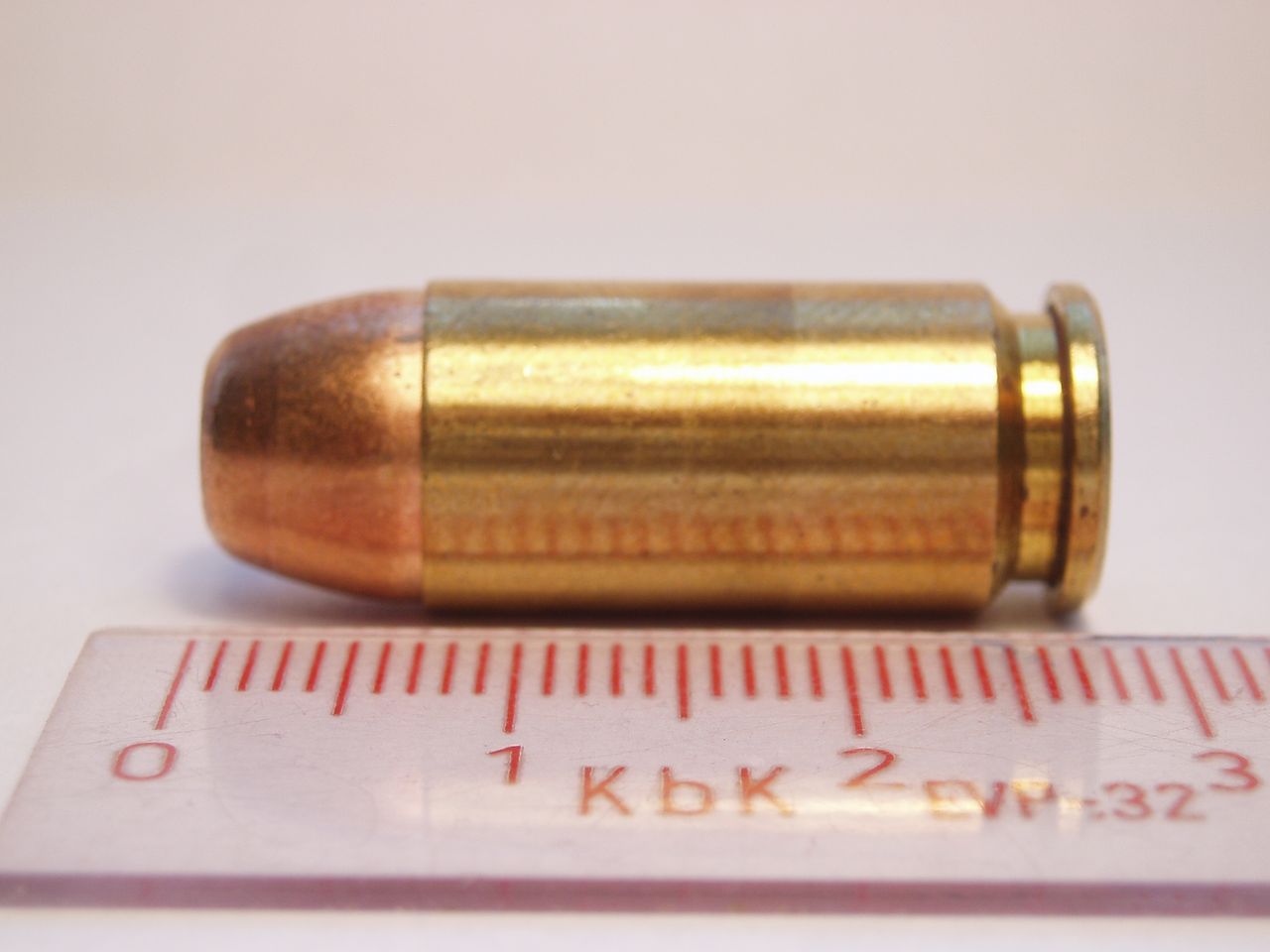
For years, the .40 S&W looked untouchable. Then the market turned, the science changed, and the cartridge that once ruled duty holsters started disappearing in plain sight.
The rise of .40 S&W made perfect sense at the time.

To understand why the .40 S&W died, you have to understand why it was born. In the late 1980s, American law enforcement was rethinking handgun performance after the FBI’s infamous 1986 Miami shootout. Agencies wanted deeper penetration and more reliable stopping power than many believed 9mm loads of the era could deliver. The 10mm Auto briefly looked like the answer, but its recoil and large-frame pistols proved too much for widespread issue.
Smith & Wesson and Winchester answered with a compromise in 1990: the .40 S&W. It offered a heavier bullet than 9mm, more energy on paper, and fit into handgun frames not much larger than existing 9mm duty pistols. That was the magic trick. Departments could get what looked like near-10mm performance without adopting oversized guns or punishing recoil.
For the next two decades, it spread everywhere. Glock 22s, SIG P229s, Beretta 96s, and Smith & Wesson M&P40s became standard police sidearms across the United States. Civilian shooters followed the law-enforcement trend, assuming agencies had done the homework. In that environment, buying a .40 felt like buying the serious option.
The FBI didn’t just leave .4;, it changed the argument.
A big part of the .40’s fall came from the institution that helped create the demand for it in the first place. When the FBI reevaluated service handgun calibers in the 2010s, it reached a conclusion that shook the market: modern 9mm ammunition had closed the performance gap enough that the practical advantages of 9mm outweighed the marginal ballistic edge of .40. That wasn’t just a procurement decision. It was a philosophical shift.
The FBI’s publicly discussed reasoning centered on shootability, qualification scores, and real-world effectiveness. Agents generally shot 9mm faster and more accurately, especially in rapid fire and one-handed drills. Reduced recoil helped smaller-stature shooters, newer shooters, and tired shooters alike. In a defensive handgun, hits matter more than caliber mythology.
Once the FBI moved back to 9mm, local and state agencies had political and practical cover to do the same. Nobody wants to be the department spending more money on guns, ammo, and parts while asking officers to manage sharper recoil for little measurable gain. The FBI didn’t pull the trigger on .40 alone, but it absolutely handed everyone else the motive.
Better 9mm ammunition quietly did most of the killing

If you want to identify the real assassin, it wasn’t one agency or one gunmaker. It was ammunition engineering. The 9mm loads of the 1980s and early 1990s were not the 9mm loads of the late 2010s and 2020s. Advances in bullet design, jacket construction, controlled expansion, and barrier performance changed the conversation. Premium 9mm duty ammo began meeting FBI testing standards with impressive consistency.
That mattered because the original selling point of .40 was ballistic reassurance. It launched heavier projectiles, and for years, that translated into a strong psychological and practical advantage. But when 124-grain and 147-grain 9mm hollow points started penetrating properly, expanding reliably, and performing well through common barriers, the old gap got narrow fast. In many realistic defensive contexts, it was narrowed enough to become irrelevant.
This wasn’t internet hype. Trainers, forensic specialists, and wound-ballistics experts increasingly emphasized placement, penetration, and repeatable performance over caliber tribalism. A miss with .40 was still a miss, and a solid hit with quality 9mm still did the job. Once modern 9mm proved it could perform, .40 lost the technical argument that had kept it alive.
Shooters chose capacity, speed, and comfort over theory.
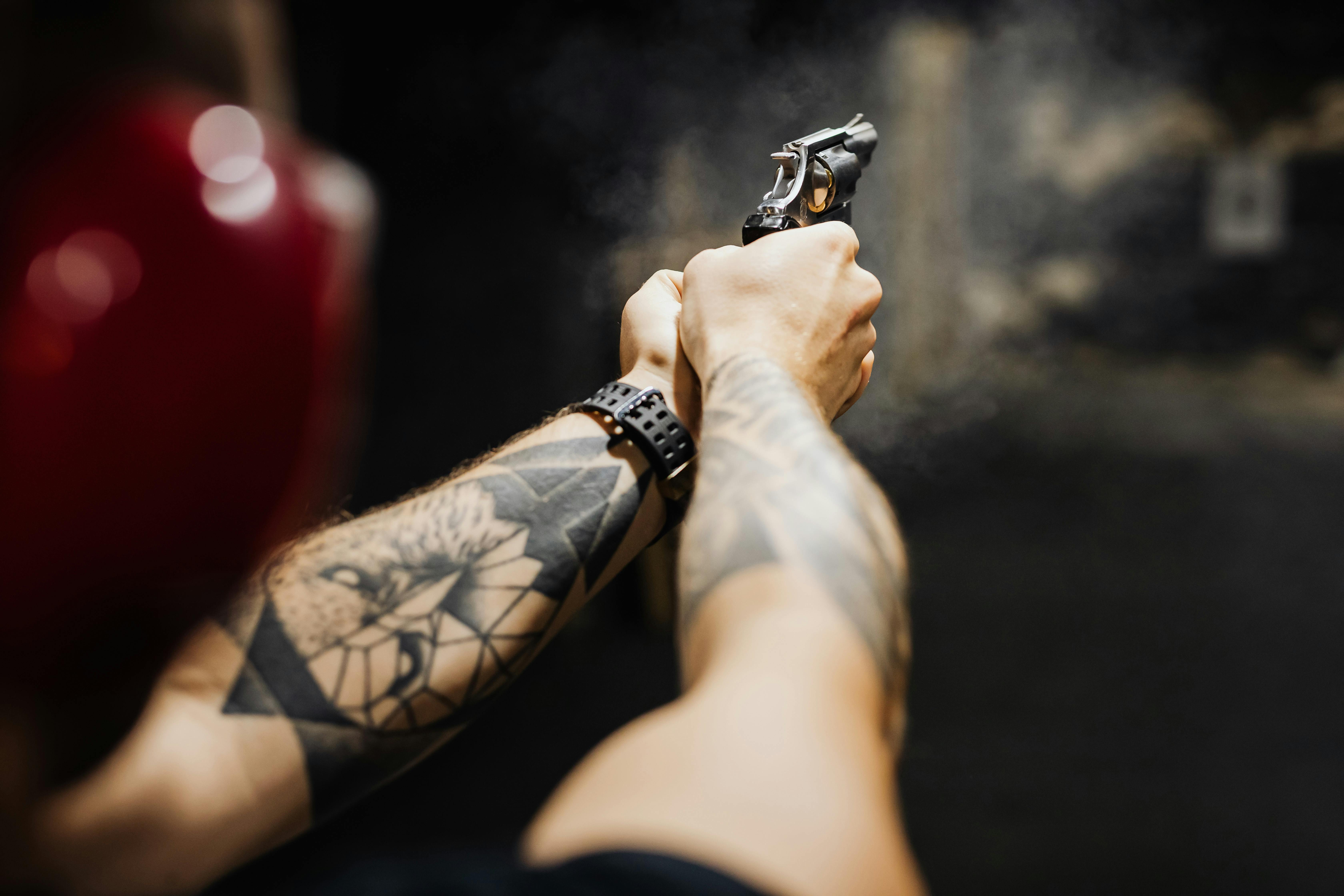
The broader gun-buying public did what consumers usually do: it migrated toward the option that felt easier, cheaper, and more pleasant to use. In similarly sized pistols, 9mm typically gives you more rounds in the magazine than .40 S&W. It also produces less recoil, less muzzle snap, and faster follow-up shots. Those are not minor perks. They are everyday advantages that shooters can actually feel.
A classic example is the difference between the Glock 17 and Glock 22 or between compact 9mm and .40 variants built on the same platform. The .40 often runs with lower capacity and a snappier recoil impulse, while the frame and carry burden remain nearly identical. From the customer’s perspective, that starts looking like a bad trade. Why accept more punishment for a narrower practical gain?
Training culture amplified that logic. As defensive pistol instruction spread online and in classes nationwide, shooters heard the same message repeatedly from reputable instructors: use a caliber you can control well and practice with often. The cartridge that makes you slower, more fatigued, and less likely to train usually loses. The .40 didn’t fail in theory. It failed in the hands of ordinary people, making rational choices.
The economics turned brutally against it.
Caliber wars are rarely settled by ballistics alone. Money finishes the fight. Once agencies and civilian buyers began returning to 9mm in large numbers, economies of scale made 9mm even harder to resist. It became cheaper to manufacture, cheaper to stock, and easier to find in bulk. For police departments running tens of thousands of rounds a year, the savings were impossible to ignore.
Lower ammo cost means more training, and more training usually means better performance. That single factor may have hurt .40 more than many enthusiasts want to admit. A department can buy 9mm, reduce recoil-related qualification issues, and stretch its training budget further at the same time. That is a procurement officer’s dream. By comparison, sticking with .40 began to look like paying extra for nostalgia.
The same pattern hit the consumer market. During normal times, 9mm dominated shelf space and promotional pricing. During shortage periods, it often returned to stores faster because demand and production were centered there. Manufacturers followed the volume, retailers followed the turnover, and used-gun prices reflected the shift. When a caliber becomes both less popular and less economical, decline turns into a feedback loop.
Gun makers and police armorers helped bury it for goo.d

Manufacturers rarely declare a cartridge dead, but they absolutely reveal where the market is heading. Over the past decade, flagship pistol launches overwhelmingly centered on 9mm. New models, optics-ready variants, compensated carry guns, and high-capacity micro-compacts were all built around that cartridge first. .40 versions, when offered at all, often arrived later, sold less, and generated little excitement.
There was also a durability issue that armorers understood well. Pistols originally sized around 9mm can handle .40, but high round counts with the snappier cartridge often accelerate wear compared with their 9mm counterparts. That doesn’t mean .40 pistols are fragile. It means maintenance schedules, parts life, and long-term fleet costs can become less attractive, especially in hard-use institutional settings.
Police trade-in markets tell the story clearly. For years, used .40-caliber service pistols flooded dealers as agencies transitioned back to 9mm. Those trade-ins were often reliable, affordable, and mechanically sound, yet they still sold as yesterday’s solution. When departments are unloading thousands of former duty guns and replacing them with 9mm models, that is not a subtle market signal. It is an obituary.
Is .40 S&W truly dead, or just no longer the default?

Dead is a dramatic word, and strictly speaking, the .40 S&W still has a pulse. Ammunition makers continue to load it, major manufacturers still chamber some pistols for it, and many private owners remain loyal to the cartridge. In certain roles, it still makes sense for shooters who value its blend of bullet weight and velocity. Plenty of older duty guns in .40 continue to run just fine.
But culturally and commercially, the verdict is already in. The .40 is no longer the serious default for people who want a fighting handgun. That crown belongs to 9mm now, and not by accident. Better ammunition, lower recoil, higher capacity, lower cost, easier training, and institutional endorsement all lined up against .40 at once. Very few cartridges survive that kind of coordinated pressure.
So who killed the .40 S&W? The FBI wounded it, modern 9mm ammunition gutted it, economics starved it, and ordinary shooters finished the job. What replaced it was not a fad but a better overall system. The .40 didn’t die because it was useless. It died because the reasons to choose it became too small for too many people.