Choosing a bear rifle is not the place for guesswork. When the discussion turns to .300 Win Mag vs .308, the answer is less about internet bravado and more about what happens when fur, bone, distance, and pressure all show up at once.
Why this comparison matters more than caliber arguments usually do
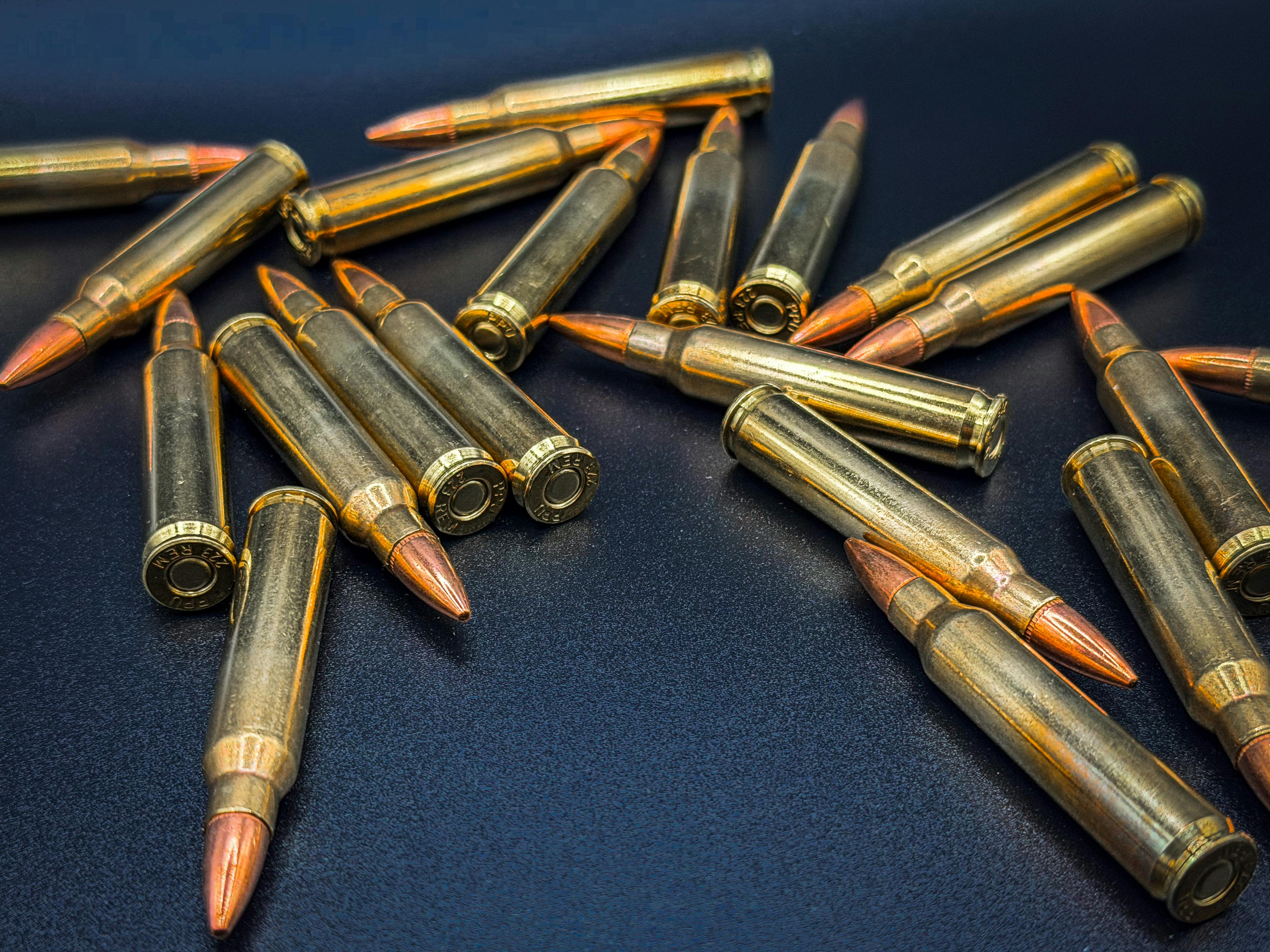
Bear hunting puts unusual demands on a cartridge because the target can be both physically tough and emotionally intimidating. Even when a bear is not especially large, heavy muscle, thick hide, and the possibility of quartering shots make hunters think carefully about penetration and bullet construction. That is why the .300 Win Mag and .308 Winchester get compared so often. They sit on opposite sides of the practical power spectrum while still being common, proven, and widely available.
The .308 has built its reputation on efficiency, manageable recoil, and real-world effectiveness. It has filled freezers and anchored game across North America for decades. In black bear country, especially in timber or over bait where shots are often inside 150 yards, the .308 is far from underpowered when loaded with a stout 165- or 180-grain hunting bullet.
The .300 Win Mag earns its reputation by stretching distance and adding striking energy. It launches similar bullet weights faster, hits harder downrange, and generally offers more margin when shot angles are less than ideal. For hunters pursuing larger black bears in open country, or brown bear and grizzly in places where legal and ethical considerations favor extra horsepower, that margin matters.
So this is not a debate about which cartridge looks better on paper. It is about matching power, recoil, terrain, and your own shooting ability to the realities of bear hunting.
Ballistics on paper and what they actually mean on a bear

With typical factory loads, the .308 often pushes a 180-grain bullet around 2,600 fps, while the .300 Win Mag may send the same weight close to 2,950 fps. That difference is not trivial. It creates a flatter trajectory, more retained energy, and usually more reliable expansion at longer ranges for the magnum.
At 100 yards, both cartridges are formidable on black bear-sized game. At 250 yards, the gap starts to become more meaningful. At 400 yards, the .300 Win Mag clearly separates itself, carrying more speed and energy while dropping less, which reduces the amount of correction the shooter needs under pressure.
Still, bear hunting is not a spreadsheet exercise. A bullet that expands too quickly can be less useful than a tougher bullet placed correctly. A premium 180-grain .308 load with controlled expansion can outperform a poorly chosen .300 Win Mag bullet if the latter sheds weight too fast or deflects on heavy bone.
Professional guides often emphasize that penetration and shot placement beat raw velocity alone. That is why many experienced hunters care less about the headstamp and more about bullet type. Bonded bullets, monolithic copper bullets, and well-designed partitions have a long track record in both cartridges when used within sensible distances.
Recoil, shootability, and the shot you can really make

This is where the conversation gets honest. The .300 Win Mag is stronger, but it is also sharper, louder, and more punishing to practice with. In rifles of similar weight, recoil energy can be dramatically higher than .308, and many hunters, even experienced ones, shoot it worse than they think they do.
That matters because bear hunting often involves fast decisions. A bear may appear suddenly at close range, or stand only briefly in a shooting lane. If your rifle causes you to flinch, lift your head, or rush the trigger, all the extra energy in the world will not make up for a bad hit.
The .308 is one of the easiest full-power big game cartridges to shoot well. Most hunters can practice longer with it, recover sight picture faster, and place follow-up shots more efficiently. In a real hunting context, those advantages are not theoretical. They directly improve field performance.
There is also the issue of rifle setup. A .300 Win Mag often benefits from a heavier rifle, a quality recoil pad, and sometimes a muzzle brake. Those additions help, but they also increase blast and can make the rifle less pleasant in blinds or tight timber. The .308 usually gets to the field with fewer compromises.
Black bear, grizzly, and brown bear are not the same problem
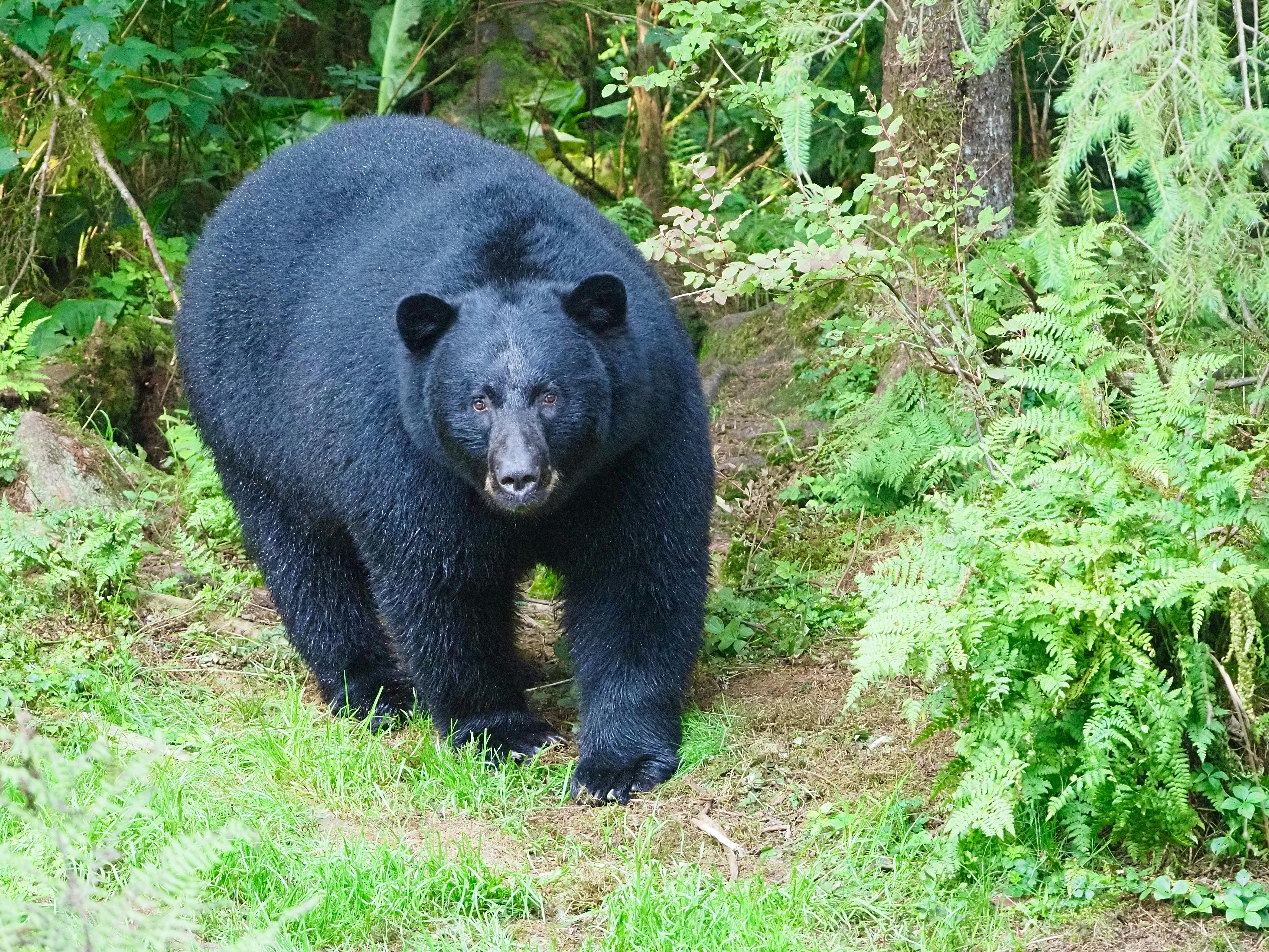
When people say “bear hunting,” they often lump very different animals into one category. That is a mistake. A 180-pound black bear over bait in eastern woods is not the same challenge as a big interior grizzly or a coastal brown bear in Alaska. Cartridge choice should reflect that difference.
For most black bear hunting, the .308 is entirely credible. With a good 165- or 180-grain bullet, moderate ranges, and disciplined shot selection, it offers enough penetration and tissue damage to produce quick, humane kills. Many outfitters have seen countless black bears taken cleanly with .308-class cartridges, including .30-06 and similar rounds.
The .300 Win Mag starts to pull ahead as body size increases, distances open up, and shot opportunities become less perfect. On large boars in mountain terrain, where a quartering-away shot may be the only ethical chance before the animal disappears, the magnum gives you more penetration reserve and more confidence beyond 200 yards.
For grizzly and brown bear, many hunters and guides prefer at least the .300 Win Mag, and some want even more. Not because the .308 cannot kill them, but because dangerous game margins matter. More energy, deeper penetration potential, and better long-range performance are comforting when consequences are serious.
Ammunition choice matters as much as the cartridge itself
A tough bear bullet is not optional. It is the difference between broadside efficiency and unreliable performance on shoulder bone or quartering angles. Whether you carry .308 or .300 Win Mag, your load should be chosen for controlled expansion, retained weight, and straight-line penetration.
In .308, 165-grain and 180-grain bonded or partition-style bullets are often the sweet spot. They give enough speed for expansion without becoming fragile, and they maintain momentum well at common bear ranges. For thick-cover black bear hunting, a 180-grain load is especially comforting because it tends to penetrate with authority.
In .300 Win Mag, 180-grain bullets are a classic all-around choice, while 200-grain options appeal to hunters who want maximum sectional density and deep penetration. The magnum’s added velocity means bullet construction becomes even more important. A bullet that is excellent in .308 may behave very differently when launched several hundred feet per second faster.
Real-world testing backs this up. Hunters who shoot water jugs, ballistic gel, soaked media, or recovered game often find that premium bullets reduce surprises. In bear country, reducing surprises is one of the smartest investments you can make.
Terrain, hunting style, and realistic range should decide a lot
The best cartridge for bear hunting often depends less on the bear and more on the country. In alder-choked creek bottoms, dense hardwoods, or bait-site setups where shots happen inside 75 yards, the .308 makes enormous sense. It is compact, controllable, and easy to shoot accurately from awkward positions.
Open-country spot-and-stalk hunts change the equation. In western basins, burned hillsides, tundra, or avalanche cuts, a bear may hang up across a canyon or feed on a far slope. Here the .300 Win Mag gives a real edge, not just in energy, but in trajectory and wind resistance, especially with modern high-BC bullets.
Hunting style matters too. If you hike long distances and value a light rifle, many .308 platforms are easier to carry and more pleasant to train with all year. If you hunt from fixed vantage points and may need to reach across uneven terrain, the .300 Win Mag starts to justify its extra recoil and rifle weight.
The most honest question is simple: how far are you actually prepared to shoot a bear under field conditions? Your answer will usually point toward the right cartridge faster than any online argument.
So which one should you carry for bear hunting?
If your bear hunting is mostly for black bears at ordinary ranges, the .308 is the smarter choice for most people. It is easier to shoot, easier to practice with, widely available, and fully capable with proper bullets. A hunter who puts a .308 round exactly where it belongs is far better armed than one who fears his .300 Win Mag.
If you routinely hunt larger bears, expect longer shots, or want extra insurance on difficult angles, the .300 Win Mag earns its place. It gives you more reach, more terminal authority, and more forgiveness when conditions are less than ideal. In big country or among big bears, those advantages are real.
The catch is that you must be able to shoot the magnum well. Not once from a bench, but repeatedly from field positions, in cold weather, with a racing pulse. If you cannot do that, the cartridge is solving the wrong problem.
So which one should you be carrying? For most black bear hunters, the .308. For hunters facing larger bears or wider country, the .300 Win Mag. The best bear rifle is not the one with the loudest reputation. It is the one you can trust when the moment comes.