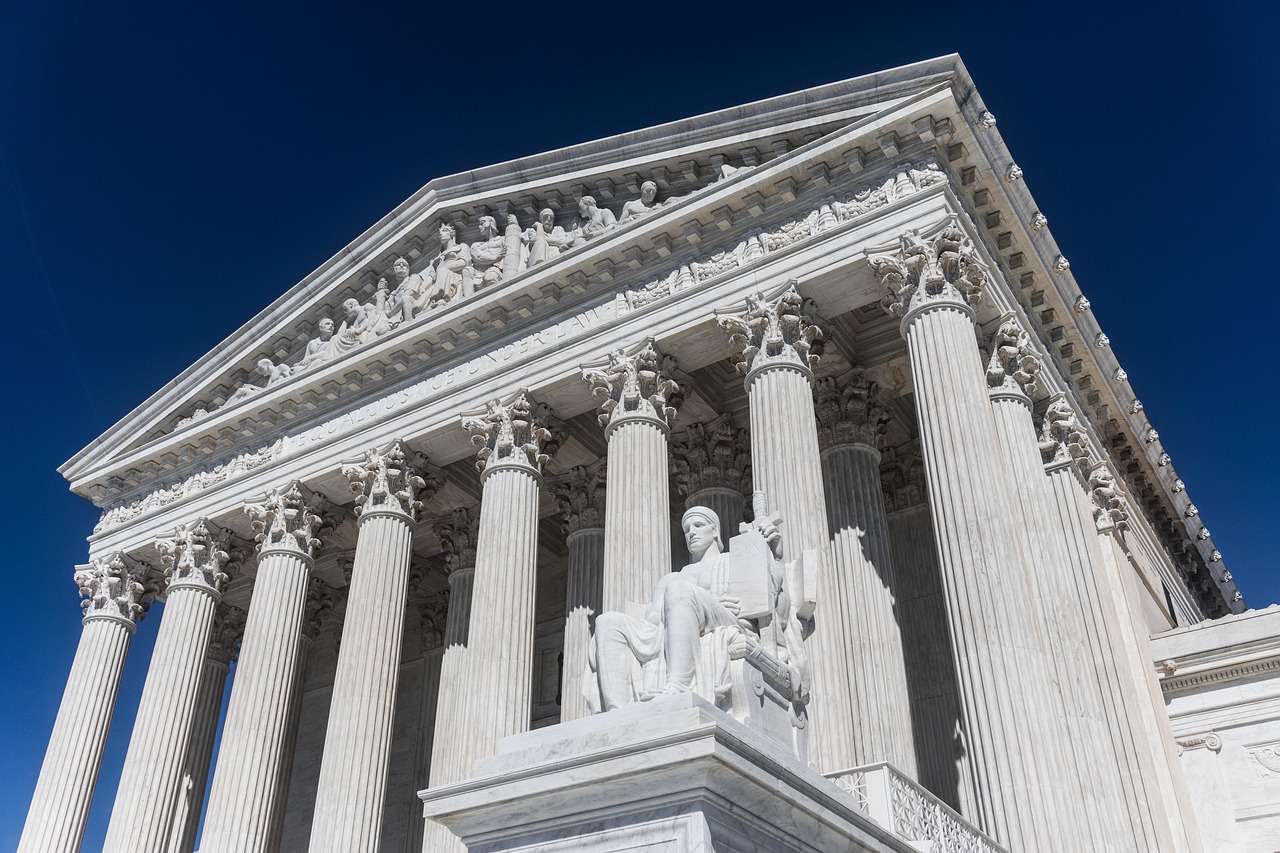
The Supreme Court has drawn a new line in the nation’s long-running fight over guns. Its latest ruling makes clear that states cannot flip the default rule and force Americans to get advance permission before carrying firearms onto private property open to the public.
What The Supreme Court Actually Decided
In Wolford v. Lopez, decided on June 25, 2026, the Supreme Court struck down Hawaii’s law requiring licensed concealed-carry holders to obtain a property owner’s express authorization before bringing a handgun onto private property open to the public. The Court held that this rule violated the Second and Fourteenth Amendments. The practical effect is significant: in places covered by ordinary public access, the government cannot presume guns are banned unless the owner first says yes.
The Court’s opinion, written by Justice Samuel Alito for a 6-3 majority, treated Hawaii’s law as a serious burden on the right to carry firearms for self-defense. According to the opinion, the Second Amendment protects not just ownership in the home, but the ability to bear arms while moving through daily life. That framing matters because it shifts the constitutional focus from mere possession to real-world access.
The dispute centered on a legal default rule. In most states, people may enter businesses or other open private property with a firearm unless the owner posts a restriction or otherwise objects. Hawaii, like a handful of states after the Court’s 2022 gun decision, reversed that presumption. The justices said the Constitution does not allow states to make armed self-defense depend on prior express consent in those settings.
Why Hawaii’s Law Became A National Test Case
Hawaii’s statute was part of a broader wave of state gun regulations enacted after the Court’s landmark 2022 decision in New York State Rifle & Pistol Association v. Bruen. That earlier ruling said modern gun restrictions must be justified by a historical tradition of similar regulation. Since then, lawmakers in several states have tried to redraw where guns may be carried, especially in crowded public-facing locations.
One strategy was to designate many places as “sensitive” or presumptively gun-free. Another was the private-property rule challenged in Wolford, sometimes nicknamed a “vampire rule” because a gun owner could not enter unless invited in. Hawaii argued that property owners should retain greater control over whether armed individuals may enter land open to the public. Supporters said the law respected autonomy and improved safety.
Opponents responded that the law functioned as a near-total barrier to lawful carry in everyday life. Most business owners, they argued, would never post affirmative permission signs, not because they opposed firearms, but because they would not think to do so. The Court found that argument persuasive. In its view, the law did not simply protect owners’ choices; it converted silence into a statewide prohibition.
The Constitutional Logic Behind The Ruling
The majority began with the plain text of the Second Amendment, asking whether the conduct at issue fell within the right to “bear” arms. Because the challengers were lawful adults seeking to carry handguns for self-defense, the Court said the constitutional text plainly covered their conduct. That moved the burden to the government to justify the restriction through history and tradition.
Hawaii pointed to historical trespass principles and older laws restricting entry onto private land without consent. But the Court distinguished between ordinary property rights and a guns-only default imposed by the state. In the majority’s view, traditional property law generally allowed owners to decide whom to exclude, but it did not establish a special nationwide tradition of presuming firearms were forbidden on all public-facing private property.
That distinction is central to the case. The Court did not say property owners must allow guns. It said the state cannot predetermine the answer by requiring affirmative permission first. Owners still may ban firearms from stores, restaurants, offices, or other premises open to the public. What changed is who gets the benefit of the default rule: the citizen carrying lawfully, not the state demanding prior approval.
What The Decision Means For Gun Owners And Businesses

For lawful gun owners, the ruling expands where a carry permit can be used in practice. A permit holder no longer has to assume that every business, shop, or privately owned public-facing venue is off-limits unless the owner has explicitly opted in. Instead, the ordinary rule returns: carry is generally allowed unless the owner says no through signage, policy, or direct notice.
For businesses, the decision preserves control but requires action. A store owner who wants a gun-free environment remains free to impose that rule, but cannot rely on the state to create it by default. In practical terms, many businesses in affected states may now revisit their signage, employee training, and customer policies. Some will post restrictions clearly; others will choose not to regulate the issue at all.
The ruling also creates compliance challenges. Property owners, security personnel, and permit holders will need to understand what counts as adequate notice under state law. Litigation may continue over whether a sign was visible enough, whether notice was properly given, or whether a mixed-use property falls within the same rule. Constitutional victories often settle one question while opening several operational ones.
Which States Are Most Affected
The immediate case involved Hawaii, but the consequences reach beyond one island state. After Bruen, several states, including California, Maryland, New York, and New Jersey, adopted laws built on the same basic theory: that guns are barred from most private property open to the public unless the owner expressly authorizes them. Those laws were designed to narrow the practical scope of public carry after permit rights expanded.
The Court’s ruling strongly undercuts that approach. Even where separate state statutes are not identical to Hawaii’s, the reasoning in Wolford gives challengers a powerful roadmap. If a law makes the lawful carrying of firearms depend on advance permission from every private business or venue open to the public, courts are likely to view it skeptically under the same constitutional framework.
That does not mean every location becomes open to firearms overnight. States still retain authority over genuinely sensitive places, licensing standards, and certain conduct-based restrictions. But the broad strategy of treating all open private property as presumptively off-limits now appears constitutionally vulnerable. Legislatures will have to draft more narrowly if they want restrictions to survive judicial review.
The Broader Impact On The Court’s Gun Jurisprudence
This decision is another step in the Supreme Court’s effort to define the post-Bruen landscape. Since 2022, lower courts have struggled to apply the history-and-tradition test consistently. Some judges have struck down regulations aggressively, while others have tried to preserve modern gun laws by identifying historical analogues. That uneven record has made the Supreme Court the final referee in an expanding number of firearms disputes.
At the same time, the justices have not invalidated every gun law. In United States v. Rahimi, the Court upheld a federal law barring gun possession by people subject to domestic-violence restraining orders. Earlier, the Court also narrowed one criminal firearms prosecution involving Hunter Biden without dismantling the broader framework of federal gun regulation. The pattern suggests a Court willing to protect core carry rights while leaving some targeted restrictions intact.
Wolford reinforces that distinction. The justices signaled that broad laws frustrating ordinary self-defense in public life face serious constitutional trouble. Narrower laws tied to dangerous individuals or historically recognized exceptions may still stand. For lawyers, lawmakers, and advocacy groups on both sides, that is now the key strategic lesson.
Why The Ruling Will Remain Politically And Legally Contentious
The ruling will be celebrated by gun-rights advocates as a straightforward defense of a constitutional guarantee. They argue that a right is not meaningful if it disappears every time a person walks into a grocery store, pharmacy, or family restaurant. From that perspective, prior-permission laws were designed less to regulate carry than to suffocate it through friction and uncertainty.
Gun-control advocates see the matter differently. They argue that more firearms in everyday commercial spaces can increase tension, complicate policing, and create new risks for workers and customers. They also warn that property owners who do not want confrontation may avoid posting no-gun notices, leaving them exposed to armed patrons by default. For critics, the decision elevates gun access over local safety judgments.
That divide ensures the case will resonate well beyond the courtroom. Legislatures will test new regulatory language, lower courts will sort through fresh challenges, and businesses will decide how visibly to exercise their own property rights. The Supreme Court settled the question of prior permission in this context, but it did not end the larger American argument over where the right to carry should begin and where it should stop.