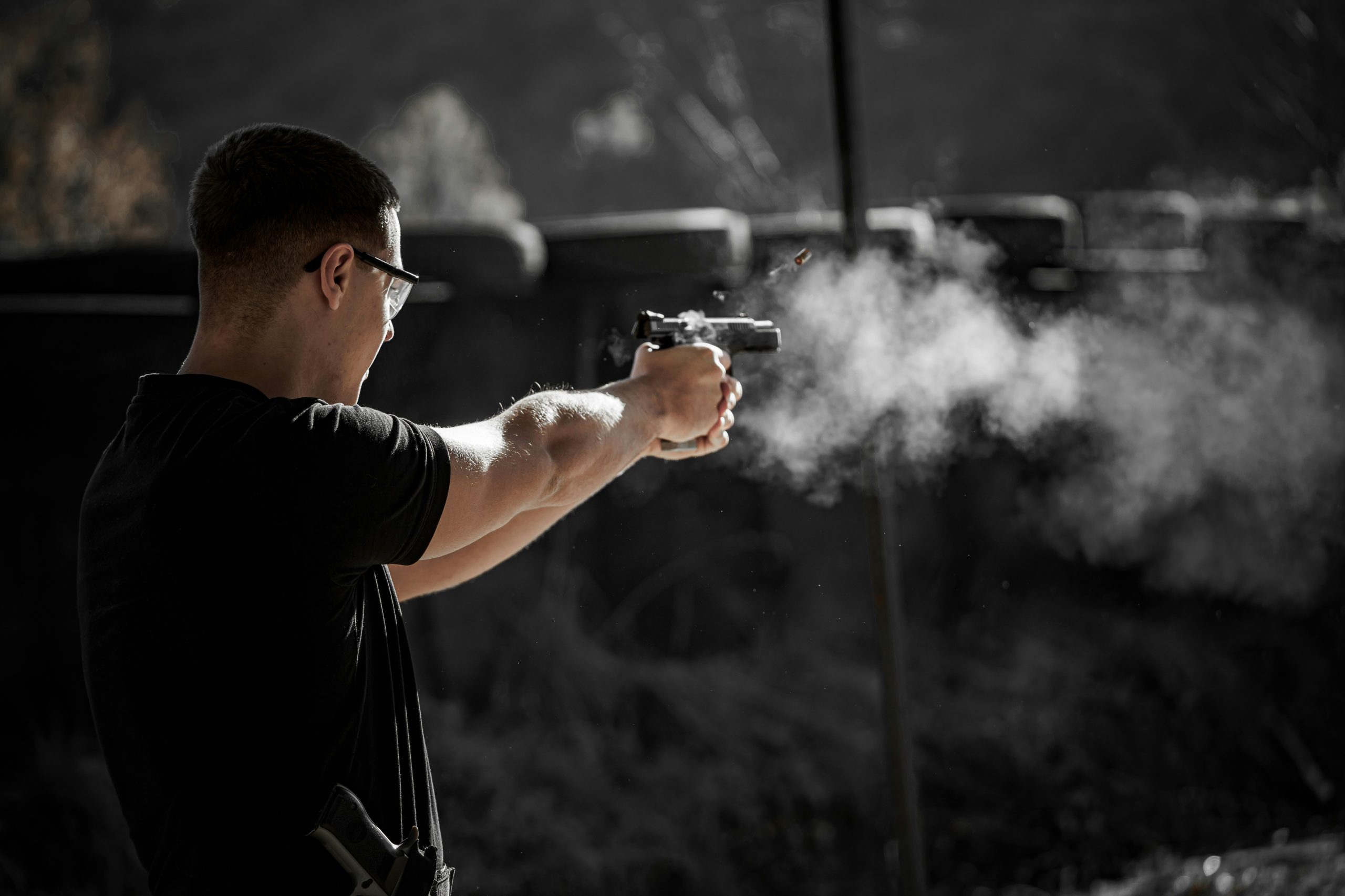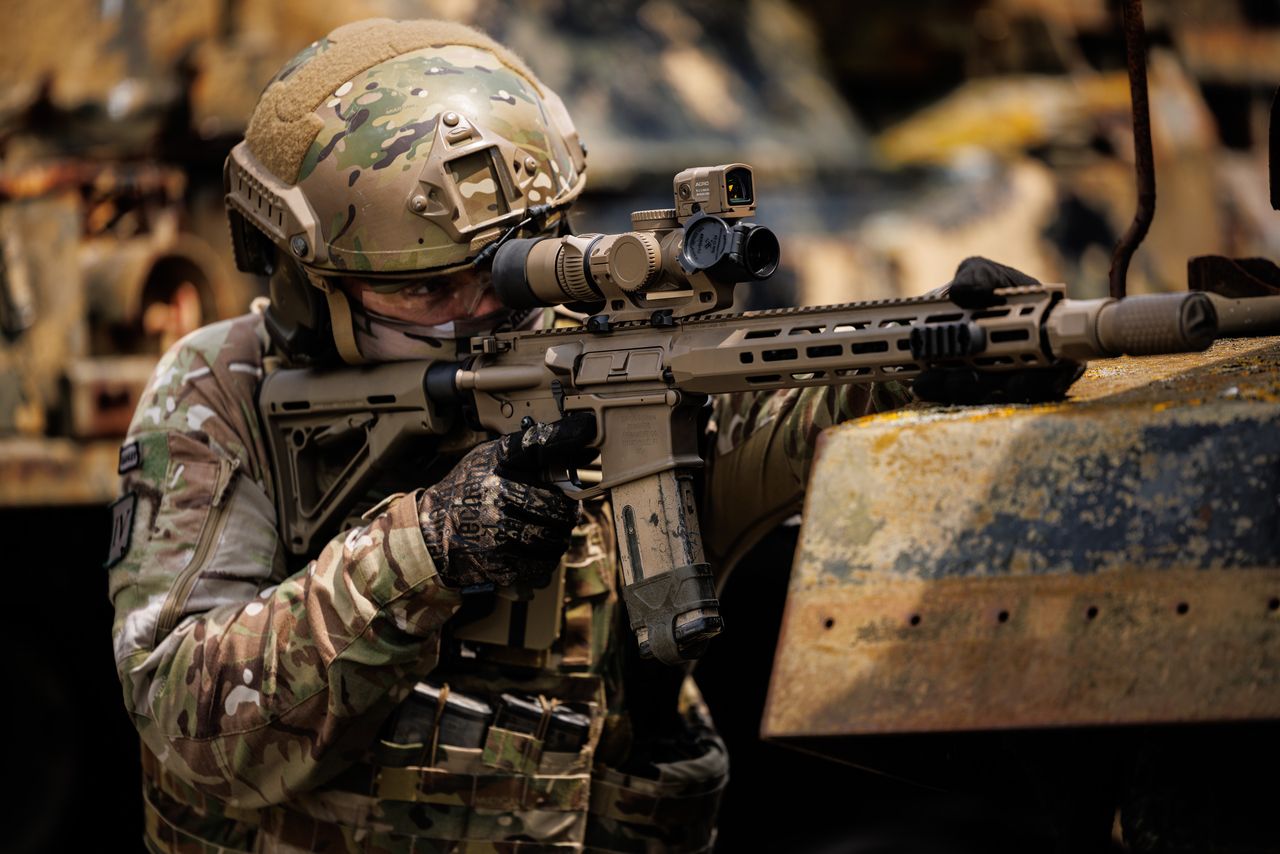
A lot of arguments about optics happen online. What matters more is what skilled shooters actually mount on rifles when performance, speed, and reliability count.
Why this debate never really goes away

The red dot versus LPVO discussion keeps resurfacing because both systems are genuinely effective. A modern red dot is fast, light, simple, and brutally efficient inside common engagement distances. A good LPVO, usually in the 1-4x, 1-6x, 1-8x, or 1-10x range, gives shooters more information at distance and more flexibility across mixed terrain.
That means the real answer is not that one setup replaced the other. It is that shooters started specializing based on mission, match format, terrain, and expected distance. A home-defense carbine, a patrol rifle, a general-purpose ranch gun, and a 2-gun competition rifle may all look similar at first glance, yet demand different optical strengths.
Serious shooters also tend to be less dogmatic than internet debates suggest. They usually care less about trend-driven gear claims and more about measurable performance: hit probability, target identification, recoil control, durability, weight, and how quickly they can solve a problem under stress. When you look at actual use instead of forum mythology, the picture becomes much clearer.
What serious shooters are actually running right now
If you look across law enforcement entry teams, private citizens building defensive carbines, and many high-volume training classes, red dots remain extremely common. There is a reason for that. Inside typical carbine distances, they are intuitive, forgiving in awkward positions, and easy to use while moving, shooting from cover, or working under time pressure.
At the same time, LPVOs have become a mainstay among shooters who expect distance variation. In practical rifle competition, rural law-enforcement work, and training where 300-500 yard targets are normal, LPVOs show up constantly. They let shooters identify partially obscured targets, read terrain better, and hold more precisely on small steel or reduced-size targets.
What are serious shooters actually running overall? The honest answer is both, but in different roles. The current pattern is simple: red dots dominate dedicated close-range carbines and lightweight defensive setups, while LPVOs dominate true general-purpose rifles expected to do near and far work with the same gun. That split is not hype. It reflects real-world tradeoffs.
Where red dots still absolutely dominate
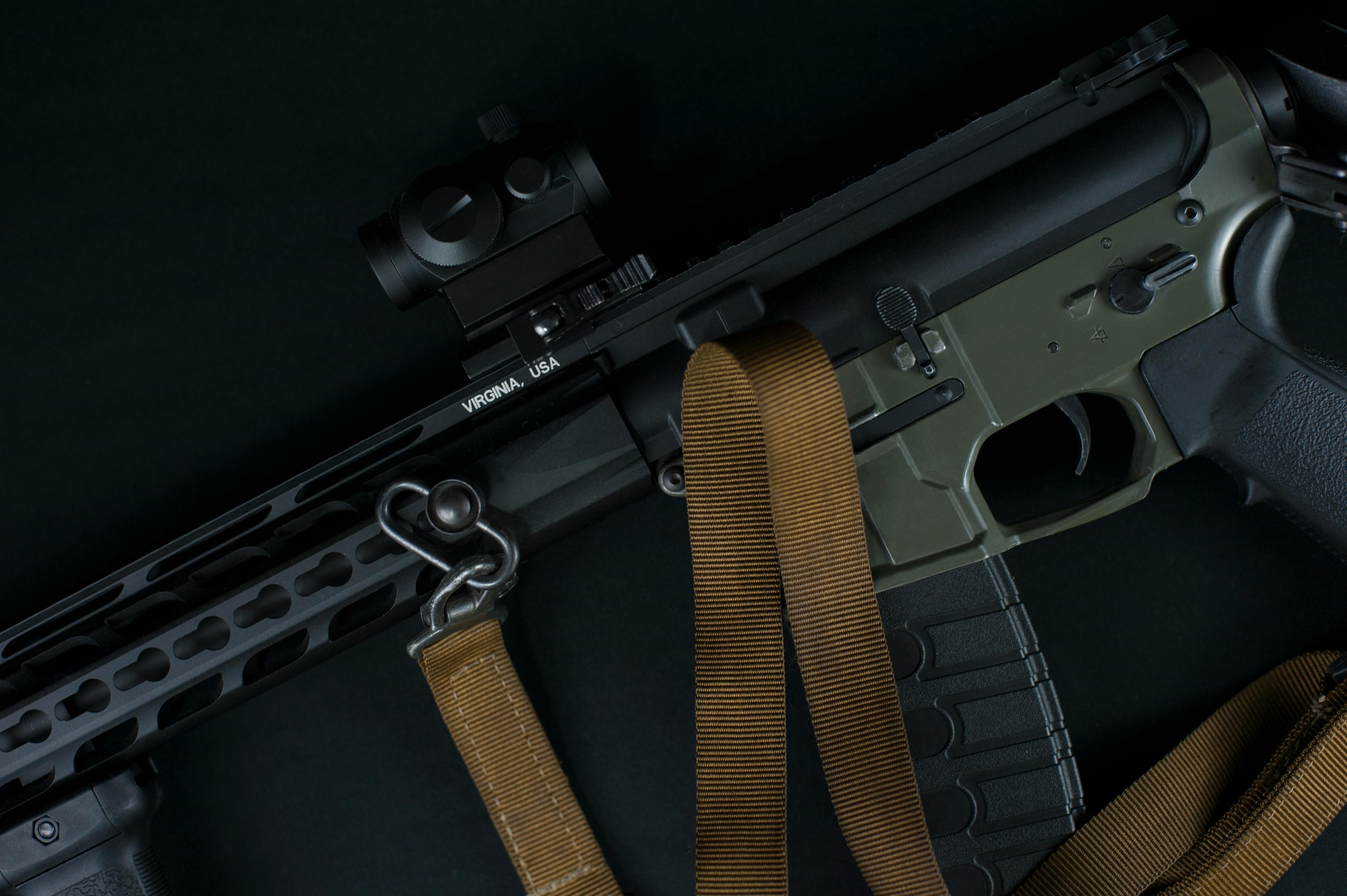
A red dot is still the king of speed at close range. With both eyes open and no concern about eye relief, shooters can mount the rifle, find the dot, and break accurate shots with minimal visual processing. On drills inside 25 yards, especially from unconventional positions, red dots consistently feel easier and often produce faster times.
They also make a lot of sense on rifles that need to stay light and simple. A quality micro dot with a rugged mount adds far less bulk than most LPVO setups. Once you include a scope mount and, in many cases, a backup or offset dot, an LPVO package can add enough weight to noticeably change how the rifle balances and how fast it transitions between targets.
Battery life and durability have also pushed red dots even further ahead for defensive use. Top-tier examples can run for years on a single battery and survive serious abuse. For a rifle that may sit staged, get grabbed in low light, and be used at indoor or street distances, many experienced shooters still trust a red dot first because it removes complexity while maximizing immediate speed.
Why LPVOs earned their place on serious rifles

LPVOs became popular because they solve a real limitation of the red dot: target detail. At 1x, a good LPVO can be used reasonably fast up close, though usually not quite as naturally as a dot. But the second distance stretches, or the target size shrinks, magnification starts paying off in a very obvious way.
On a 300-yard plate, a coyote in uneven brush, or a partially hidden target in a practical match, being able to dial to 4x, 6x, or 8x changes everything. Shooters can confirm what they are looking at, see misses better, and hold with far more precision. According to many carbine instructors, confidence rises quickly when shooters can actually see what is happening downrange.
Reticle design is another major advantage. Modern LPVOs often include daylight-bright centers for close work plus subtensions for holds at distance. That lets shooters manage drop, wind, and target transitions more methodically. If a rifle truly has to cover hallway distance and open-field distance on the same day, the LPVO remains one of the strongest all-around answers available.
The tradeoffs nobody should ignore.
The biggest downside of the LPVO is not cost, though premium models are expensive. It is the total burden of the setup. Scope, mount, caps, throw lever, and sometimes an offset red dot can add significant weight high on the gun. That affects carry fatigue, readiness, and how lively the rifle feels during rapid handling.
There is also the issue of visual complexity. At 1x, some LPVOs are excellent, but they still involve eyebox sensitivity, scope shadow, and more head-position discipline than a red dot. Under stress or in compromised positions, especially around barricades or vehicles, that difference matters. Shooters with a lot of experience can work around it, but the tradeoff never fully disappears.
Red dots, of course, have their own limitations. They do not magnify, they offer less target discrimination, and they can leave shooters guessing at distance unless a magnifier is added. A magnifier helps, but now the shooter is carrying another device, another mount, and another set of compromises. In other words, every attempt to make one system act like the other usually adds complexity.
Who should choose which setup?

If the rifle is primarily for home defense, training inside 100 yards, or fast practical use in tight spaces, a red dot is still the smart default. It is easier to learn, quicker to present, and usually cheaper once you factor in a mount. For most people, that means more practice and fewer excuses, which is often more valuable than extra capability on paper.
If the rifle is meant to be a true do-everything carbine, the LPVO becomes very compelling. Ranchers, rural property owners, competitors, and shooters in classes that regularly push beyond 200 yards benefit immediately from magnification. The ability to identify, observe, and hold precisely is not theoretical. It shows up on the timer and on target.
There is also a middle path that serious shooters increasingly use: red dot plus magnifier, or LPVO plus offset dot. Those hybrid setups work, but they are best understood as specialized answers for people who already know exactly what problem they are solving. For most shooters, picking one primary system based on realistic distance expectations is still the cleaner and smarter move.
So,o which setup are serious shooters actually trusting?
The most serious shooters are not choosing optics by internet fashion. They are choosing based on context. If speed, simplicity, and close-range efficiency are the top priorities, they are still running red dots in very large numbers. That remains true for defensive carbines, duty-style rifles, and lightweight setups intended to be grabbed and used immediately.
If the rifle must stretch, identify, and engage with precision across wider distances, serious shooters are increasingly running LPVOs. Not because LPVOs are trendy, but because they make hard shots easier and unknown-distance work more manageable. On rifles expected to bridge 10 yards and 500 yards, magnification is a real advantage, not a luxury.
So the honest answer is this: serious shooters are running red dots on purpose-built close-range guns, and LPVOs on true general-purpose rifles. Neither has won outright because each excels in a different lane. The shooter who understands that, and builds accordingly,y is usually the one making better hits instead of better arguments.