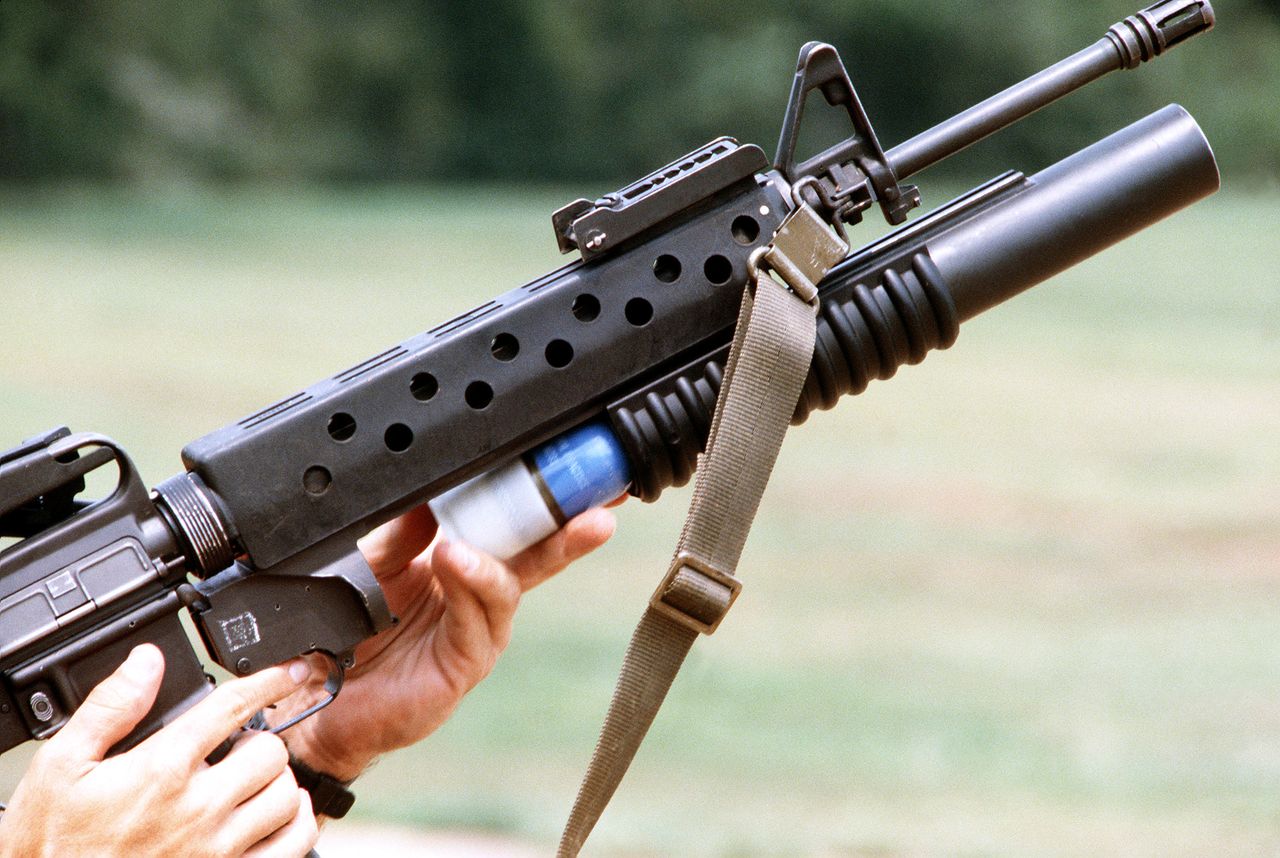
At a glance, the M16 and M4 look like close relatives because they are. But in actual use, these two rifles behave like tools shaped for very different kinds of work.
One family tree, two very different missions

The M16 and M4 both descend from Eugene Stoner’s AR-15 pattern, a lightweight, magazine-fed, gas-operated rifle design that changed military small arms thinking in the 20th century. The M16 entered U.S. service during the Vietnam era and became the long-form service rifle associated with conventional infantry warfare. It emphasized reach, controllability, and a full-length profile that fit the doctrine of the time.
The M4 came later as the military looked for something handier in vehicles, buildings, and tight terrain. It is not a separate bloodline so much as a compact branch of the same system. In Army terminology, the M4 is a carbine, meaning it preserves the core rifle architecture while shortening the package to improve portability and speed.
That distinction matters because people often compare them as if one simply replaced the other in every role. In reality, they were optimized around different mission sets. A mechanized infantryman climbing in and out of an armored vehicle needs something different from a rifleman expected to exploit distance in open ground.
Over time, modular accessories blurred some of the visual and practical differences. Rails, optics, lights, lasers, and modern slings made both platforms more adaptable than their early versions. Even so, the original design logic still shows through: the M16 favors length and stability, while the M4 favors compact handling.
The size difference changes almost everything
The most obvious technical difference is barrel length. The M16A2 and M16A4 use a 20-inch barrel, while the standard M4 uses a 14.5-inch barrel. That 5.5-inch gap may sound modest on paper, but in firearms performance, it has consequences for velocity, maneuverability, sight radius on iron sights, and the overall feel of the weapon.
A longer barrel generally gives 5.56×45mm NATO ammunition more time to accelerate, which increases muzzle velocity. Higher velocity can help with flatter trajectories and, depending on projectile type and range, terminal performance. That was one reason the M16 built its reputation as a rifle that could make the most of the cartridge at longer distances.
The shorter M4 gives up some of that ballistic advantage in exchange for a far more manageable footprint. Moving through hallways, exiting trucks, or operating in urban combat becomes easier when the weapon is shorter and lighter at the front end. For troops carrying radios, armor, night gear, and ammunition, shaving length matters more than it might seem in a clean side-by-side table.
Stock design also separates the two in practical use. Traditional M16 configurations typically use a fixed stock, while the M4 is known for its collapsible stock that can be adjusted to body armor, shooting position, or user size. That one feature alone helps explain why the M4 feels more adaptable to modern battlefield realities.
Range, velocity, and what the numbers really mean
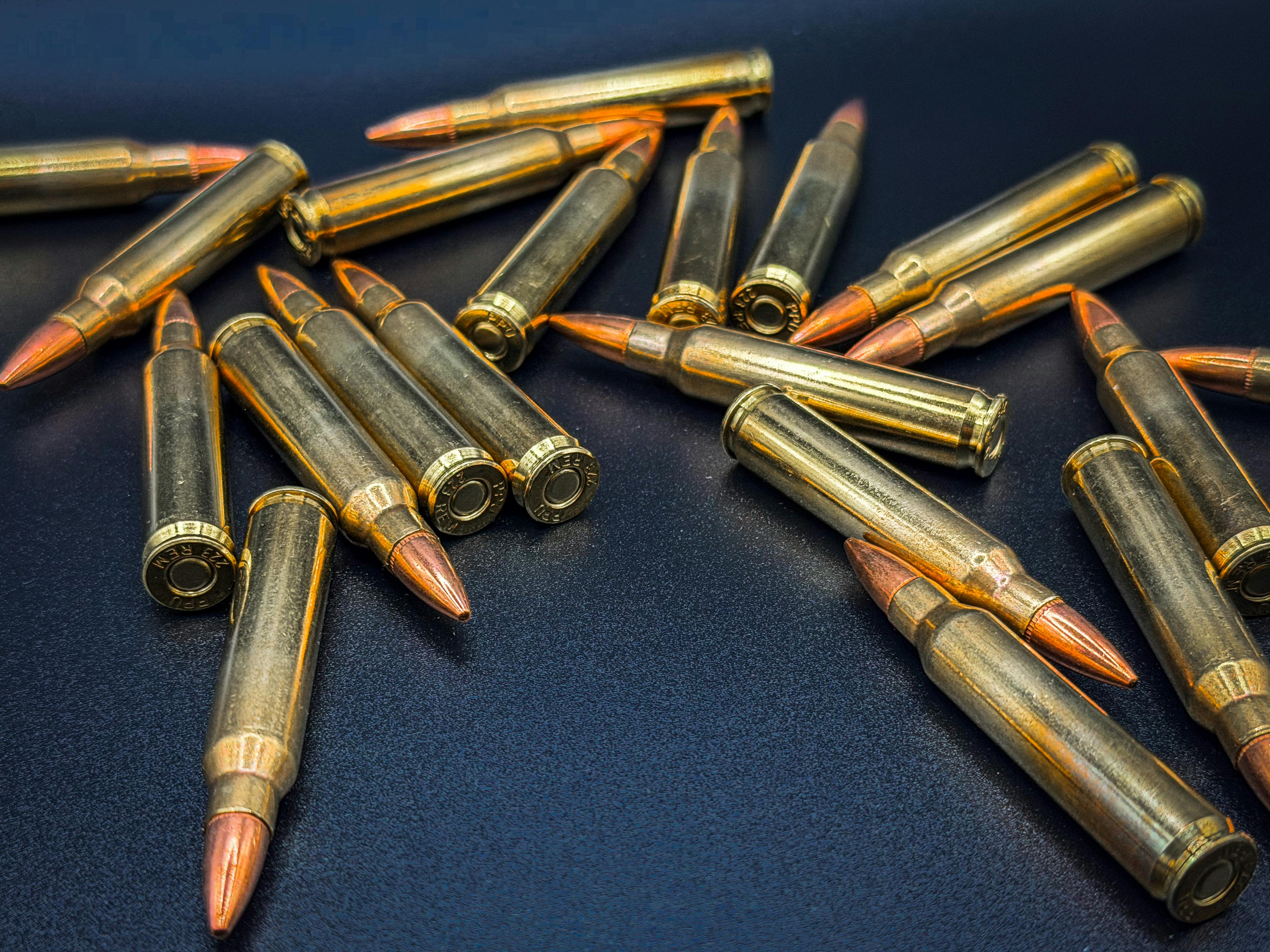
A lot of debate around M16 versus M4 comes down to range, but that term gets oversimplified. Both fire the same basic cartridge family and can be accurate weapons, especially with good optics and trained shooters. The difference is not that one is precise and the other is not. It is that the longer the M16 tends to preserve ballistic efficiency better as distance increases.
With standard military loads such as M855, the M16’s 20-inch barrel typically delivers noticeably higher muzzle velocity than the M4’s 14.5-inch barrel. Exact figures vary by ammunition lot and conditions, but the general pattern is consistent across testing from military evaluators and firearms experts. More velocity usually means more energy retained downrange and a little more forgiveness in trajectory estimation.
That advantage becomes more visible as targets stretch beyond typical close-quarters distances. In open terrain, the M16 can offer an easier path to effective fire at range, particularly with iron sights or less-than-perfect conditions. The M4 can still reach out, and modern optics have narrowed the practical gap, but it asks a bit more of the shooter and the ammunition.
None of this means the M4 is weak or unsuitable. It means tradeoffs were accepted intentionally. Military procurement almost always works that way: one gain comes with one cost, and the M4’s gain was superior handling in the environments where many late-20th-century and early-21st-century troops actually fought.
Why soldiers often prefer the M4 in the real world
Ask people who have had to carry a rifle all day, every day, and the M4’s appeal becomes easy to understand. Comfort is not a trivial issue in combat. A weapon that is less awkward on patrol, quicker to shoulder, and easier to control in confined spaces reduces fatigue and can improve reaction time under stress.
Urban operations especially helped cement the M4’s status. In Iraq and Afghanistan, many troops worked in vehicles, compounds, alleyways, and interiors where a full-length rifle could feel cumbersome. A shorter weapon clears doorways more cleanly, snags less on equipment, and is easier to manage when switching from movement to target engagement in a split second.
Special operations forces had embraced carbine-length rifles early for many of these reasons. Their influence on broader military thinking should not be understated. As optics, free-float rails, improved magazines, and better training spread across the force, the M4 looked less like a compromise and more like the best all-around answer for a broad share of missions.
There is also the matter of user adaptability. The M4’s collapsible stock, accessory compatibility, and generally compact profile suit a wider range of body types and kit configurations. That flexibility made it especially attractive as battlefield equipment grew bulkier and the need for customization became normal rather than exceptional.
Reliability myths and the truth behind the reputation

The M16 family carries a complicated reputation because of its troubled early years in Vietnam. Initial fielding problems, ammunition changes, and poor communication about maintenance damaged confidence in the platform. Those failures were real and costly, but they also belong to a specific historical chapter rather than the whole life story of the design.
Both the M16 and M4 use a direct impingement-style gas system, though more precisely, the gas acts within a carrier system rather than through a separate piston assembly. Critics have long argued that this makes the rifles dirtier than piston-driven alternatives. That is true to a degree, but military and independent testing have repeatedly shown that well-maintained rifles in this family can be highly reliable.
The M4 did face scrutiny during the Global War on Terror as dust tests and combat anecdotes fueled debates about stoppages. Context matters here. High round counts, harsh environments, accessory weight, magazine quality, and maintenance discipline all affect reliability. In many cases, improved magazines and incremental engineering changes did as much to improve confidence as any headline-grabbing redesign.
So the fair conclusion is not that one rifle is reliable and the other is not. It is that both have matured substantially over time. The modern M16 and M4 are the products of decades of iteration, and their operational records are much better than the simplistic myths that still circulate in casual conversations.
Training, doctrine, and the shift in military thinking
Weapons do not exist in a vacuum. The rise of the M4 reflects a broader shift in how militaries think about infantry combat, mobility, and engagement distance. During the Cold War, armies often planned around large-scale conventional warfare where the full-length service rifle fit neatly into a doctrine focused on open battlefields and sustained line infantry use.
Later conflicts forced a different emphasis. Troops increasingly fought in cities, mountainous terrain, mixed civilian environments, and fast-moving mounted operations. In those settings, average engagement distances were often shorter than traditional doctrine assumed, while quick target acquisition and compact carry became more important than squeezing every last bit of performance from a cartridge.
Training methods evolved alongside the hardware. Red dot sights, low-power variable optics, white lights, infrared lasers, and more dynamic shooting techniques helped the M4 excel. The shorter carbine became part of a whole ecosystem built around speed, flexibility, and fighting effectively in complex, cluttered spaces rather than simply maximizing rifle length.
That does not make the M16 obsolete in principle. In fact, designated marksman roles and certain line infantry contexts still benefit from longer barrels. But institutionally, the center of gravity shifted. The M4 fit where military culture, equipment, and tactical expectations were already heading, which is a big reason it became so dominant.
So which one is better? It depends on the job.
If the question is pure ballistic efficiency, the M16 has the edge. Its longer barrel helps the 5.56 cartridge perform closer to its full potential, and that can matter at distance. If the question is practical handling across the widest variety of modern combat tasks, the M4 usually comes out ahead because compactness solves problems soldiers encounter constantly.
That is why calling the M4 a simple shortened M16 misses the point. It is shortened, yes, but with purpose. The reduced length, adjustable stock, and carbine role make it a distinct answer to a different tactical environment. Same operating DNA, same family identity, but not the same animal once real-world use begins.
For a general audience, the easiest way to think about it is this: the M16 is the classic full-size service rifle, and the M4 is the modern do-everything carbine. Neither is universally superior. Each reflects the era, assumptions, and battlefield demands that shaped it.
And that may be the most important takeaway of all. Firearms design is always a negotiation between power, control, size, weight, and mission. The M16 and M4 tell that story perfectly because they are close enough to compare directly, yet different enough to show how even small design changes can reshape an entire weapon’s role.